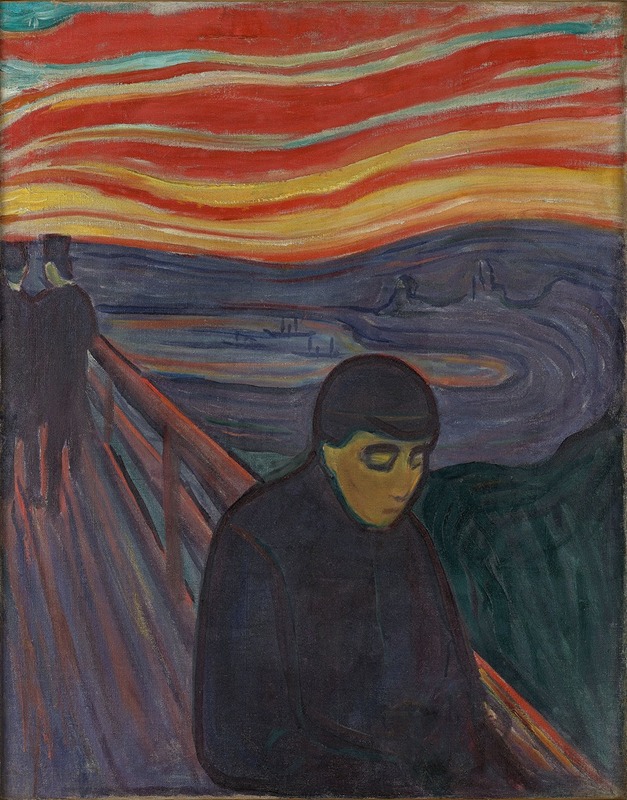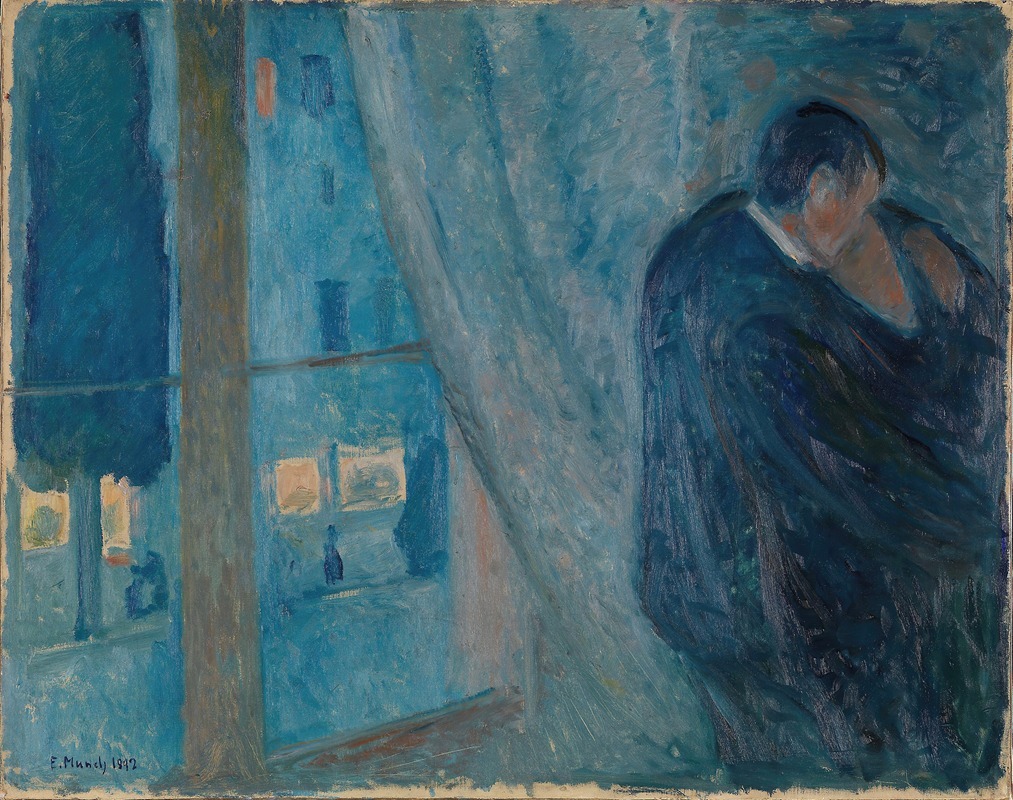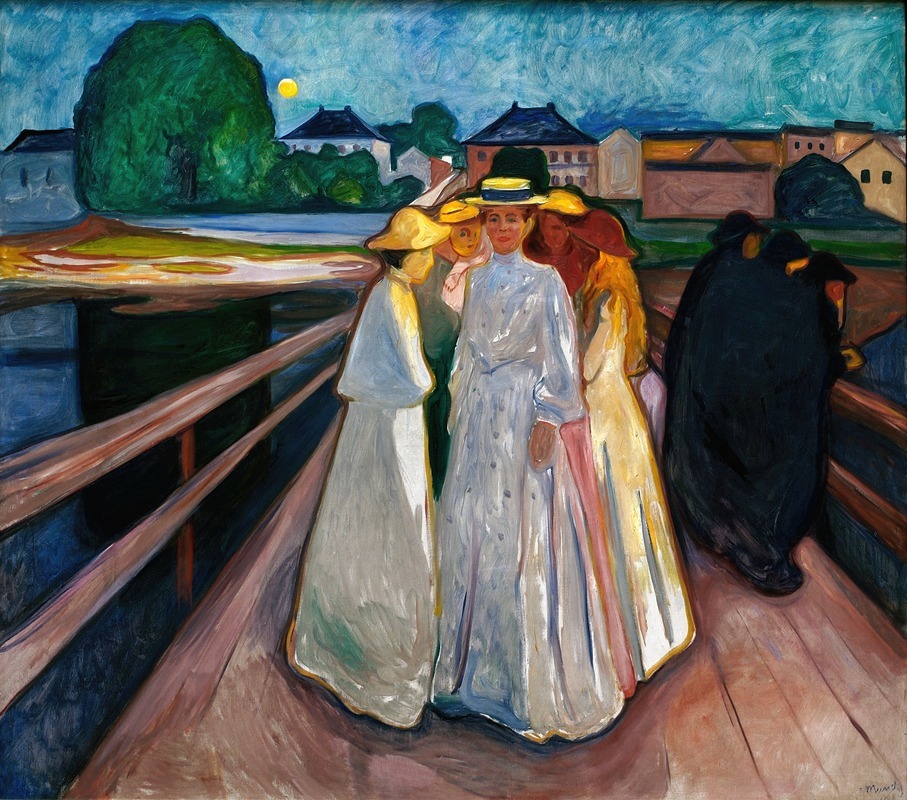
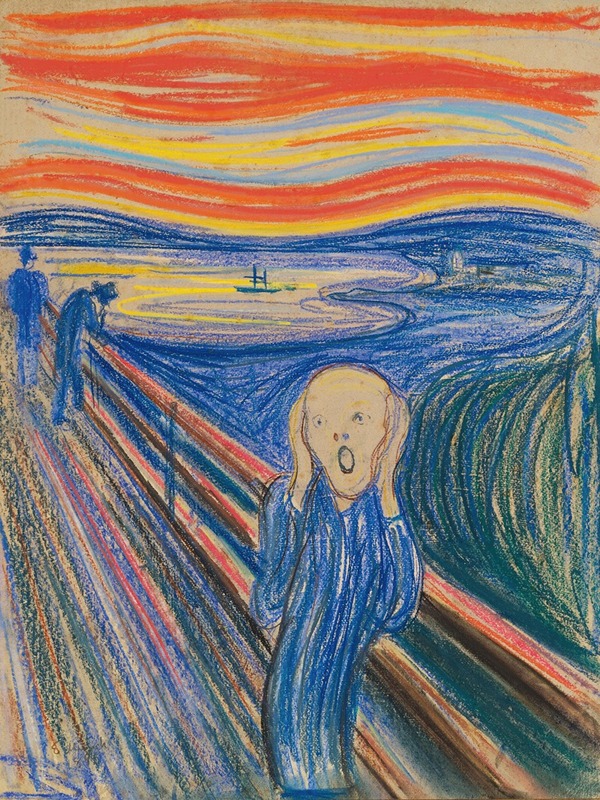
Can paint confess what words never could? The emotional weight of loss spills onto the canvas, evoking despair and solitude in equal measure. Focus on the lone figure standing on the bridge, cloaked in a somber palette of blues and grays. There’s a haunting stillness in their posture, a sense of waiting for something that may never return. Notice how the brushstrokes swirl around them, creating an atmosphere that feels both oppressive and liberating. The bridge, stretching into the void, becomes a visual metaphor for the chasm between what is lost and what remains. The tension between light and shadow plays a crucial role in this work, where the twilight sky looms ominously above. The interplay suggests not only the passage of time but also the emotional weight of grief. Look closely at the distant figures — are they witnesses, or are they oblivious to the protagonist's pain? Each element contributes to the overarching theme of isolation, allowing the viewer to feel the profound absence that haunts the individual on the bridge. In 1903, Munch was grappling with personal loss and the complexities of human emotion. Living in Norway, he was at the forefront of the Symbolist movement, seeking to express inner feelings through art. This period marked a significant evolution in his work, as he began to delve deeper into themes of existential despair, foreshadowing the intensity that would define his later pieces.