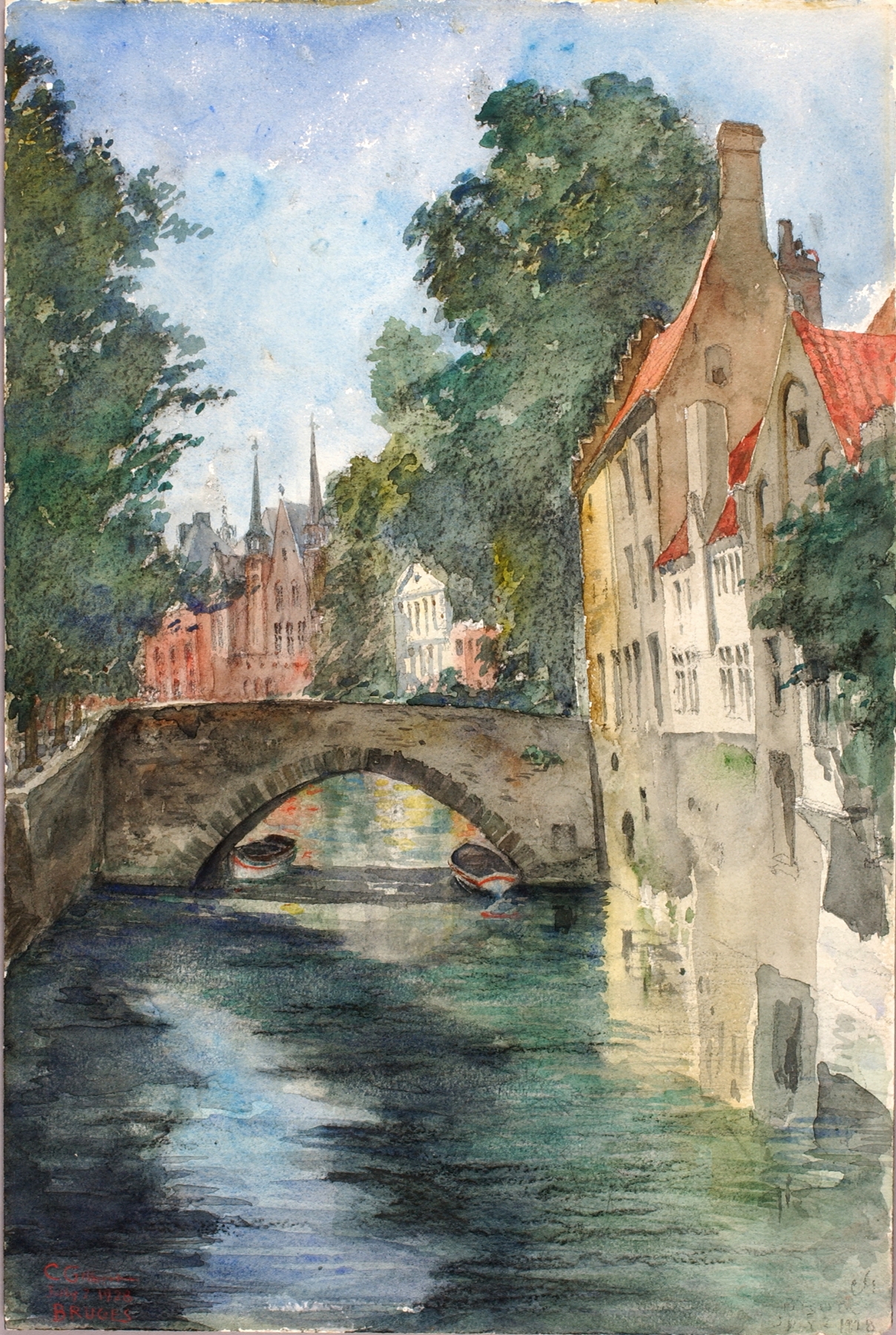
What if silence could speak through light? In *On the Canal, Bruges*, the still waters whisper timeless tales, reflecting not just the scene but the delicate interplay between hope and nostalgia. Look to the left at the gentle curve of the canal, where soft, dappled light dances on the water’s surface. The architecture, with its weather-worn facades, stands stoically under a pastel sky, illuminating the intricate details of brick and stone. Notice how the artist employs a palette of muted tones—seashell pinks, soft blues, and earthy browns—creating a soothing yet somber atmosphere. It's a masterful composition, inviting the viewer's gaze to wander leisurely along the waterway. Beneath the tranquil exterior lies a profound tension between serenity and longing. The stillness of the water suggests a moment suspended in time, yet hints at a world beyond the canvas, filled with unseen stories and unfulfilled dreams. The juxtaposition of the vibrant canal life reflected in the water against the stillness of the buildings speaks to the duality of existence—how hope can bloom quietly in the midst of stillness. In 1928, Cass Gilbert painted this piece during a time when the art world was grappling with modernity and change. Working in an era marked by the aftermath of the Great War and the rise of new artistic movements, he sought to capture the enduring beauty of a historical landscape. This painting reflects both the artist's personal journey and the broader quest for solace and hope amid a changing world.