On the Test — History & Analysis
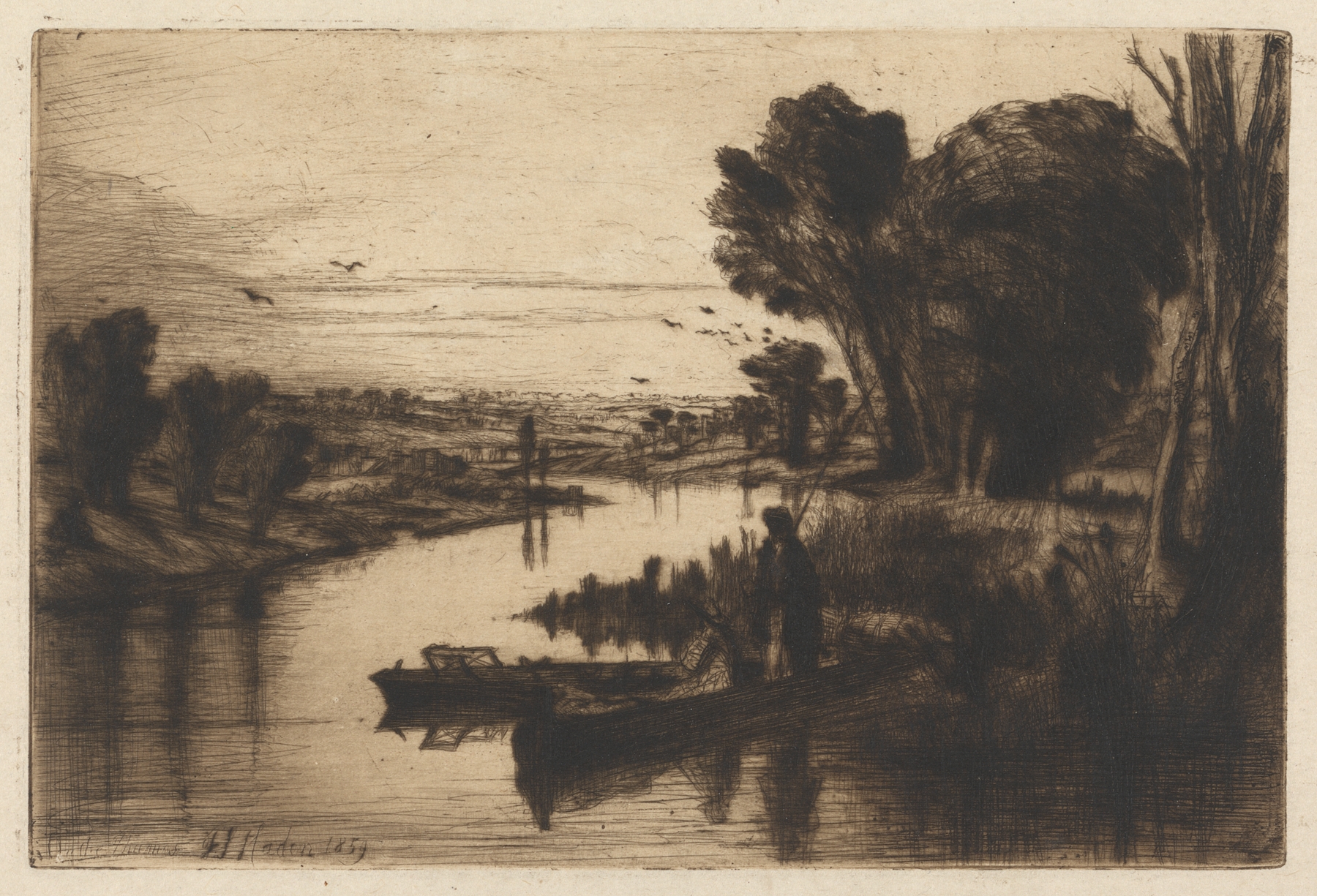
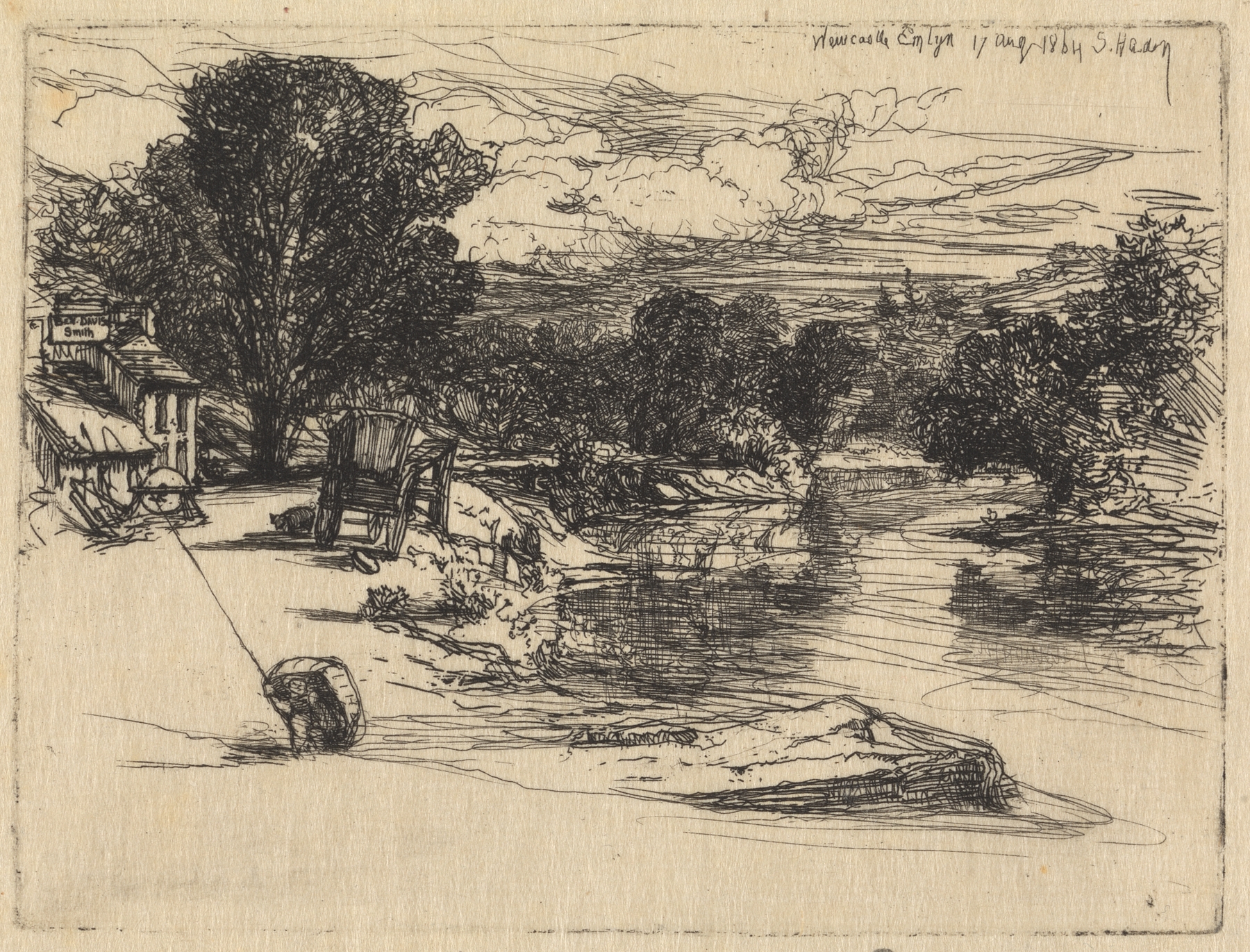
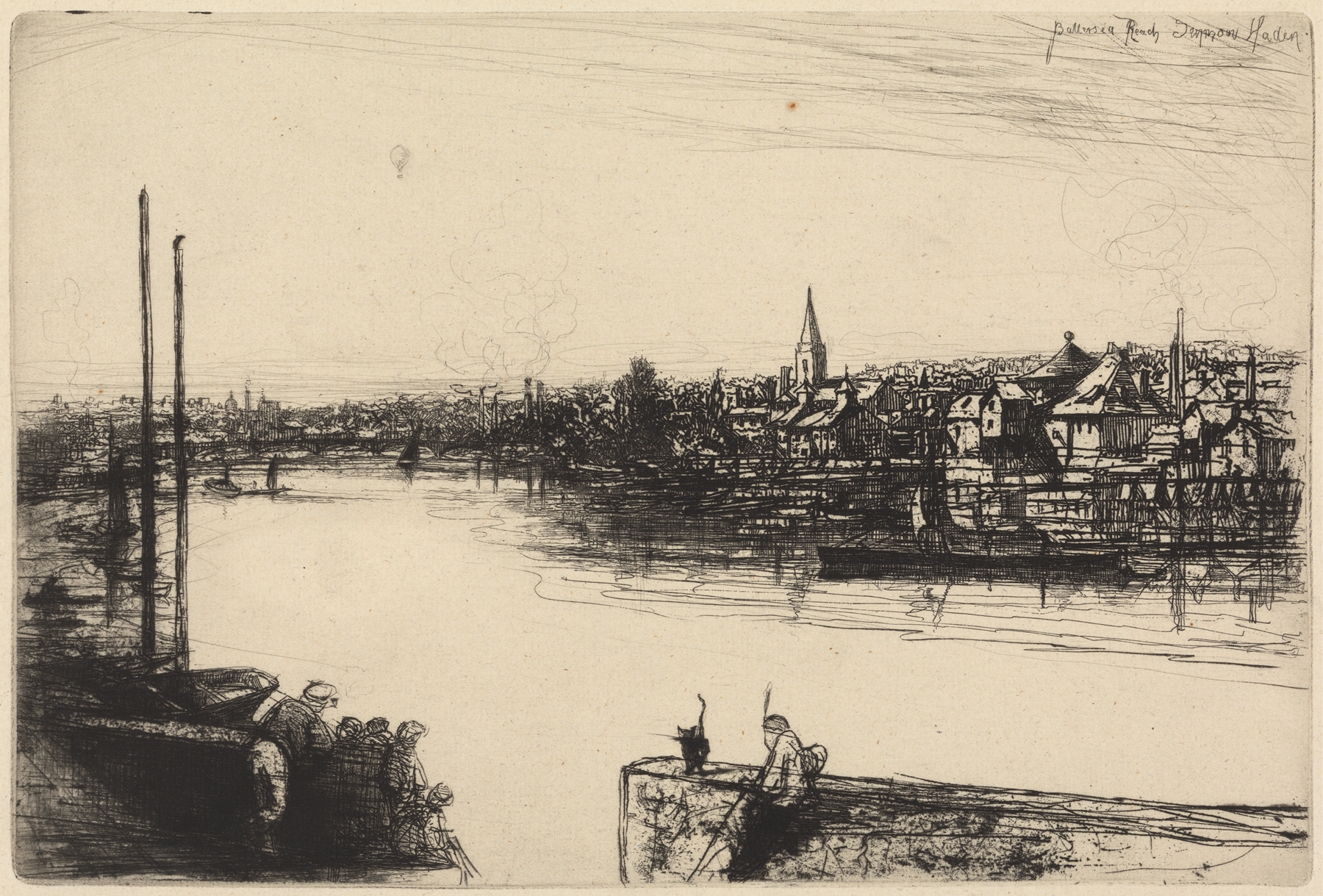
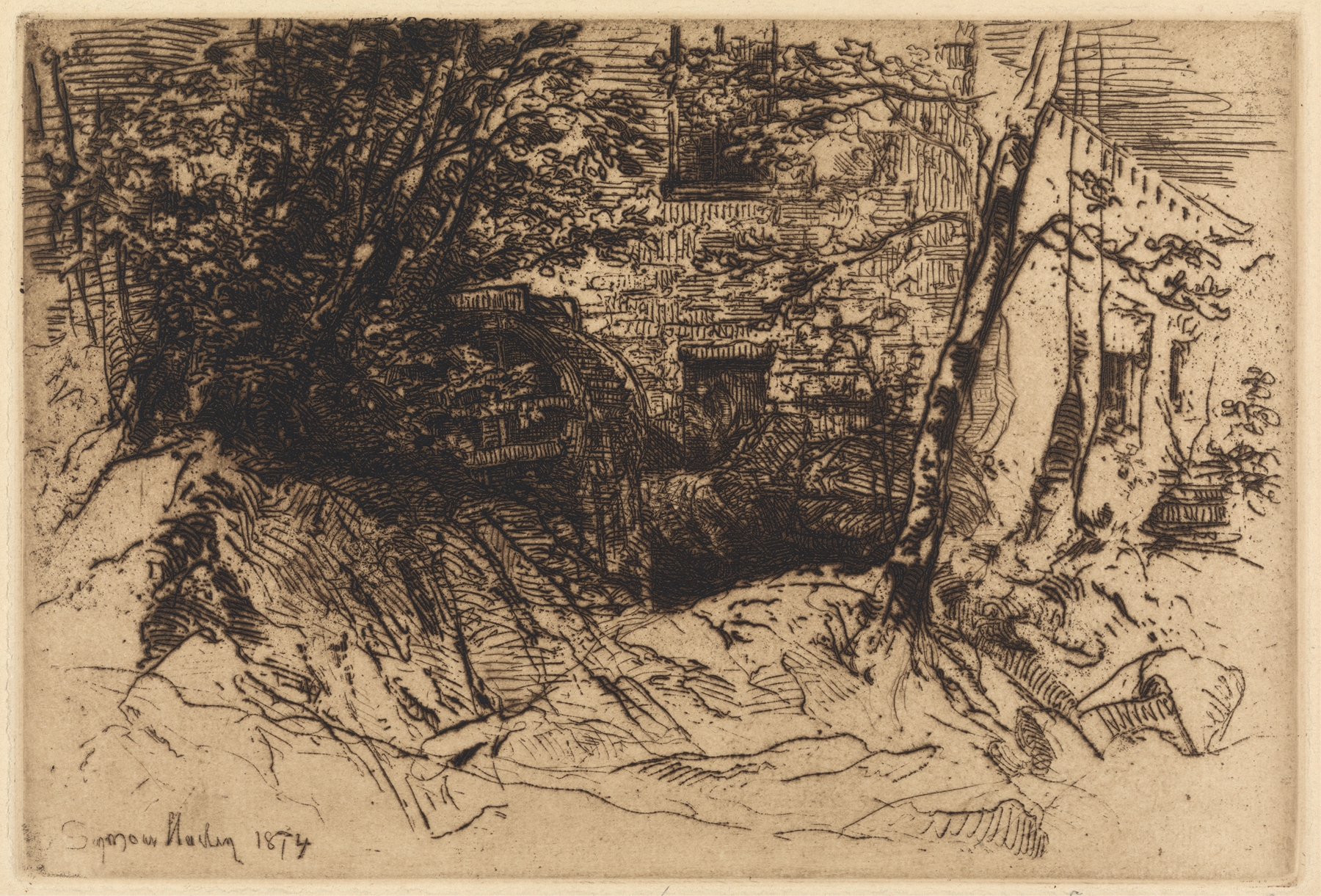
Where does light end, and longing begin? In On the Test, a haunting interplay of shadow and illumination emerges, drawing us into an emotional landscape rich with solitude and introspection. Look closely at the central figure, a lone angler poised on the riverbank, casting his line into the water. The delicate strokes of the artist create a shimmering effect in the water, reflecting both the sky and the depths below. To the left, notice the gnarled branches of a nearby tree, their intricate forms contrasting the smooth surface of the river.
Haden’s choice of muted tones envelops the scene in a sense of melancholy, as soft grays and greens blend together, evoking the tranquil yet somber atmosphere of the moment. Beneath the surface, a narrative of isolation unfolds. The angler's posture suggests a contemplative yearning, perhaps for connection or solace in the solitude of nature. The stillness of the water enhances this tension, as if time itself has paused to allow for reflection.
The subtle interplay of light and shadow serves not just as a means of depicting the scene but as a metaphor for the depths of human emotion — the yearning for companionship against the backdrop of nature's vastness. In 1859, Haden, an influential figure within the British etching movement, was creating works that embodied the complexities of human experience. Living in London amidst a vibrant artistic community, he was drawn to exploring the themes of solitude and introspection that resonated deeply within him. This piece reflects both his personal struggles and the broader context of an era grappling with industrialization, capturing a moment that transcends time.