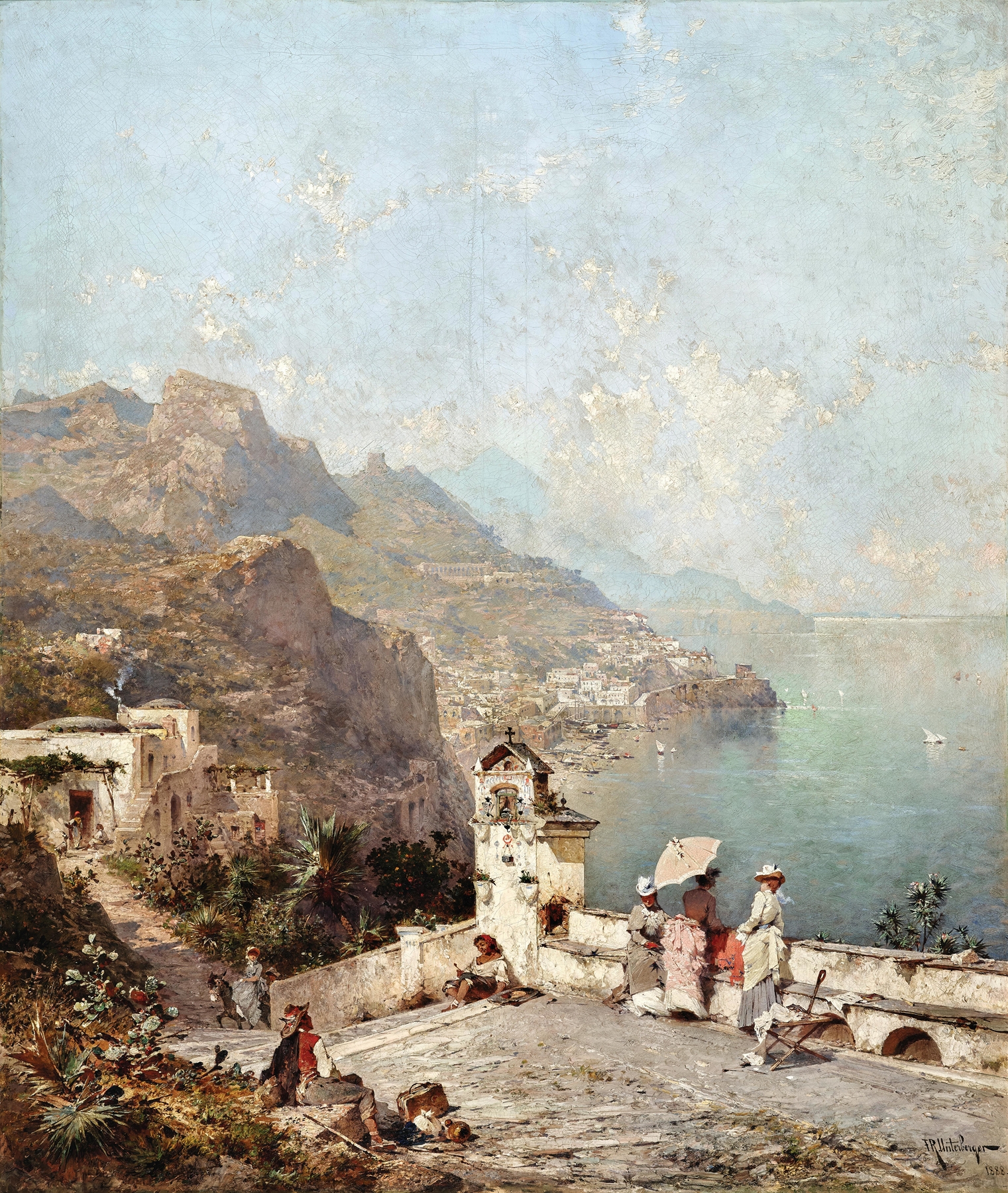
On the Veranda, in the Background Naples — History & Analysis
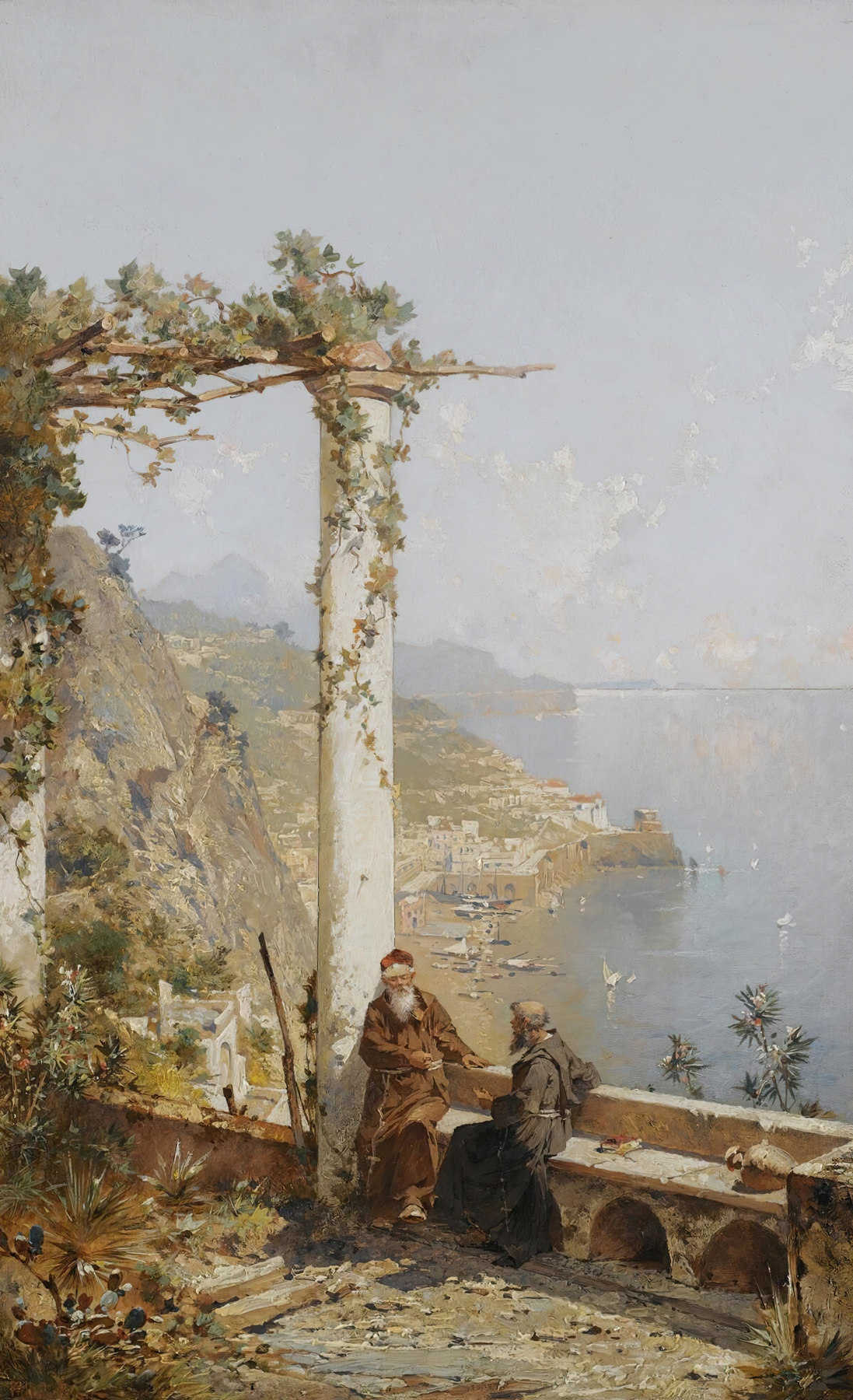
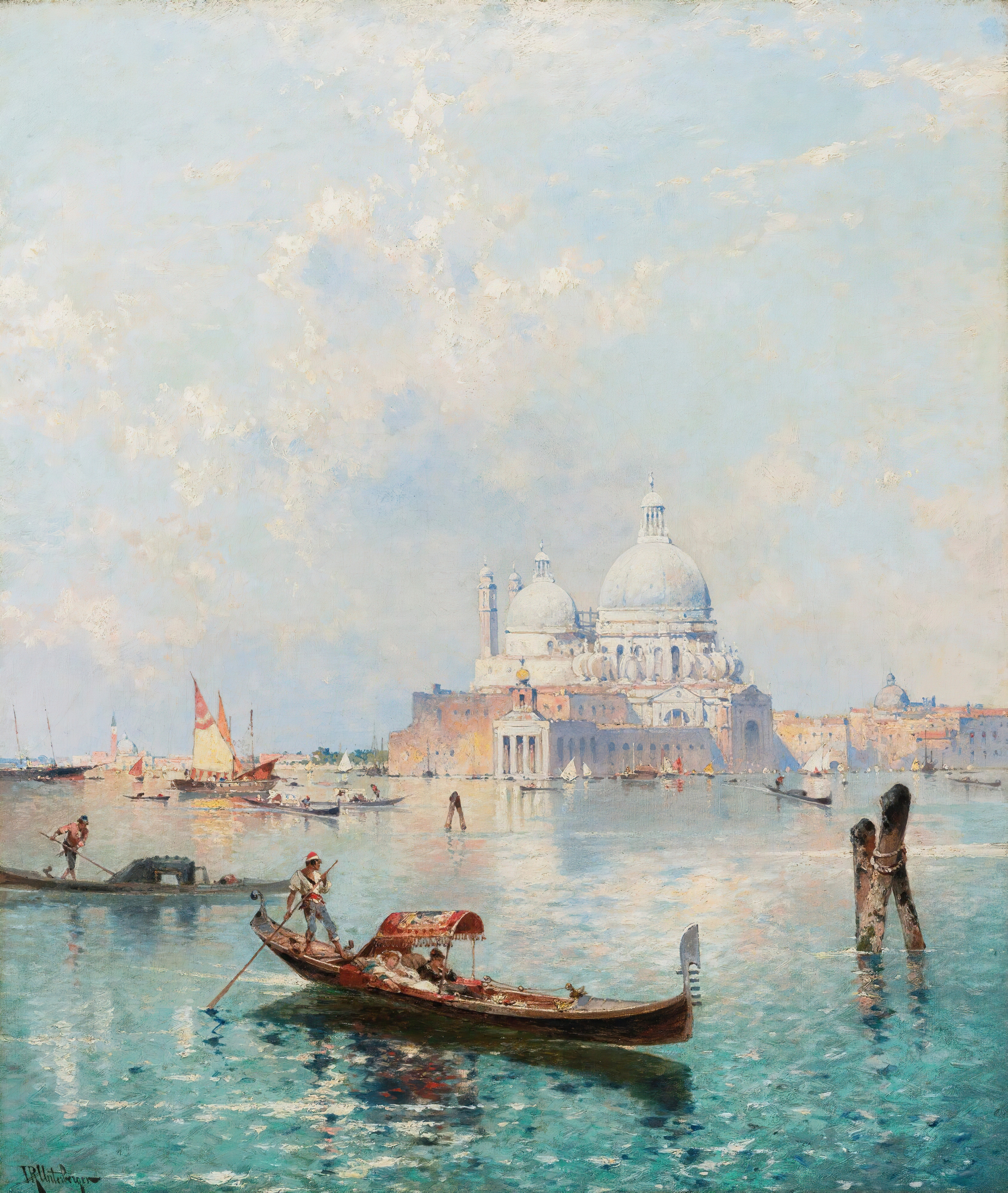
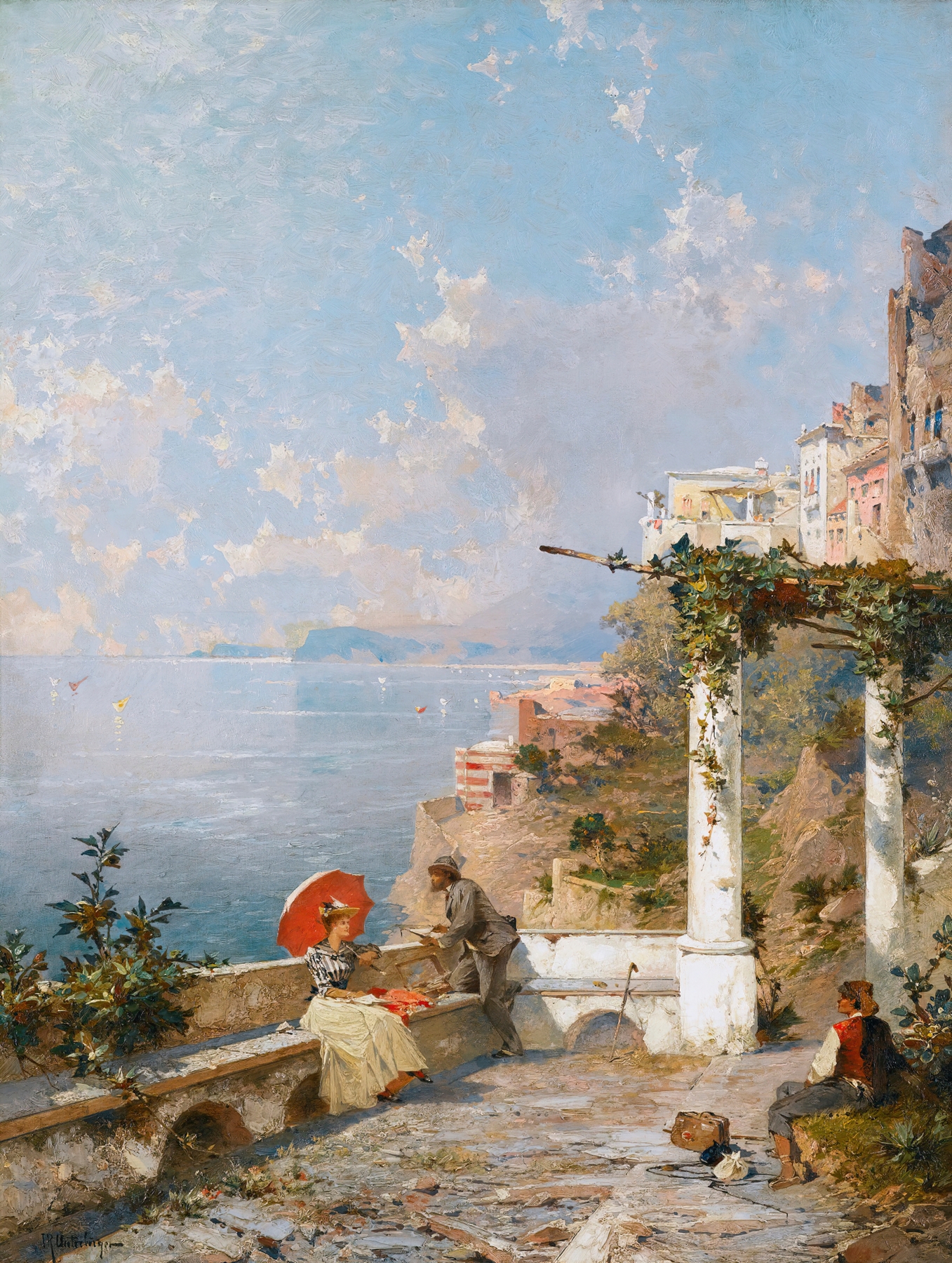
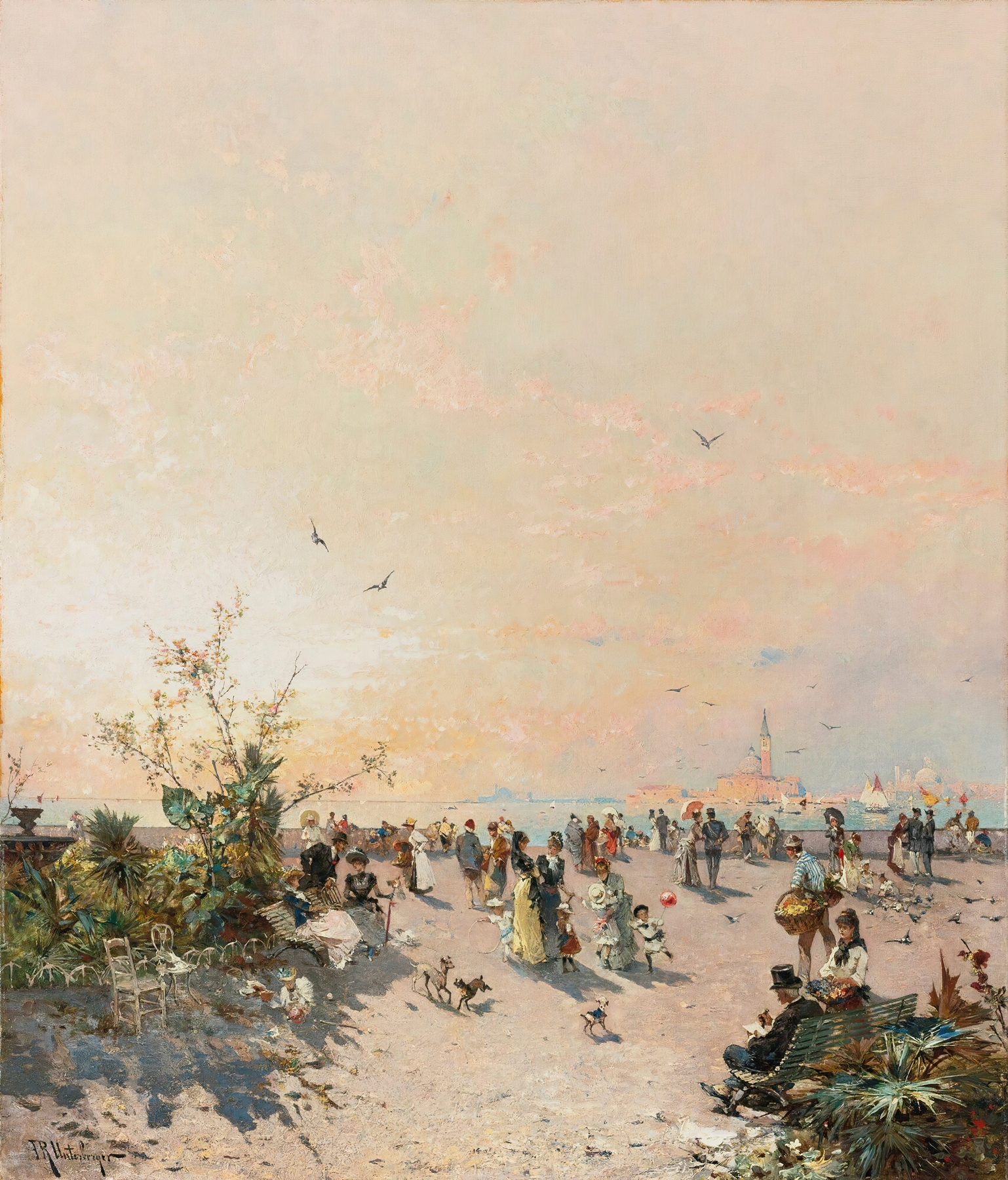
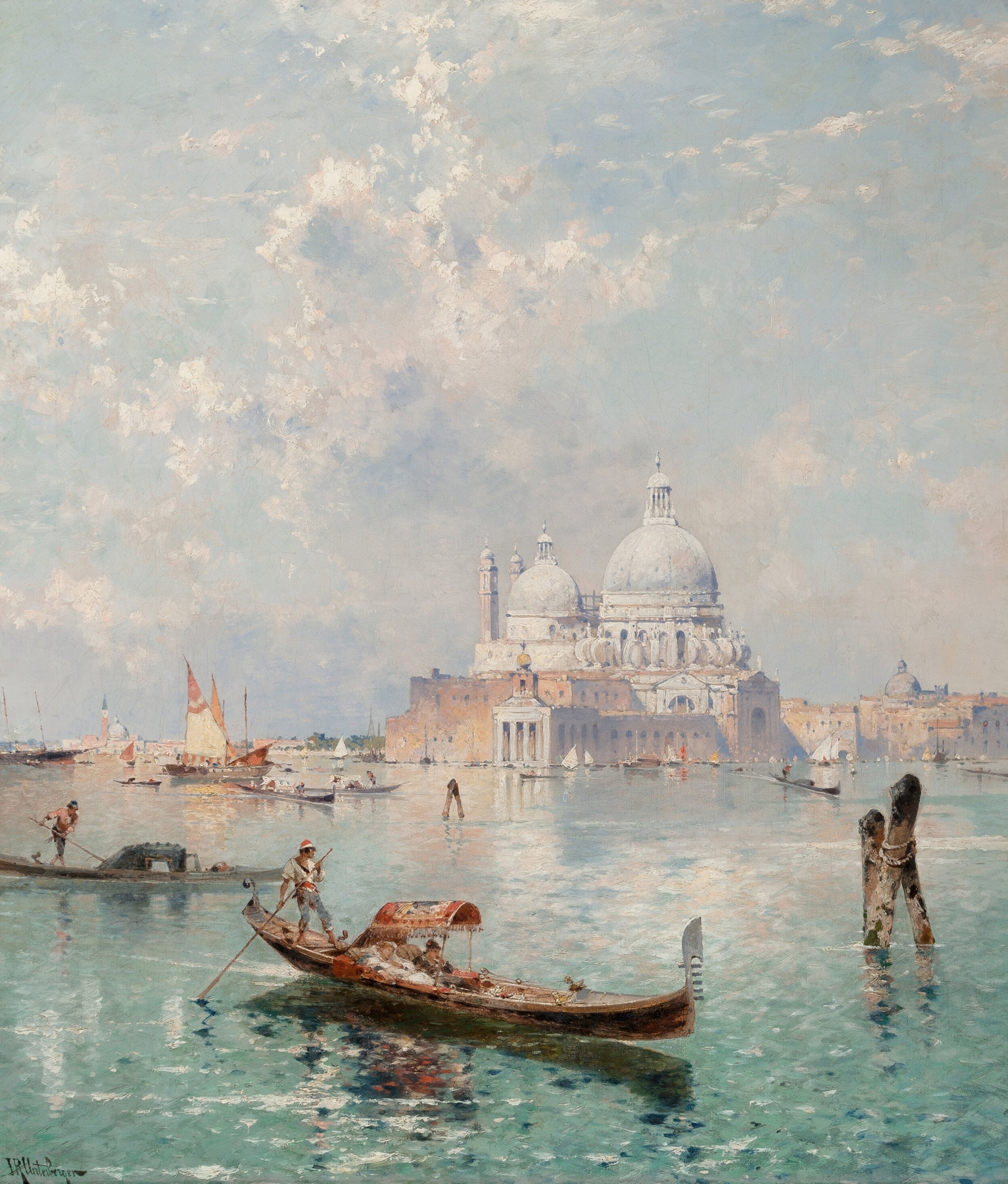
“The canvas doesn’t lie — it simply waits.” In this still moment captured by Unterberger, we find ourselves on the threshold of a world both inviting and hauntingly empty. The scene speaks of absence, where space yearns for presence, and silence echoes louder than words. Look to the right at the elegant lines of the veranda, where ornate railings draw the eye outward, inviting one to step beyond the painted frame. The warm hues of muted oranges and soft blues mingle, suggesting a twilight that bathes everything in a gentle glow.
Notice how the light dances over the surface, illuminating the meticulous brushstrokes that hint at a history of lives once lived in that sun-kissed space. The composition beckons us to explore, yet the lack of figures stirs a sense of longing, as though the artist has captured a moment just before the laughter and chatter would fill the air. Delving deeper, the emptiness of this veranda becomes poignant — it reflects the tension between presence and absence, inviting contemplation on what has been lost or left behind. The contrast of light and shadow hints at memories hovering just out of reach, evoking feelings of nostalgia.
The viewer is left to ponder the stories that this space could tell, amplifying the emotional weight of solitude in a vibrant, bustling Naples. Franz Richard Unterberger painted this work during a period of artistic exploration in the 19th century, often influenced by his surroundings in Italy. The precise date remains uncertain, but it is believed to be created while he was immersed in the rich cultural landscape of Naples, a time when artists were increasingly drawn to the interplay of light and atmosphere. Amidst the historical shifts and evolving art movements, Unterberger's focus on architectural beauty and the emotional resonance of space set his work apart, emphasizing the significance of absence within vibrant locales.