Paysage à Marlotte (Fontainebleau) — History & Analysis
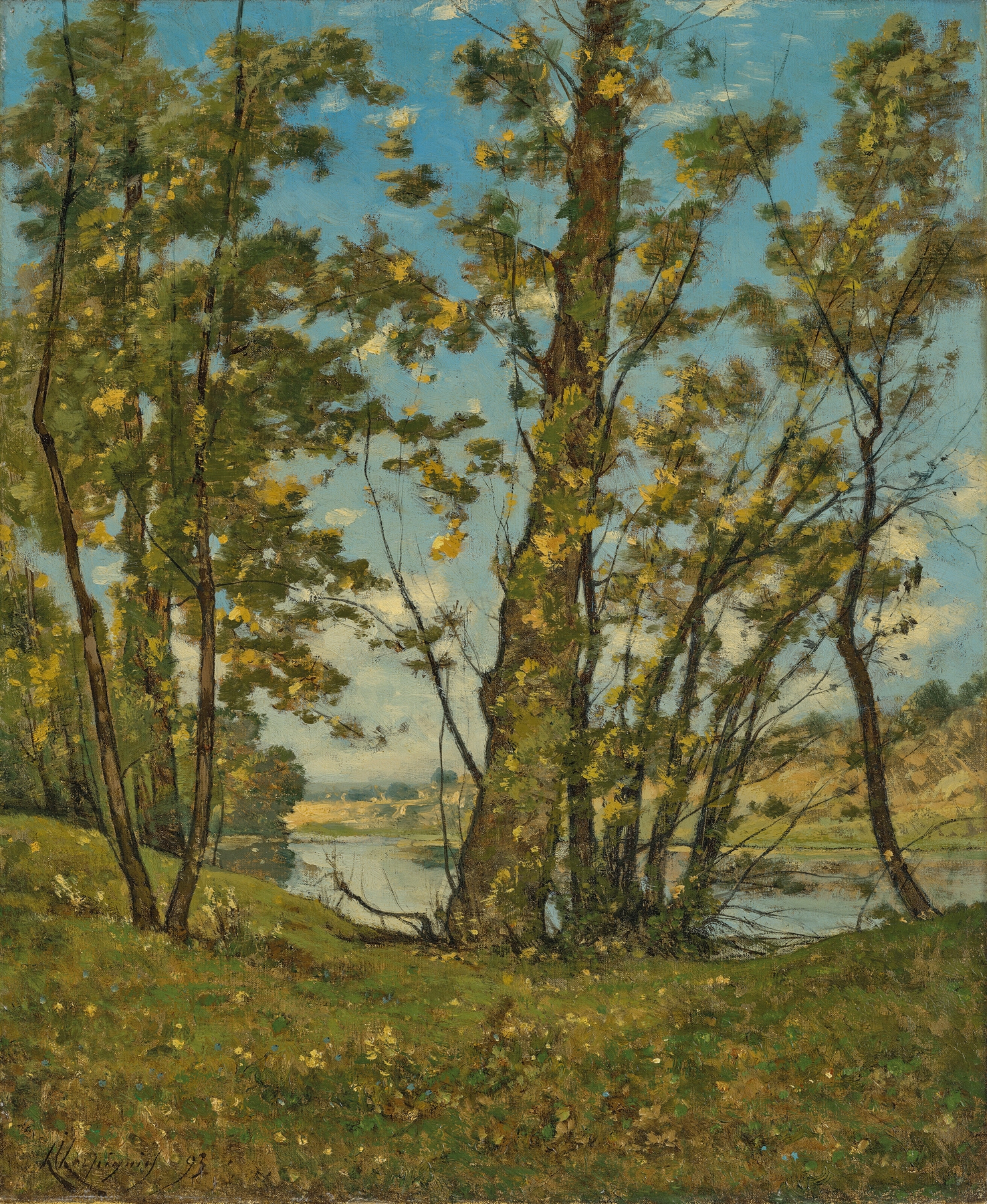
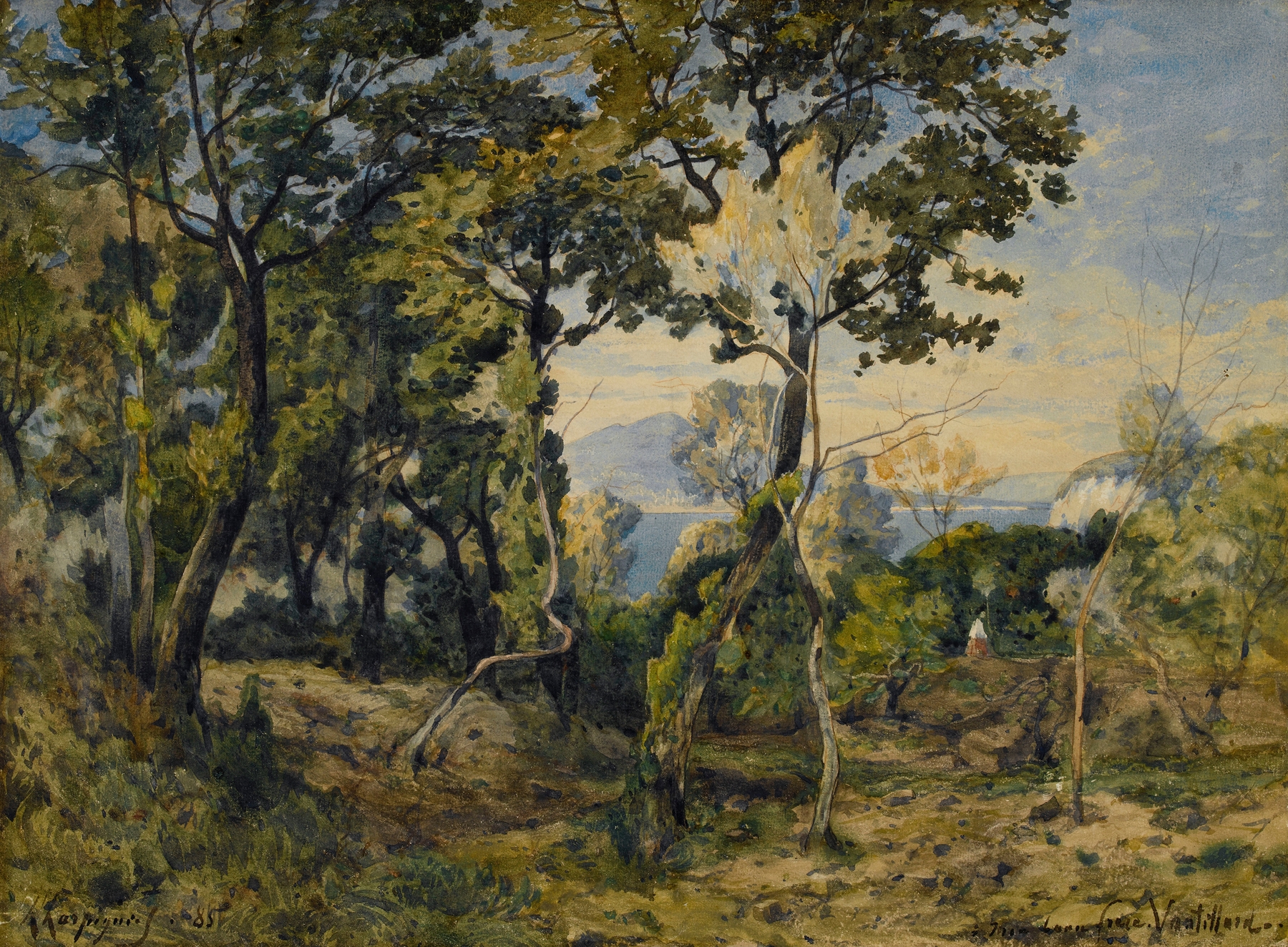
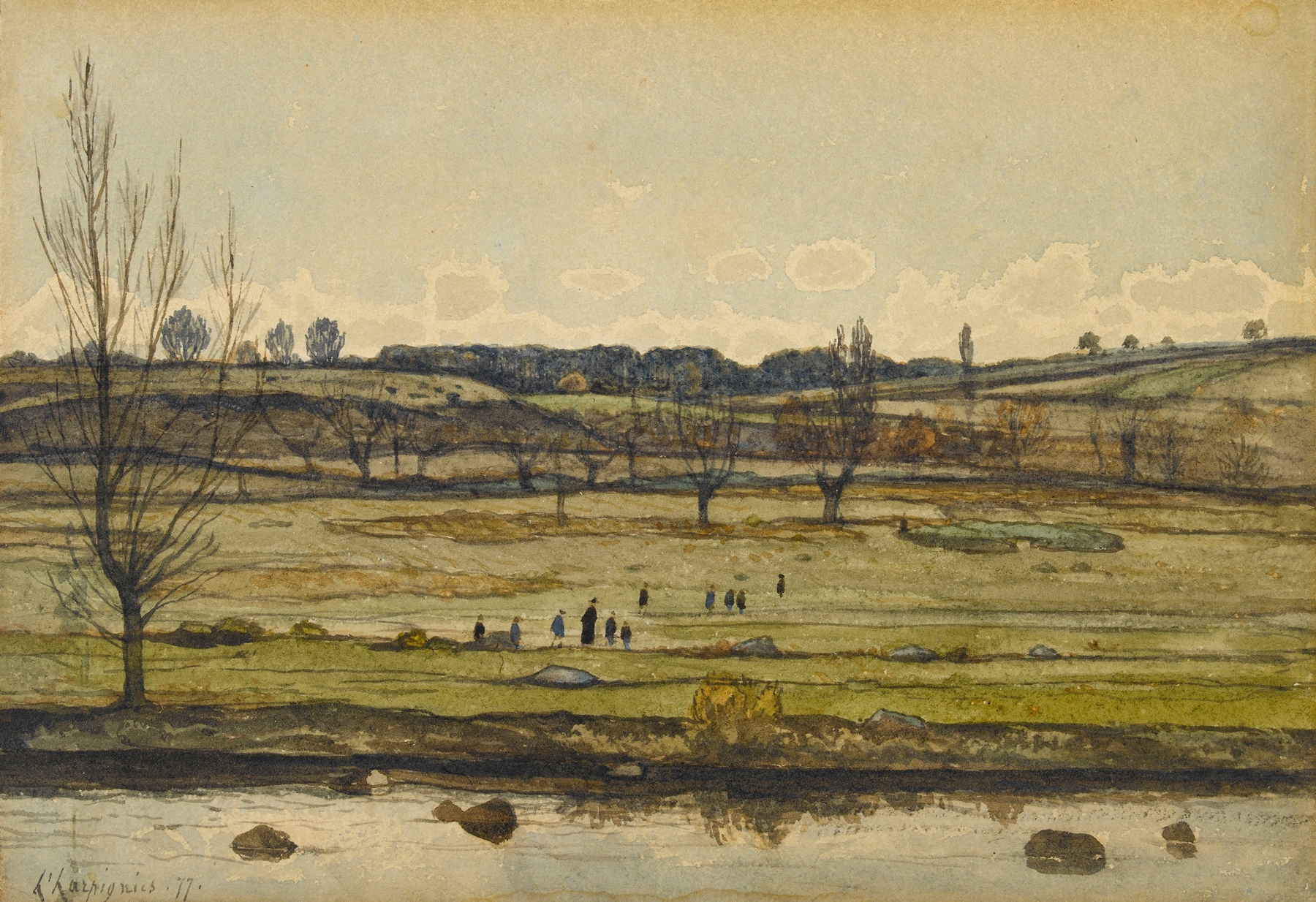
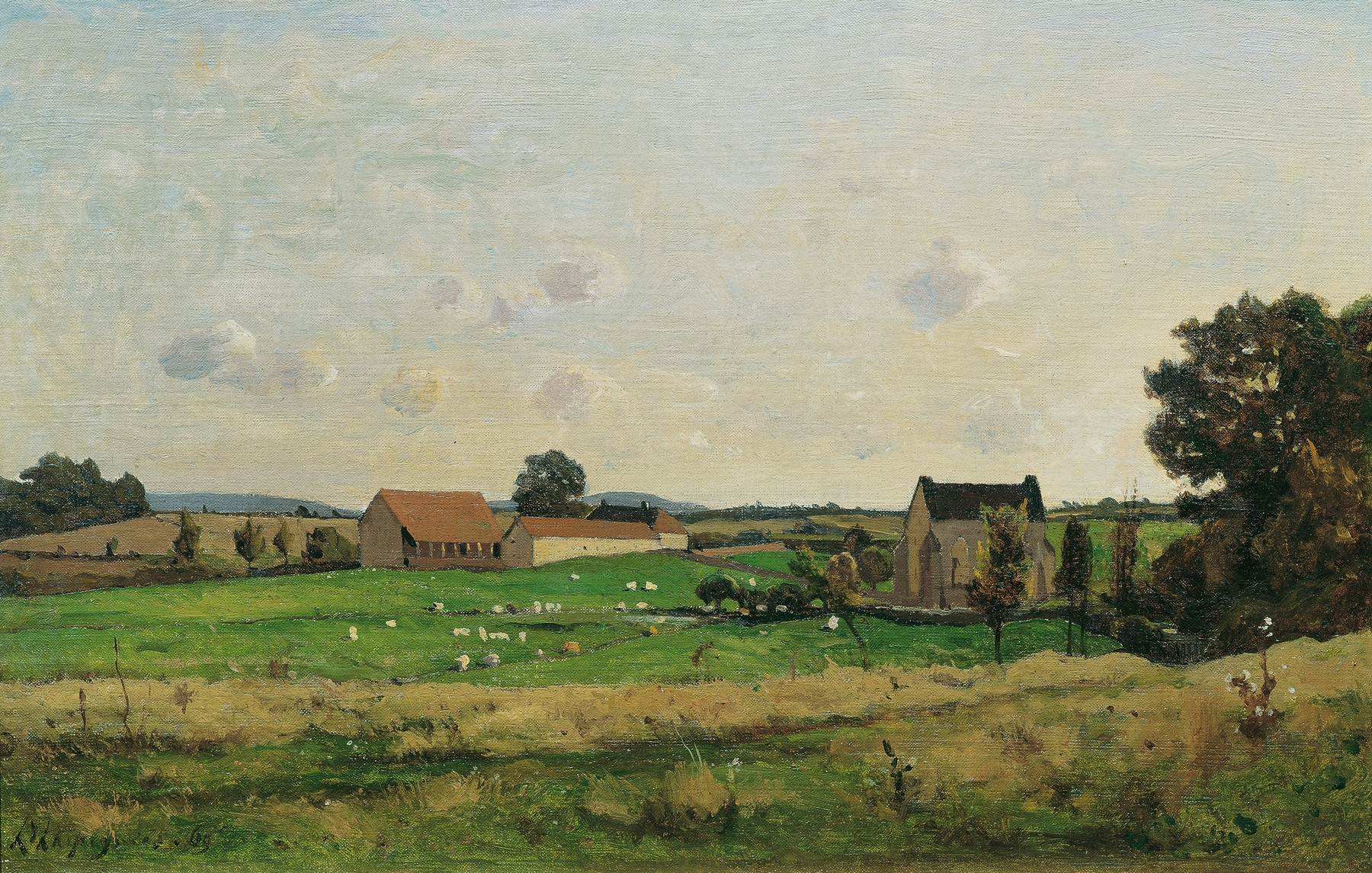
“Art reveals the soul when the world turns away.” In the quietude of nature, grief finds its voice, mingling with the rustle of leaves and the whisper of the wind, revealing the fragility of life. Look to the left at the gentle curve of a stream, its surface reflecting a tapestry of dappled sunlight filtered through the canopy above. The greens and browns of the landscape blend harmoniously, creating a serene yet poignant backdrop. Notice how the brushstrokes vary, soft and impressionistic in the foliage, while more defined lines accentuate the forms of distant trees, leading the eye deeper into the painting's embrace.
Within the tranquility lies a tension, an ache that speaks of remembrance and loss. The blending of light and shadow suggests the transient nature of beauty, a reminder that every moment carries both joy and sorrow. Small details, such as the lone figure in the distance, evoke a sense of solitude, hinting at the personal grief that often accompanies moments of peace.
Harpignies created this work in 1856 while residing in the Fontainebleau forest area, a place that inspired many artists seeking to capture the essence of nature. At this time, the art world was transitioning, with artists exploring the interplay of light and atmosphere. Harpignies was deeply influenced by the Barbizon school’s focus on realism, yet he infused his own emotional depth into landscapes, reflecting his personal experiences of loss and memory.