Pejzaż z kościółkiem (La Comelle) — History & Analysis
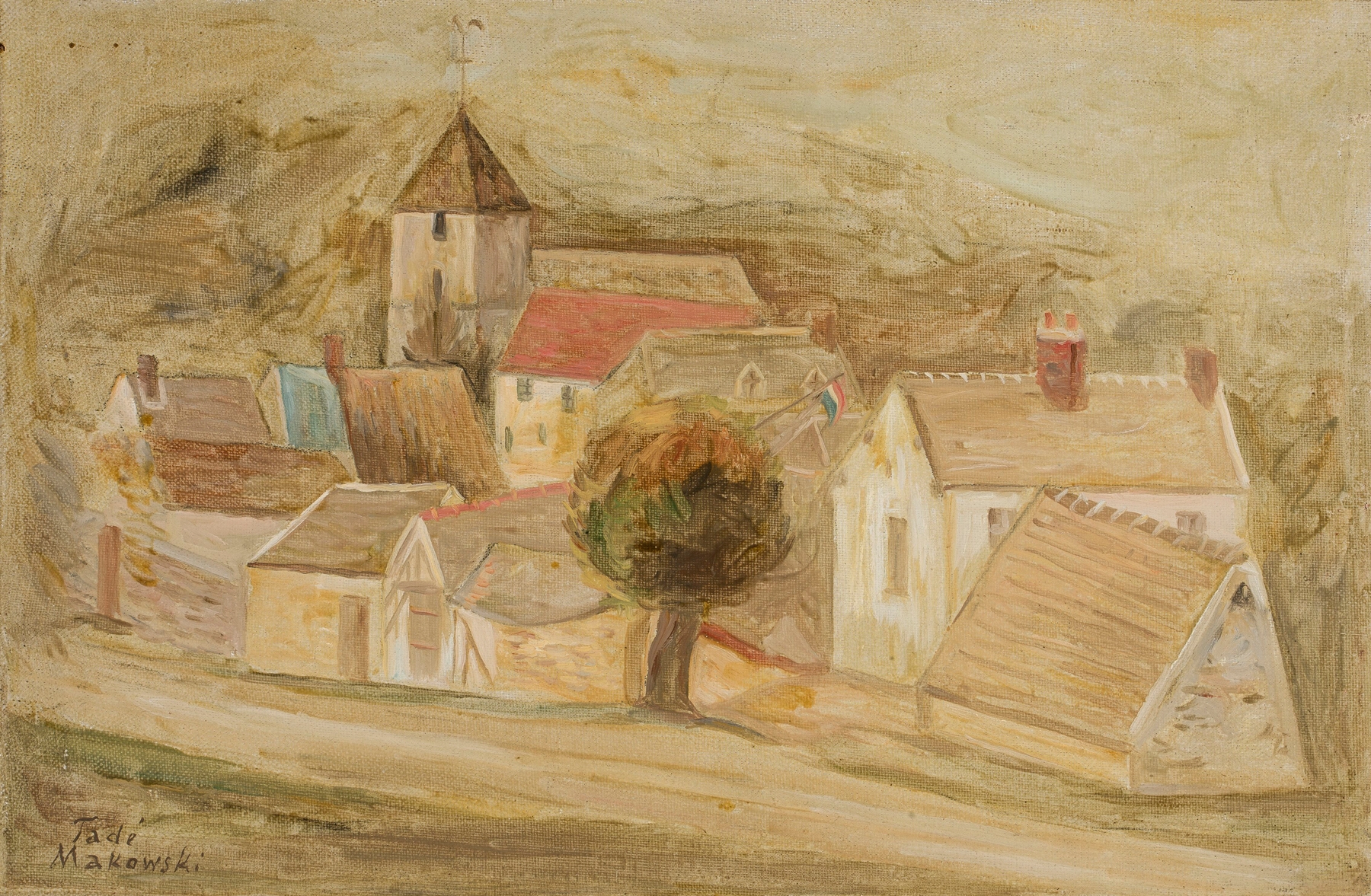
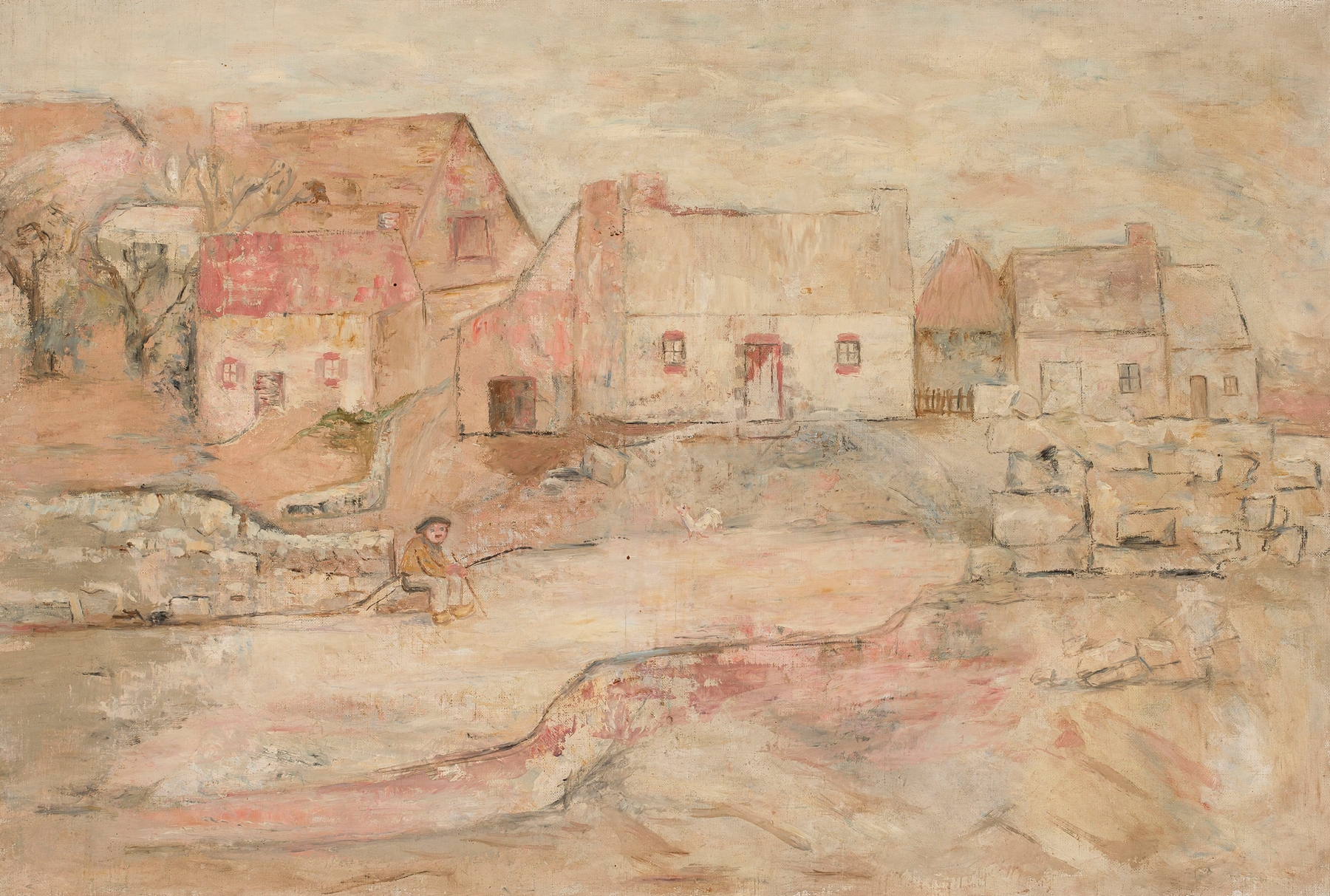
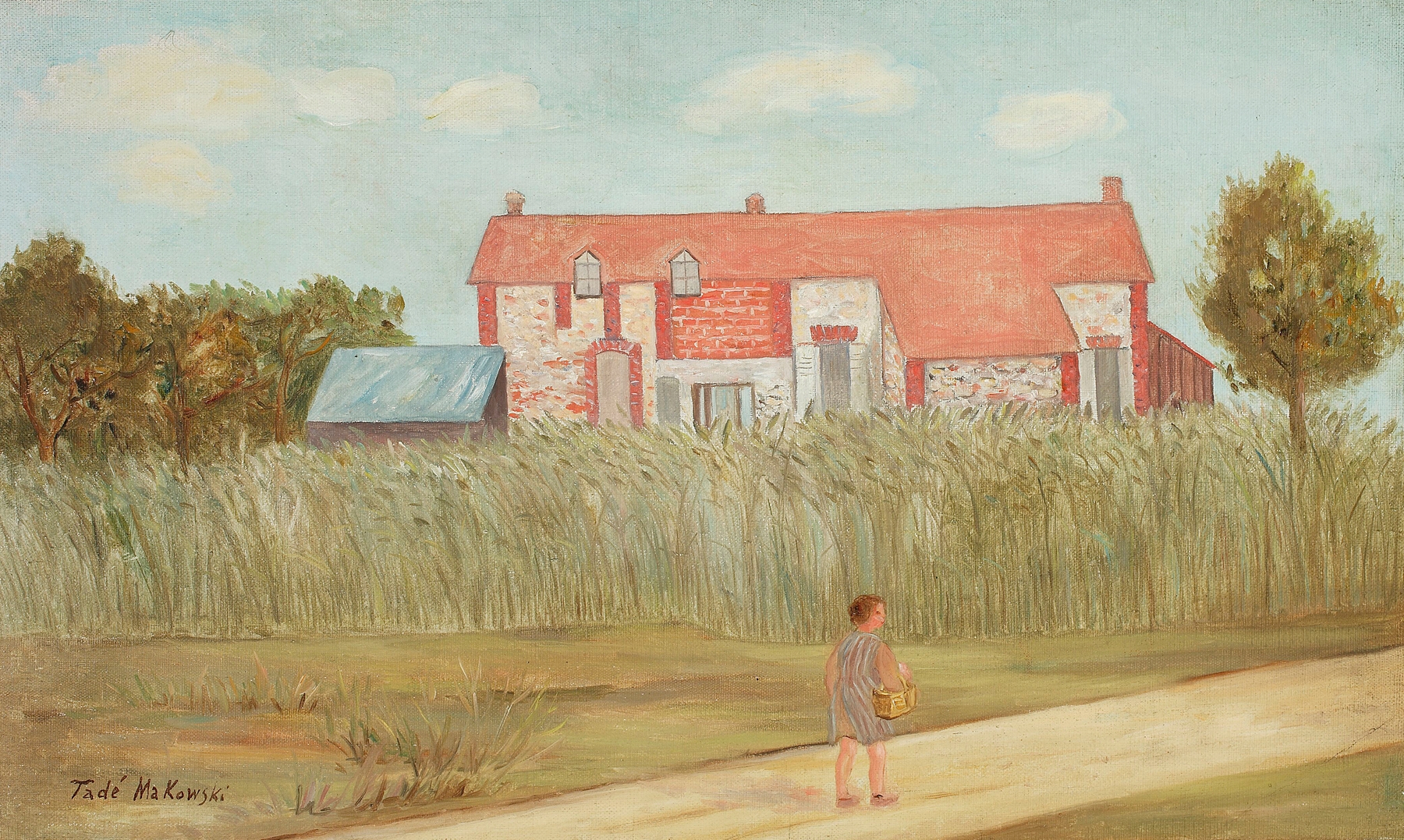
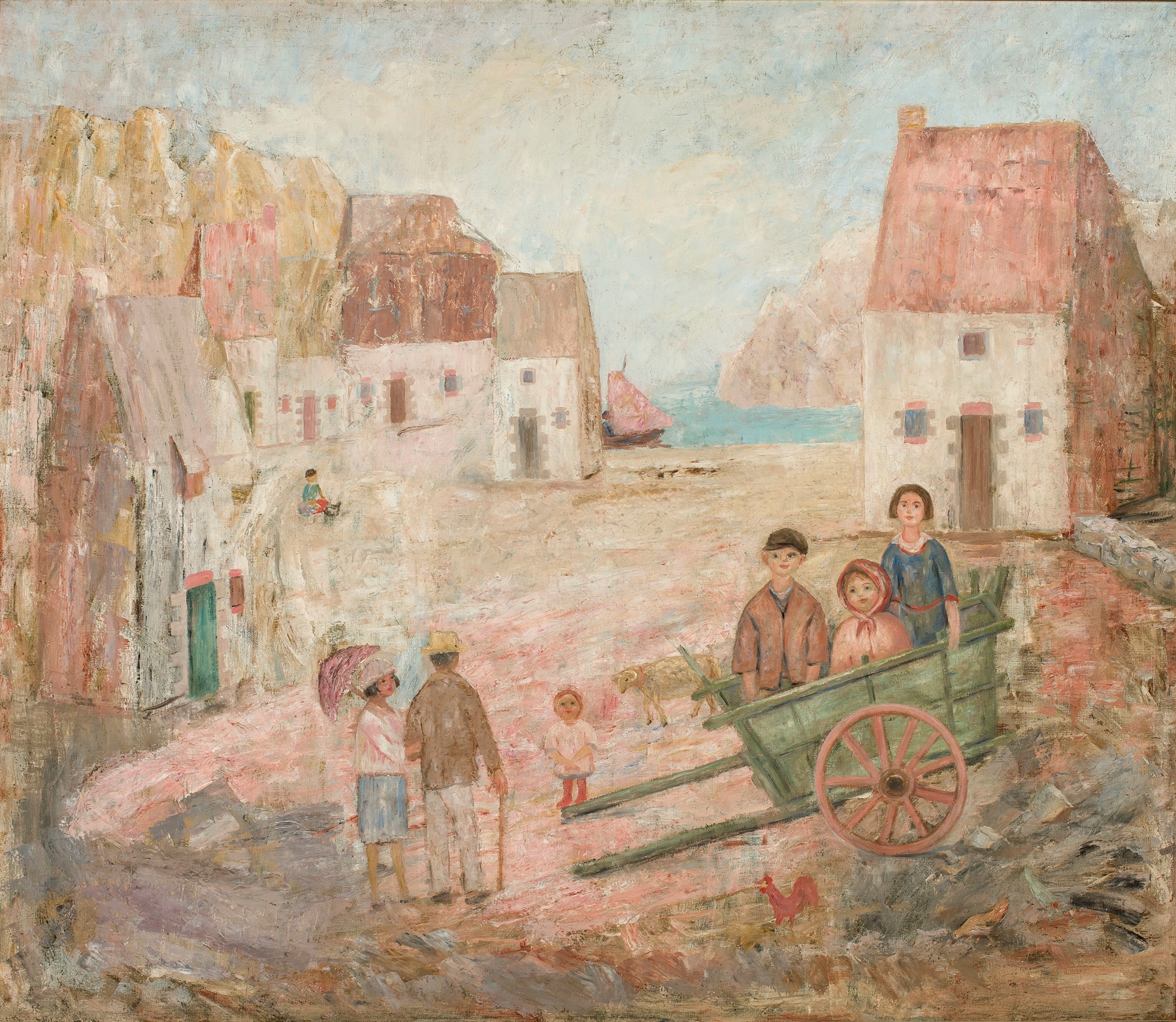
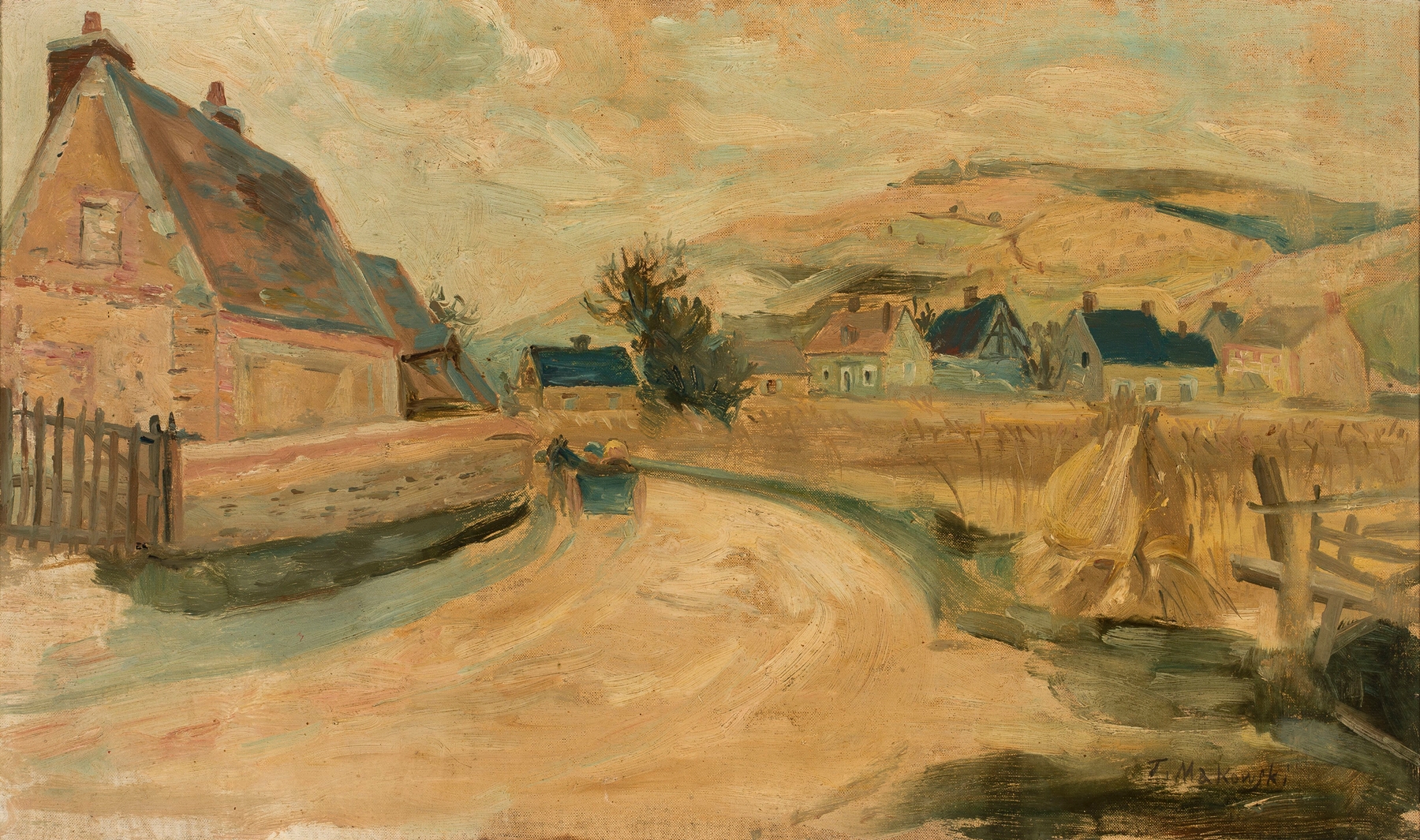
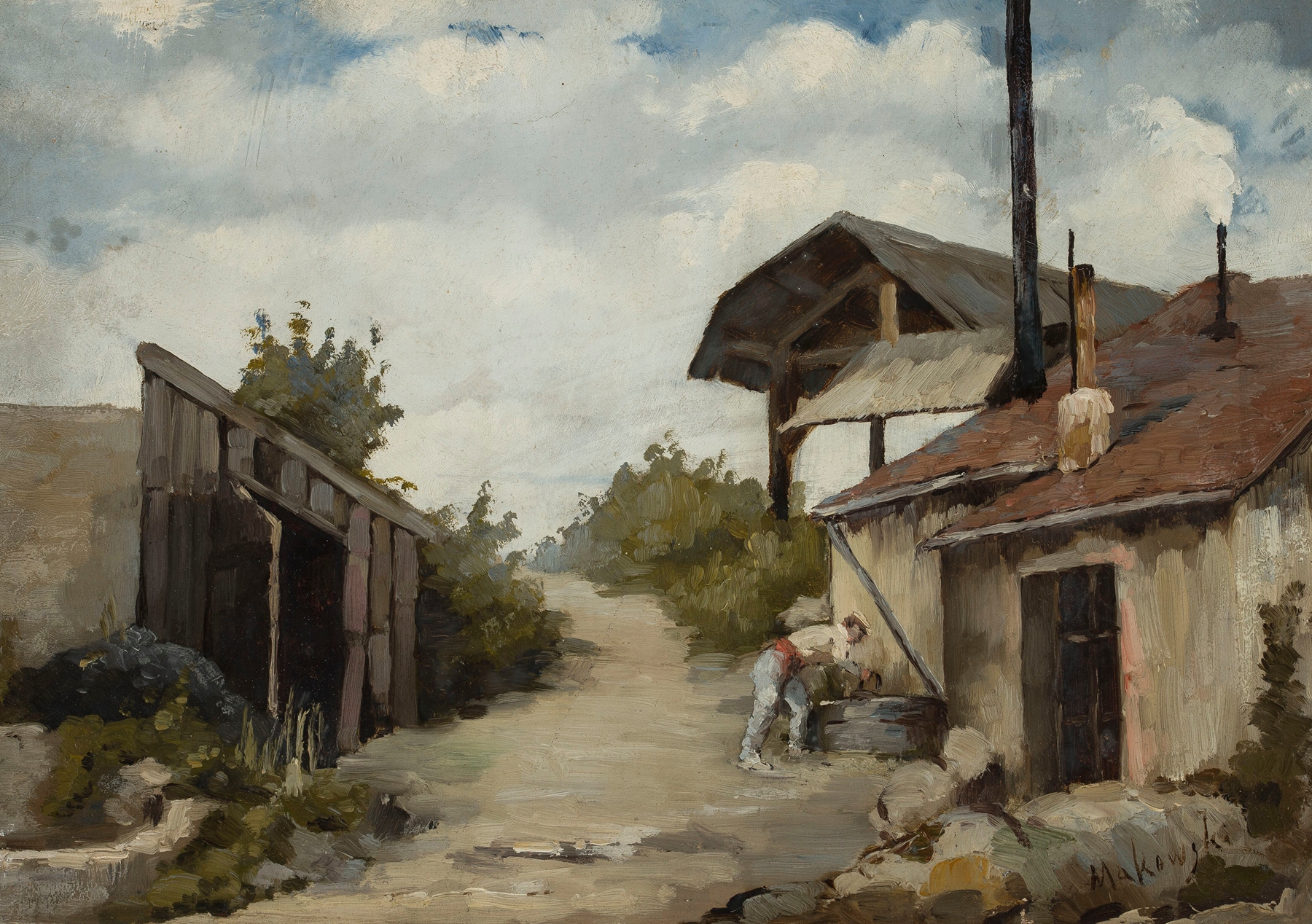
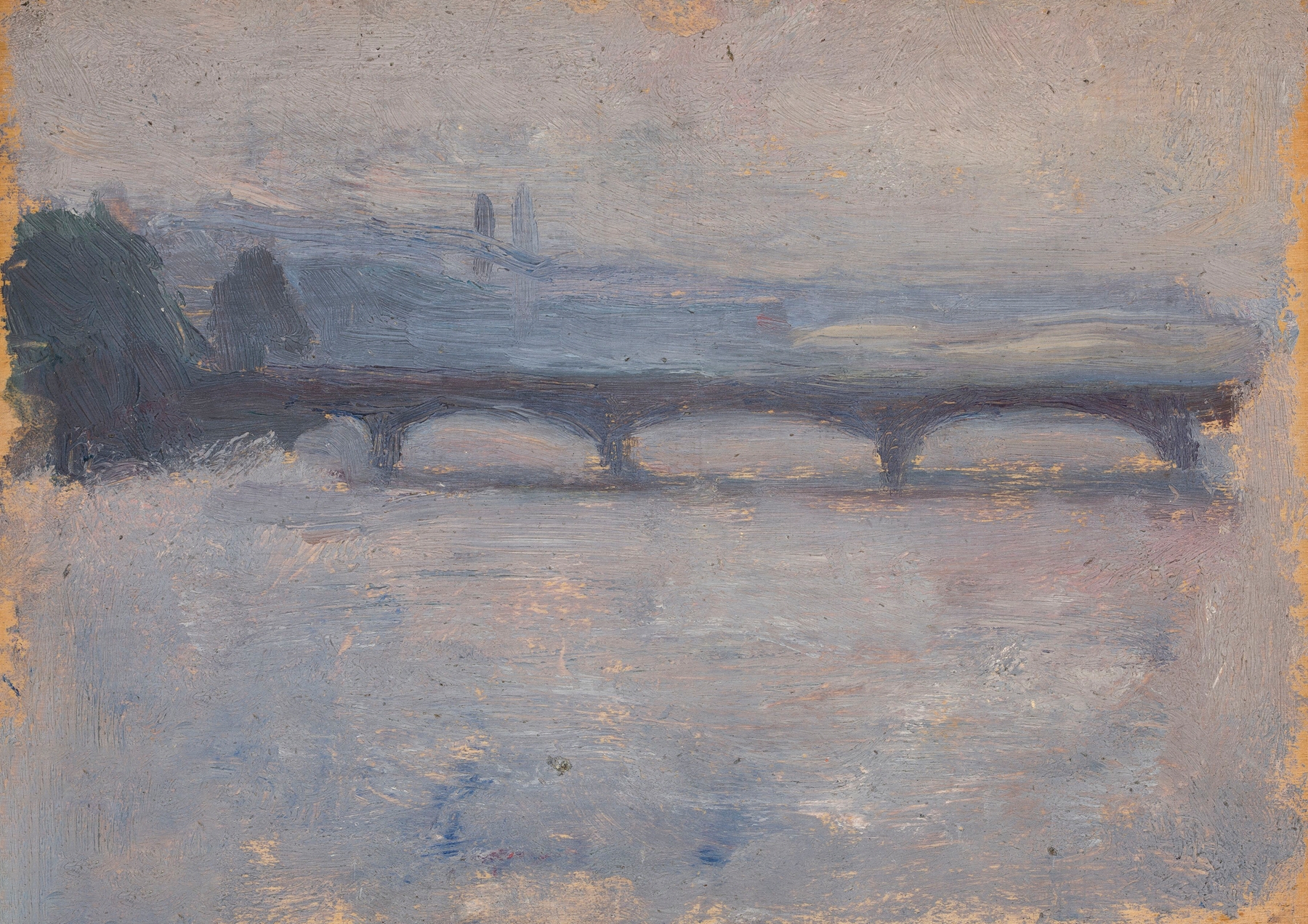
Can paint confess what words never could? In Pejzaż z kościółkiem, Tadeusz Makowski invites us to explore the melancholy beauty of a decaying landscape, where silence speaks volumes. Look to the left at the church, its steeple standing tall but worn, a testament to time's relentless march. Notice how the muted hues of ochre and green merge seamlessly, creating a sense of nostalgia that envelops the scene. The brushstrokes are both delicate and decisive, revealing the artist's intimate relationship with his subject.
The light, soft and diffuse, bathes the landscape in a gentle glow, highlighting the weathered textures of the buildings and the rustling leaves of surrounding trees. Beneath the surface, a deeper narrative unfolds. The contrast between the church's solidity and the ephemeral nature surrounding it speaks to themes of faith and impermanence. The fading colors evoke a sense of decay, hinting at a world where beauty is intertwined with loss.
This duality captures the essence of human experience — the tension between what is cherished and what inevitably fades away. In 1923, Makowski painted this work during his time in France, immersed in a vibrant art scene that valued both tradition and modernity. He had recently left Poland, seeking new inspiration amidst the avant-garde movements sweeping through Europe. This period marked a pivotal moment in his career, as he began to blend the folk traditions of his homeland with the influences of his adopted culture, culminating in the poignant resonance of this piece.