Ponte di Paglia, Riva Schiavoni, Venice — History & Analysis
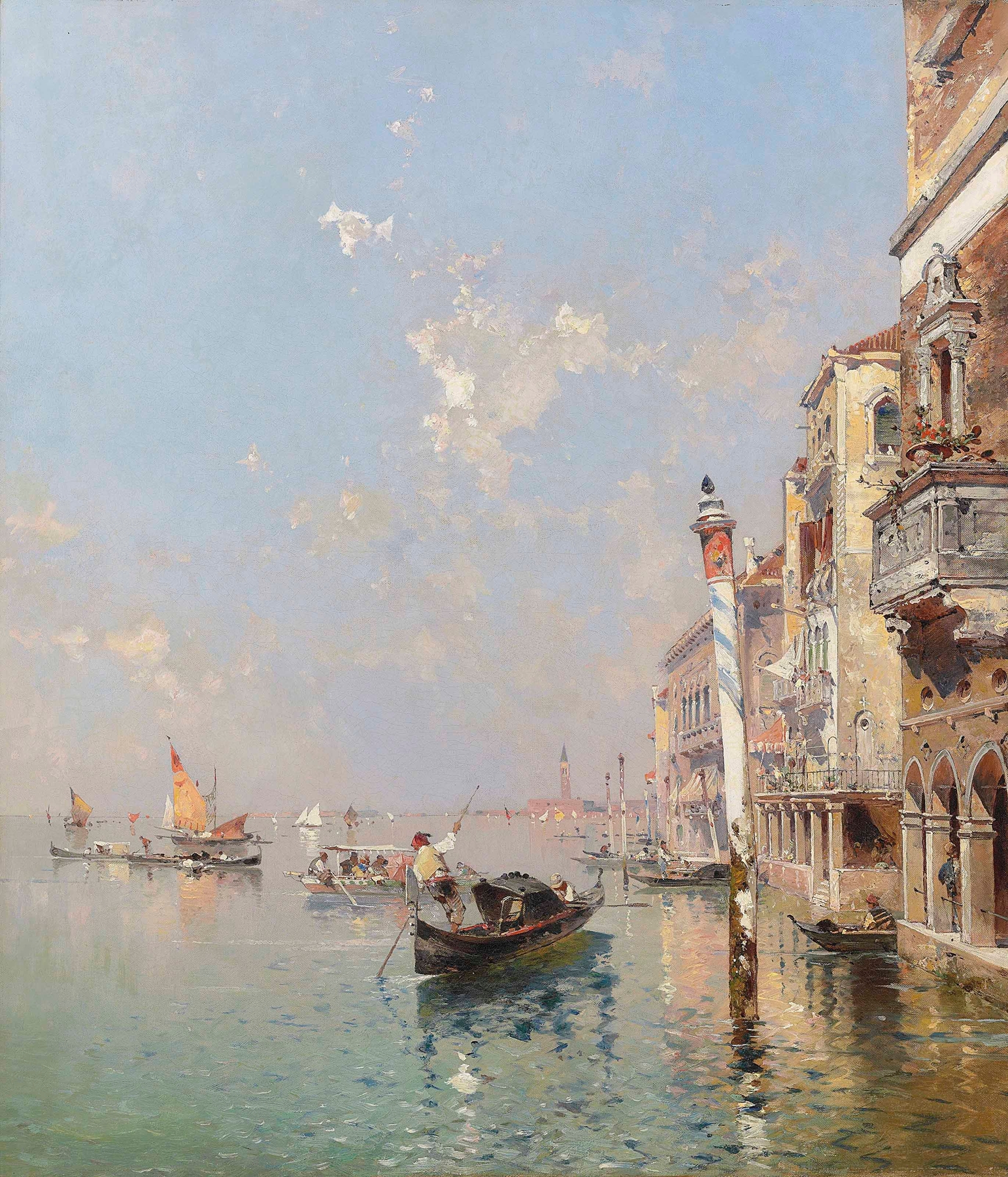
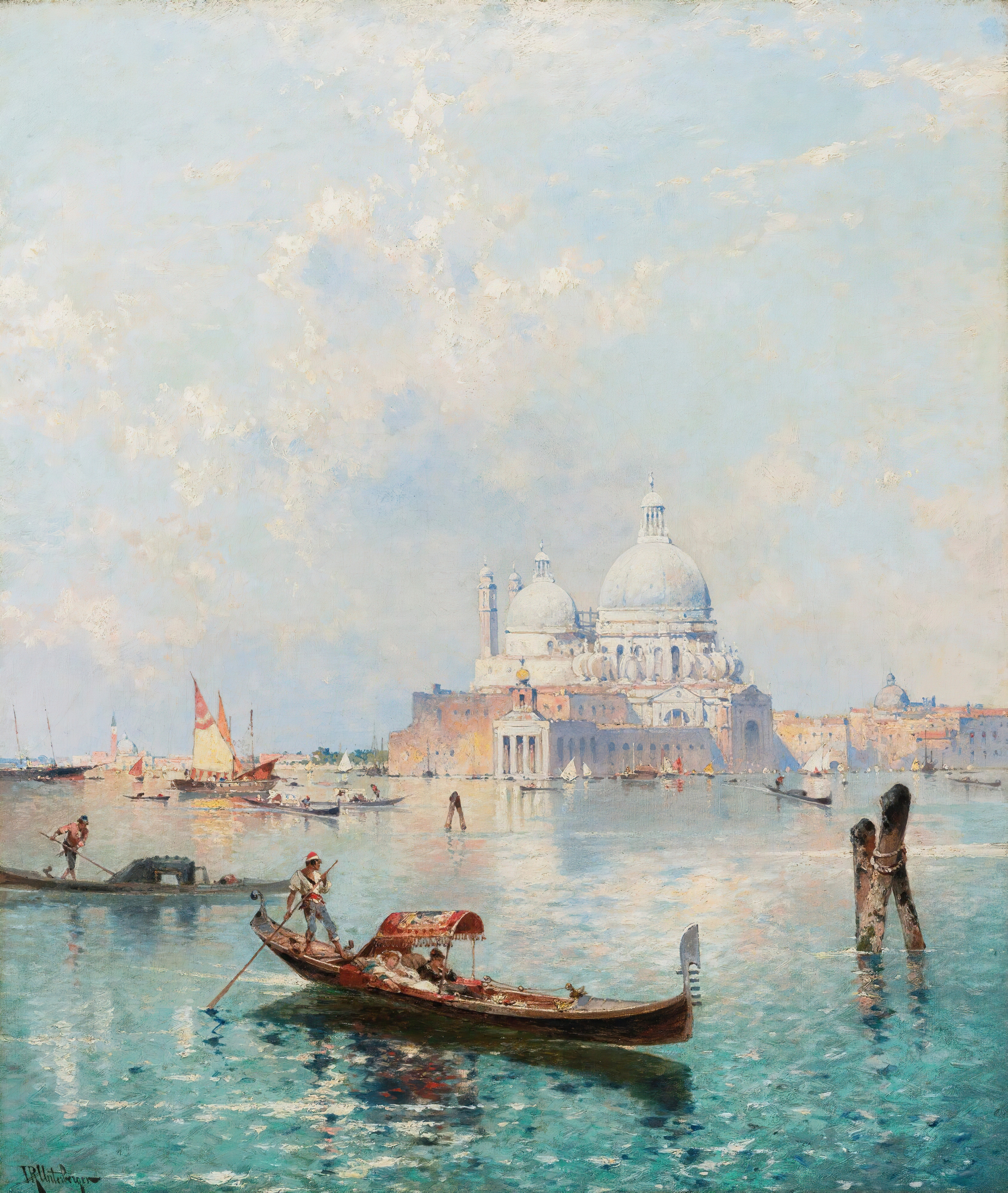
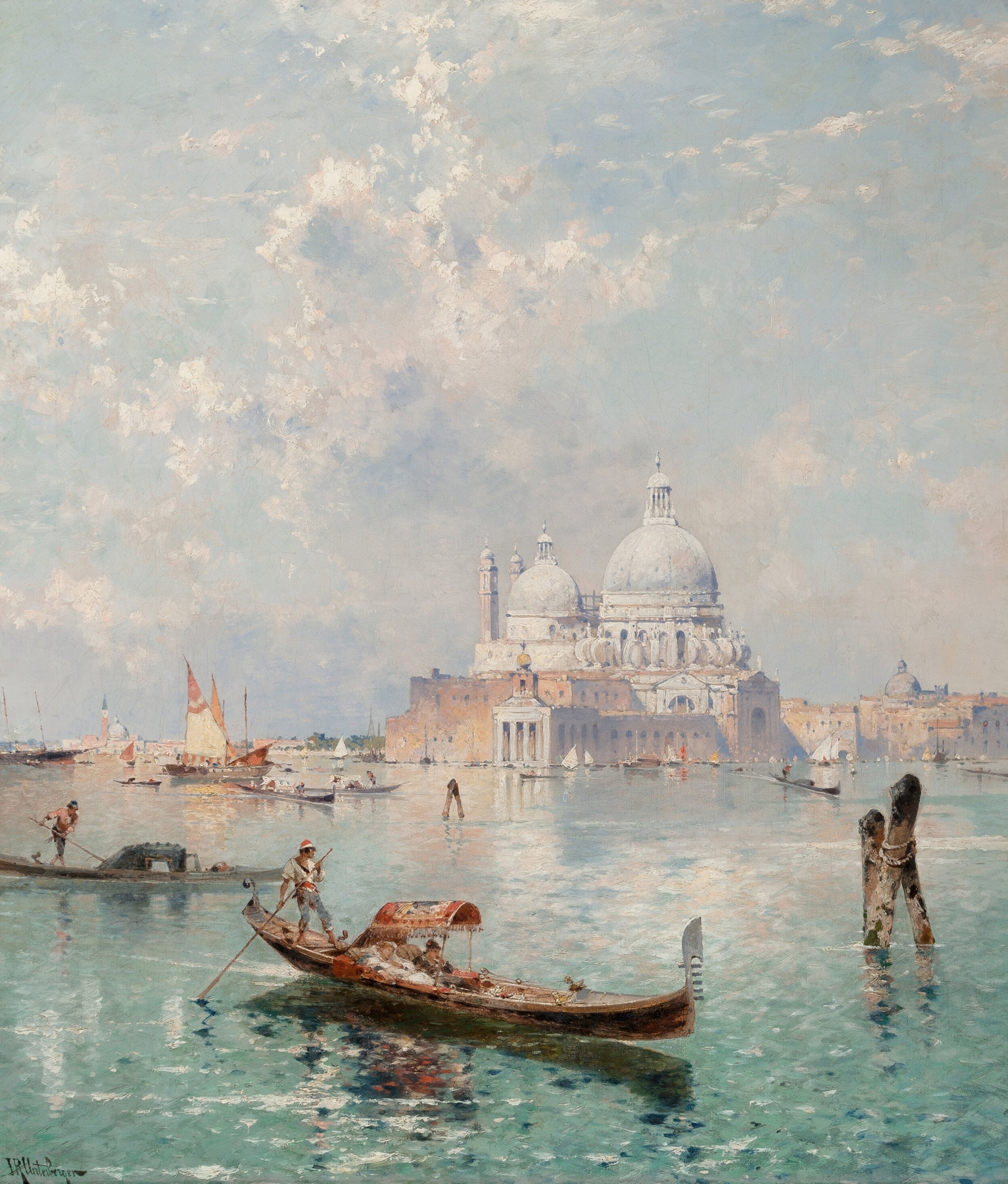
Is this a mirror — or a memory? The reflection of Venice shimmers on the water’s surface, teasing the boundaries between the present and the past, life and mortality. Look to the center, where the Ponte di Paglia emerges, its elegant arches cradling the passing gondolas. Notice how the light dances on the canal, illuminating the delicate brushstrokes that capture both the architecture and the fleeting moments of life.
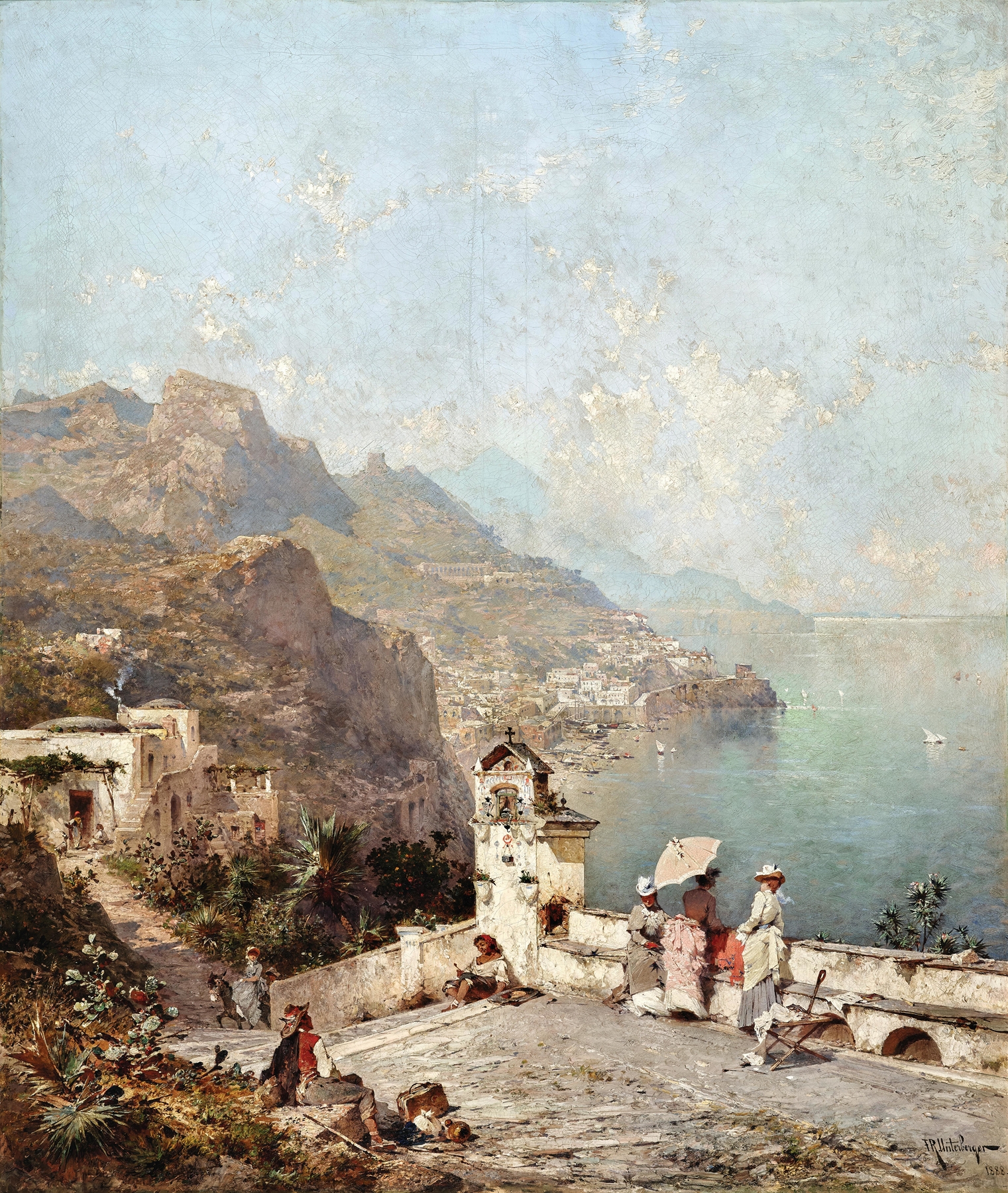
The palette, rich in soft blues and warm earth tones, creates a sense of nostalgia that envelops the viewer, inviting them to linger in this timeless scene. As you explore the canvas, subtle contrasts become apparent: the vivacious movement of the gondolas against the stillness of the water. The juxtaposition of vibrant figures against the muted serenity of the setting evokes a tension between joy and the inevitability of time passing. The reflections hint at the transient nature of existence, whispering the stories of those who have walked these streets before.
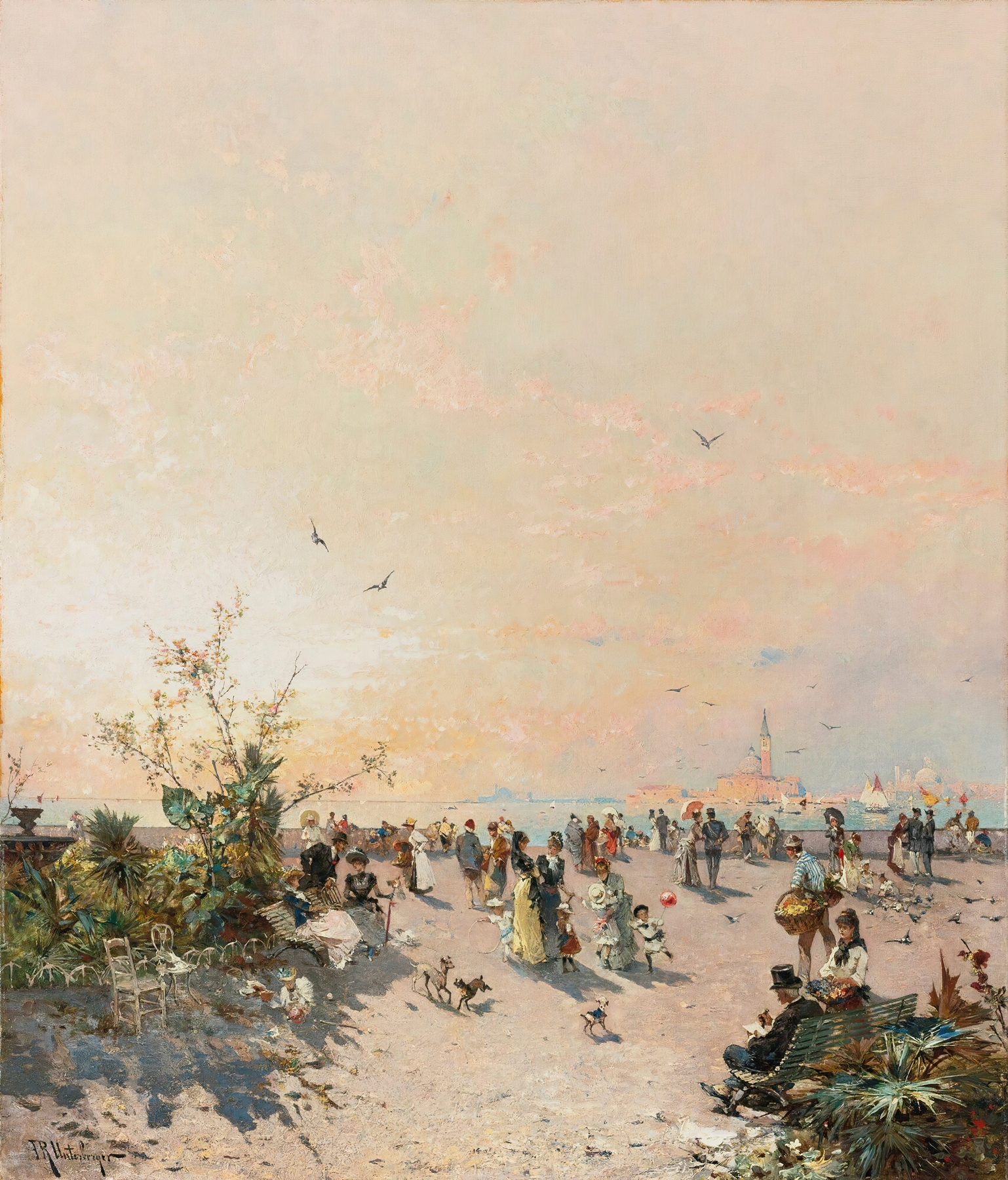
In 1894, Unterberger painted this scene during a period marked by a fascination with capturing the essence of Venice. Amidst a growing interest in impressionism, he found himself drawn to the city's intricate beauty, while simultaneously grappling with the remnants of its declining grandeur. As he immortalized this moment, he invited viewers to contemplate not just the charm of the city, but the ephemerality of life itself.