Poplars near Nuenen — History & Analysis
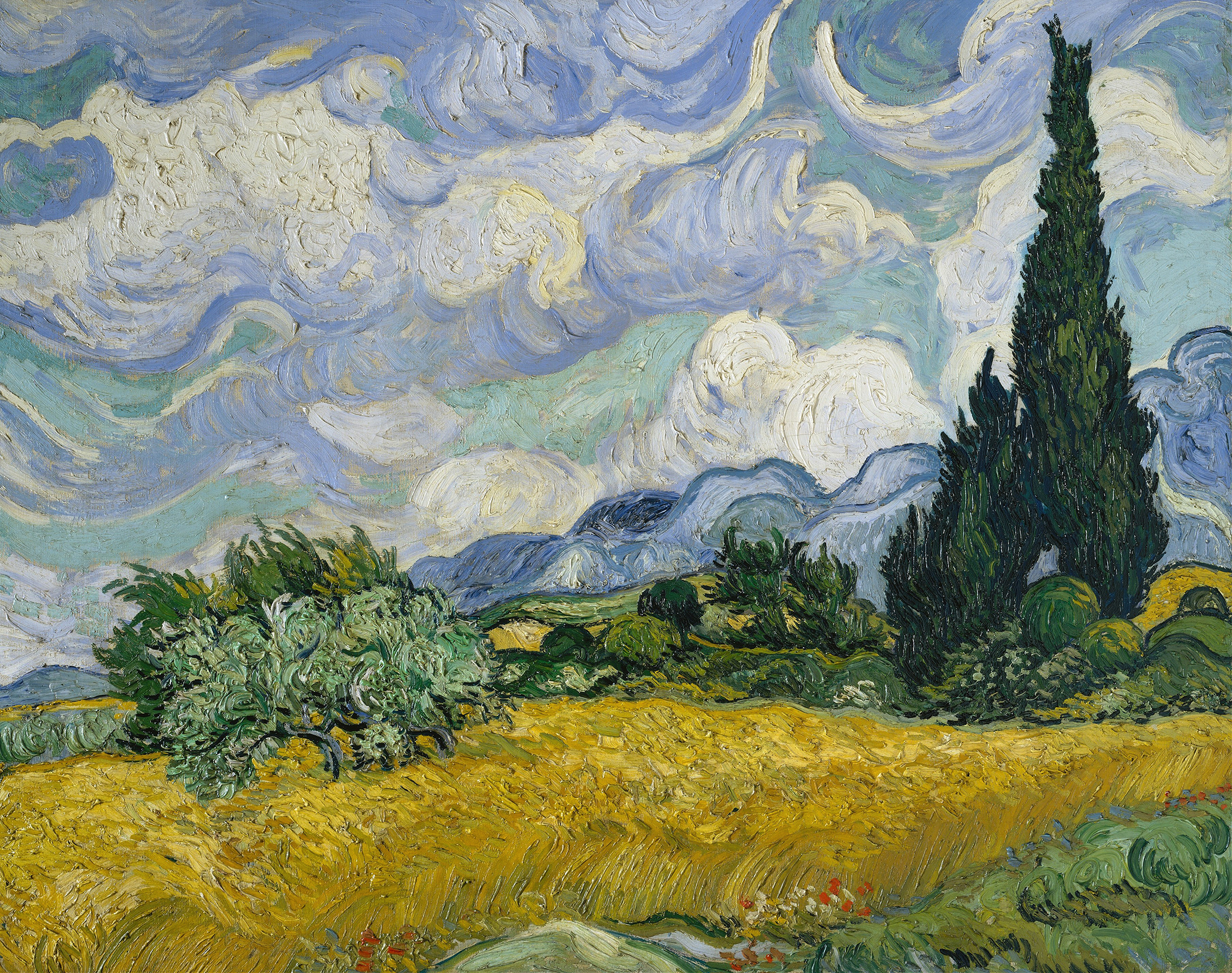
Could a single brushstroke hold eternity? In Vincent van Gogh's Poplars near Nuenen, a world unfolds that brims with the essence of dreams and nature’s whispers. The painting invites us into a realm where the ordinary becomes extraordinary, evoking a sense of nostalgia and a yearning for the transcendental. Look to the foreground, where a gentle curve of the path leads your gaze towards the towering poplars, their leaves dancing in a breeze that feels almost palpable.
Notice the rich greens and earthy browns, the way they merge and interact, creating an organic rhythm. The brushwork, both bold and delicate, conveys movement — a testament to nature alive, as if the trees sway in silent conversation beneath an expansive sky awash in soft blues and whites. Within this tranquil yet vivid landscape, the tension between darkness and light emerges. The shadowed forms of the trees contrast with the illuminated sky, suggesting a journey from despair to hope, as if the poplars stand as guardians of a sacred dreamscape.
Each stroke may seem simple, but together they weave a narrative of solitude and connection, reflecting the artist's own inner struggles and aspirations. In 1885, Van Gogh was living in Nuenen, grappling with his artistic identity amidst personal trials. This period was marked by a deep exploration of peasant life and the themes of nature, embodying the struggles and beauty of human existence. The world of art was shifting, moving towards Impressionism and beyond, yet Van Gogh remained steadfast, dedicated to capturing the raw, emotional truth of his reality through each profound brushstroke.