Portrait of Don Ramón Satué — History & Analysis
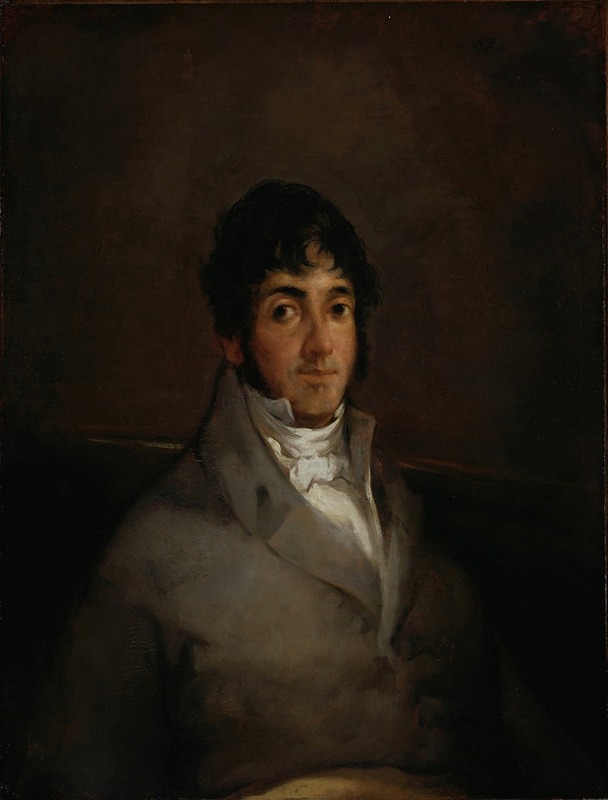
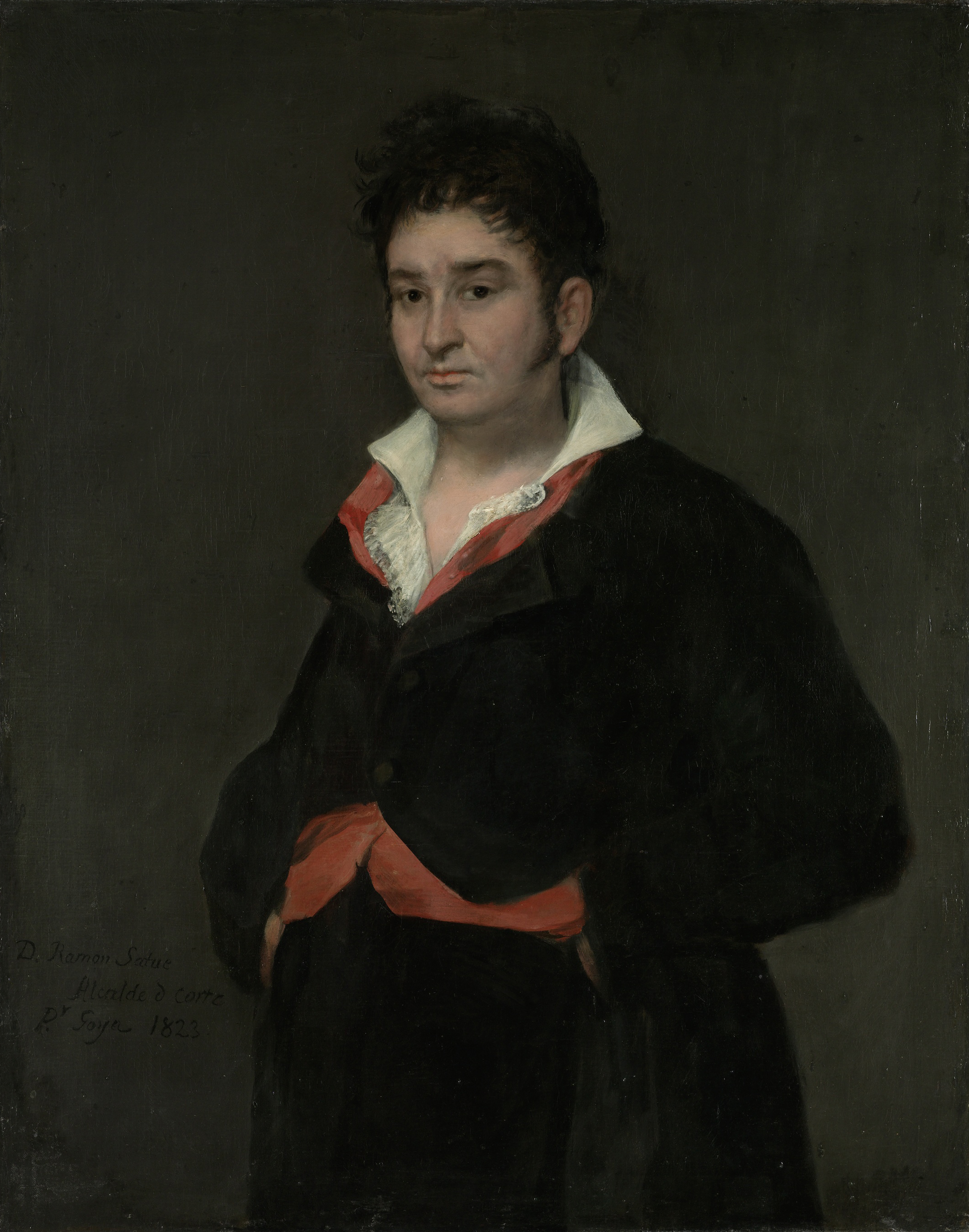
Could beauty survive in a century of chaos? In Portrait of Don Ramón Satué, the viewer encounters an unsettling tension, where elegance and fear coexist, illustrating the fragility of human presence amid turmoil. Look to the left at the stark contrast of Don Ramón's dark attire against the muted background, which pulls your gaze directly to his poised expression. Notice how the light delicately illuminates his face, bringing forth an unsettling clarity to his features, accentuated by the slight turn of his body.
The artist’s brushwork reveals an exceptional depth, with each stroke adding texture to the fabric, suggesting both refinement and an underlying tension that belies the formality of the portrait. Delve deeper into the details: the slight furrow in Satué’s brow hints at an awareness of the political unrest surrounding him. The artist’s choice to depict this figure not only as a man of status but also as a representative of a society teetering on the brink of change invites contemplation of vulnerability.
The softness of his gaze contrasts sharply with the harsh realities of the era, evoking a sense of apprehension that permeates the composition—an unspoken fear of what lies ahead. Francisco de Goya painted this work in 1823, a time marked by his growing disillusionment with the political climate in Spain, caught between the remnants of the Enlightenment and the rise of oppressive regimes. As he navigated through personal health struggles and the aftermath of war, Goya channeled his experiences into a series of powerful portraits, capturing the complex interplay of humanity, beauty, and the shadows of his time.