Rievaulx Abbey, Yorkshire — History & Analysis
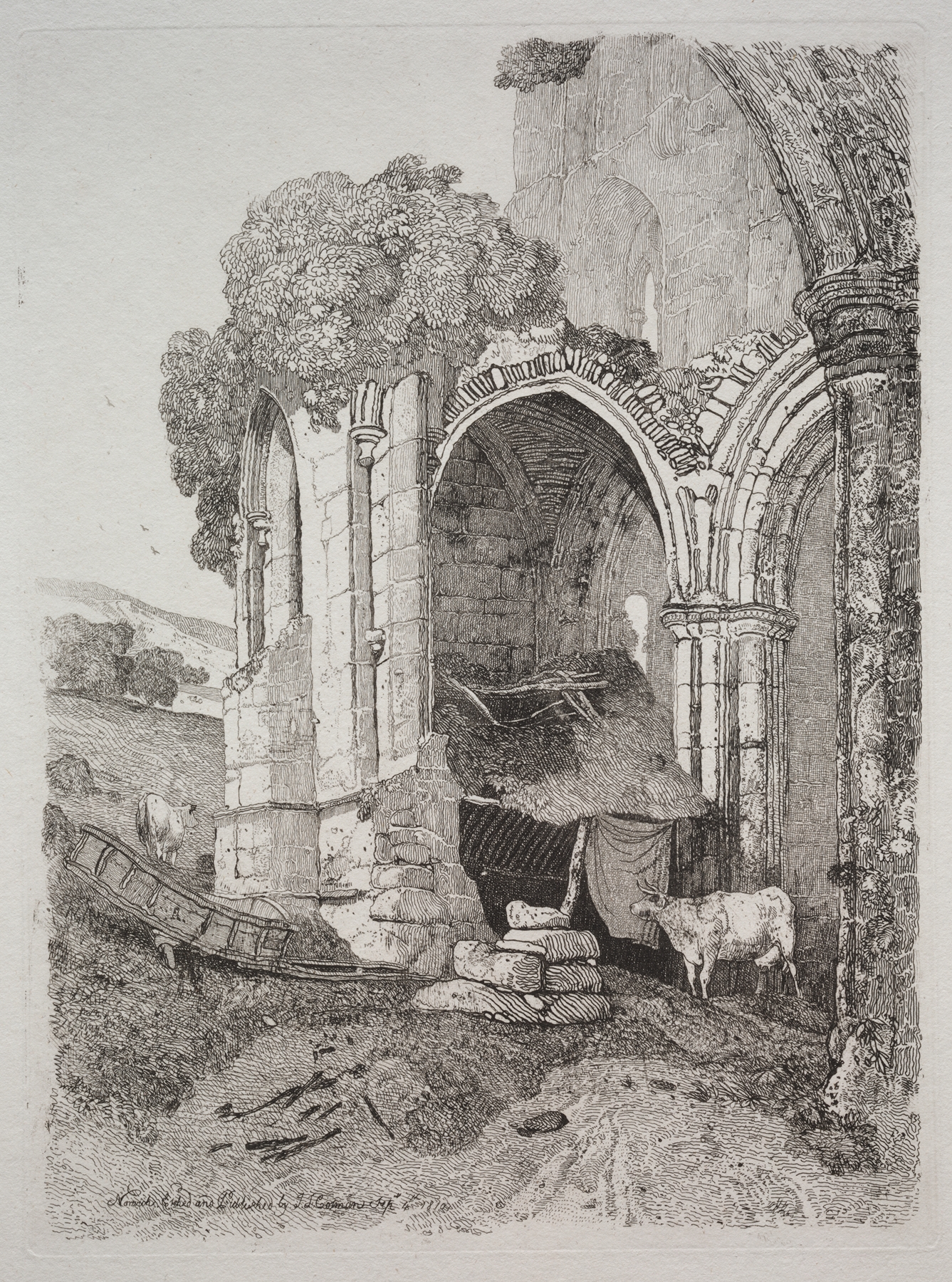
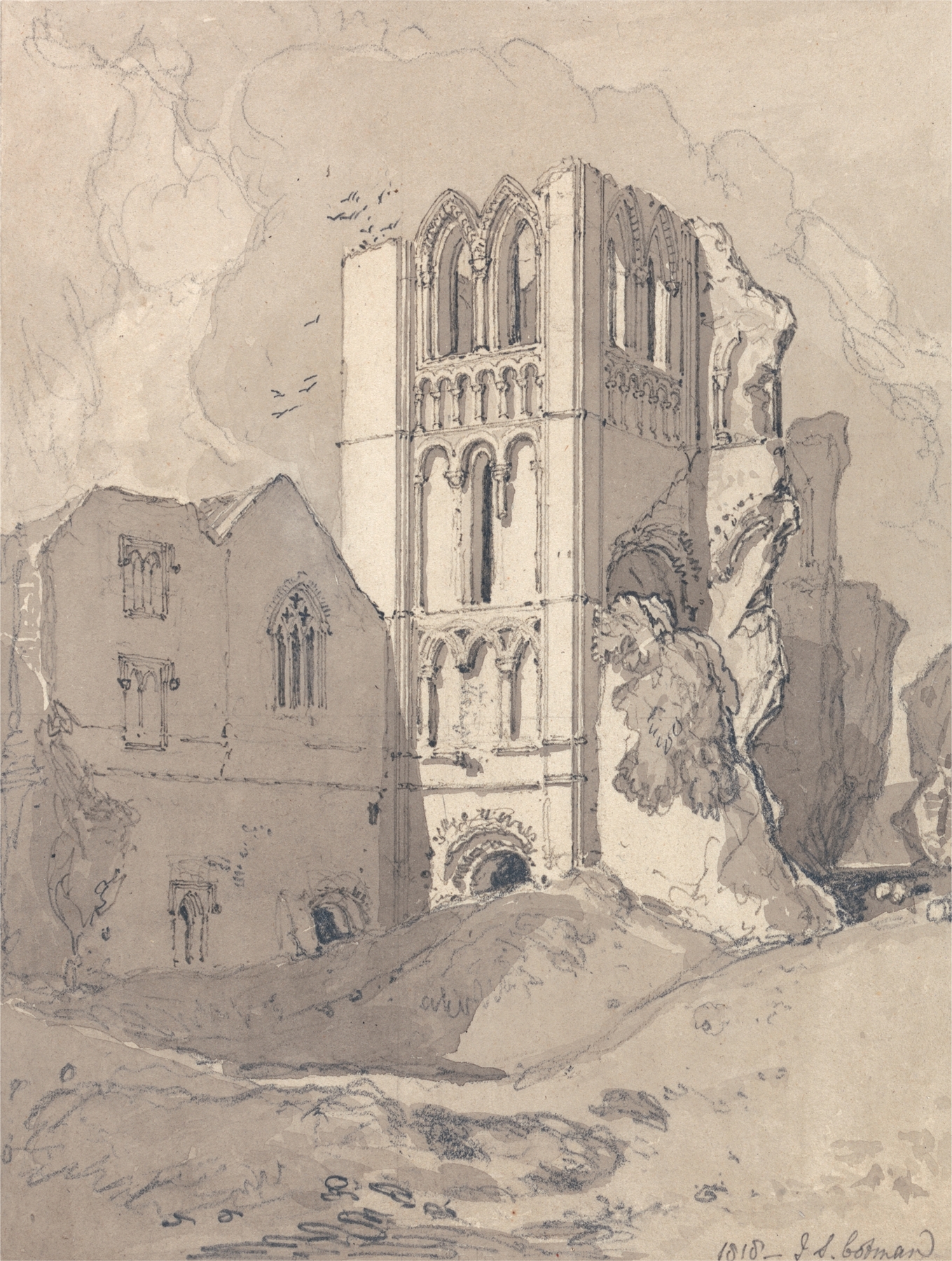
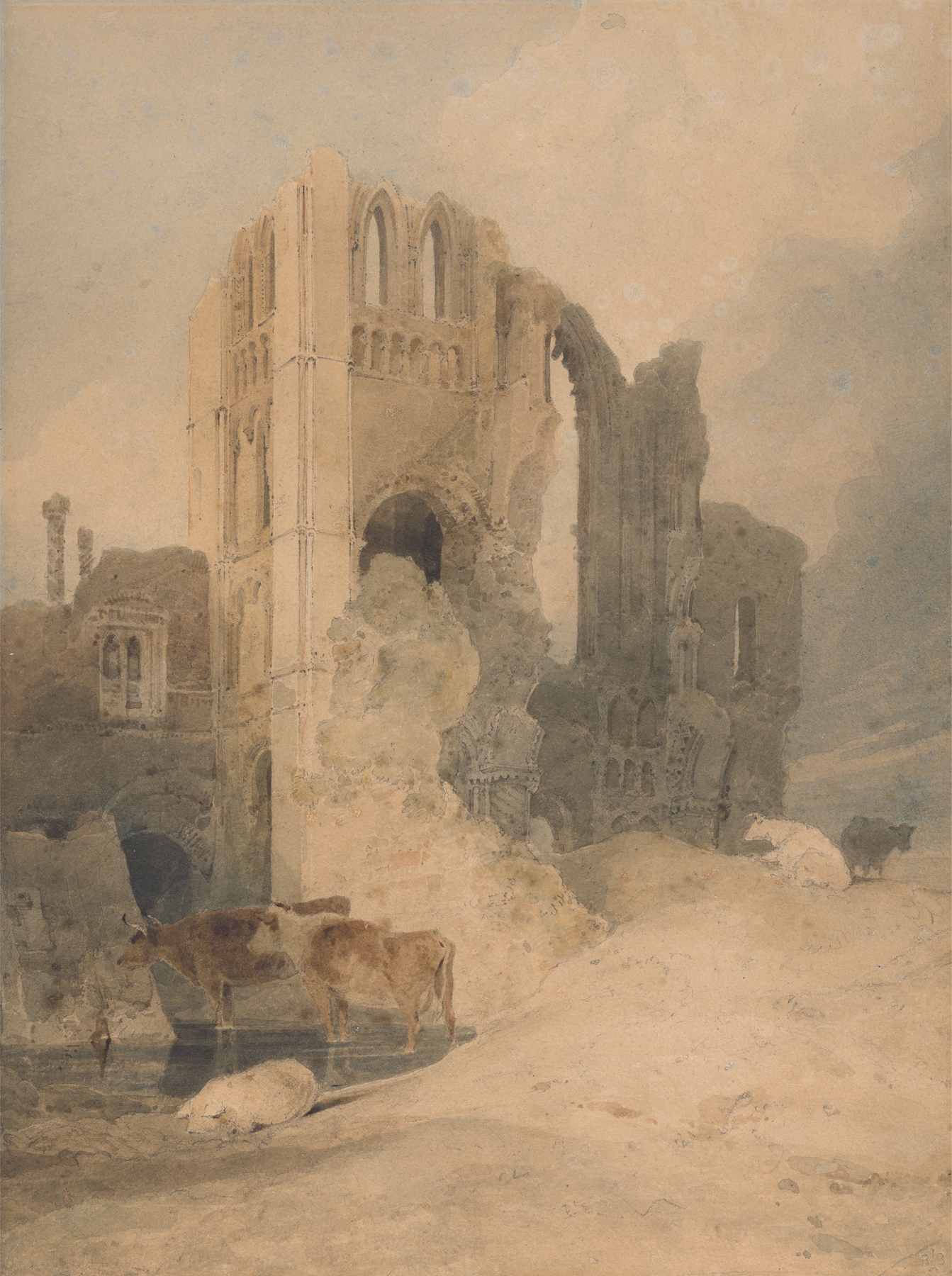
Did the painter know this moment would outlive them? In Rievaulx Abbey, the scene is framed by the quiet decay of history, where stone walls, once vibrant with life, now echo only whispers of the past. This juxtaposition of permanence and transience invites contemplation on the passage of time and the movement of nature reclaiming its ground. Focus first on the foreground, where the gentle brushstrokes render lush greenery, almost trembling with life. The cool blue skies contrast sharply with the warm yellows and browns of the abbey, directing your gaze upwards toward the soaring remains of the architecture.
Notice how shadows play upon the crumbling stone, breathing life into the ruins, and how the interplay of light and dark emphasizes the delicate balance between human creation and nature’s relentless march. Deeper still, the painting encapsulates the tension between memory and oblivion. The towering remnants of the abbey hold a solemn dignity, yet the encroaching foliage suggests a softer, inevitable reclamation by the earth. This evokes a sense of nostalgia, not just for the physical structure but for the lives once lived within it.
The movement of foliage contrasts with the stillness of the stone, hinting at the stories lost over time, reinforcing the cycle of growth and decay. In 1803, as he painted this work, Cotman was deeply involved in the English Romantic movement, expressing a profound connection to nature and history. Living in Yorkshire, he was captivated by the picturesque landscapes around him, reflecting a growing interest in the sublime and the spiritual attributes of the natural world. As industrialization loomed on the horizon, this painting stands as a tribute to both the beauty of the past and the relentless passage of time.