Schiffbruch an einer felsigen Küste — History & Analysis
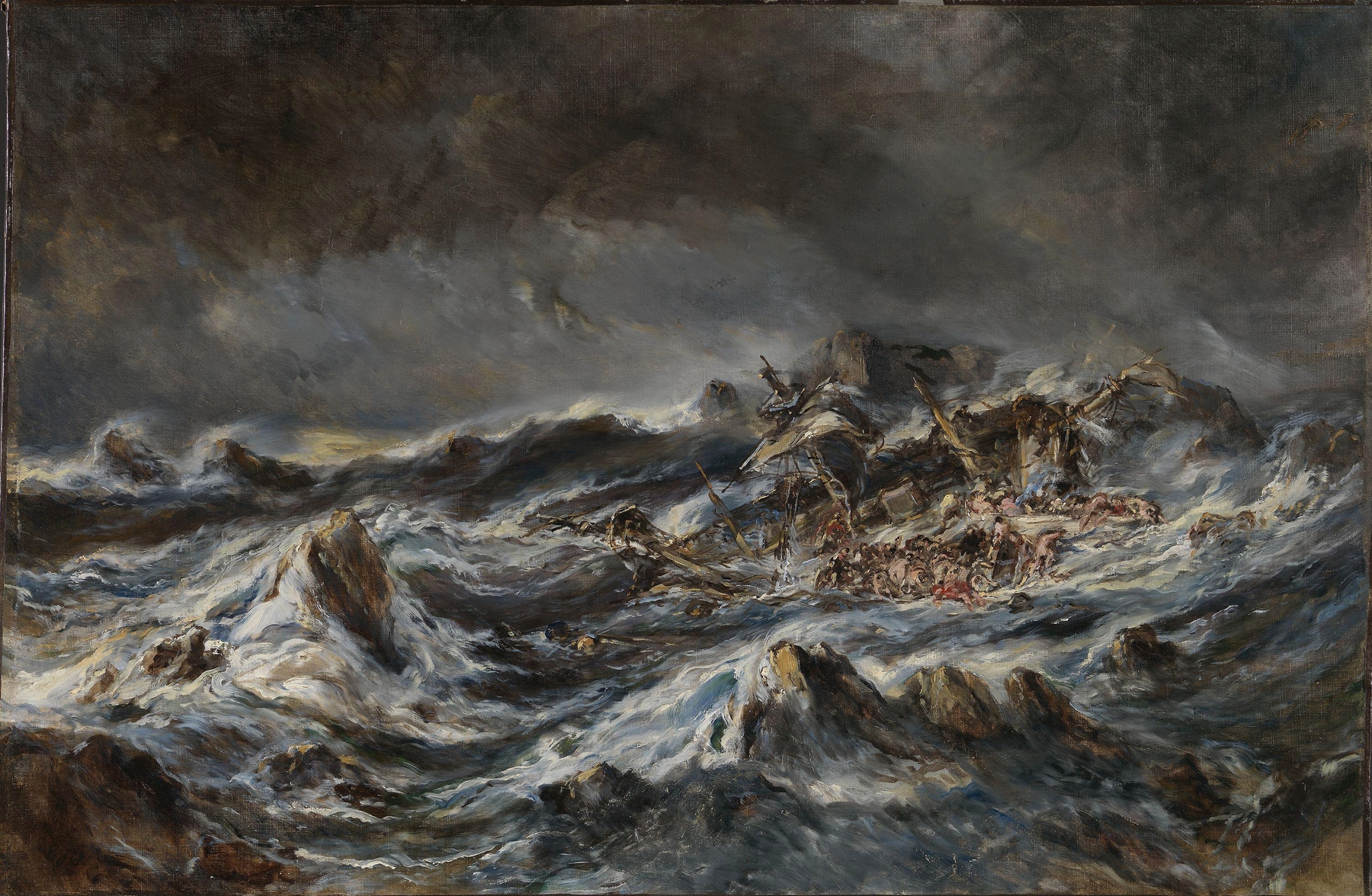
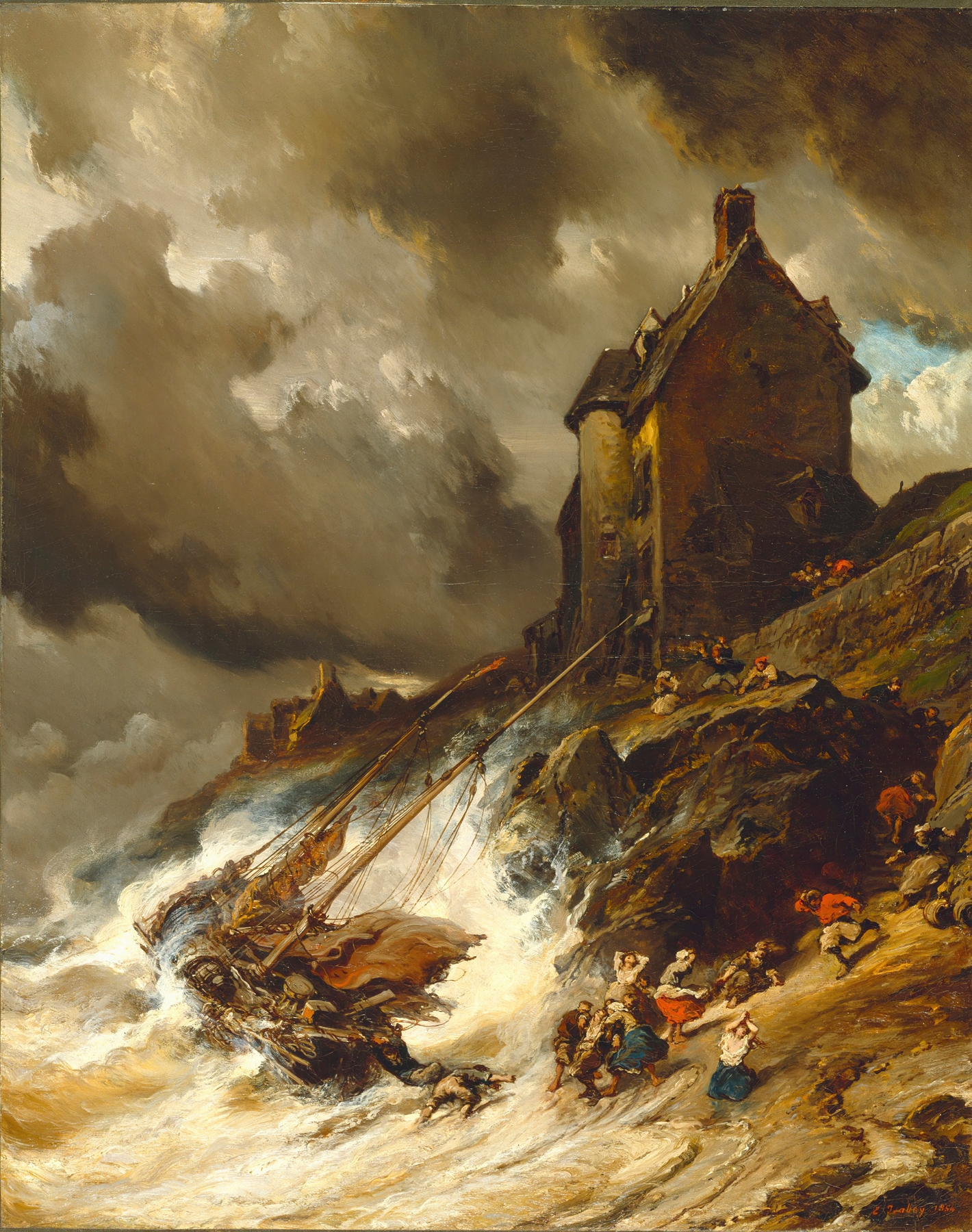
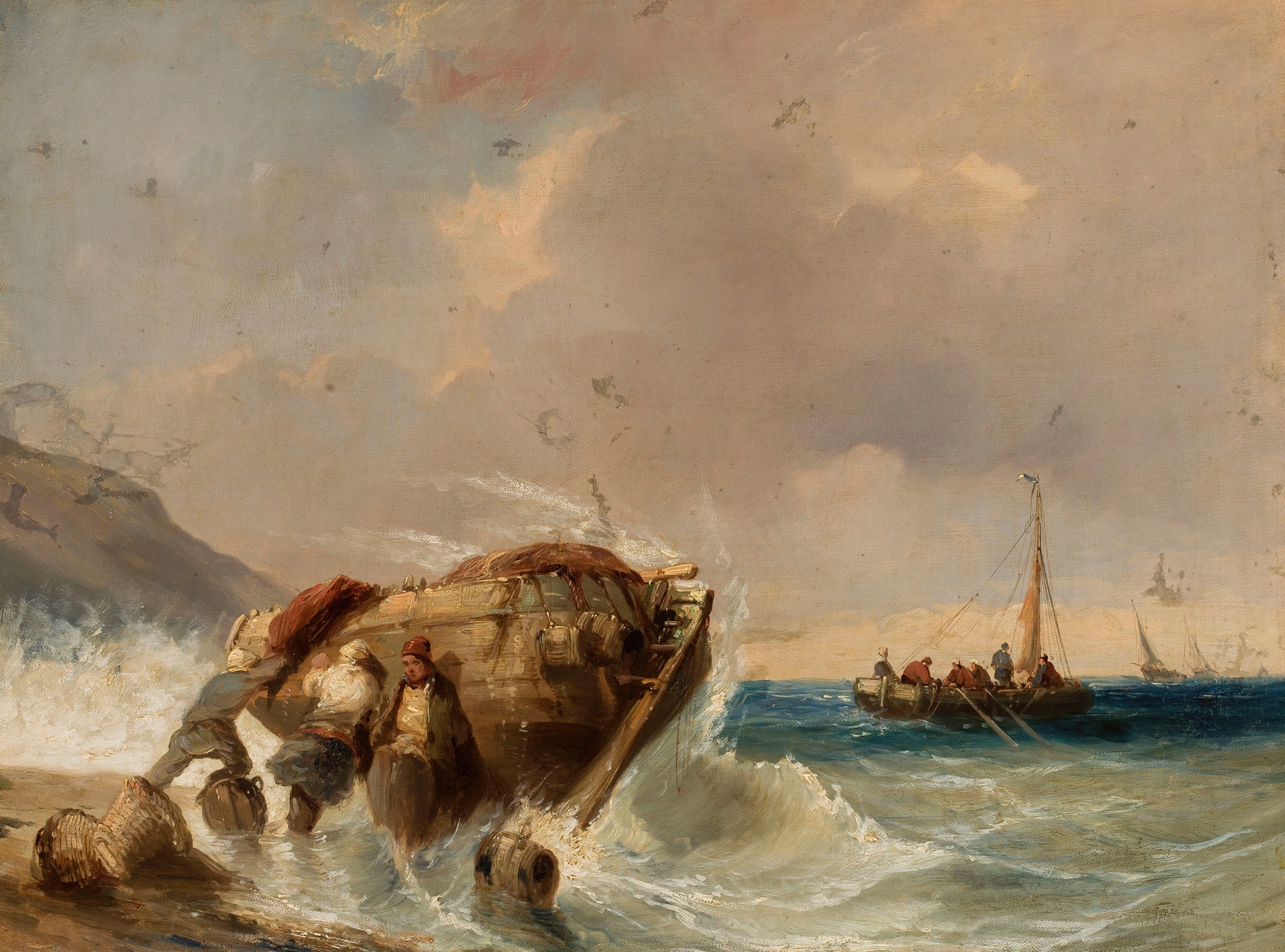
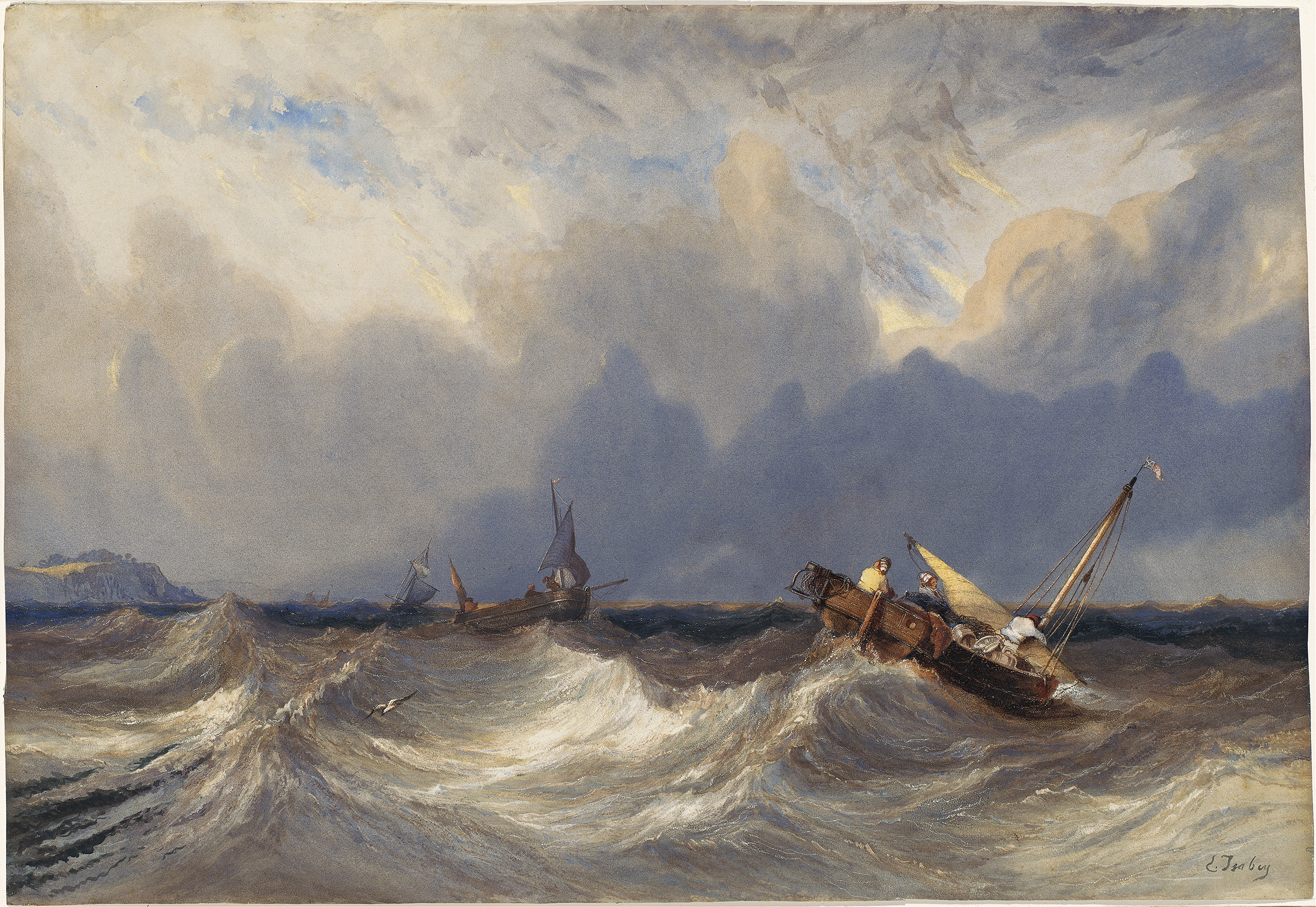
“Under the brush, chaos becomes grace.” In the tumult of a storm, riders and sailors confront nature’s wrath, reflecting the fragility of human endeavor against the vastness of the ocean. Look closely at the swirling waves, where foamy crests clash against jagged rocks. The tumultuous sea dominates the canvas, rendered with dynamic brushstrokes that evoke both chaos and beauty. Notice how the sunlight pierces through dark clouds, casting a golden hue on tumultuous waters, illuminating the desperate figures struggling against the tide.
The contrasting colors of deep blues and vibrant whites capture a moment teetering between despair and fleeting hope. At the heart of this piece lies a tension between vulnerability and resilience. The ship, battered yet unyielding, symbolizes human ambition in the face of overwhelming forces. The solitary figures, dwarfed by the towering cliffs, represent the loneliness of existence when confronted with nature’s indifference.
Each gust of wind and crash of wave echoes a broader narrative of survival, urging contemplation on the delicate balance between humanity and the natural world. Eugène Isabey painted this work in 1837 during a period marked by Romanticism's rise, where the emotional connection to nature was paramount. Living in France, Isabey was influenced by the turbulent political landscape and the burgeoning fascination with nature’s power, which resonated deeply in his art. This piece encapsulates both his technical prowess and his ability to convey the sublime, reflecting a moment when the artist grappled with the very essence of life and nature.