Église de St. Nectaire — History & Analysis
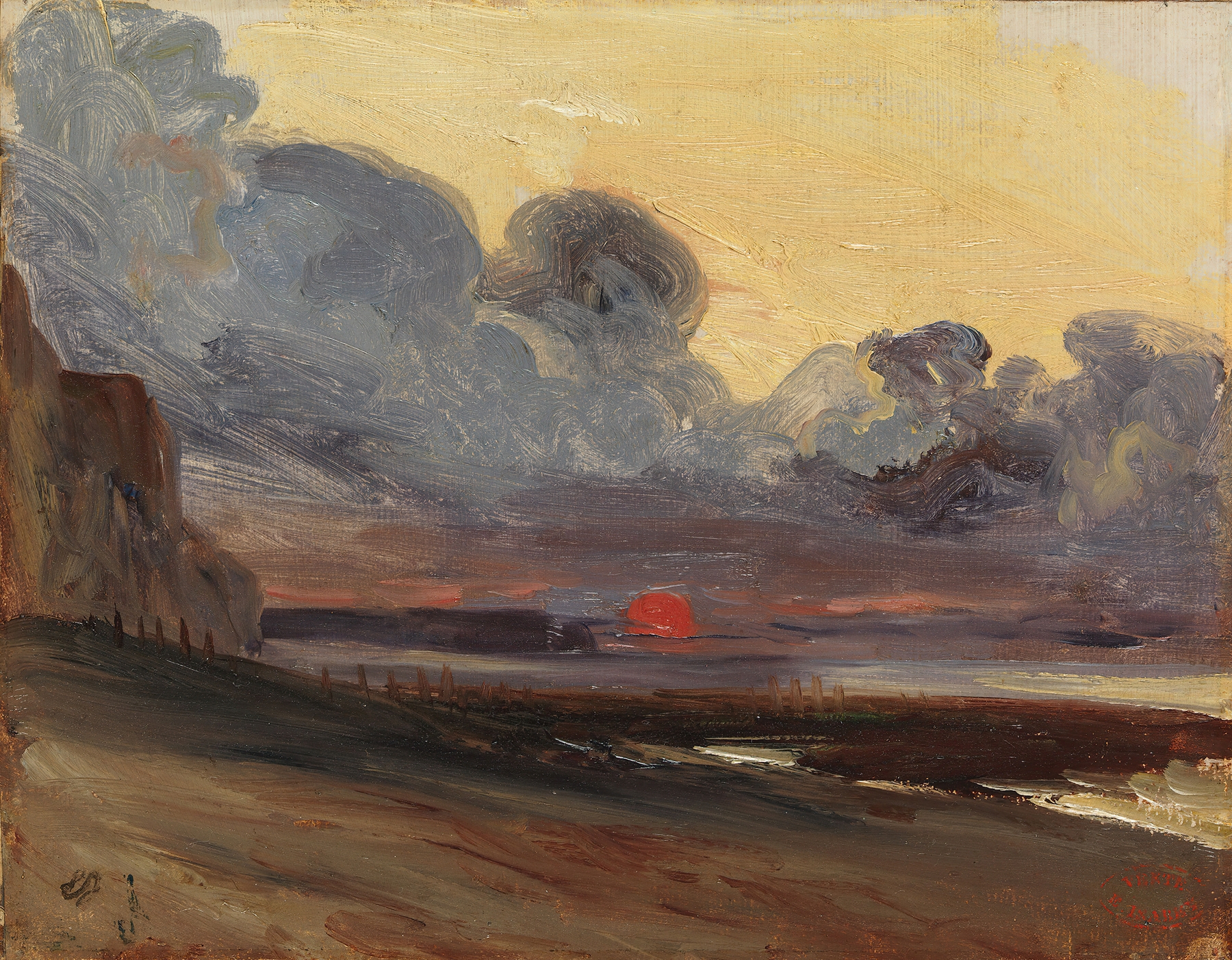
“Between color and silence, truth hides.” In the quiet ambiance of a forgotten legacy, the echoes of the past whisper through the walls of Église de St. Nectaire. Look to the foreground, where the rich, earthy tones of the church's stonework invite your gaze. The intricate details of the façade, rendered with soft touches of light and shadow, create a dialogue between strength and fragility.
Notice how the cool blues and warm ochres harmonize, suggesting the passage of time while illuminating the sacred structure’s solemnity. As you delve deeper, consider the contrast between the sturdy architecture and the ethereal sky that envelops the church. The calmness of the scene belies an emotional tension — a sense of reverence mixed with inevitable decay. The absence of human figures allows you to contemplate the church's longstanding presence, urging you to reflect on the relationship between human endeavors and the relentless flow of time.
Eugène Isabey painted this work between 1830 and 1832 during a period marked by a growing interest in Romanticism and a focus on nature and emotion in art. Living in France, he was part of a cultural landscape that sought to capture the profound connection between humanity and the environment. The choice to depict this church speaks to the era’s fascination with historical architecture, prompting viewers to consider not just the beauty of the structure, but its narrative within the broader tapestry of French heritage.