Scène de rue Parisienne — History & Analysis
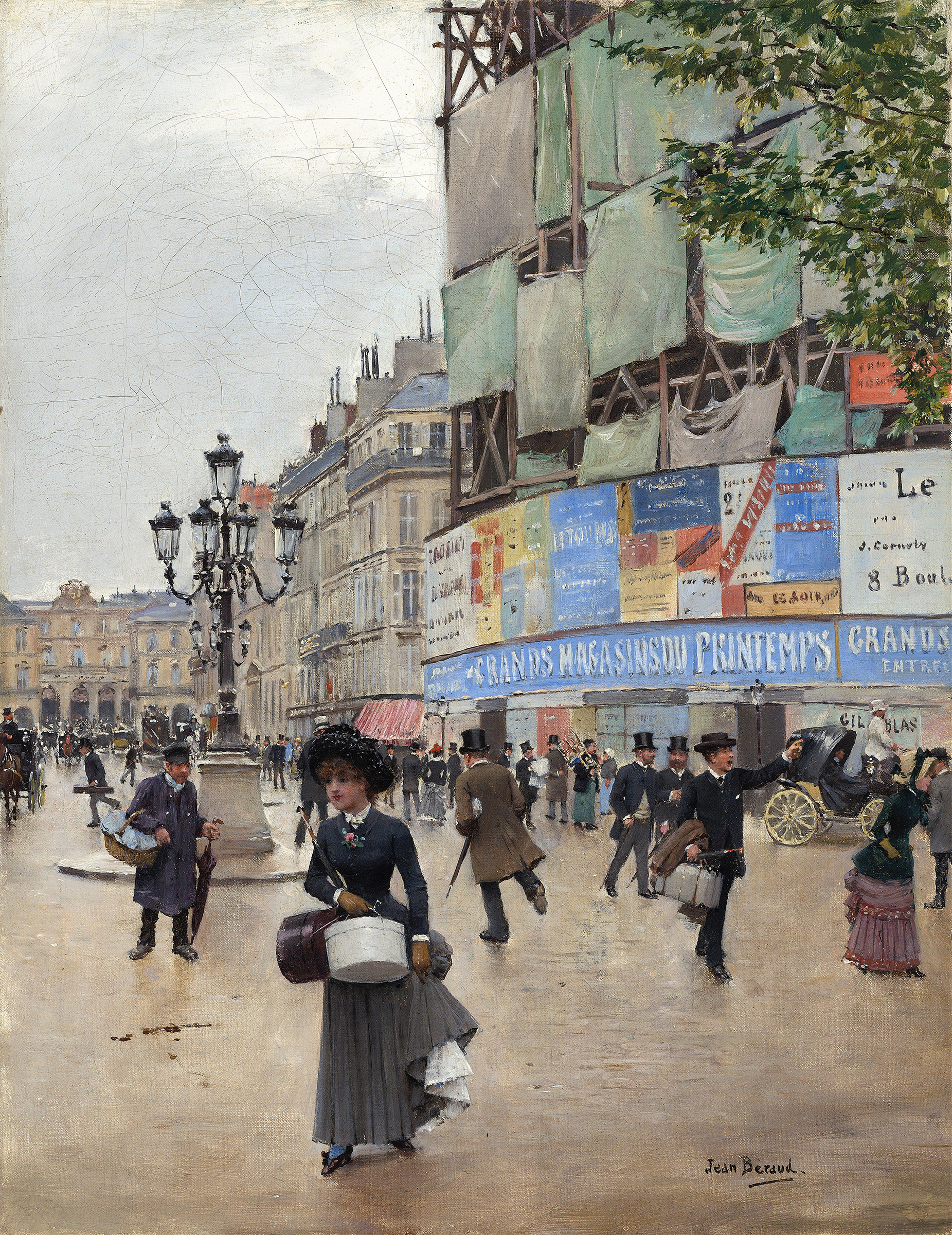
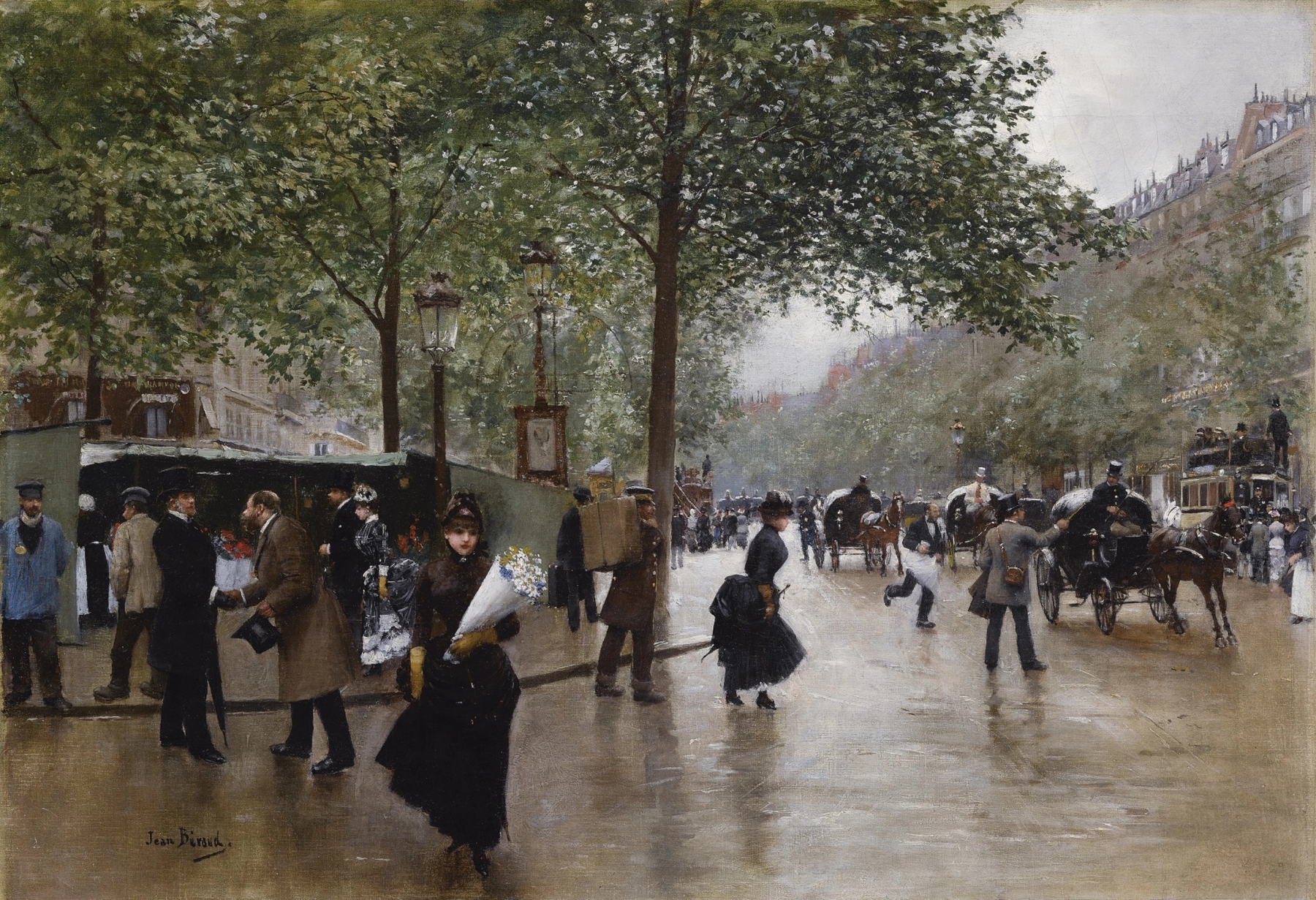
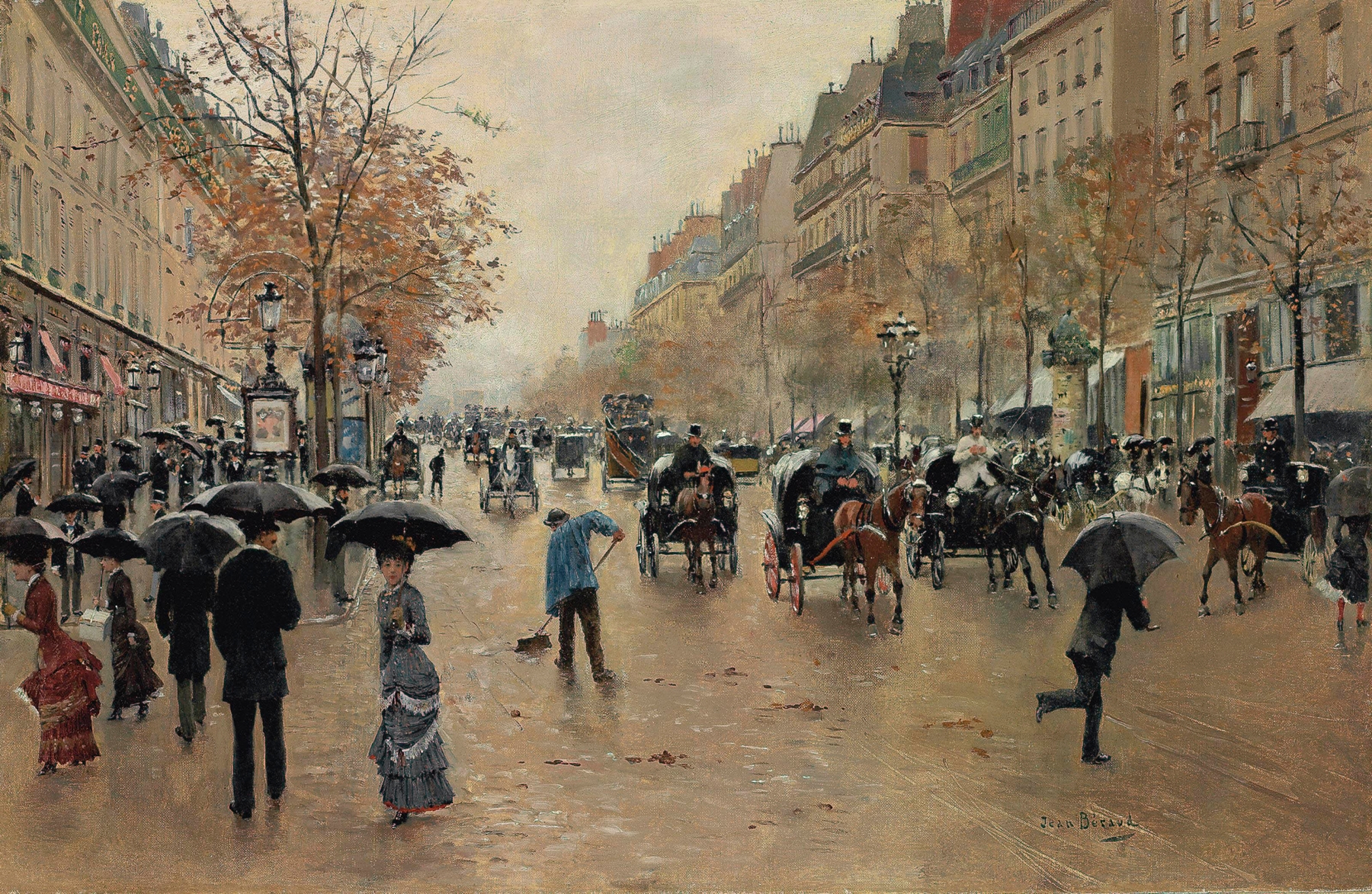
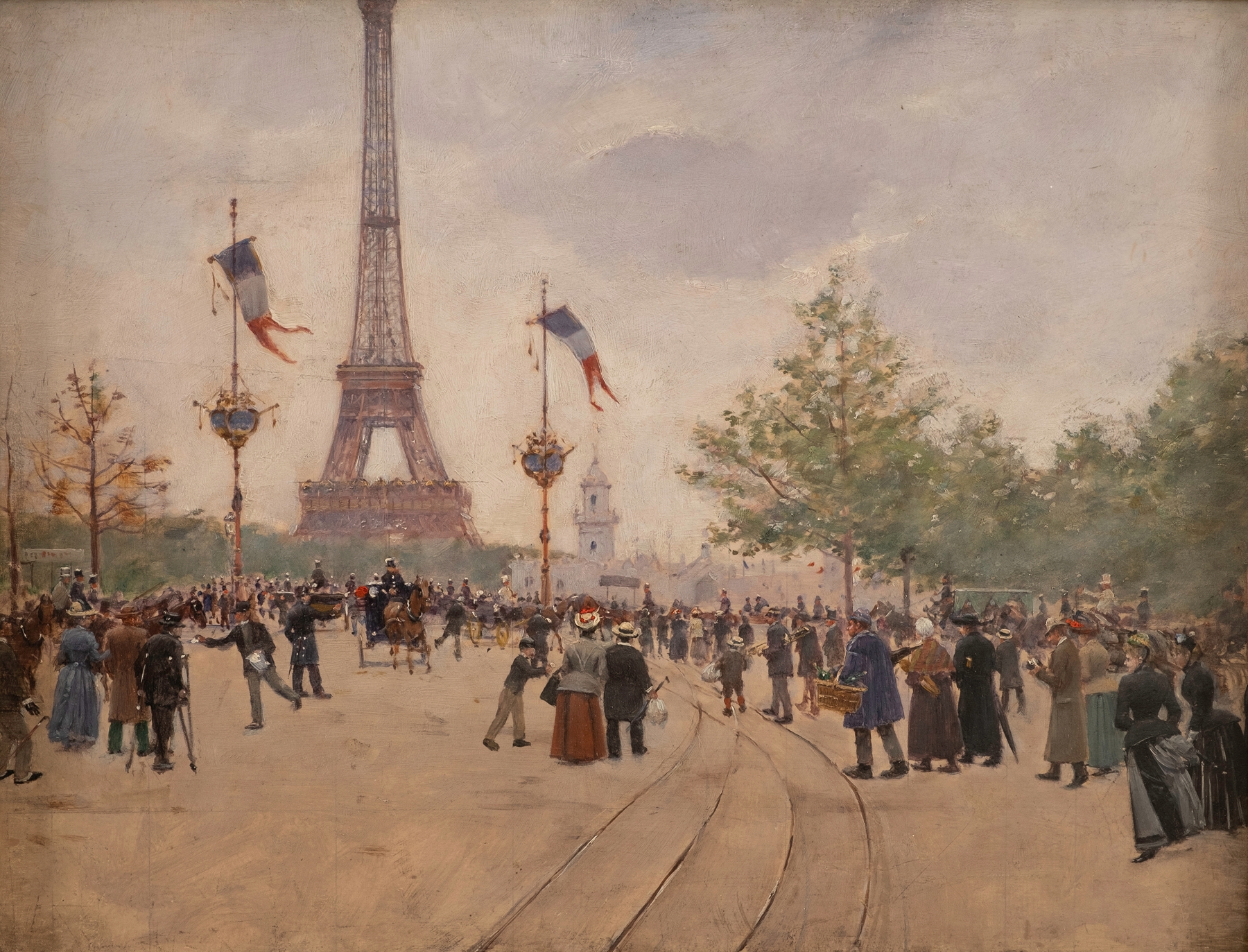
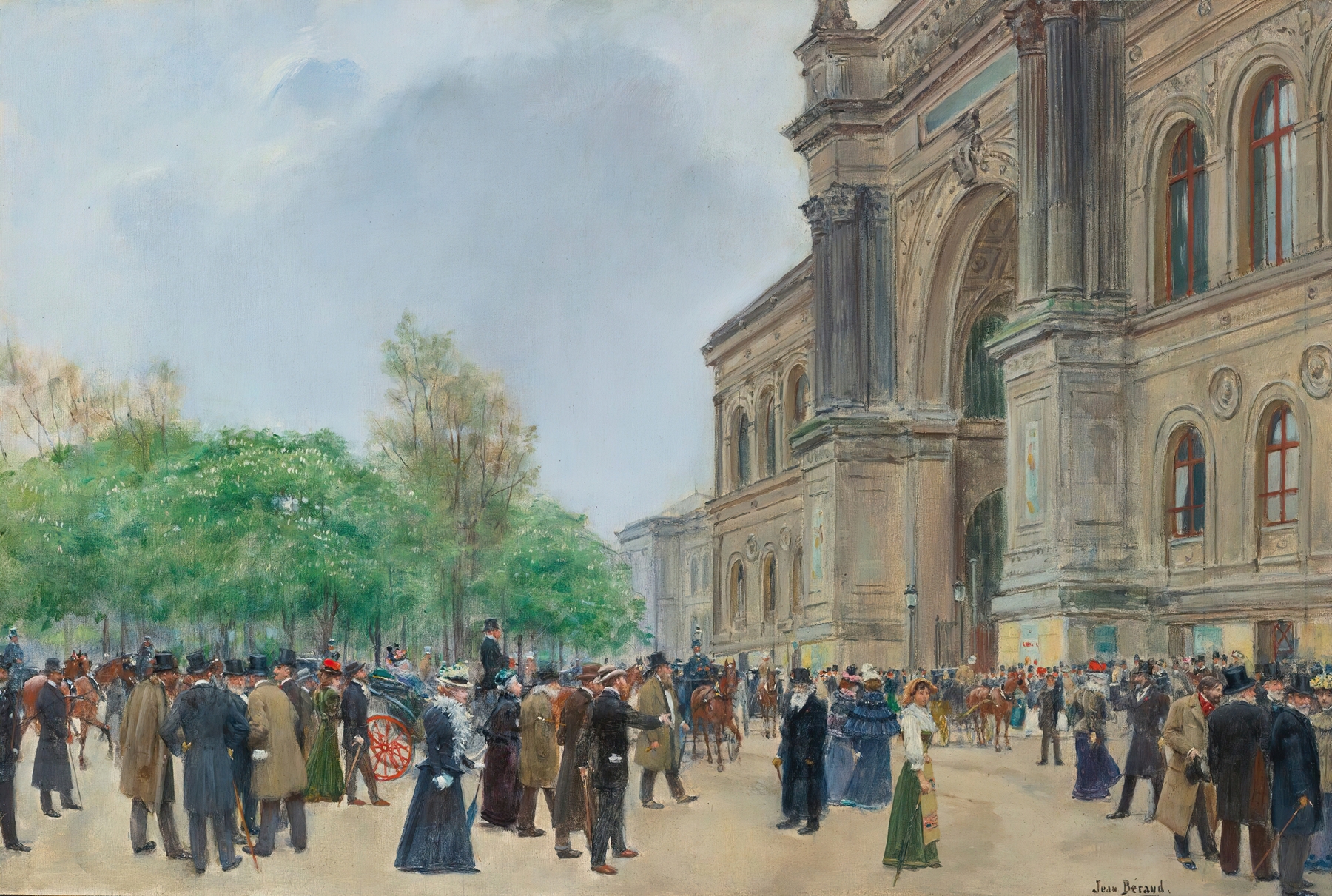
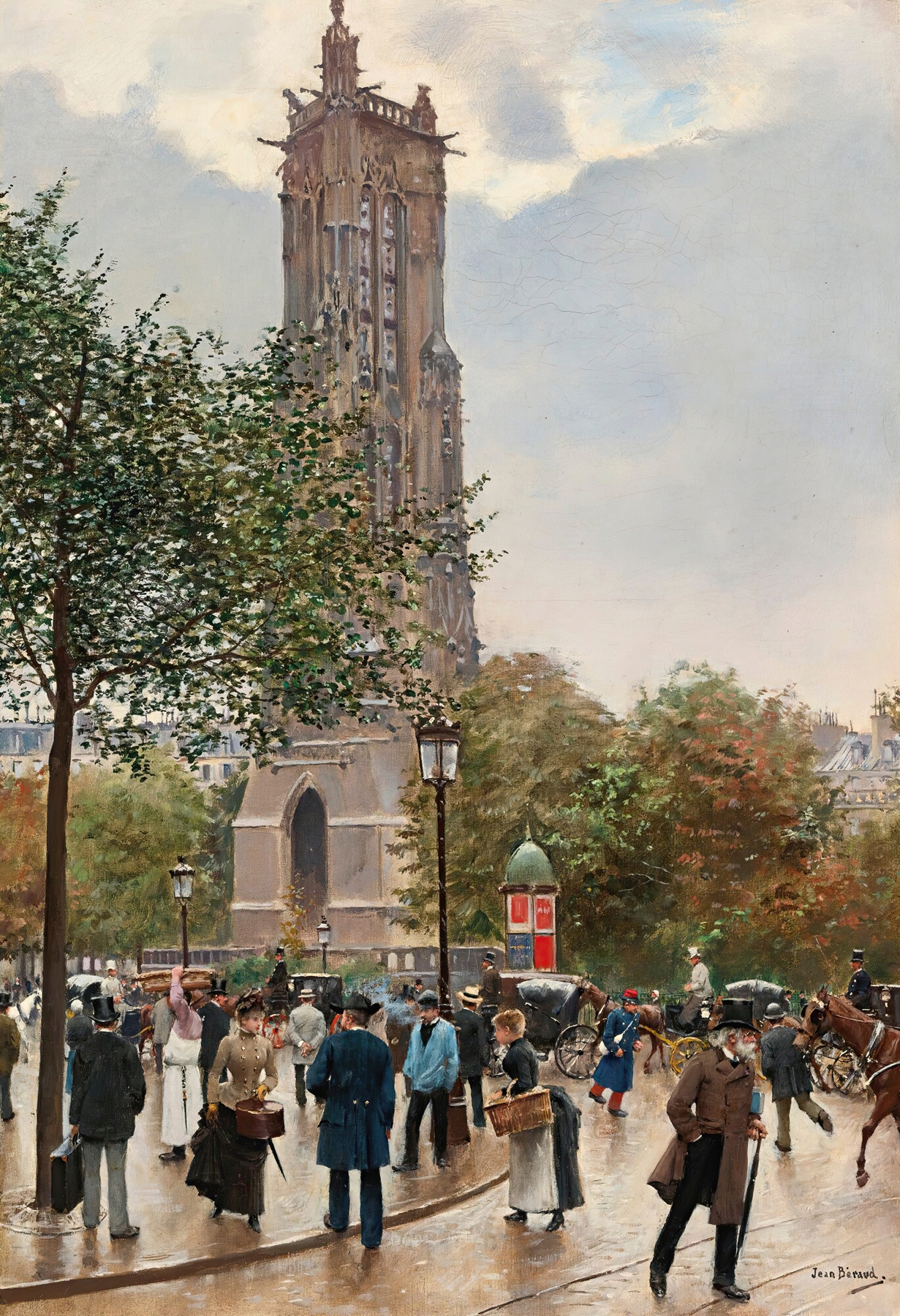
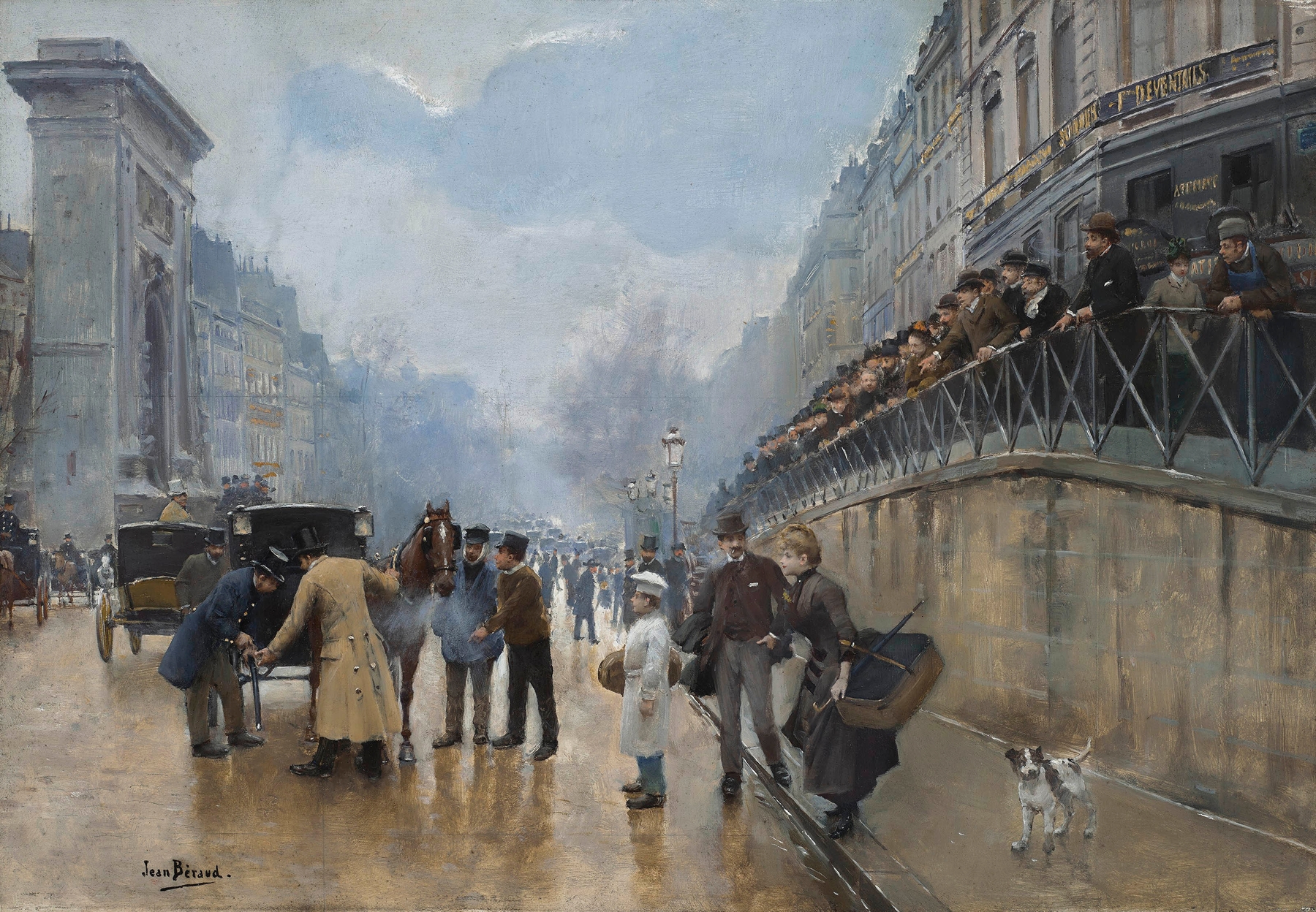
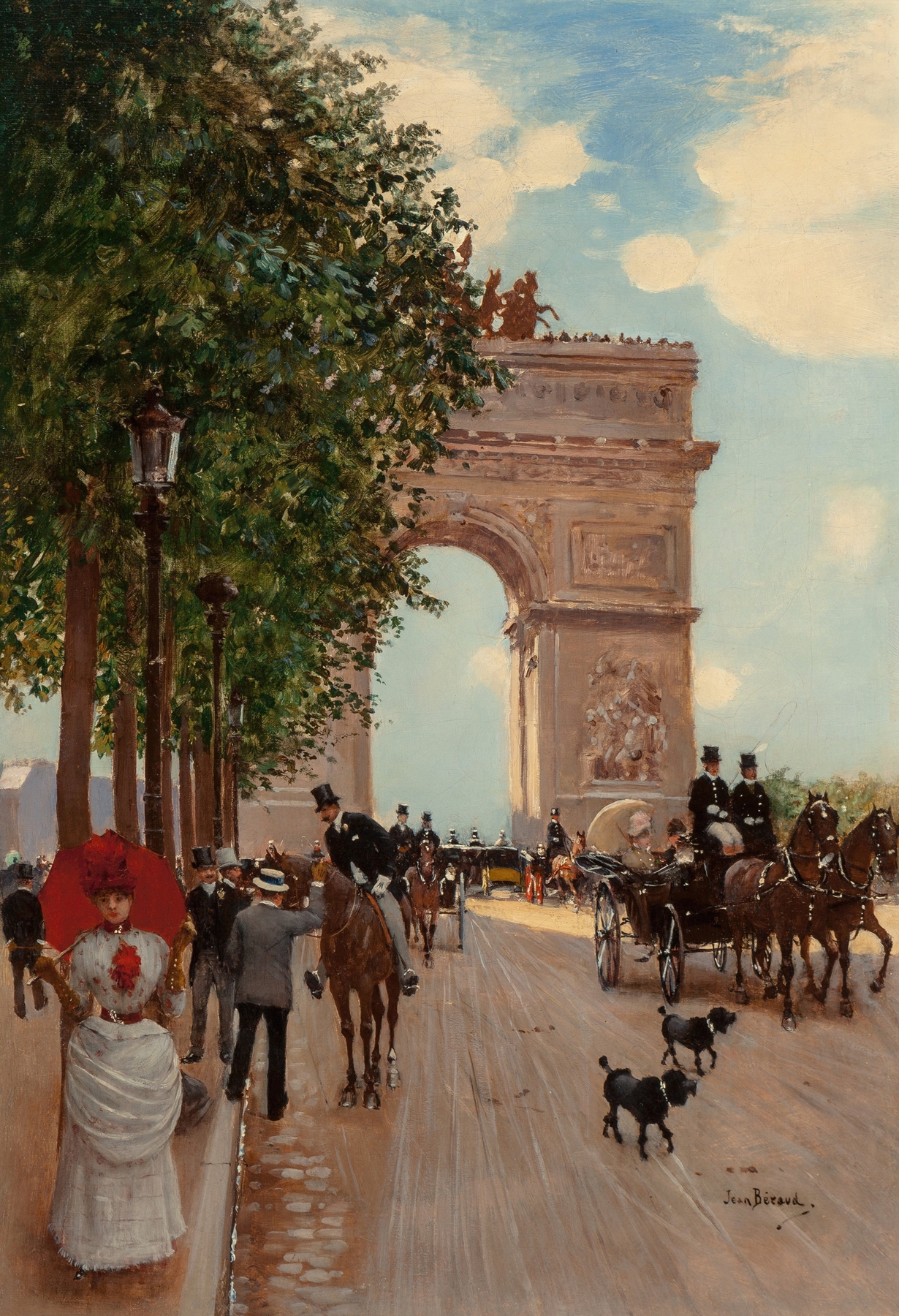
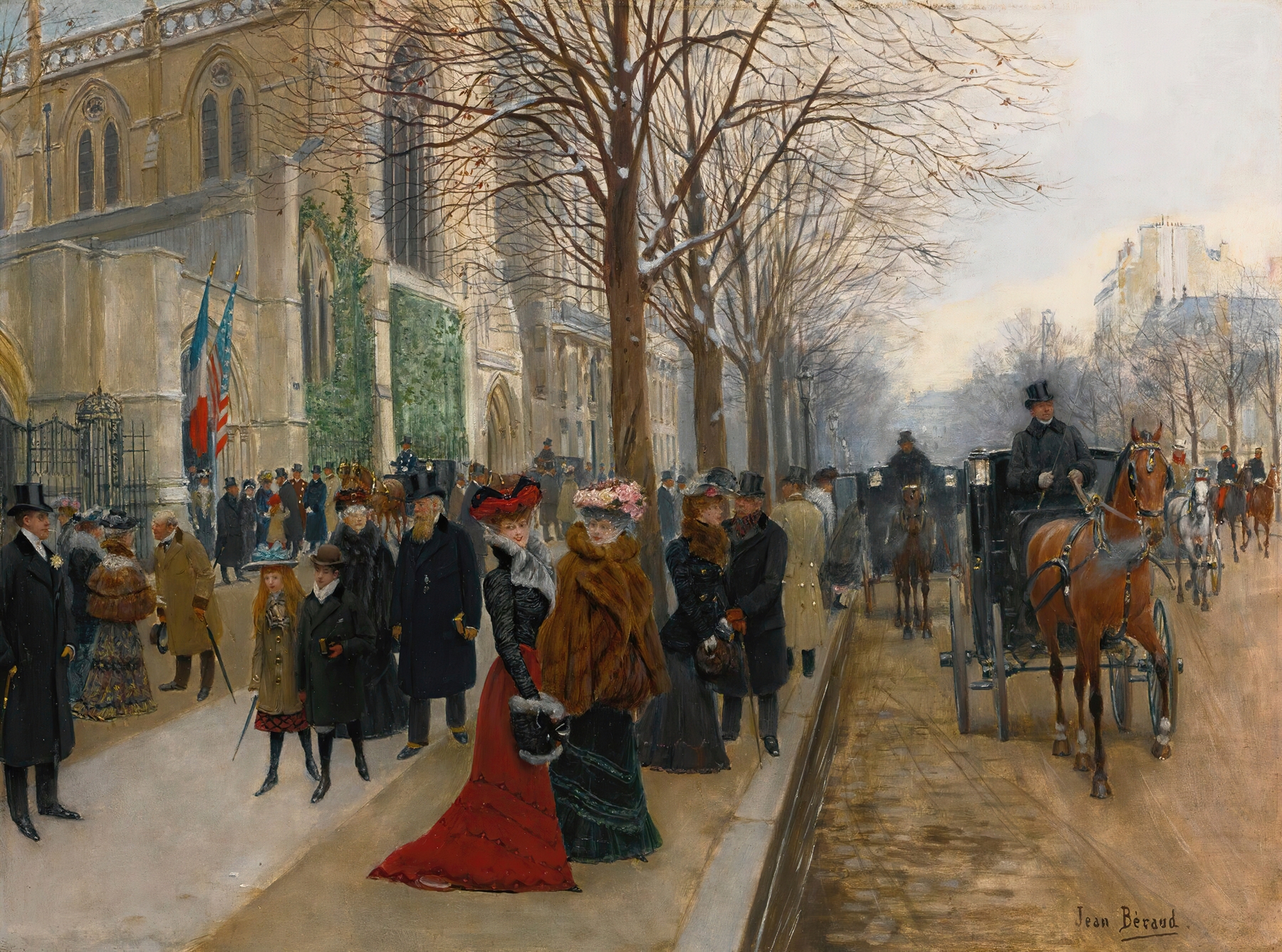
Can paint confess what words never could? In Scène de rue Parisienne, a bustling Parisian street hums with life, each figure caught in a moment of unspoken connection and faith in the everyday. The artist captures the reverence of routine, where faith is not just religious but nestled in ordinary exchanges and shared glances. Focus first on the gathering crowd in the foreground, where diverse characters interact, their postures revealing subtle stories. Notice how the warm, golden hues of the setting sun cast long shadows, enveloping the scene in a gentle glow.
The artist's deft brushwork gives texture to the cobblestones and the flowing garments of the figures, inviting the viewer to linger in the atmosphere of this lively street. Béraud's use of perspective draws our gaze down the avenue, creating a sense of depth that accentuates the thrumming heart of Paris. Delve deeper into the painting, and you’ll find layers of meaning woven through the urban tapestry. Watch how the faces of the passersby blend elements of hope and worry; their expressions oscillate between joy and contemplation. The juxtaposition of sunlight against the shadows symbolizes the duality of life in the city, where optimism persists amid daily struggles.
This interplay highlights the artist's insight into human nature, capturing a moment that speaks to the spirit of the time. In the late 1890s, Jean Béraud was actively painting scenes of Parisian life, deeply engaged with the Impressionist movement. Living in a period of rapid urbanization, he sought to immortalize the fleeting moments that defined contemporary existence. His work reflects not only the vibrancy of Paris but also the broader cultural shifts, as society grappled with the complexities of modernity and tradition, faith and skepticism.