Boulevard Poissonnière en automne — History & Analysis
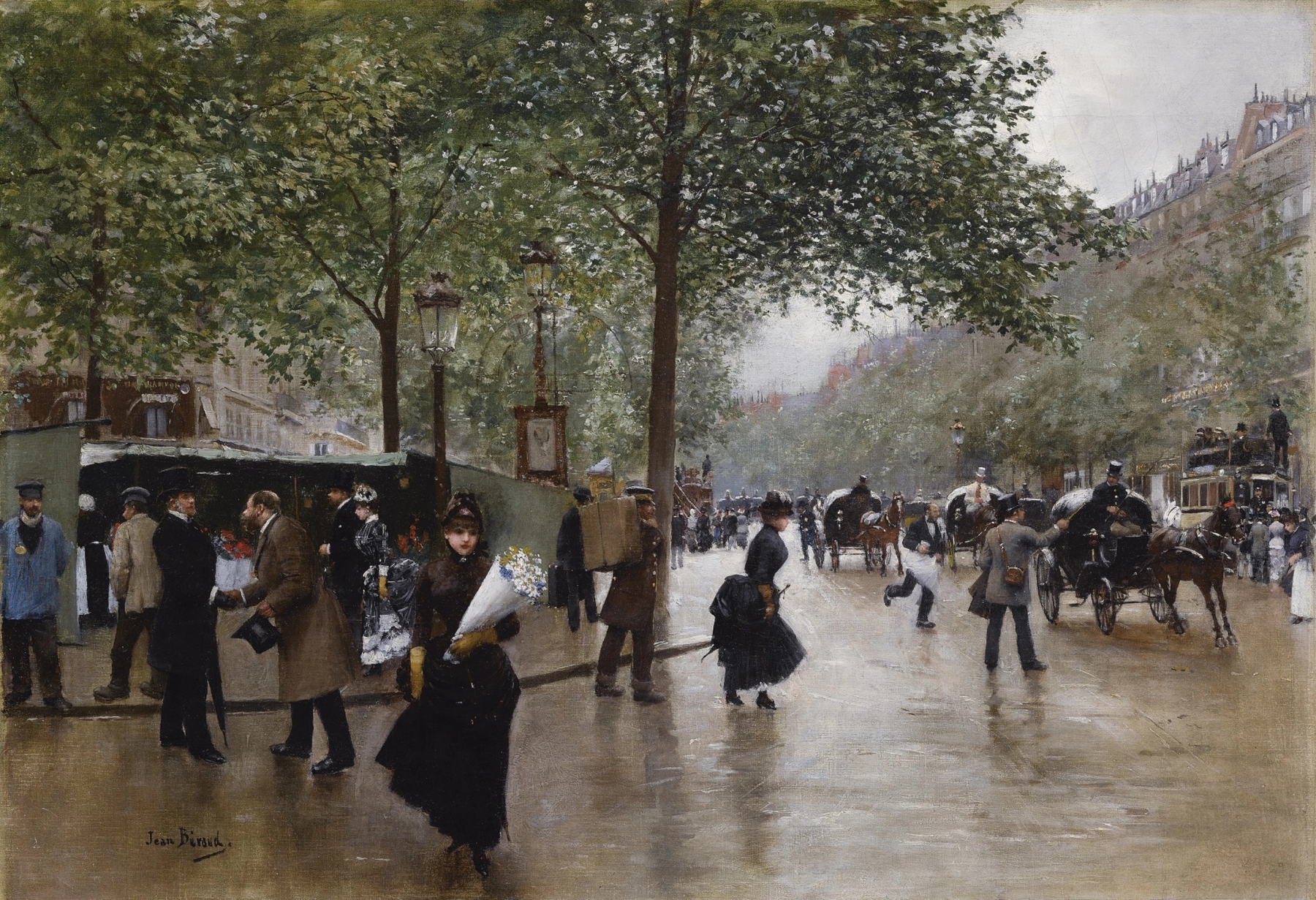
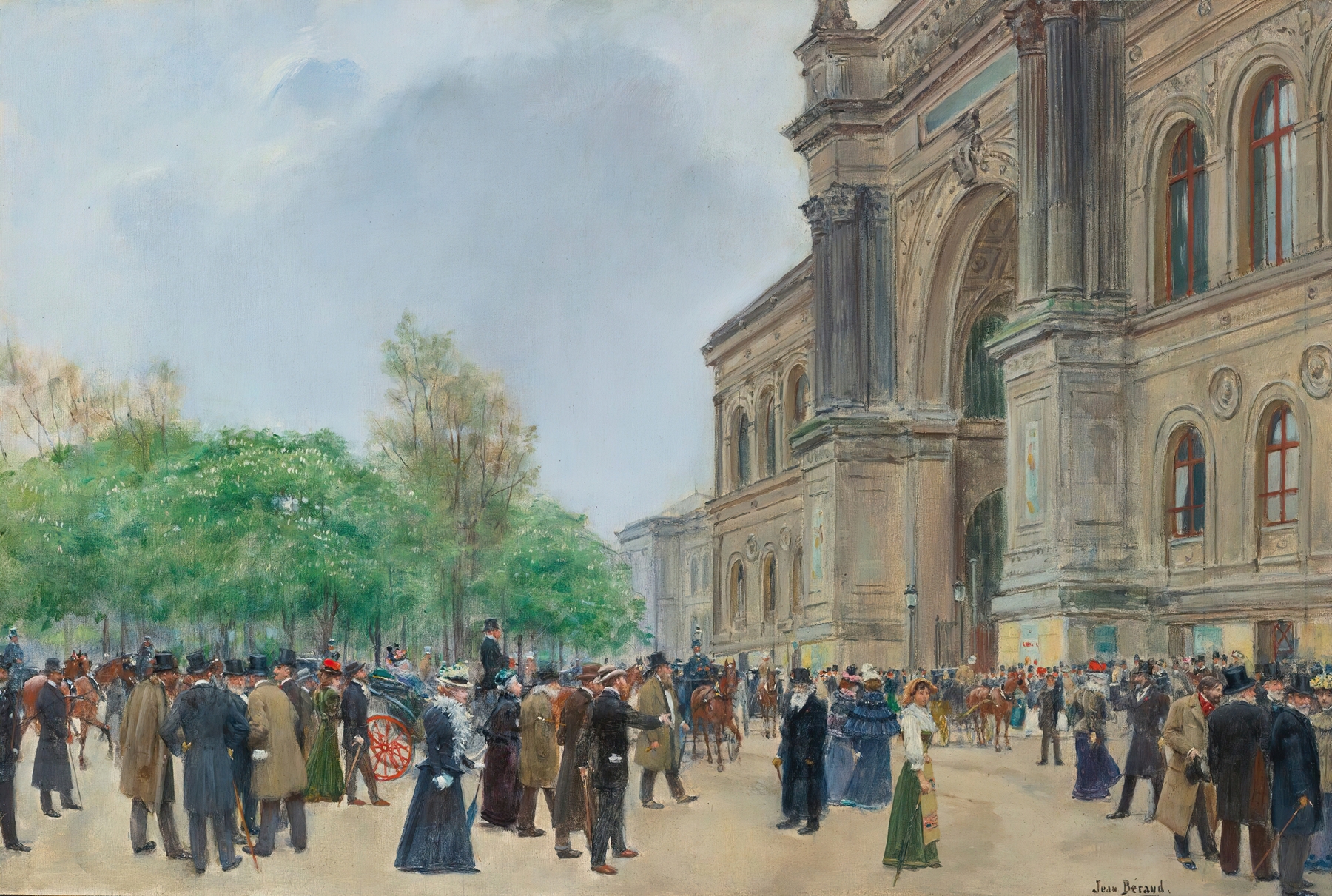
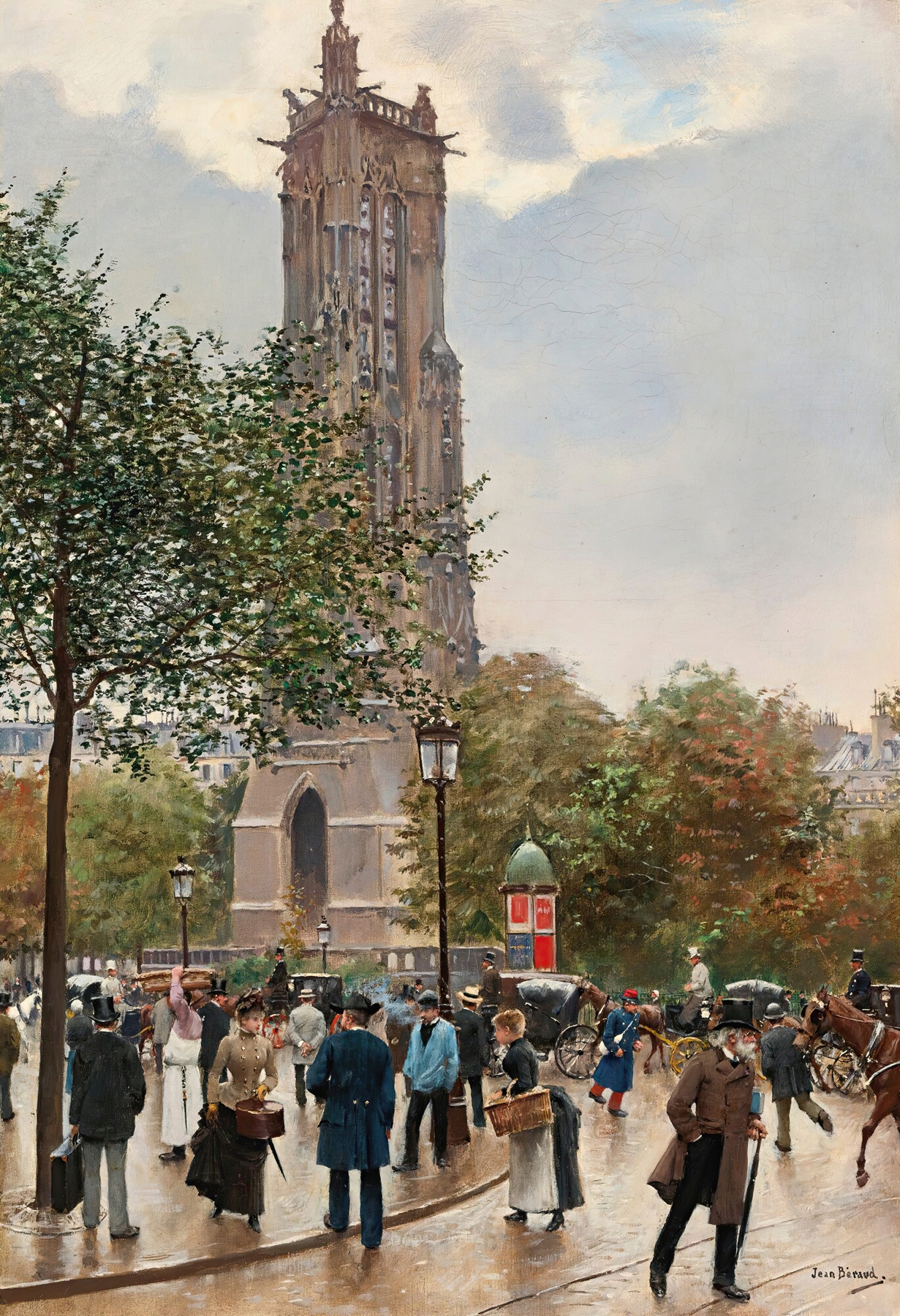
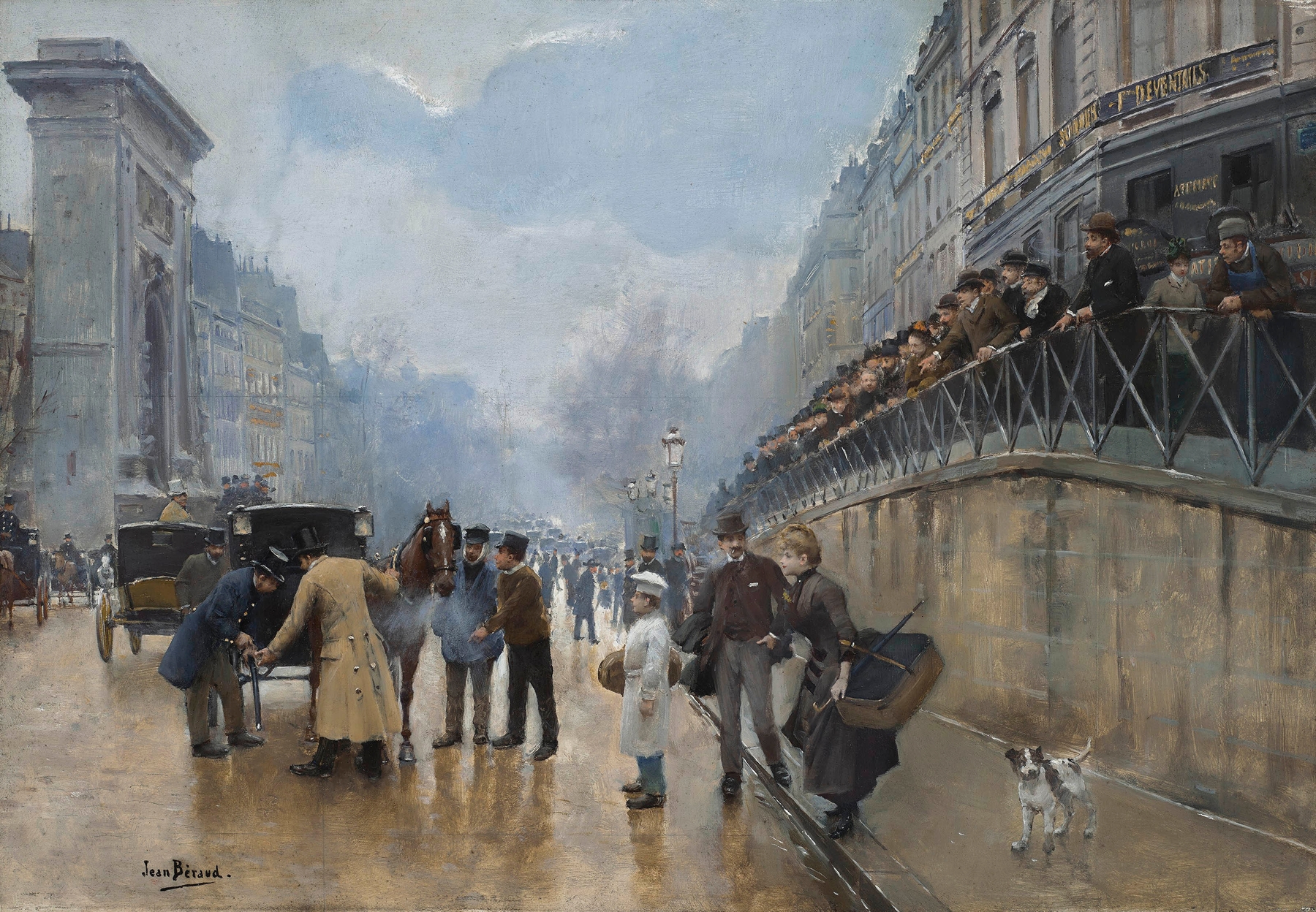
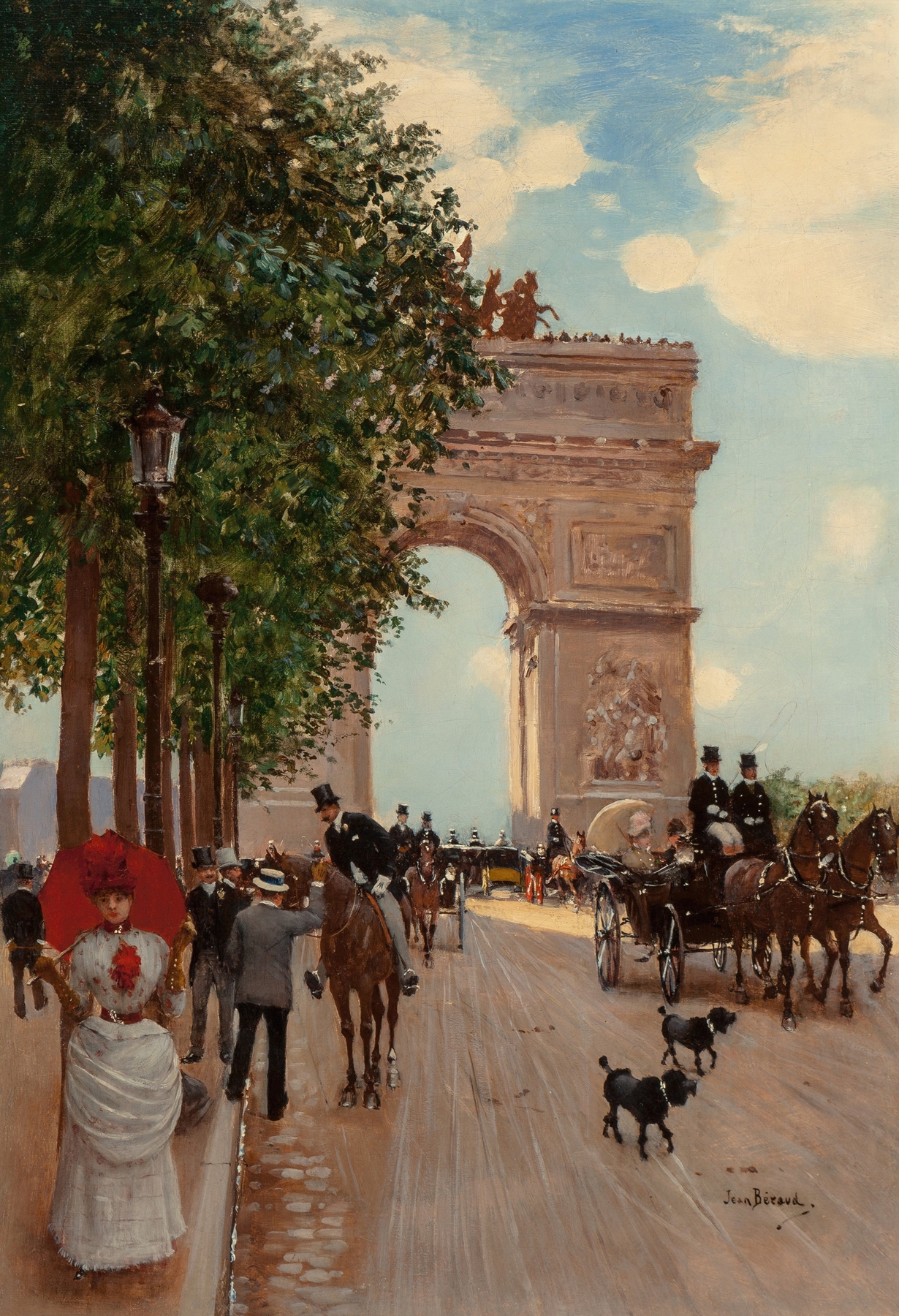
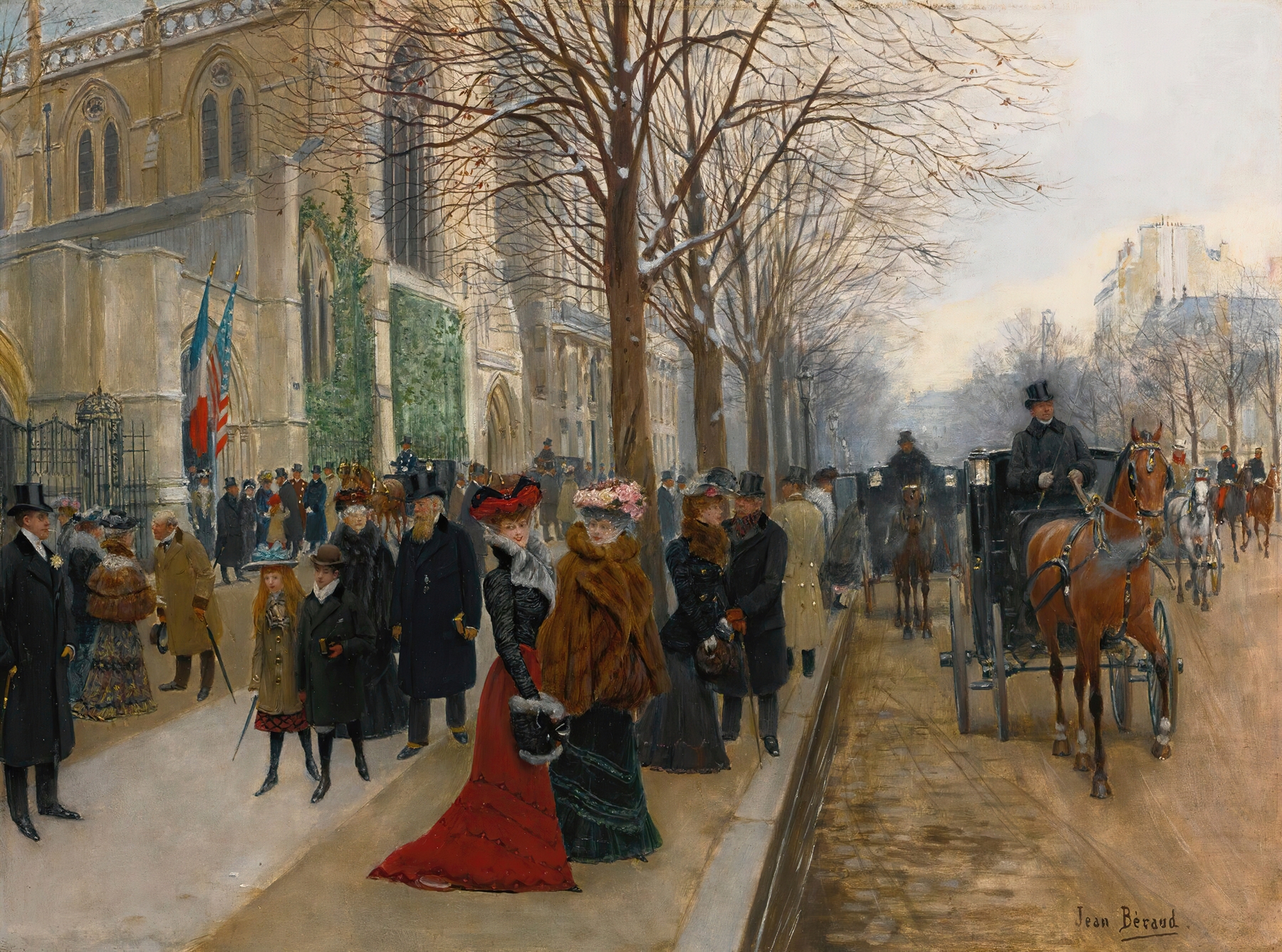
Could a single brushstroke hold eternity? In the delicate interplay of hues and shadows, Boulevard Poissonnière en automne invites us to ponder how moments crystallize into memory. Look to the left at the shimmering reflections in the puddles on the cobblestone, capturing the essence of an autumn day. The browns and golds blend seamlessly, evoking the fallen leaves that blanket the street.
Notice how the figures, cloaked in layers, appear both engaged in conversation and lost in thought, their gestures expressing the weight of nostalgia amidst the vibrant backdrop. The subtle variations in light breathe life into the scene, guiding the eye through this vibrant, bustling boulevard. Béraud deftly contrasts movement and stillness—the lively passersby juxtaposed with the tranquil architecture that stands as a sentinel of time. The autumnal color palette signifies transition, hinting at both the beauty and transience of life.
Each character embodies a story of their own, yet they collectively evoke a shared longing for the past—a resonant reminder of fleeting moments we all wish to hold onto. During the late 19th century, Béraud painted this work amid the vibrant art scene of Paris, where Impressionism was taking root and transforming the perception of urban life. He found inspiration in the everyday, capturing the essence of the city and its people. This was a period marked by social change and a burgeoning modernity that permeated the streets, ultimately shaping the narrative of his artistic journey.