Sur les grands boulevards — History & Analysis
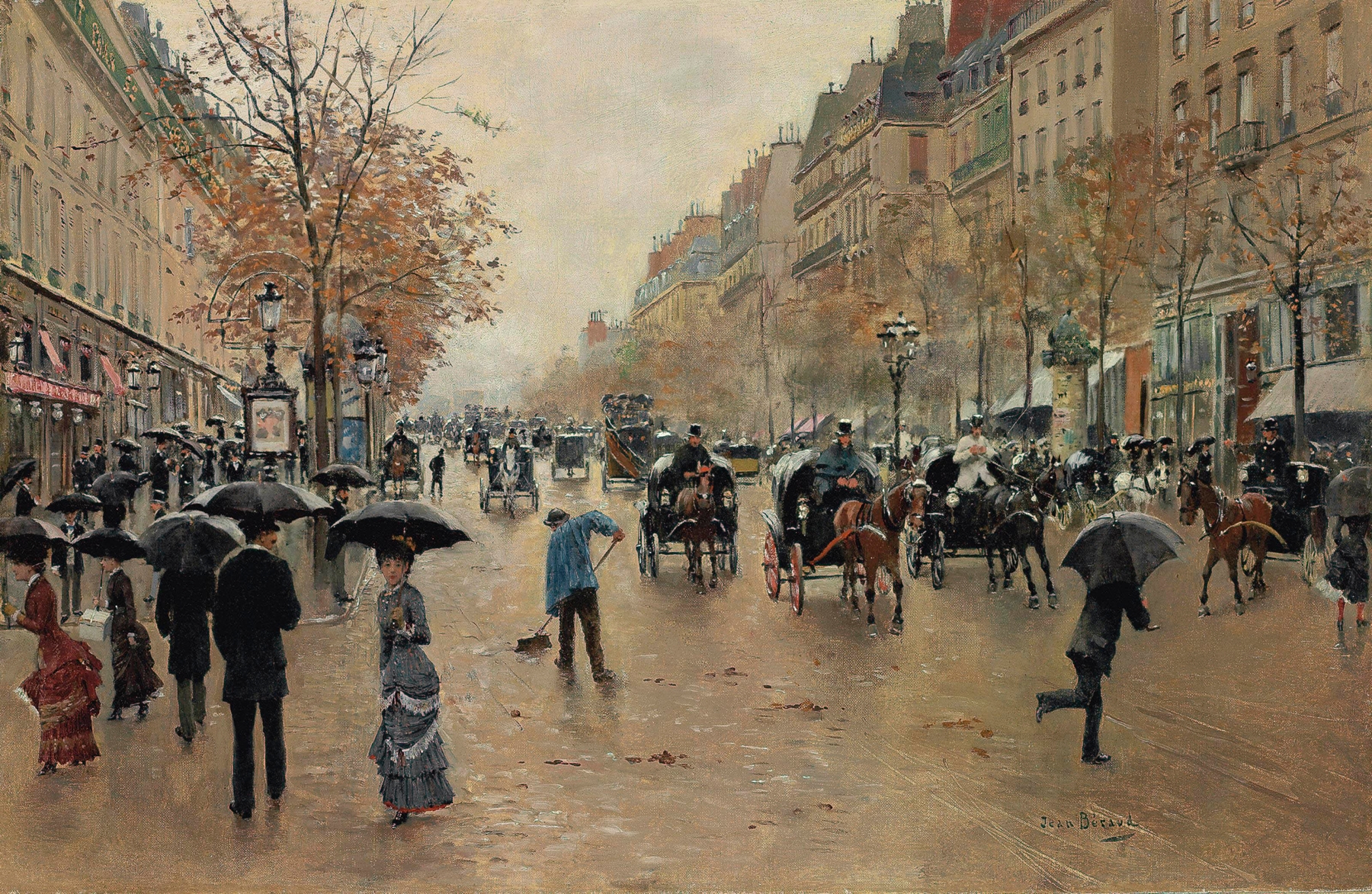
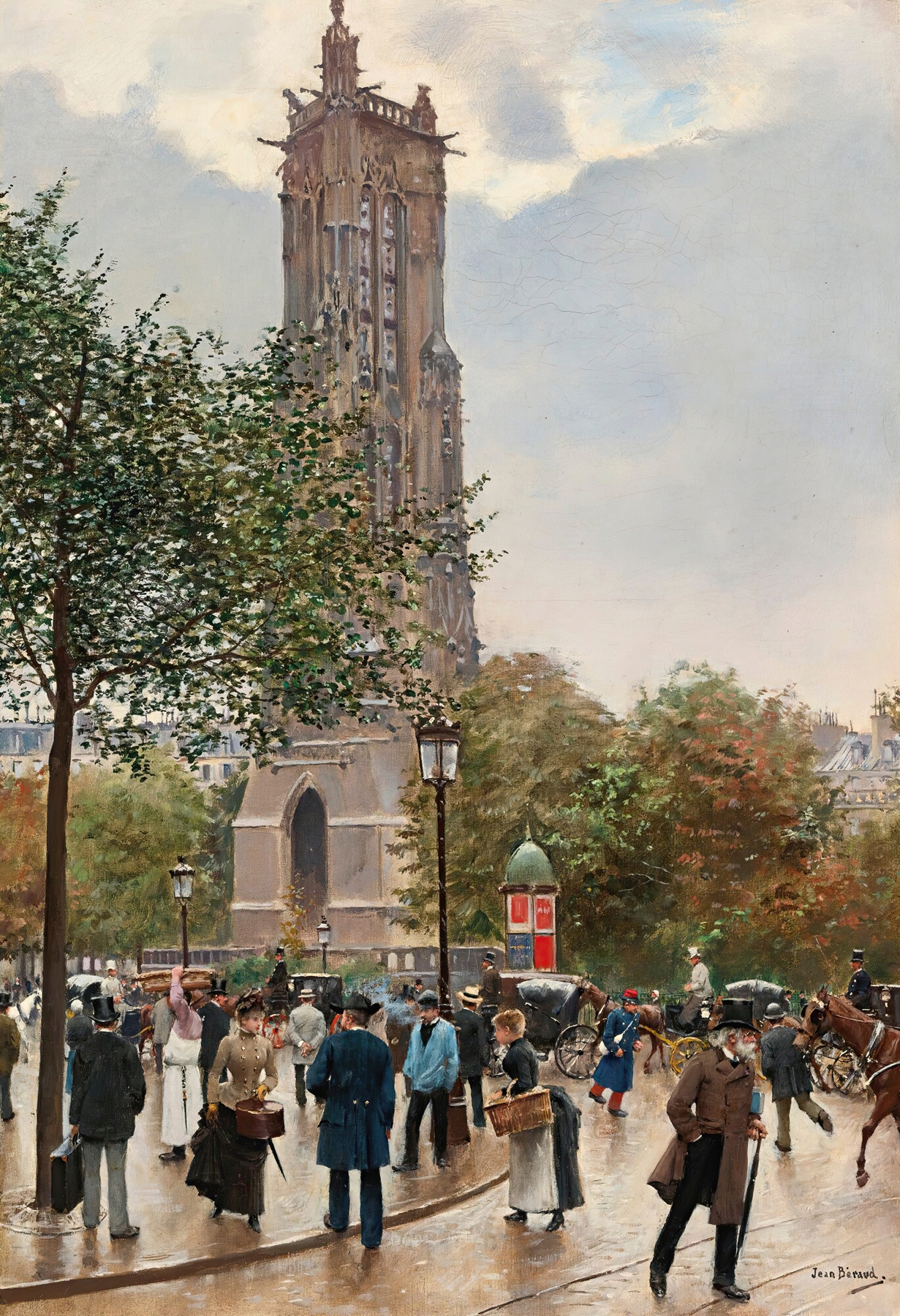
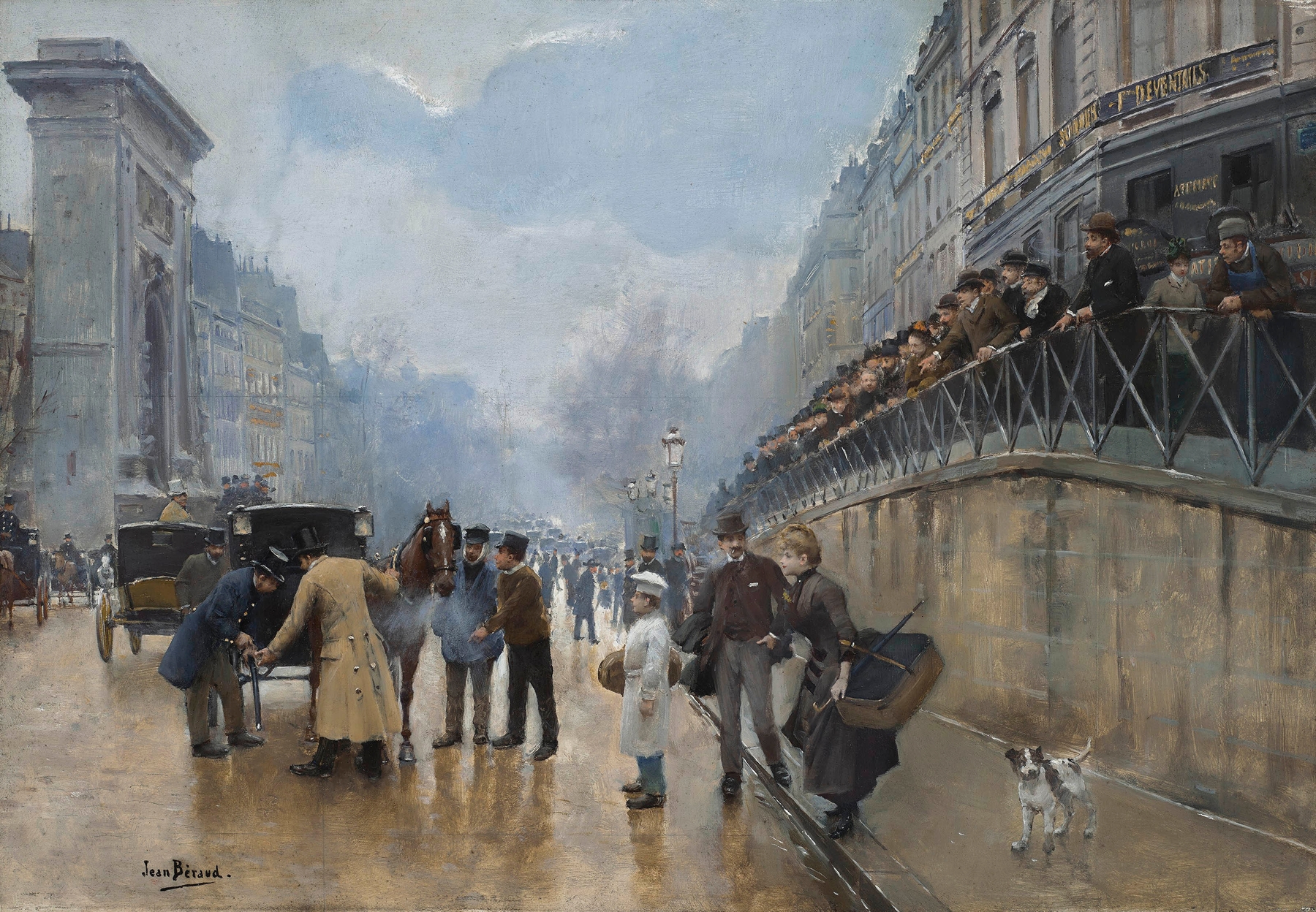
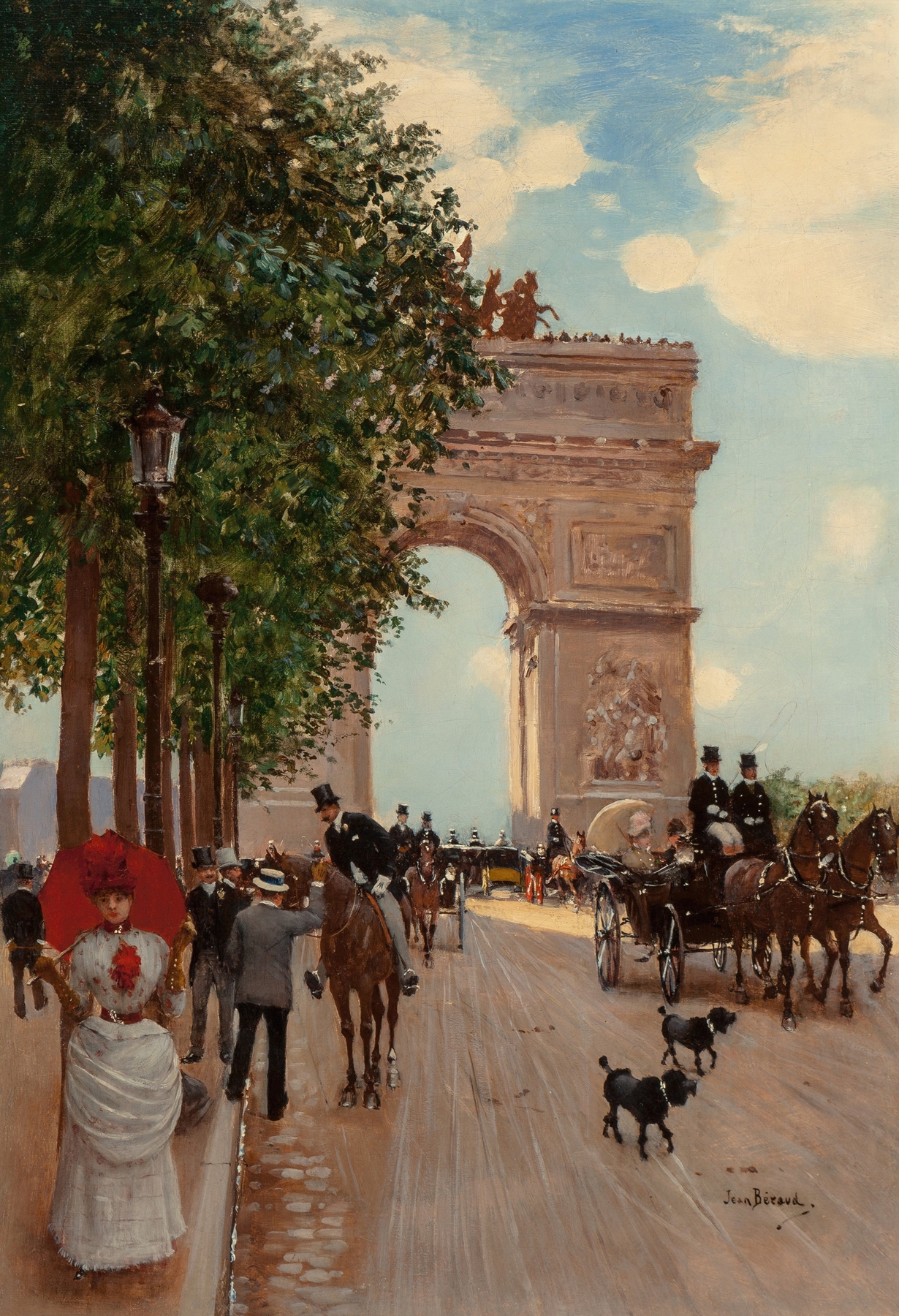
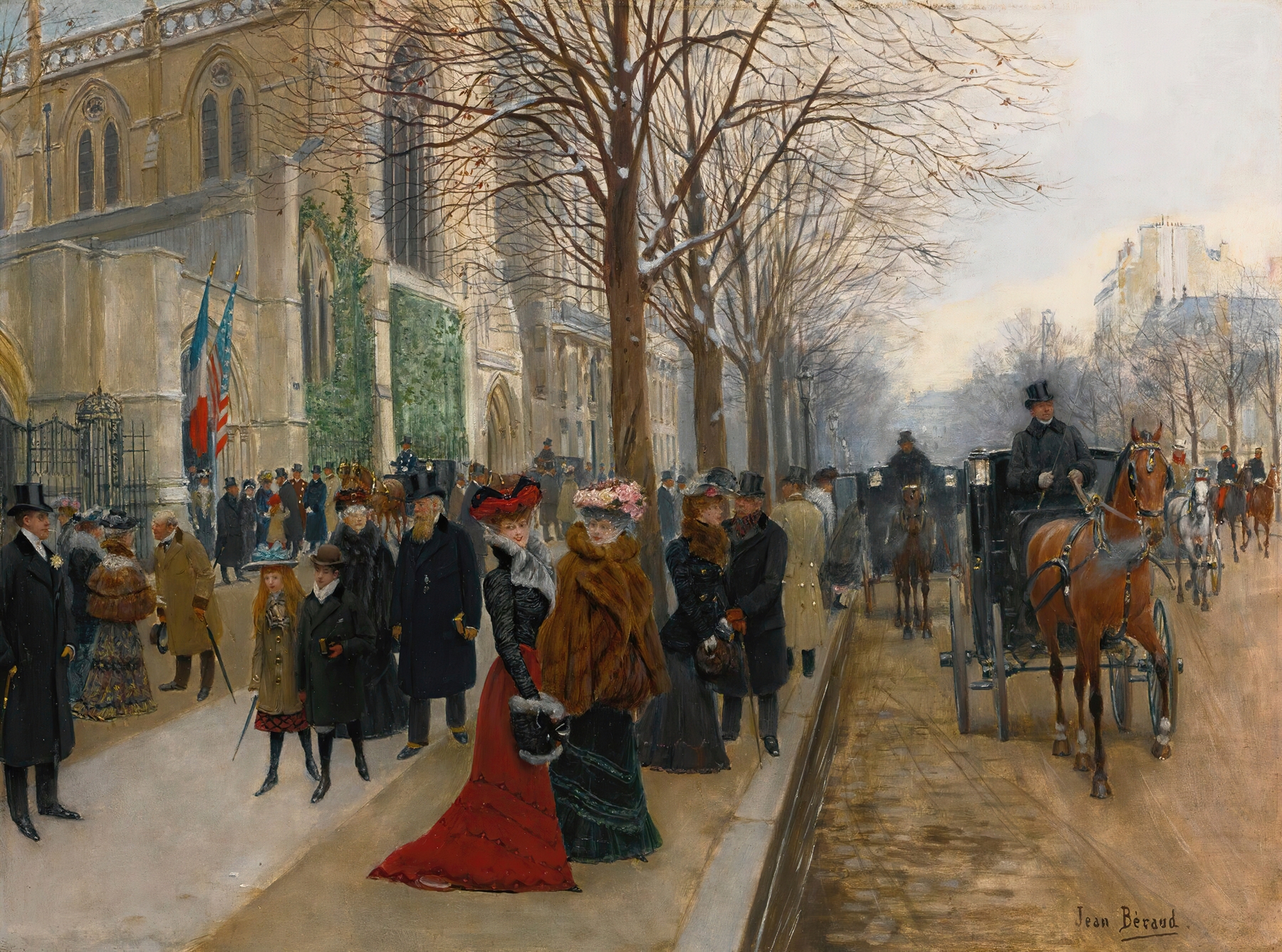
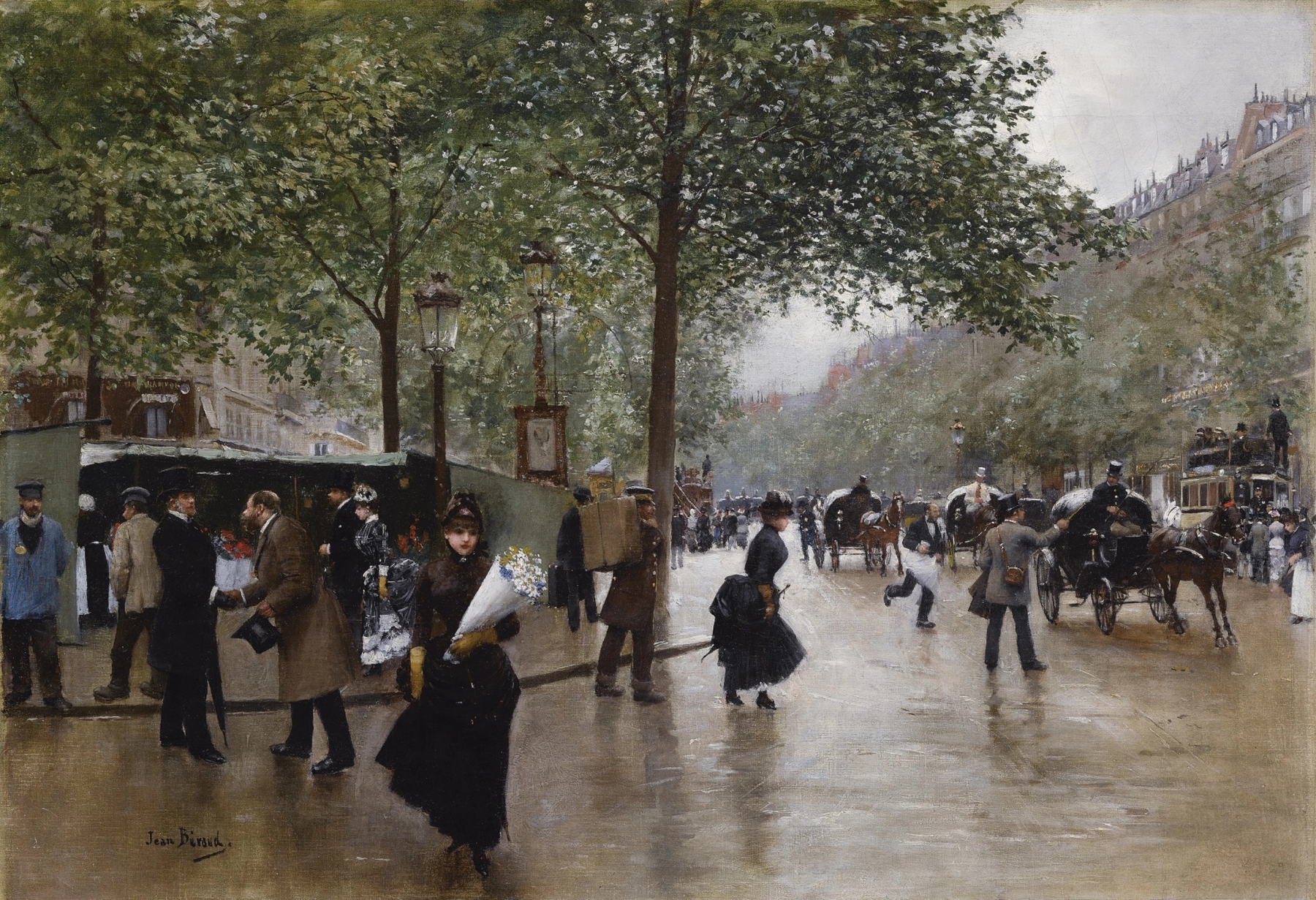
Can paint confess what words never could? In Sur les grands boulevards, the canvas awakens with a vibrant pulse of urban life, encapsulating the bustling allure of Paris. Focus your gaze on the left where a group of elegantly dressed people stroll along the grand boulevard, their laughter almost audible. Notice how the light dances on the cobblestones, reflecting a warm glow that envelops them in a golden embrace. The artist’s deft brushwork creates movement; the flutter of a woman’s skirt, the delicate arc of a hat, and the subtle gestures of conversation come to life.
The colors, rich with earth tones and splashes of luminescent whites, draw you into this vivid scene, making you feel as though you’ve stepped right into the heart of the city. Béraud captures more than just a moment; he encapsulates an era. The contrast between the joyous scene and the looming shadows of the buildings hints at the tensions of modernity—where the excitement of progress meets the weight of tradition. The juxtaposition of the vibrant figures against the stoic architecture speaks to the duality of life in Paris: the ephemeral pleasures of the moment and the inevitable passage of time.
Each detail, from the steam rising from a nearby café to the subtle expressions on the passersby, resonates with the energy of awakening and possibility. At the time this piece was created, Béraud was deeply immersed in the Parisian art scene, a period marked by a shift toward modern life and Impressionism. Painted during the late 19th century, a time of rapid change and innovation, he found inspiration in the everyday scenes of the bustling boulevards, reflecting the vibrancy and complexities of urban existence. The work stands as a testament to his ability to translate the excitement of contemporary life into a timeless artistic expression.