Storm in Umbria — History & Analysis
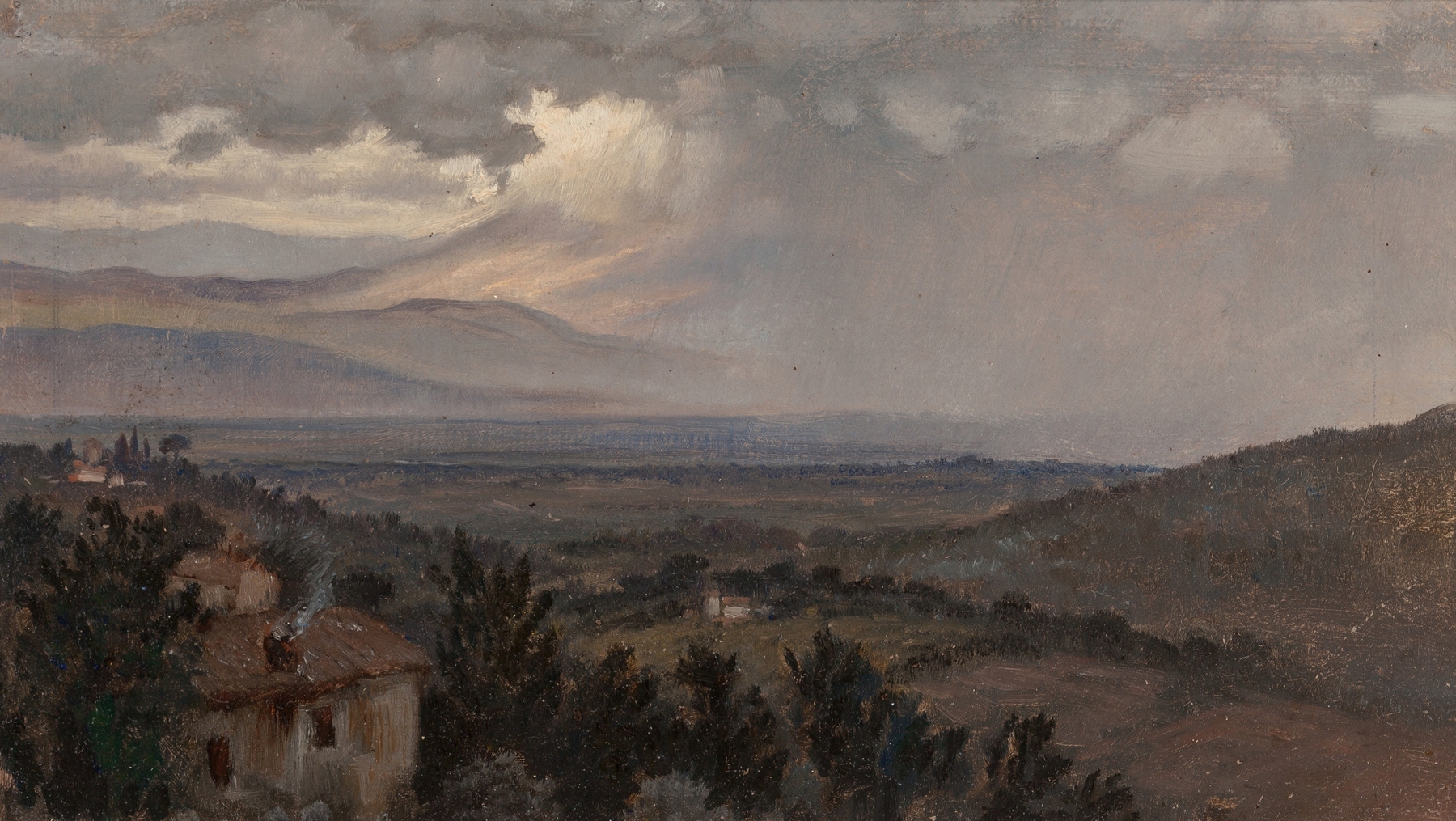
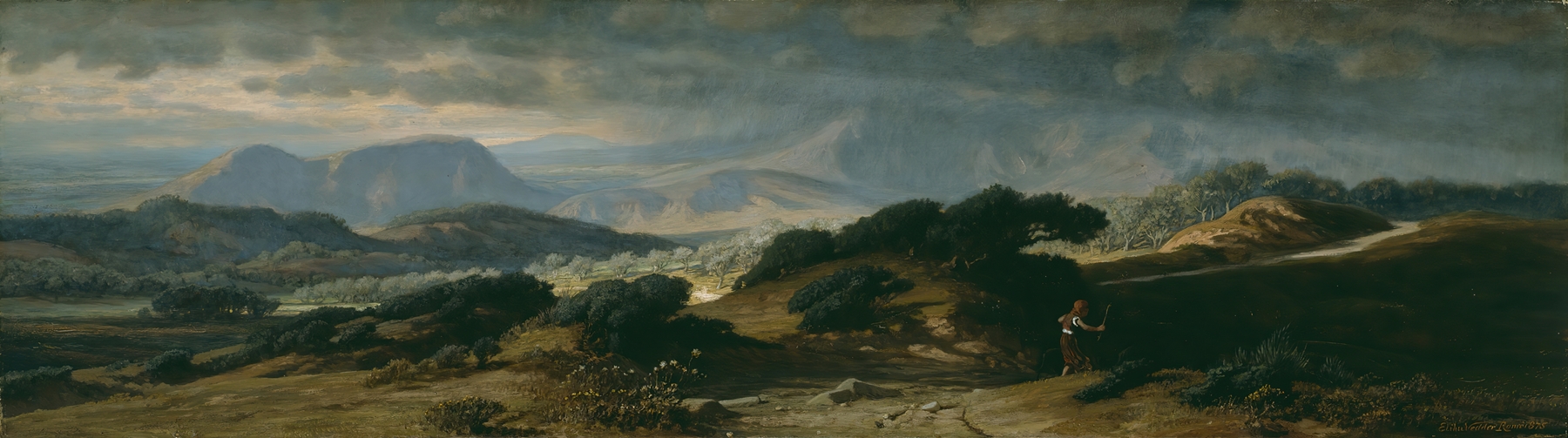
What if silence could speak through light? In Elihu Vedder's Storm in Umbria, the tempest rises not only in the sky but within the depths of our collective memory, hinting at legacies forged in moments of turmoil. Look to the left at the swirling clouds, their dark hues contrasting sharply with the vibrant greens of the landscape below. The astonishment lies in Vedder's use of light; it breaks through the chaos, illuminating the scene with an ethereal glow. The brushstrokes dance with energy, guiding your gaze across the tumultuous sky and down to the calm, resilient land.
This duality of ferocity and tranquility reflects the tension between nature's wrath and the enduring spirit of the earth. The painting captures not just a weather event but a moment of existential reflection. The storm hints at an upheaval that threatens yet also nurtures rebirth; the land waits patiently for the rain to nourish it. Delicate details—like the glimmers of sunlight breaking through the clouds—serve as metaphors for hope amidst despair, illustrating how beauty often emerges from chaos.
This contrast invites viewers to contemplate the cycles of life and the legacies that are shaped in the wake of destructive forces. In 1875, Vedder was residing in Italy, immersed in the richness of its landscapes and cultural heritage. This period marked a turning point in his artistic journey, where he fused Romantic ideals with a symbolist approach. The world of art was concurrently shifting, with movements like Impressionism taking root, yet Vedder remained committed to exploring deeper emotional resonances, much like the very storm he portrayed.