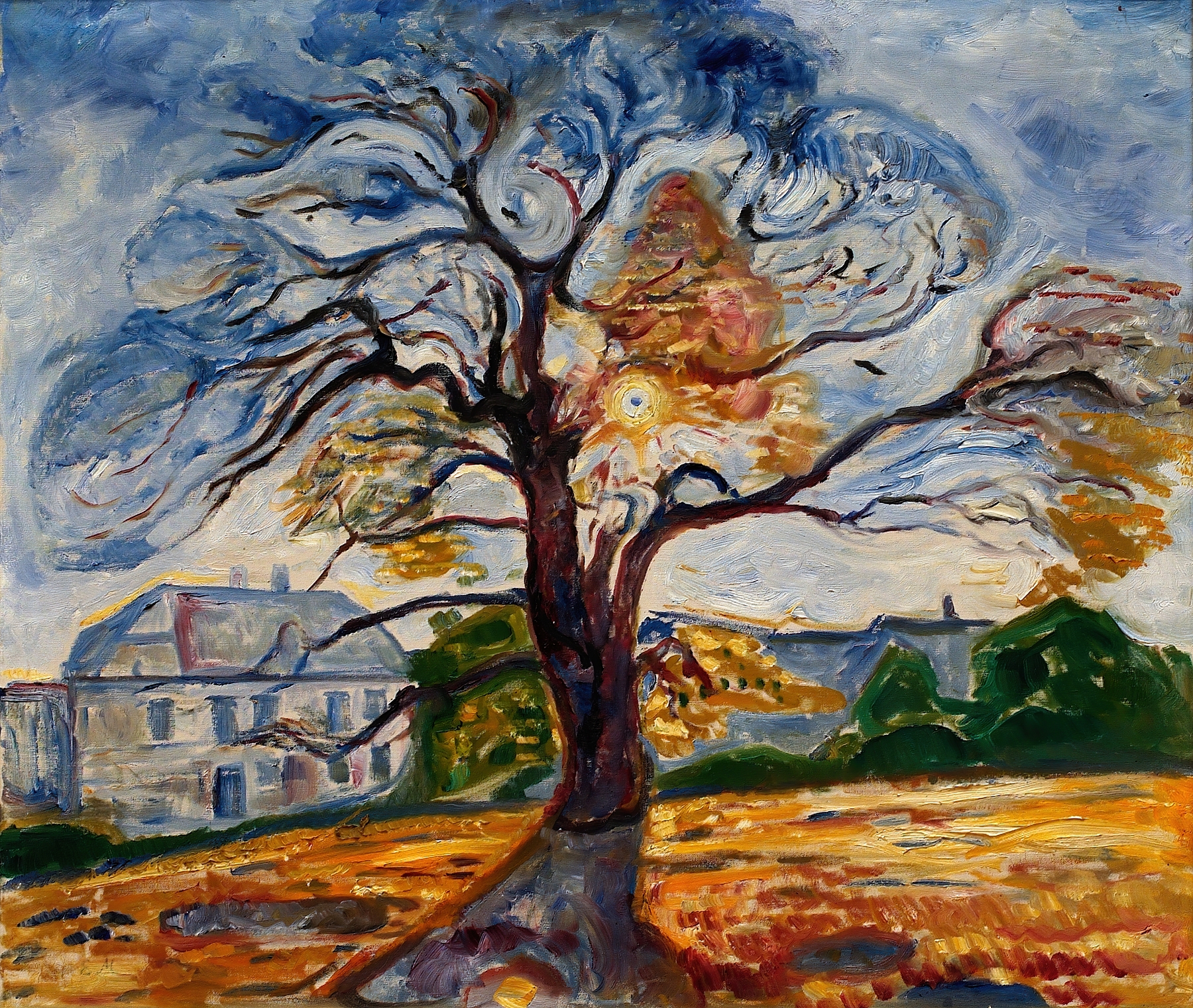
When did color learn to lie? In *The Oak*, the vibrant greens and earthy browns deceive, painting a façade of serenity over an undercurrent of turmoil and revelation. Look to the center, where the gnarled trunk of the oak commands attention, its rough bark a testament to endurance. Surrounding it, the foliage dances in a spectrum of greens, yet each hue seems to pulse with a life of its own. Notice how the interplay of light and shadow creates an almost surreal atmosphere, rendering a space that feels both familiar and unsettling. Munch’s brushstrokes, adventurous and spirited, allow the colors to swirl with emotional depth, as if the very essence of the tree is alive and breathing on the canvas. Dig deeper into the nuances, and you’ll discover the tension inherent in this natural scene. The grandeur of the oak stands in stark contrast to the swirls of color that seem almost frenzied, hinting at a world that is not as stable as it appears. Here, the tree could represent both resilience and isolation, a solitary sentinel in an unpredictable environment. The revelations found in the details—each stroke and shade—speak to the complexity of existence, inviting contemplation on what lies beneath the surface. Munch painted this piece during a time of personal turbulence in 1906, as he grappled with the emotional fallout from his family’s history and his own struggles with mental health. Emerging from a period of experimentation, Munch was deepening his exploration of color and symbolism while navigating the avant-garde movements in Europe. The world around him was shifting, seeking new expressions of truth, making *The Oak* both a reflection of his inner landscape and a commentary on the complexities of human experience.