The Rialto Bridge, Venice — History & Analysis
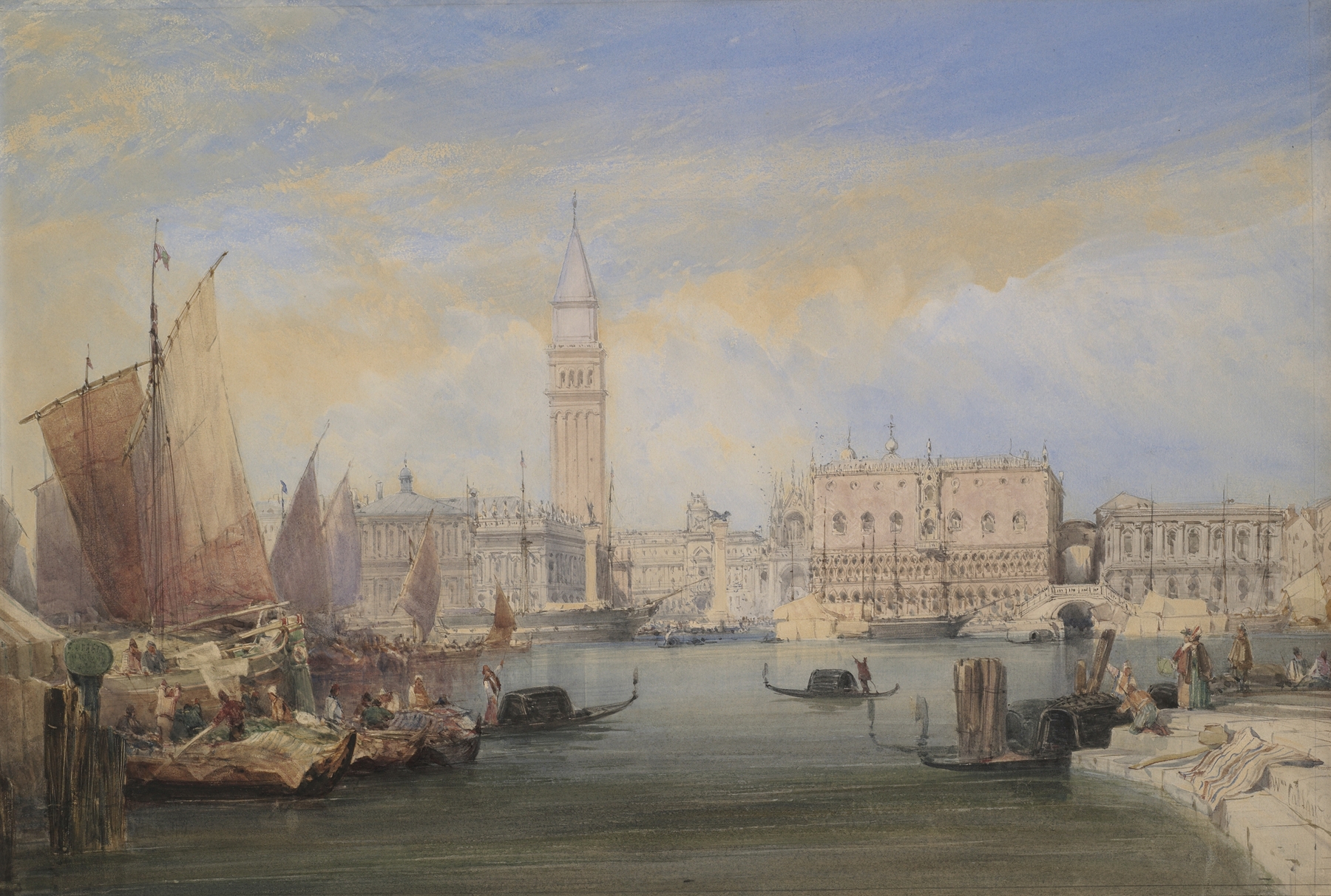
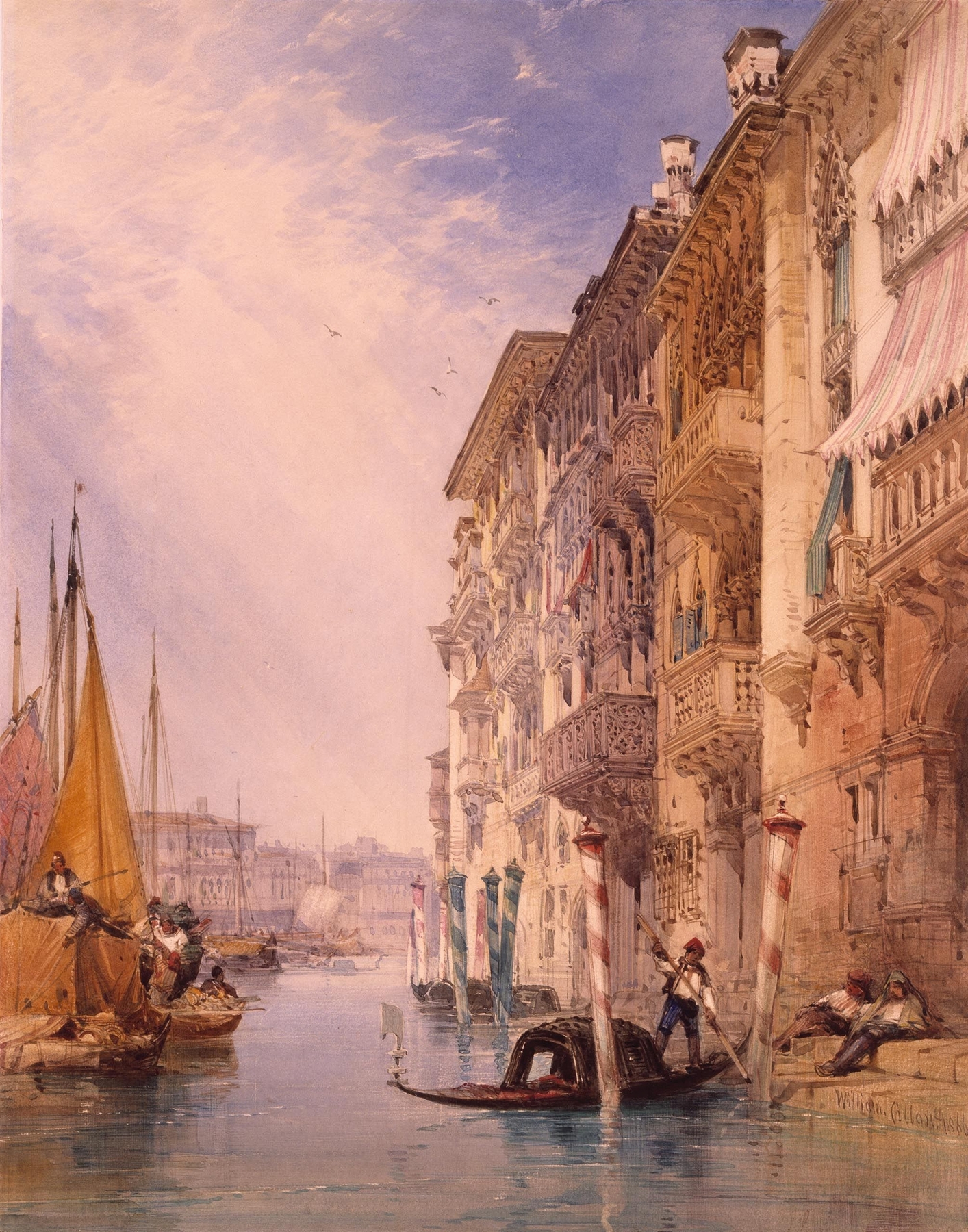
Can beauty exist without sorrow? In the hushed embrace of twilight, we encounter a moment where silence reigns, where the beauty of life lingers in the stillness of the Venetian landscape. Look to the left at the soft ripple of the canal, its surface shimmering with the golden hues of the setting sun. The Rialto Bridge rises majestically, arching gracefully over the water, its stone structure bathed in warm light that contrasts sharply with the cool shadows extending from the buildings.
Notice how Callow’s delicate brushwork captures the intricate details of the bridge’s architecture, emphasizing both its grandeur and its timelessness, while the distant figures add a sense of scale and humanity to this serene scene. In the quietude of the painting, a poignant emotional tension emerges from the interplay between light and shadow. The vibrant colors of the sunset evoke a fleeting beauty, while the looming shadows hint at the inevitable passage of time. The gentle ripples in the water suggest a sense of movement that is both calming and restless, inviting the viewer to ponder the silent stories of those who traverse the bridge.
Each element, from the depth of the sky to the reflections on the water, reflects the fragile balance between joy and melancholy. During his career, Callow created The Rialto Bridge at a time when he was deeply engaged in capturing the essence of English landscapes and architecture, often drawing inspiration from his travels throughout Europe. Living in the mid-19th century, he embraced the Romantic movement, exploring themes of nature and classical elements, while working in a period marked by a growing appreciation for plein air painting and a fascination with capturing the transitory qualities of light.