A Gondola on the Grand Canal, Venice — History & Analysis
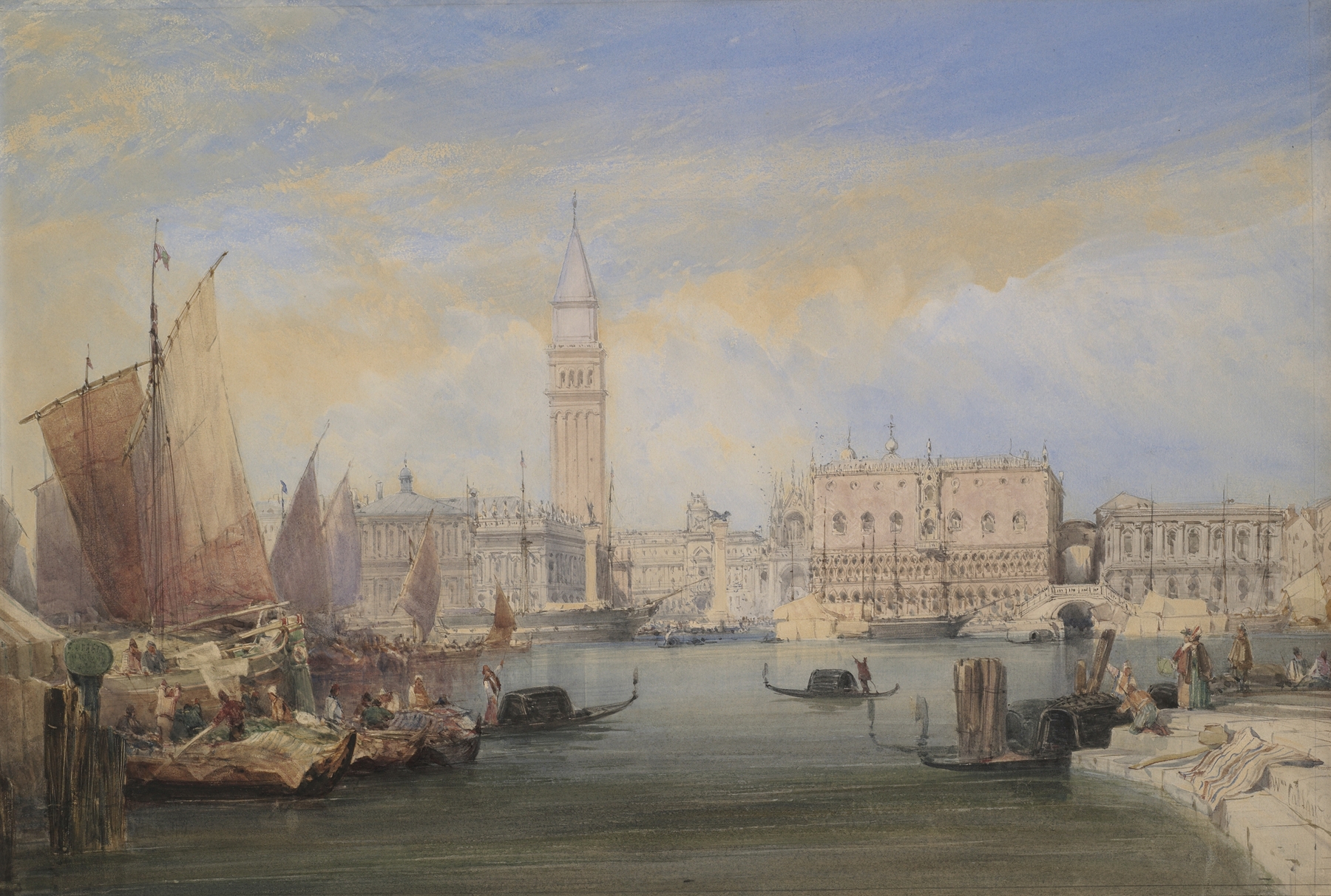
Can paint confess what words never could? In A Gondola on the Grand Canal, Venice, the ethereal beauty of this famed city transforms into a dreamscape, inviting us to wander through its canals and secrets. First, look to the left, where the gentle ripples of the water seem to whisper tales of history. The gondola, painted with precision, glides serenely along the Grand Canal, harmonizing with the soft hues of the evening sky. The warm oranges and pinks blend seamlessly, reflecting off the water's surface, while buildings rise majestically in the background, silhouetted against the fading light.
The artist's careful brushwork captures not only the scene but also the delicate interplay of light and shadow, drawing the viewer into a moment suspended in time. Deeper insights emerge from the contrasts within the painting. The stillness of the gondola stands in stark opposition to the vibrant life of Venice, where every stroke evokes both tranquility and the bustling energy of the city. The contrast between the serene water and the shadowy façades hints at the secrets that linger just beneath the surface, inviting contemplation about the unseen lives intertwined within these canal-side walls.
The dreamy atmosphere feels both nostalgic and elusive, as if the viewer is peering into a memory tinged by longing. In 1866, while painting this piece, Callow was living in London, surrounded by a burgeoning movement of artists exploring landscape and travel as subjects. The 19th century was a time of great change, particularly in the way artists approached light and color. This work reflects both his artistic mastery and the era's fascination with romanticized vistas, capturing the essence of Venice — a city that remains a dream for many.