Trampaarden op de Dam te Amsterdam — History & Analysis
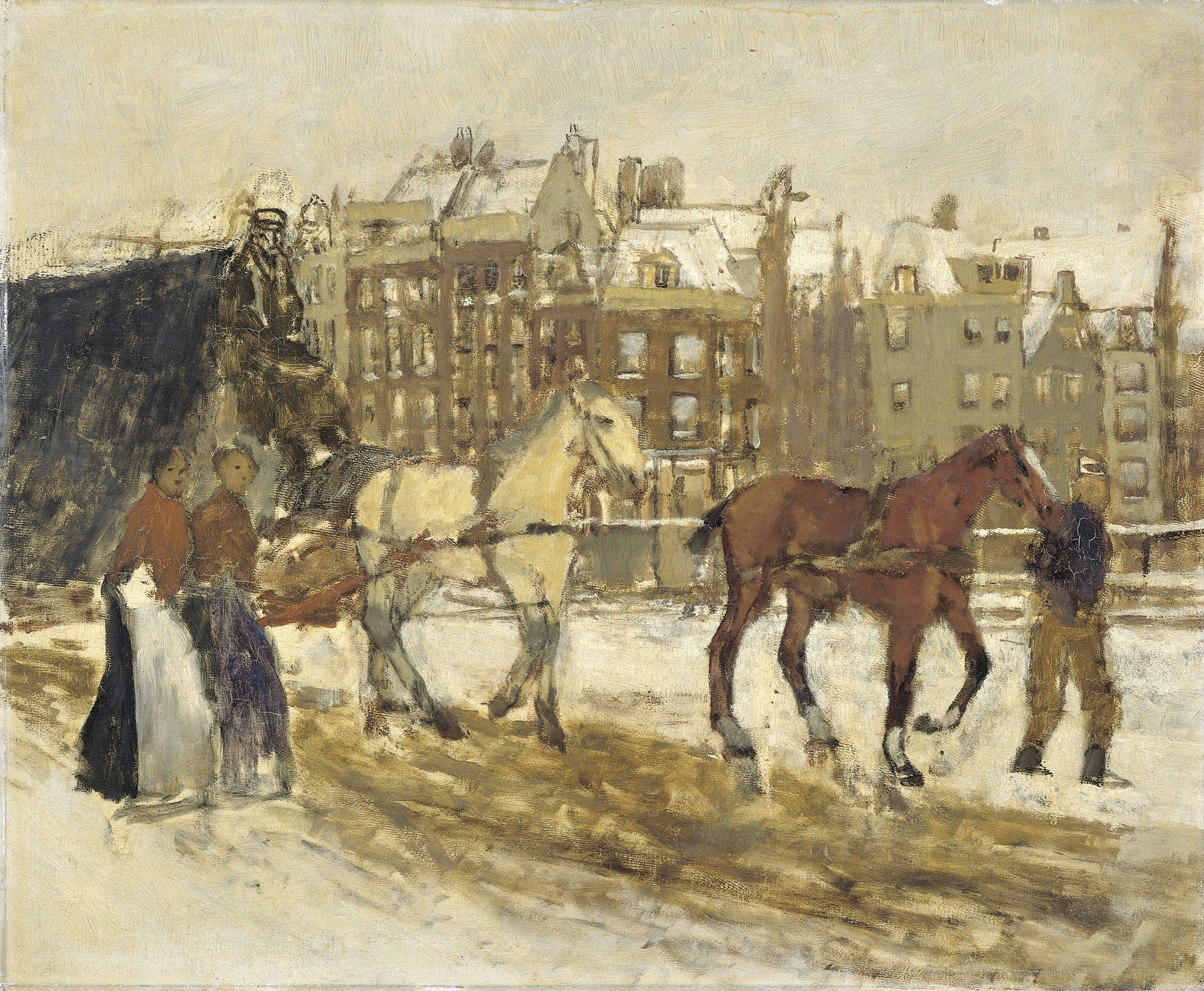
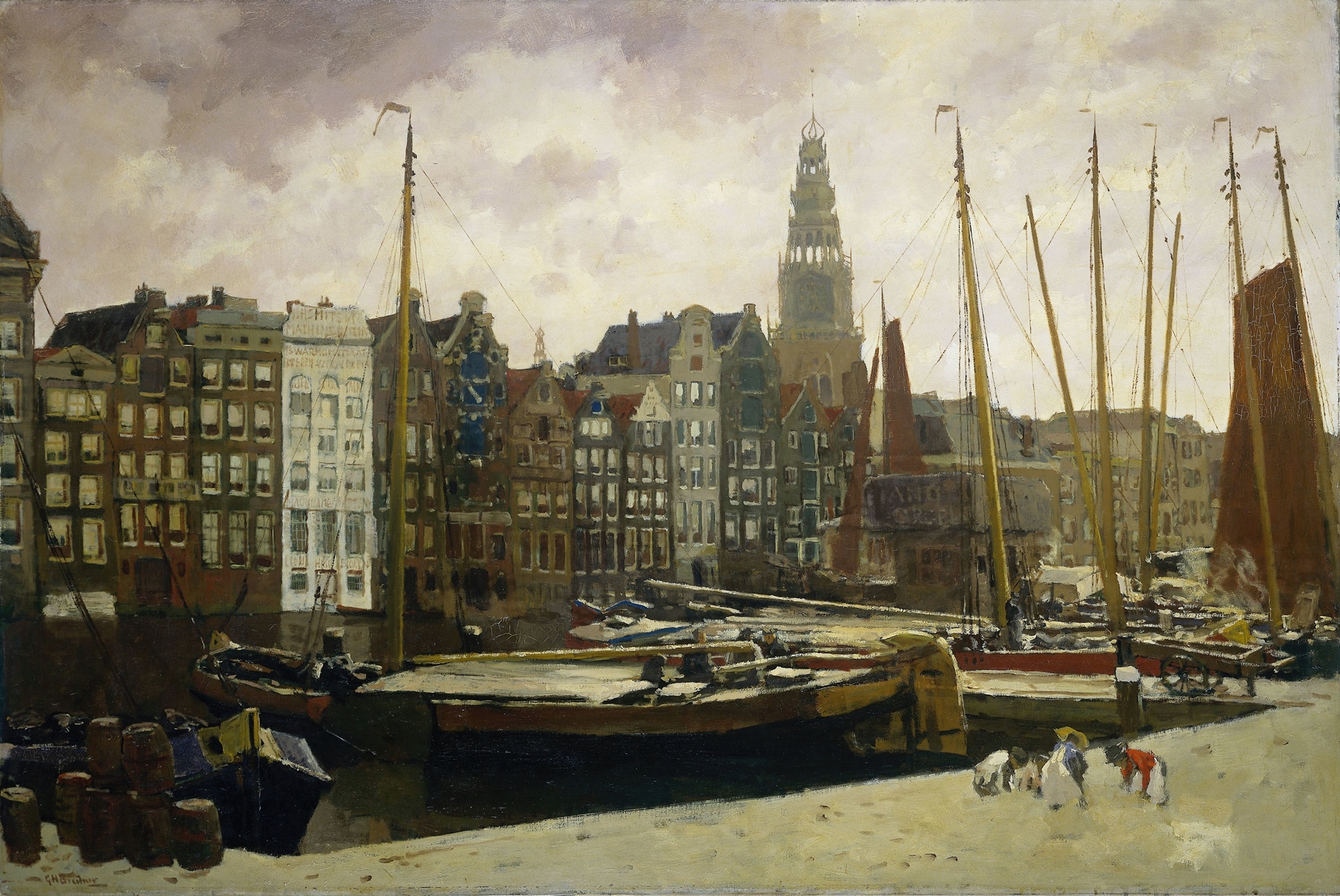
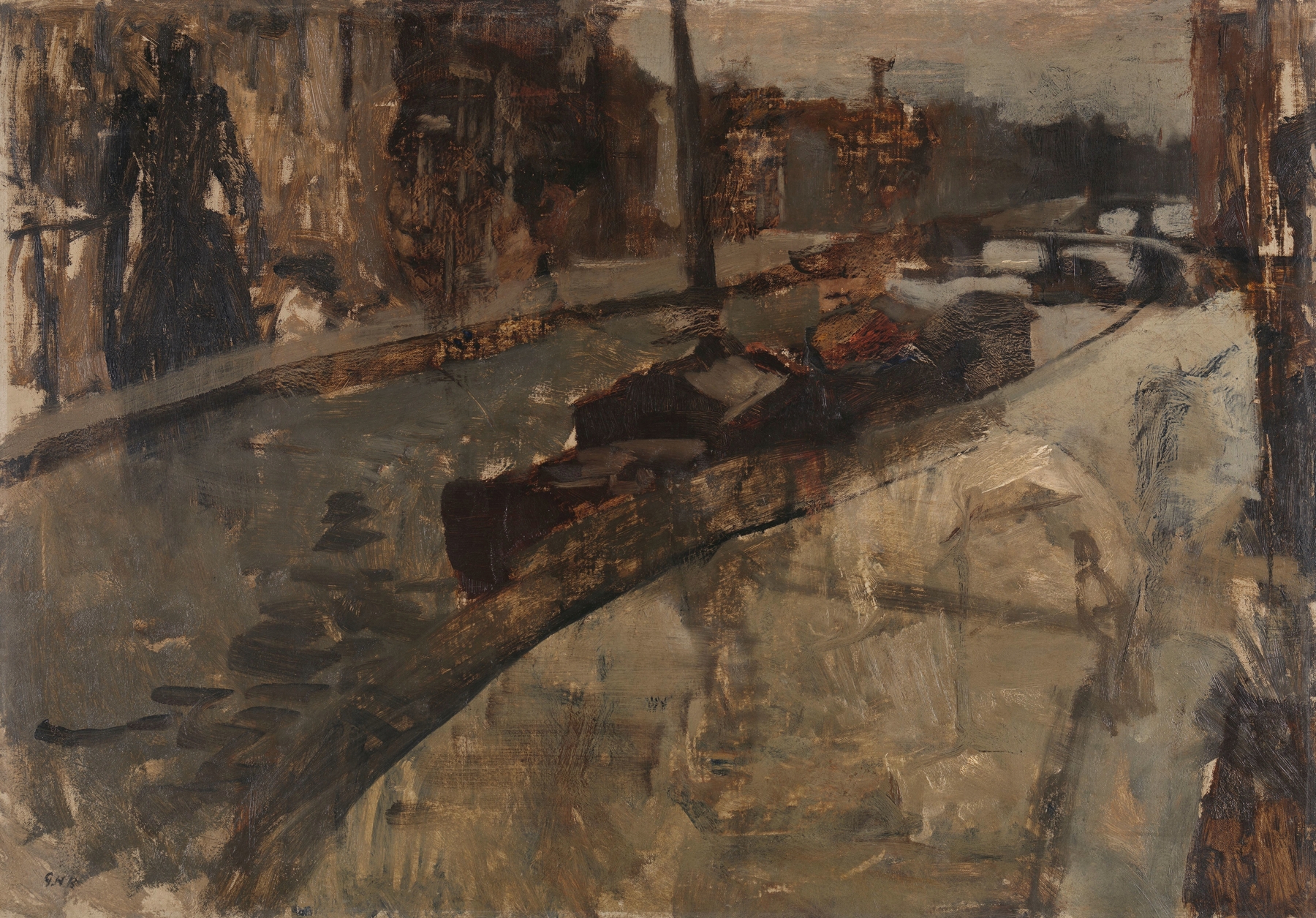
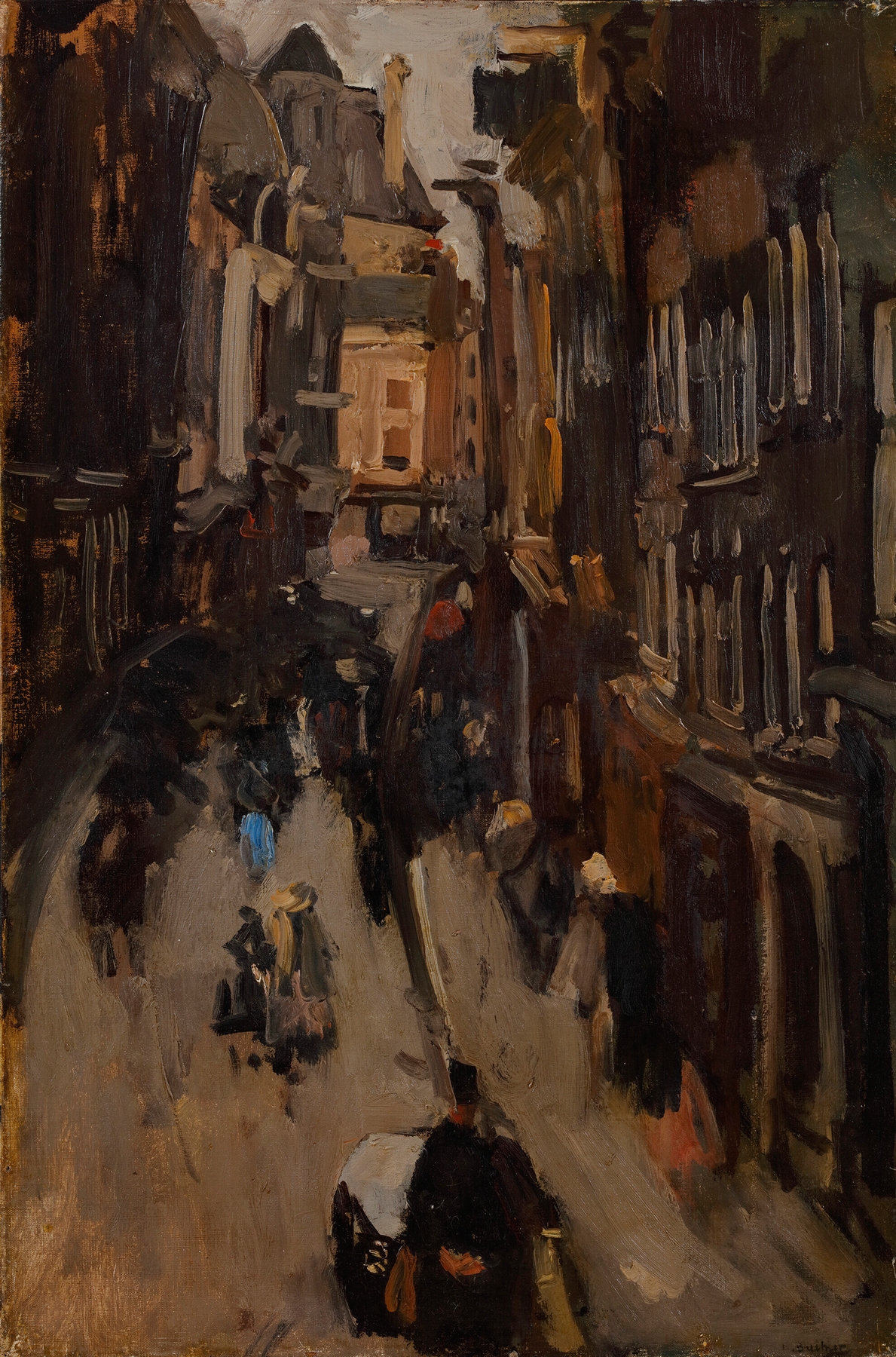
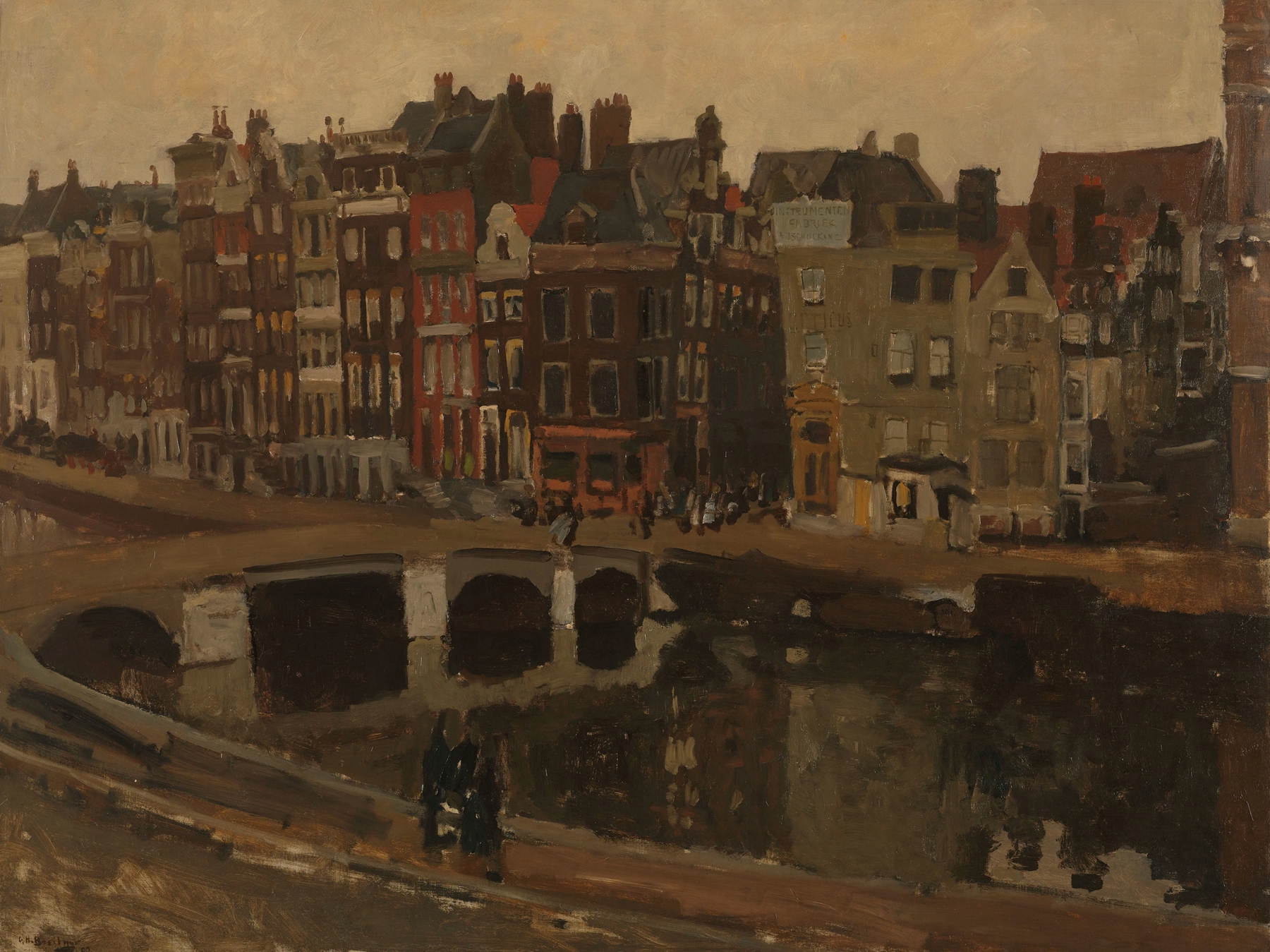
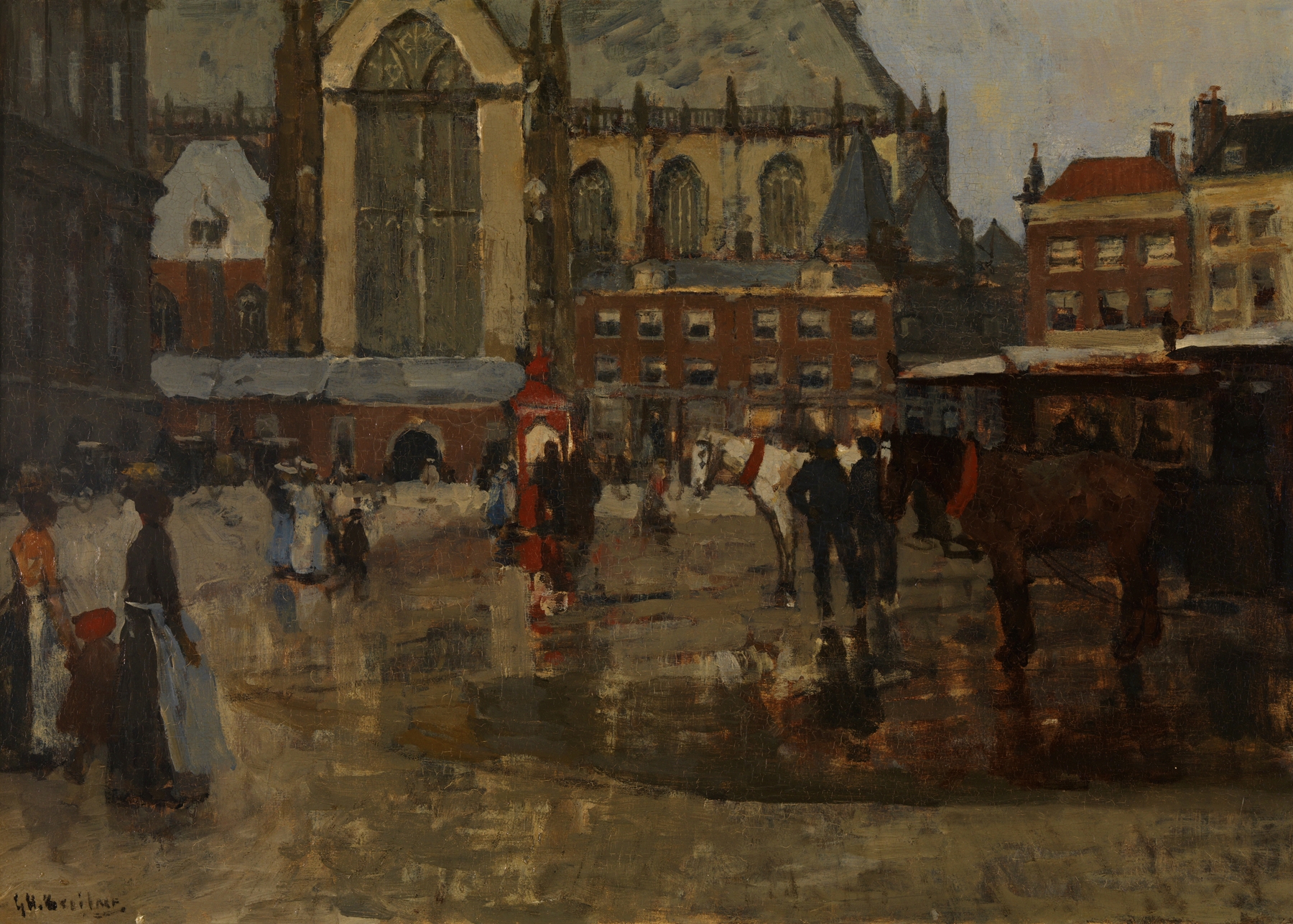
Can beauty exist without sorrow? In Trampaarden op de Dam te Amsterdam, a delicate tension plays out, suggesting that illusion dances hand in hand with reality, capturing fleeting moments lost to time. Look to the center, where a dynamic crowd mingles under a canopy of umbrellas. The artist masterfully captures the play of light on the wet cobblestones, creating reflections that double the vibrancy of the scene. Notice how the muted palette of grays and browns contrasts with the bursts of color from the people’s clothing, adding life to the otherwise somber environment.
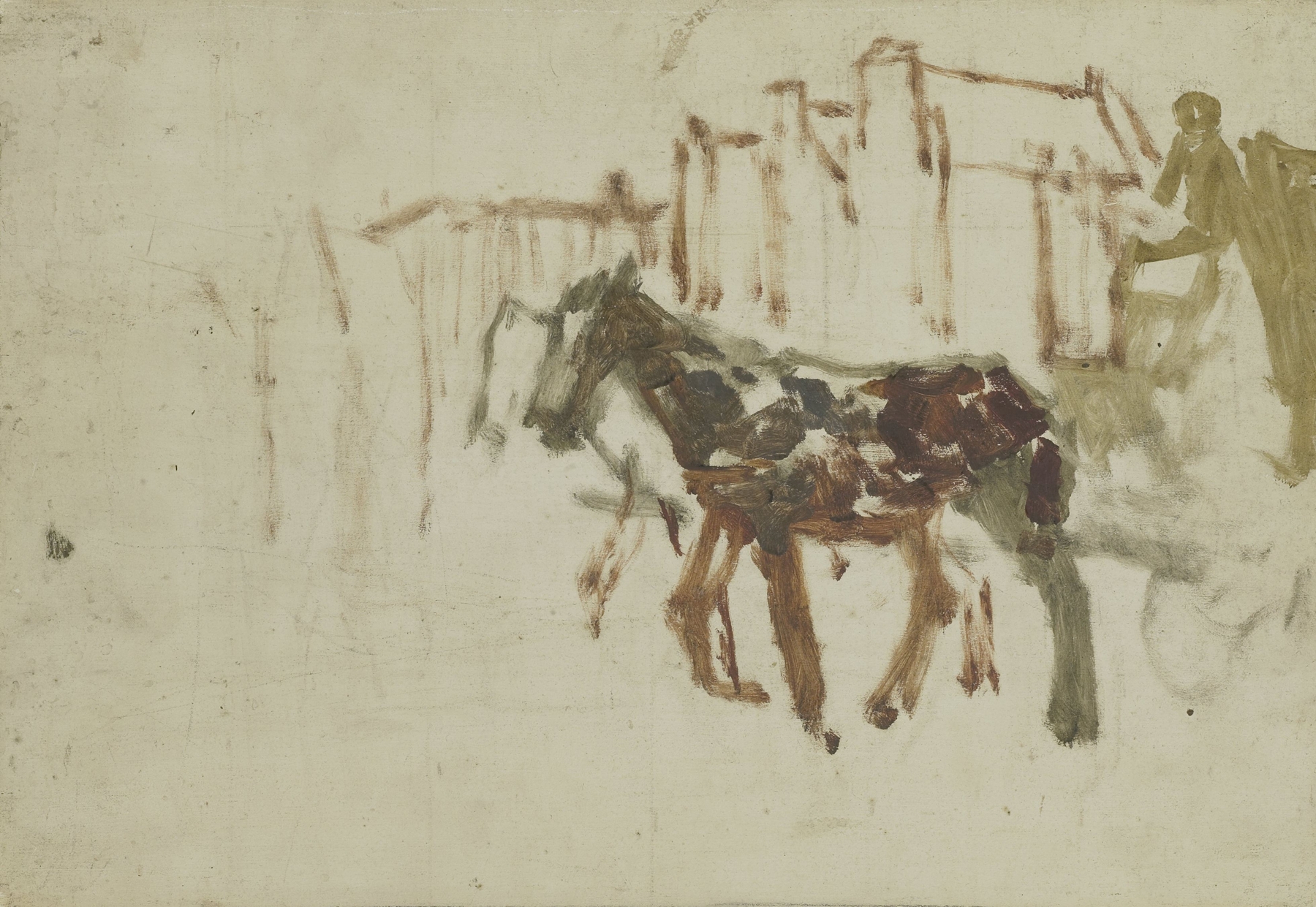
The figures appear animated yet transient, caught in a moment that feels both alive and ephemeral. Upon closer inspection, the faces convey a subtle melancholy, hinting at stories untold. The intricate details of the horses’ reins and the way the rain blurs the edges of their forms evoke a sense of movement and urgency, contrasting with the stillness of the surrounding architecture. This duality invites the viewer to ponder what lies beneath the surface — are these joyful moments masking deeper regrets?
The heavy sky looms above, reminding us that beauty often coexists with sorrow. In 1893, while residing in Amsterdam, the artist was deeply influenced by the Impressionist movement, yet he maintained his unique observational style. This period was marked by a growing fascination with urban life, capturing moments of everyday reality amid changing societal landscapes. The world around him was evolving, and through this work, he immortalized a brief encounter with beauty that speaks to the transient nature of existence.