Um-Baghek on the Dead Sea — History & Analysis
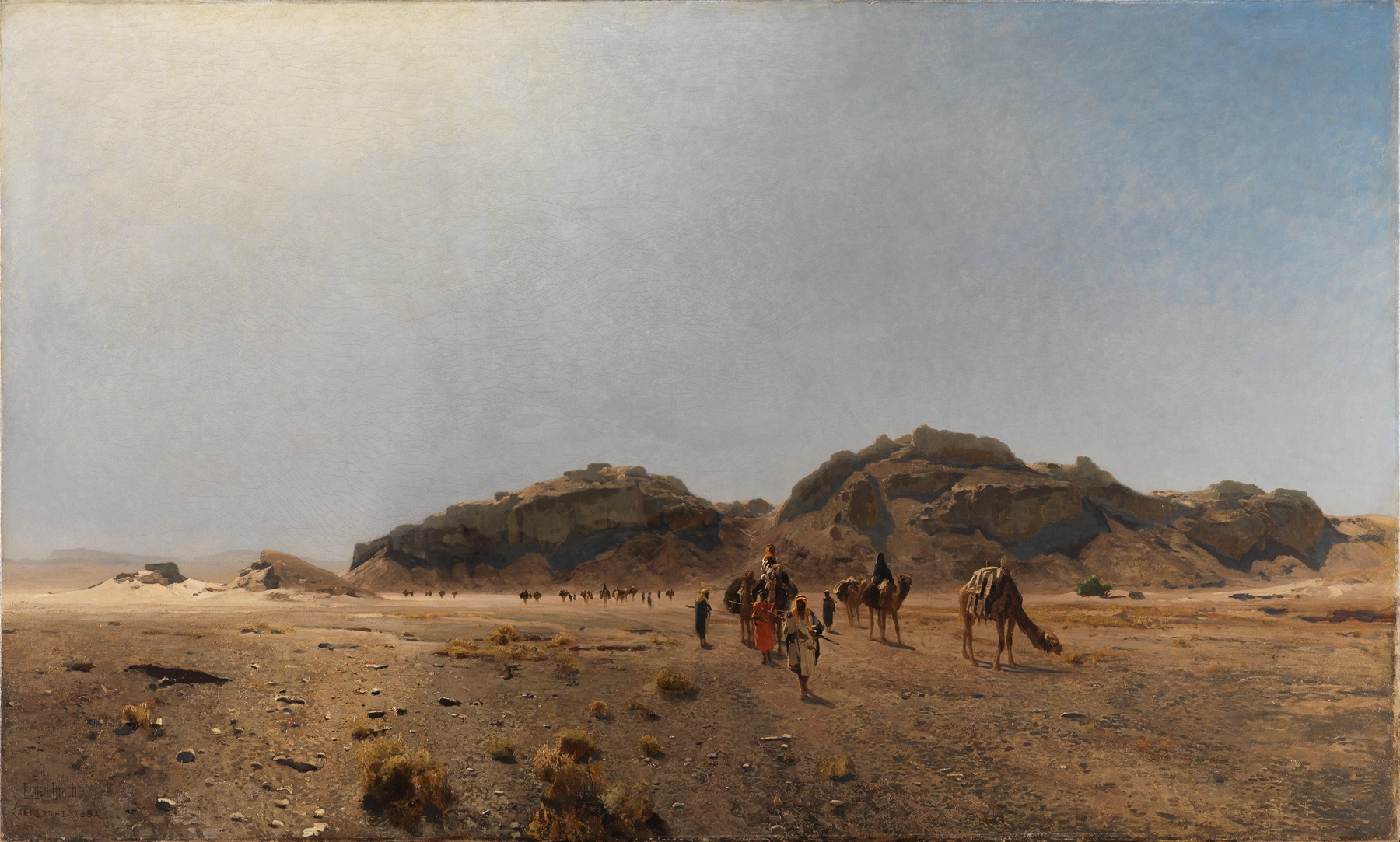
What secret hides in the quiet of the canvas? In the stillness of Um-Baghek on the Dead Sea, fragility emerges as a poignant theme, inviting us to explore the delicate interplay between the natural world and human existence. Look to the center of the painting, where the shimmering waters of the Dead Sea stretch infinitely toward a hazy horizon. The soft, muted palette of blues and greens creates a tranquil atmosphere, while the subtle warm tones of the surrounding landscape draw the eye. Notice how the gentle strokes evoke a sense of serenity, yet the figures of travelers cast slight shadows upon the scene, hinting at their transient nature.
The composition balances the vastness of the sea with the intimate connection of the figures, encapsulating a moment that teeters on the edge of permanence and impermanence. Delve deeper into the scene, and you may find hidden stories nestled within the details. The lone palm tree, bending gracefully against the wind, symbolizes resilience amidst fragility. The distant mountains serve as silent witnesses to the passage of time, their craggy surfaces contrasting with the smoothness of the water, evoking a sense of age and stillness.
Each brushstroke whispers of fleeting moments, reminding us of the beauty in transience—a theme inherent in both the environment and the lives of the figures depicted. Eugen Bracht painted Um-Baghek on the Dead Sea in 1891 while he was based in Germany, exploring the visual narratives of landscapes in his travels. This period was marked by a growing interest in plein air painting and the relationship between light and atmosphere, influenced by the wider movements of Romanticism and Impressionism. Bracht's work captures a moment in time, reflecting both the artist's personal journey and the cultural shifts occurring in the world of art.