Unter den Linden mit Droschken im Regen — History & Analysis
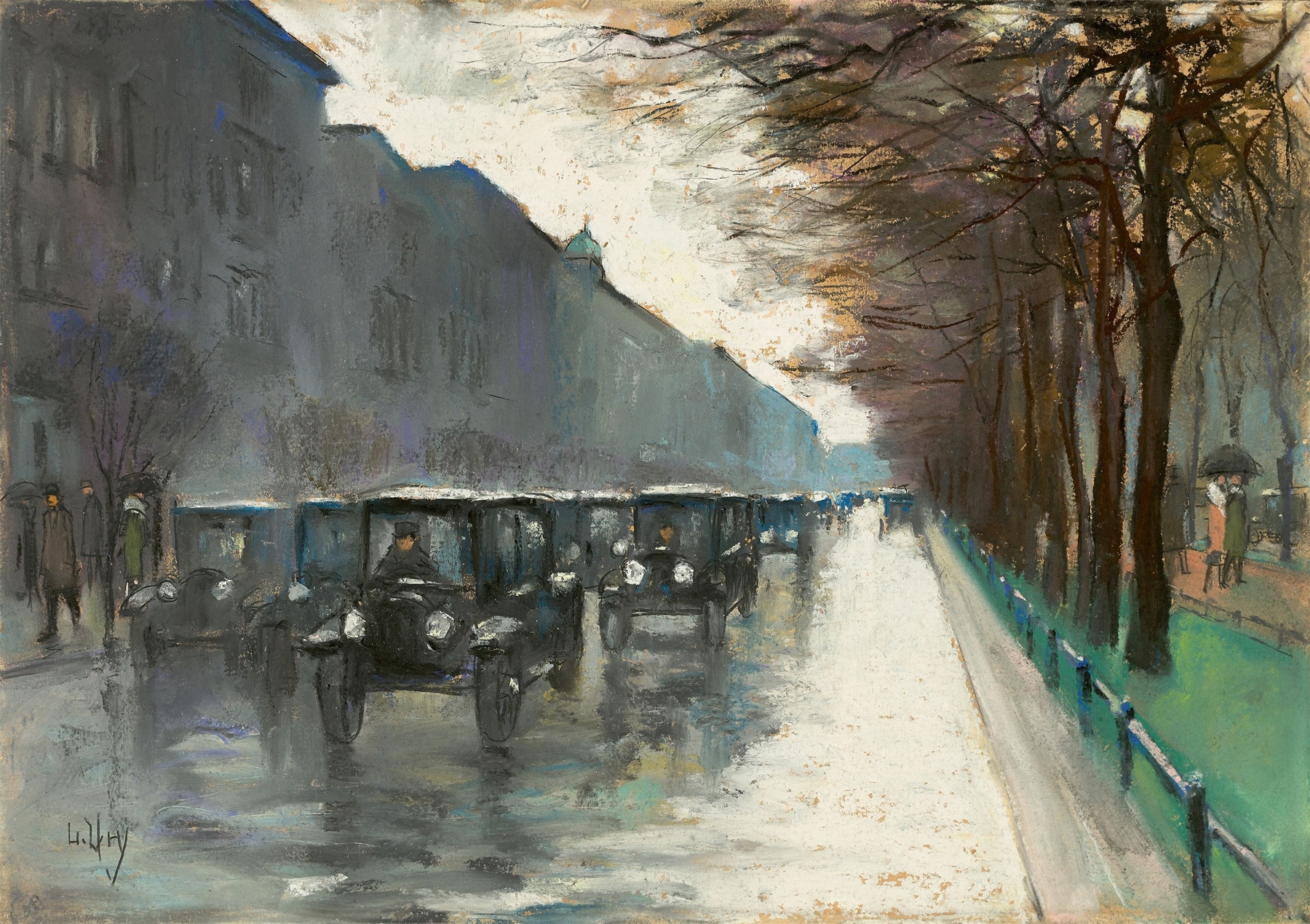
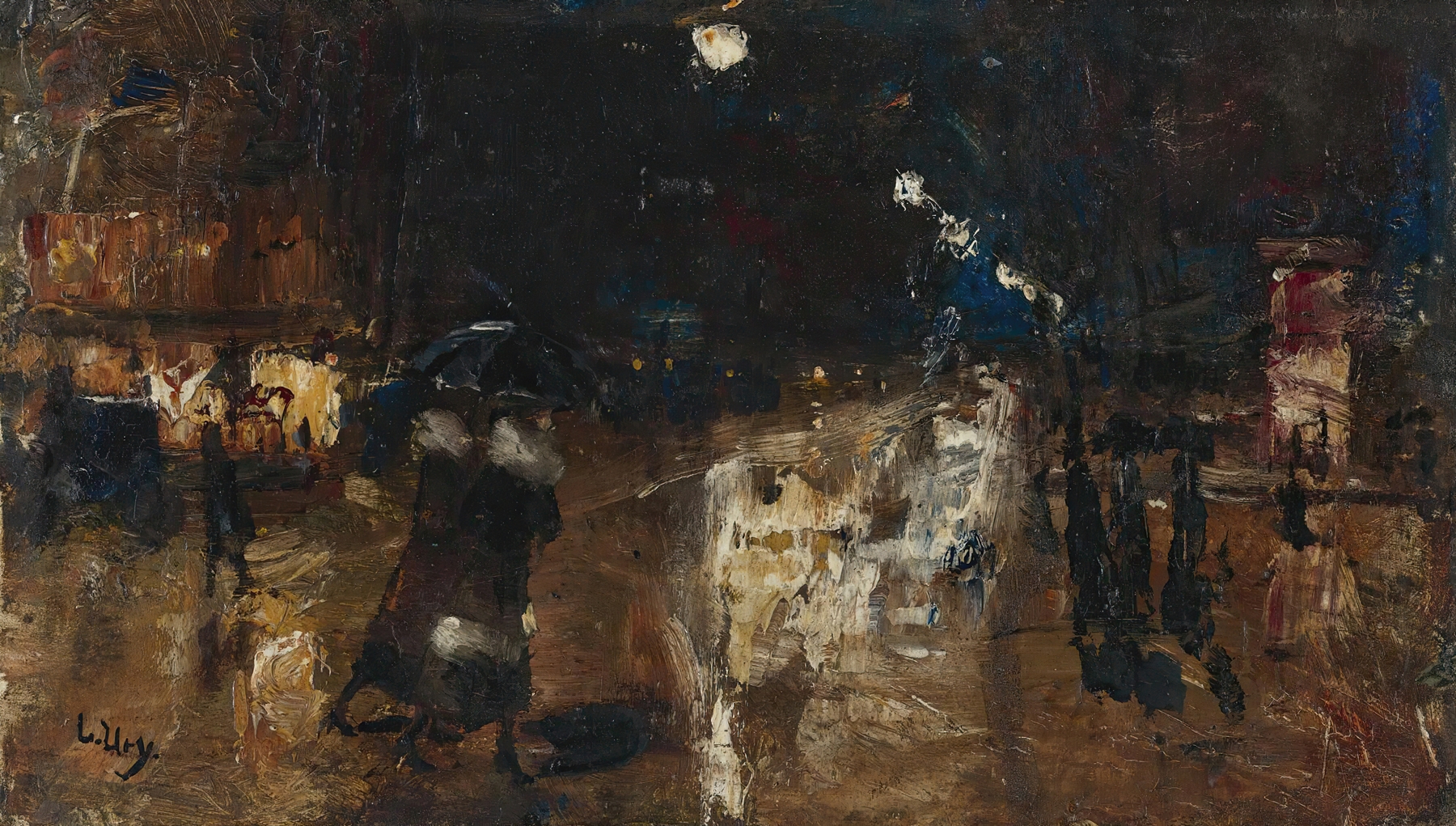
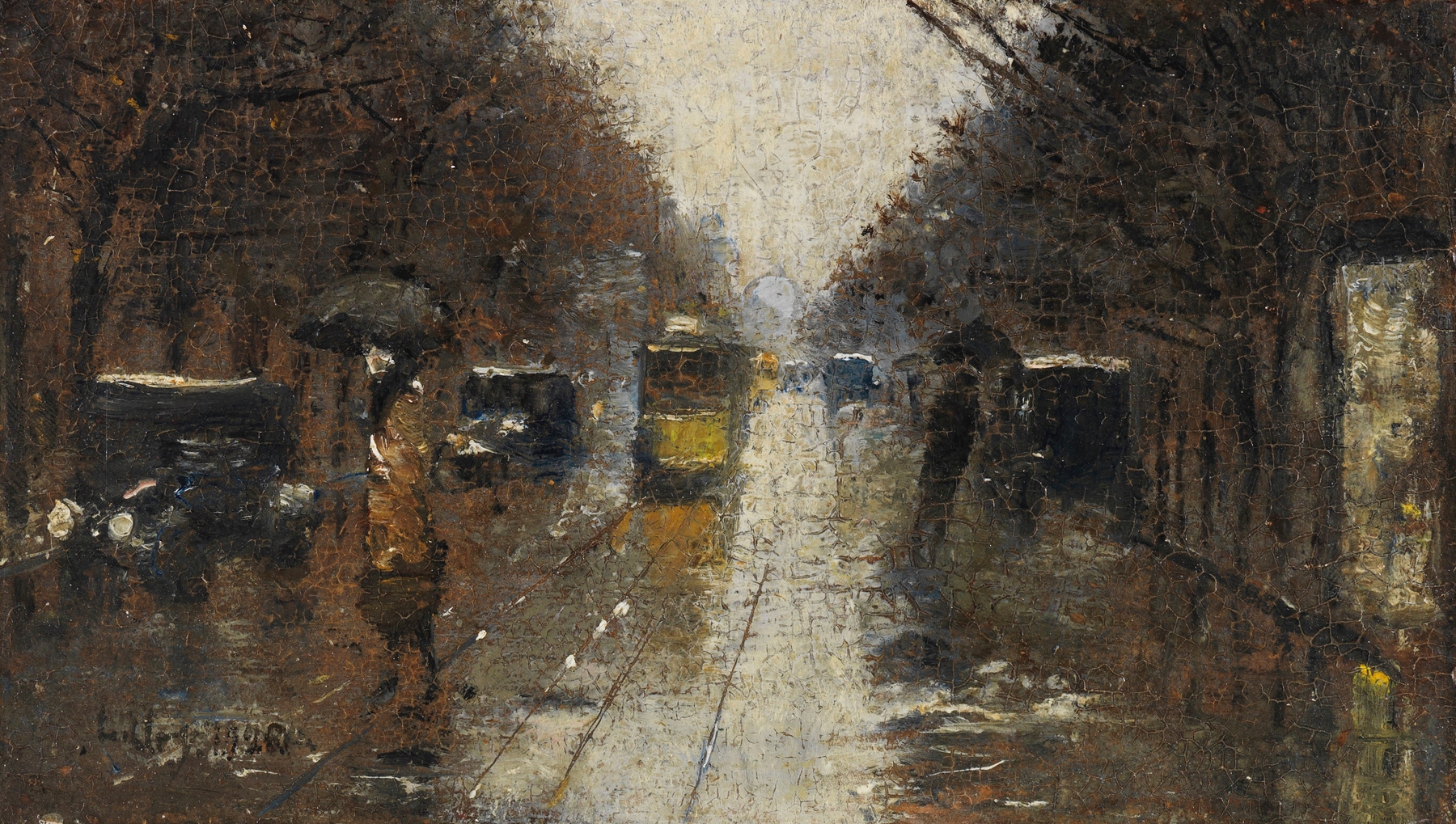
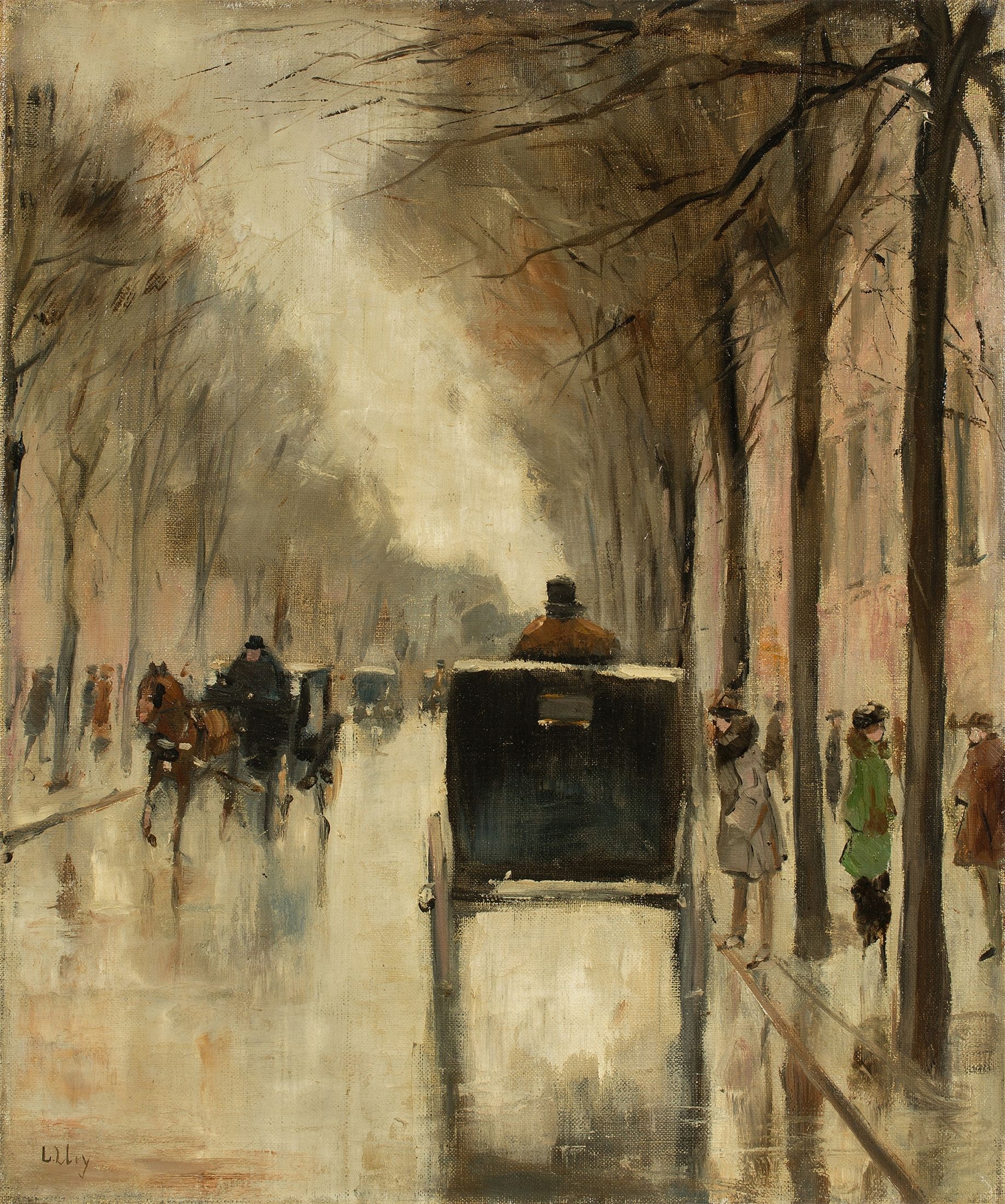
Who listens when art speaks of silence? In Unter den Linden mit Droschken im Regen, a world caught in the embrace of melancholy unfolds. The painting encapsulates that profound stillness — a moment where nature and humanity converge, drenched in the quietude of a gentle rain. Look to the left at the delicate silhouettes of horse-drawn carriages, their shapes softened by the translucent veil of raindrops.
The muted palette of grays and blues creates an atmosphere of wistfulness, as light refracts through the droplets, casting reflections onto the cobblestones. Notice how the rhythmic streaks of rain interlace with the faint figures huddled under umbrellas, their presence both ghostly and intimate, suggesting fleeting encounters amidst the relentless downpour. The emotional tension lies in the juxtaposition of movement and stillness. While the carriages seem in motion, the background remains static, and the raindrops create a sense of pause, inviting contemplation.
Each detail, from the glistening street to the shimmering umbrellas, evokes a sense of longing, as if the scene captures not just the physical space of Berlin’s Unter den Linden but also the unspoken narratives of its inhabitants, forever intertwined in solitude. Lesser Ury painted this piece in the early 20th century, during a time of burgeoning expressionism in Germany. Living in Berlin, he straddled the line between traditional Impressionist techniques and the darker themes that would later define his contemporaries. The world was shifting, and through his work, Ury explored the bittersweet essence of urban life, finding beauty in the ephemeral moments often overlooked amidst the clamor of the city.