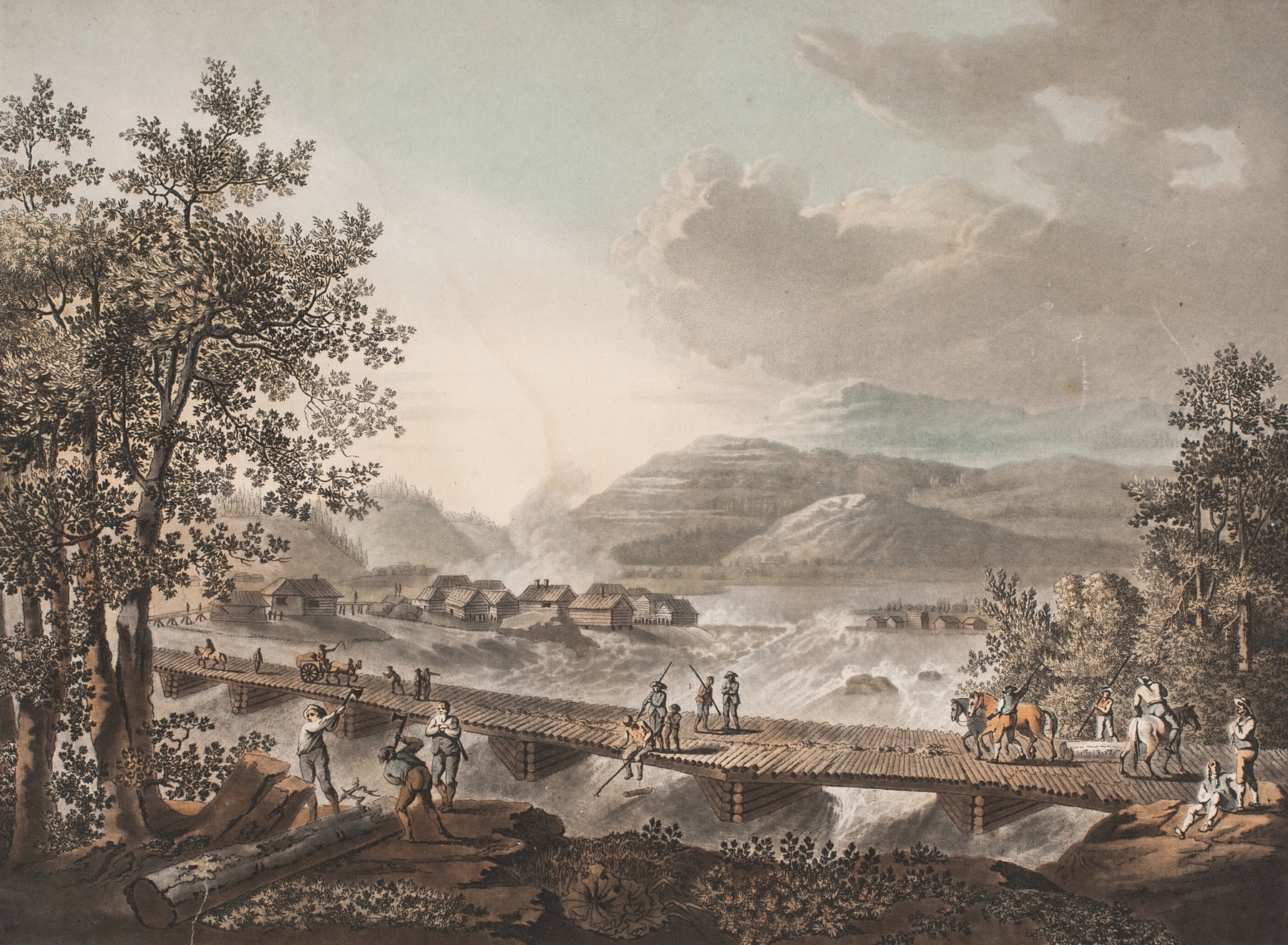
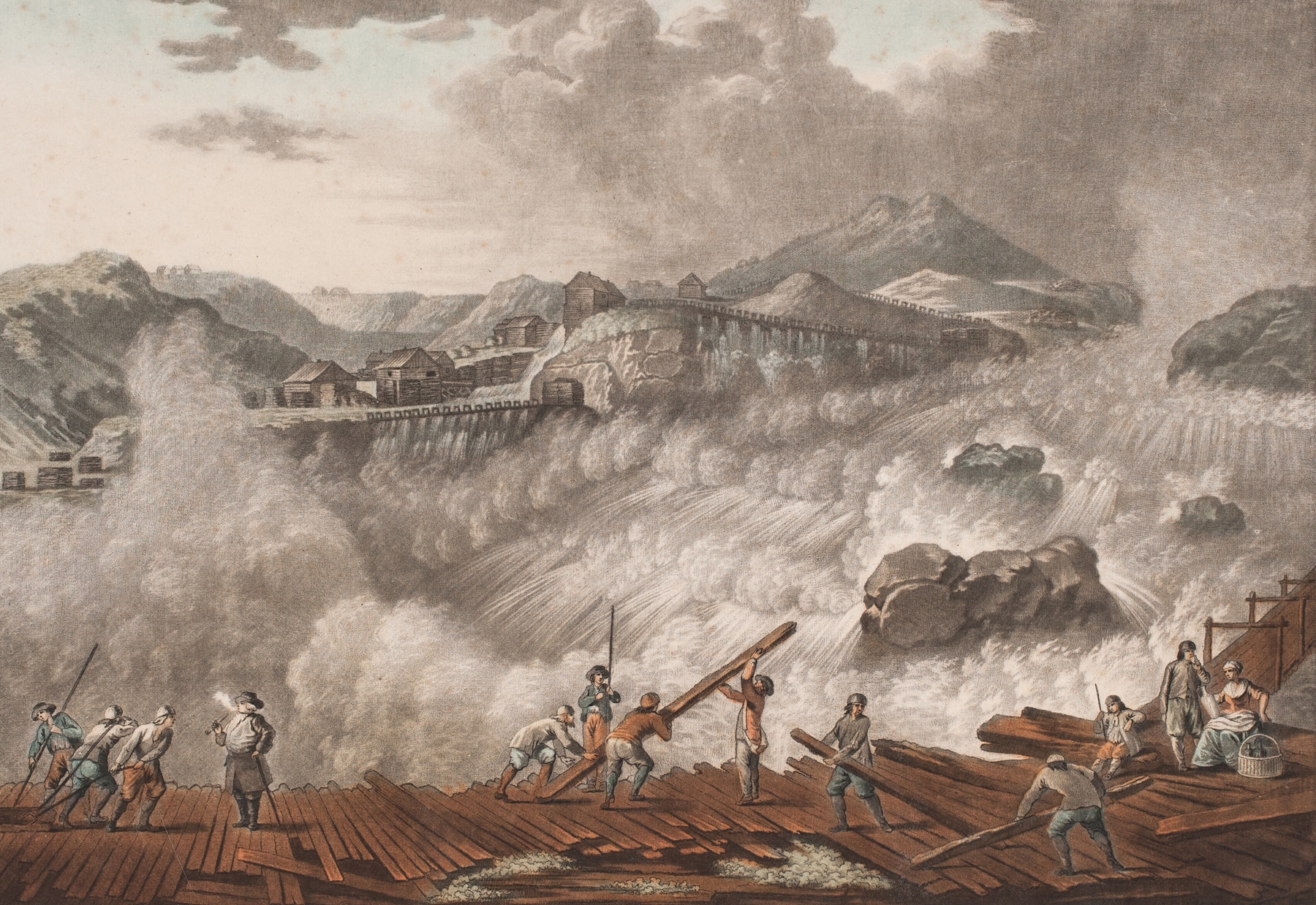
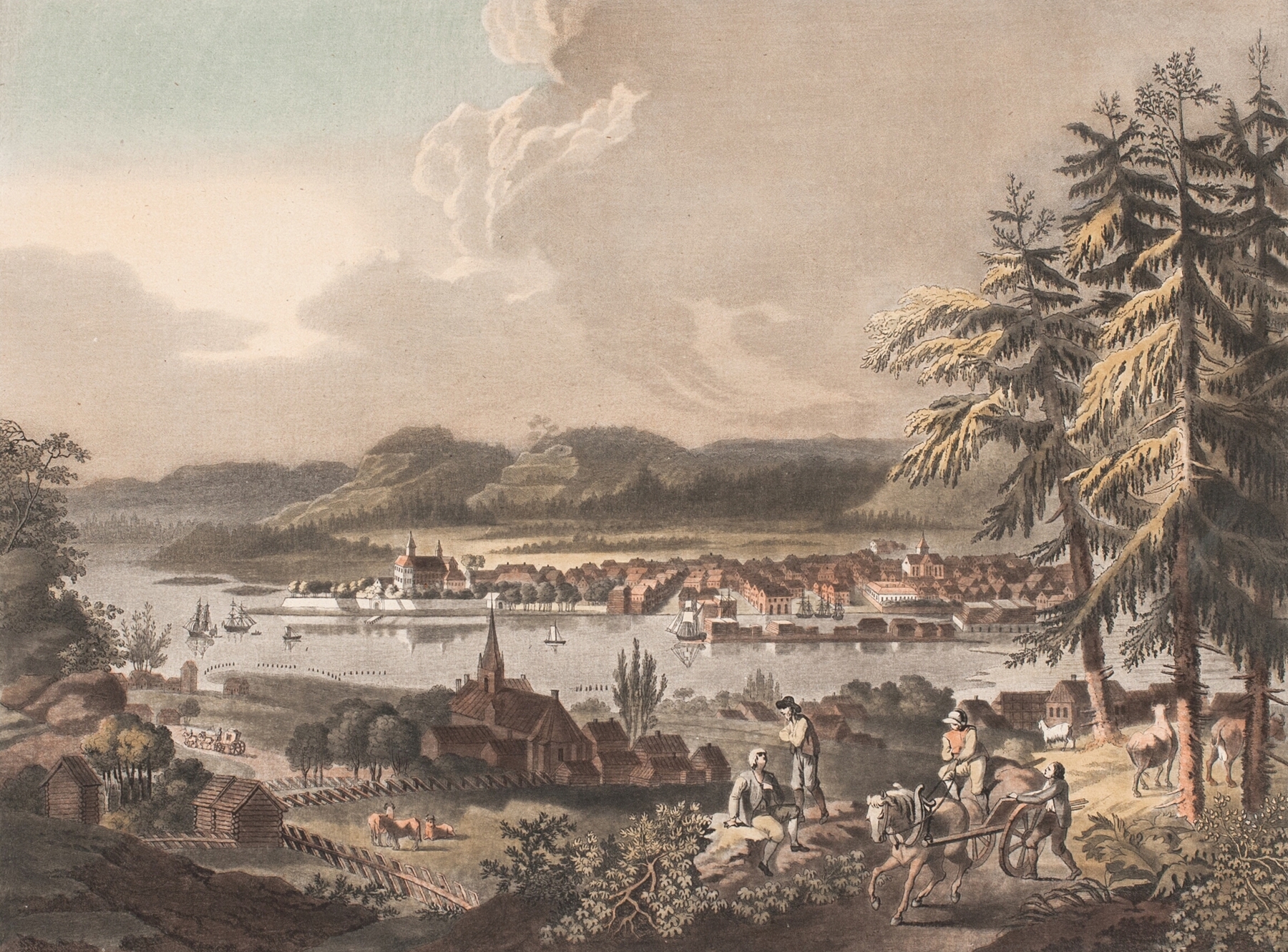
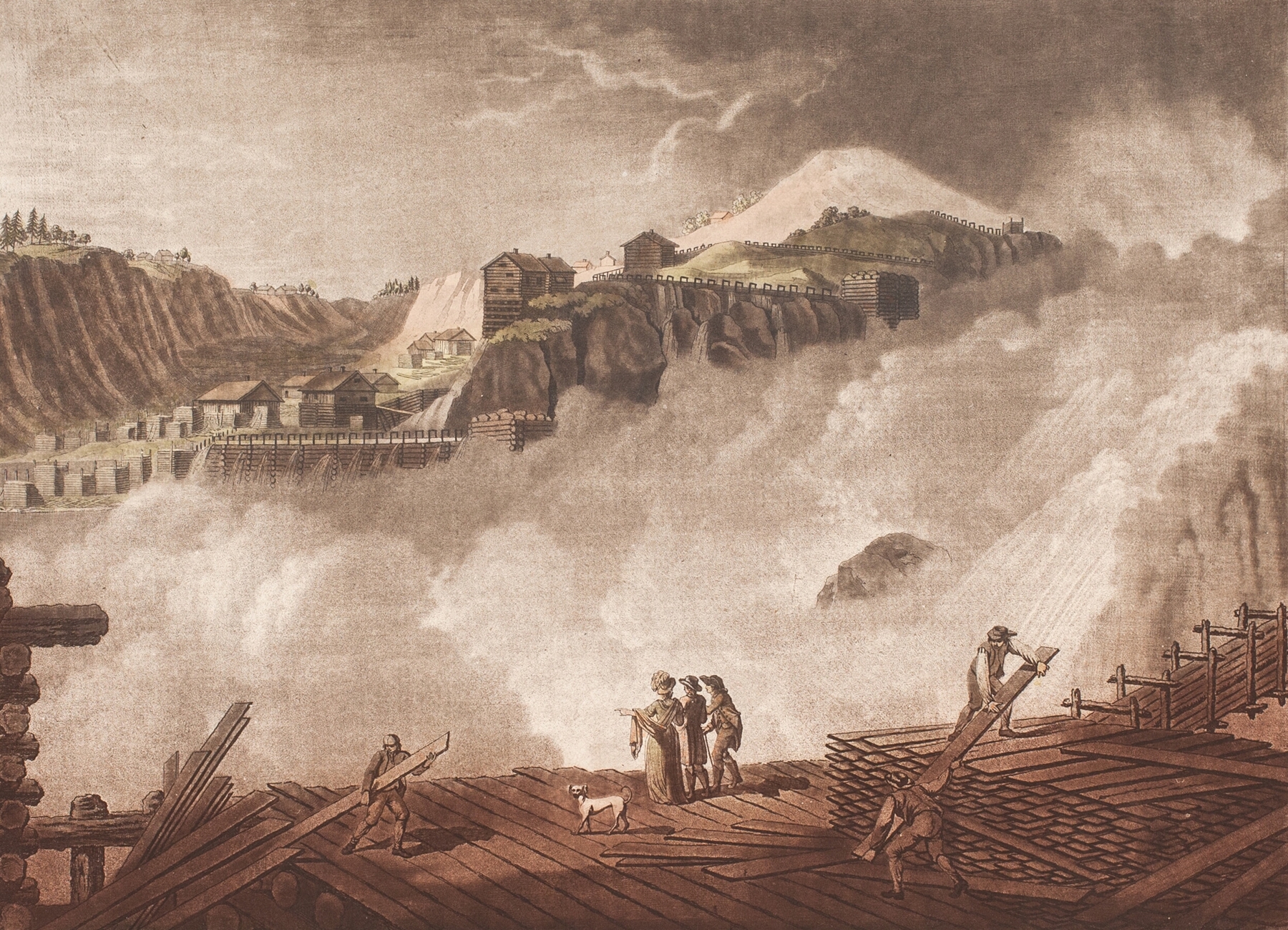
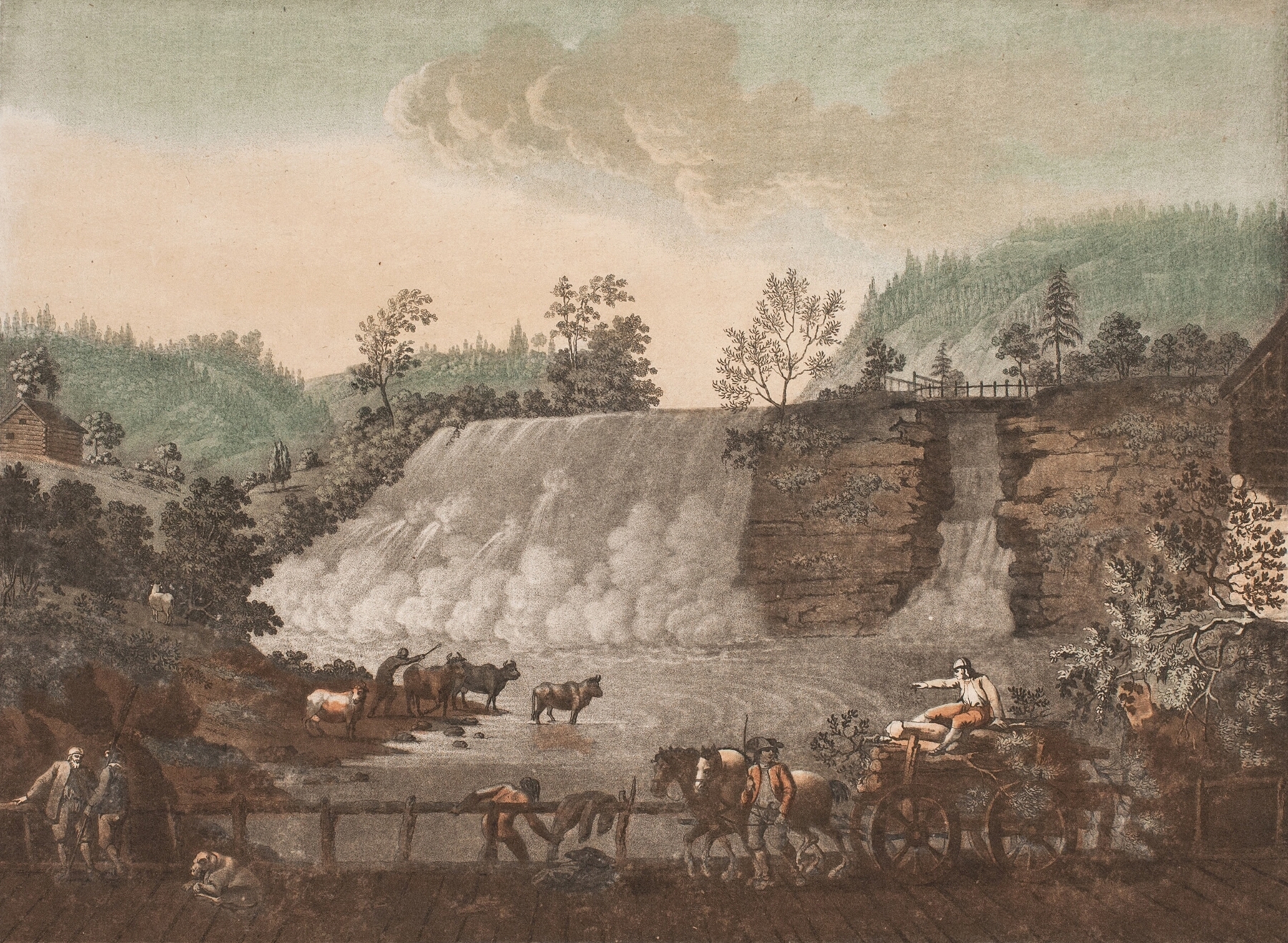
Vûe de la prémière chûte d’eau de Tisteddal en Norwège — History & Analysis
Is this a mirror — or a memory? The cascading waters of the Tisteddal waterfall beckon viewers to consider the fluidity of time and the essence of nature itself. Look to the left, where a veil of mist dances above the rushing waters, its ethereal quality rendered through delicate brushstrokes of whites and blues. Progress rightward, and the rocks emerge with a textured warmth, painted in earthy tones that contrast with the coolness of the waterfall.
This juxtaposition of movement and stillness captures not only the force of nature but also the serene beauty that envelops it. Delve deeper into the composition, and you’ll notice the way light refracts off the water, creating a spectrum of colors that symbolize the intersection of chaos and tranquility. The placement of the trees, framing the scene, hints at the encroachment of civilization upon untouched wilderness, evoking a sense of nostalgia for a world less altered. Each element invites contemplation on the tension between natural beauty and human endeavor.
Georg Haas created this work between 1787 and 1791 during his time in Norway, a period when Romanticism began to flourish in Europe. This work reflects the era's fascination with the sublime, exploring themes of nature's grandeur in contrast to human life. As an artist associated with the burgeoning Romantic movement, Haas sought to capture not just a location but the emotional resonance it evoked in him, presenting a moment that feels both immediate and timeless.