Venetian Canal — History & Analysis
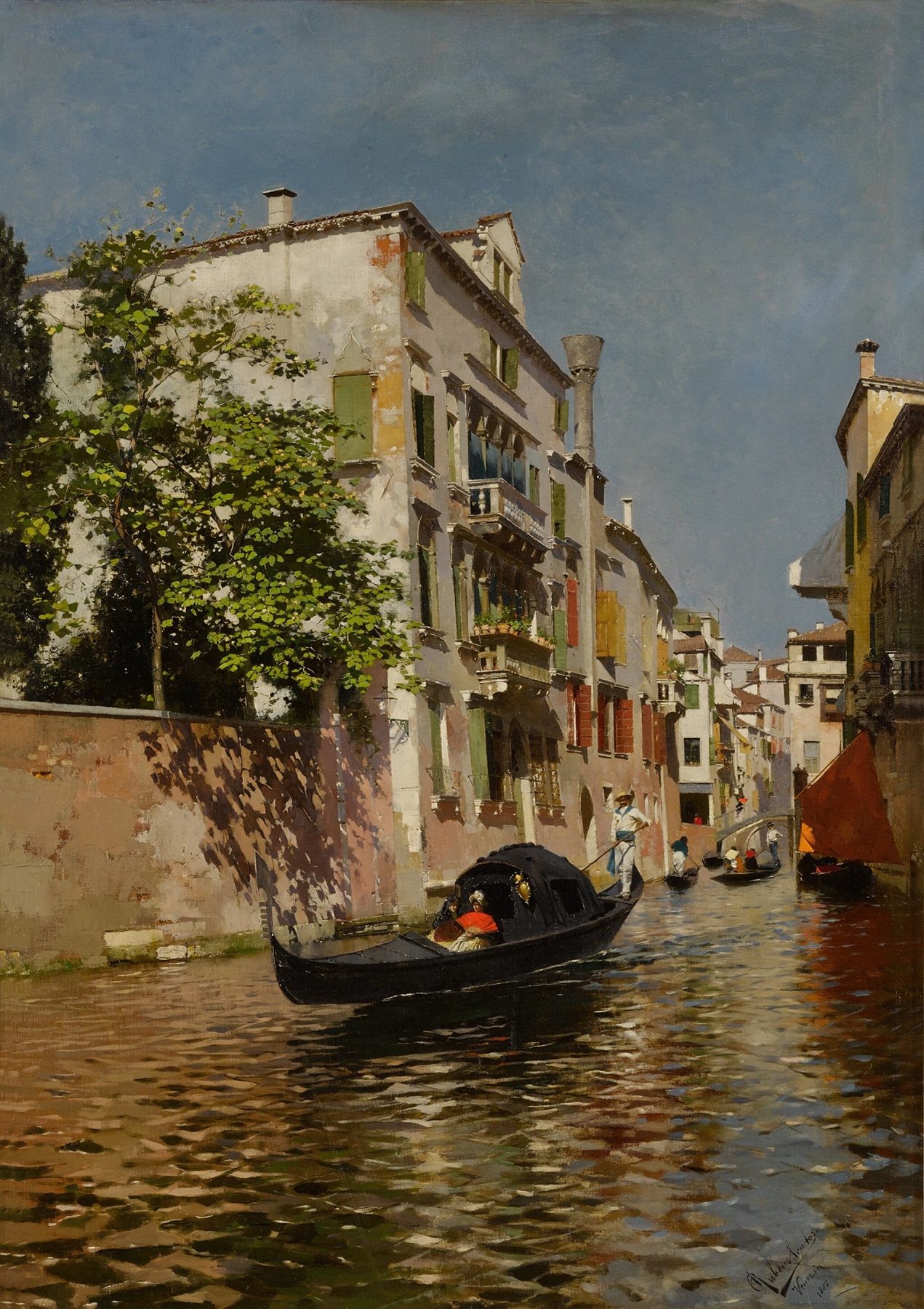
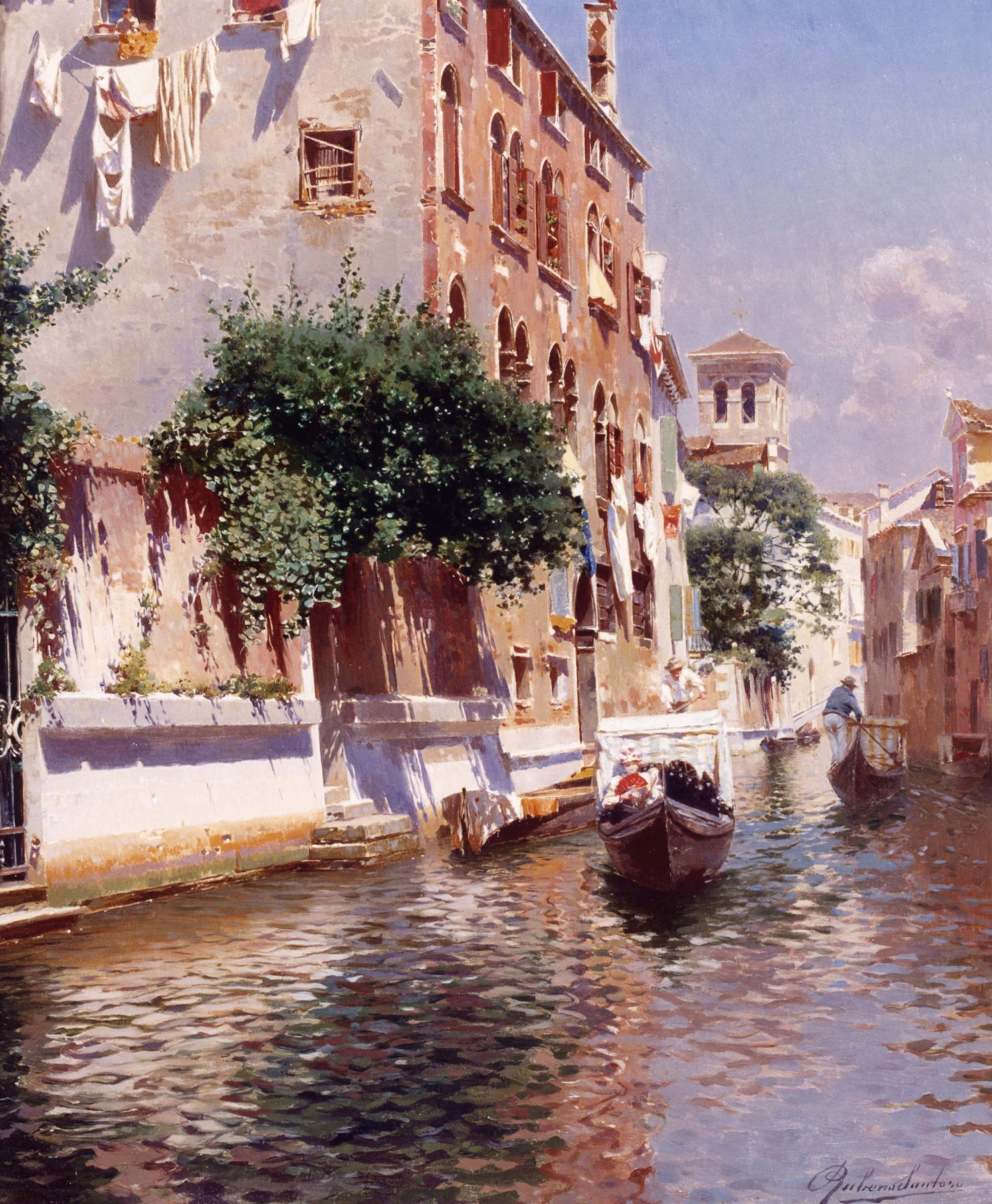
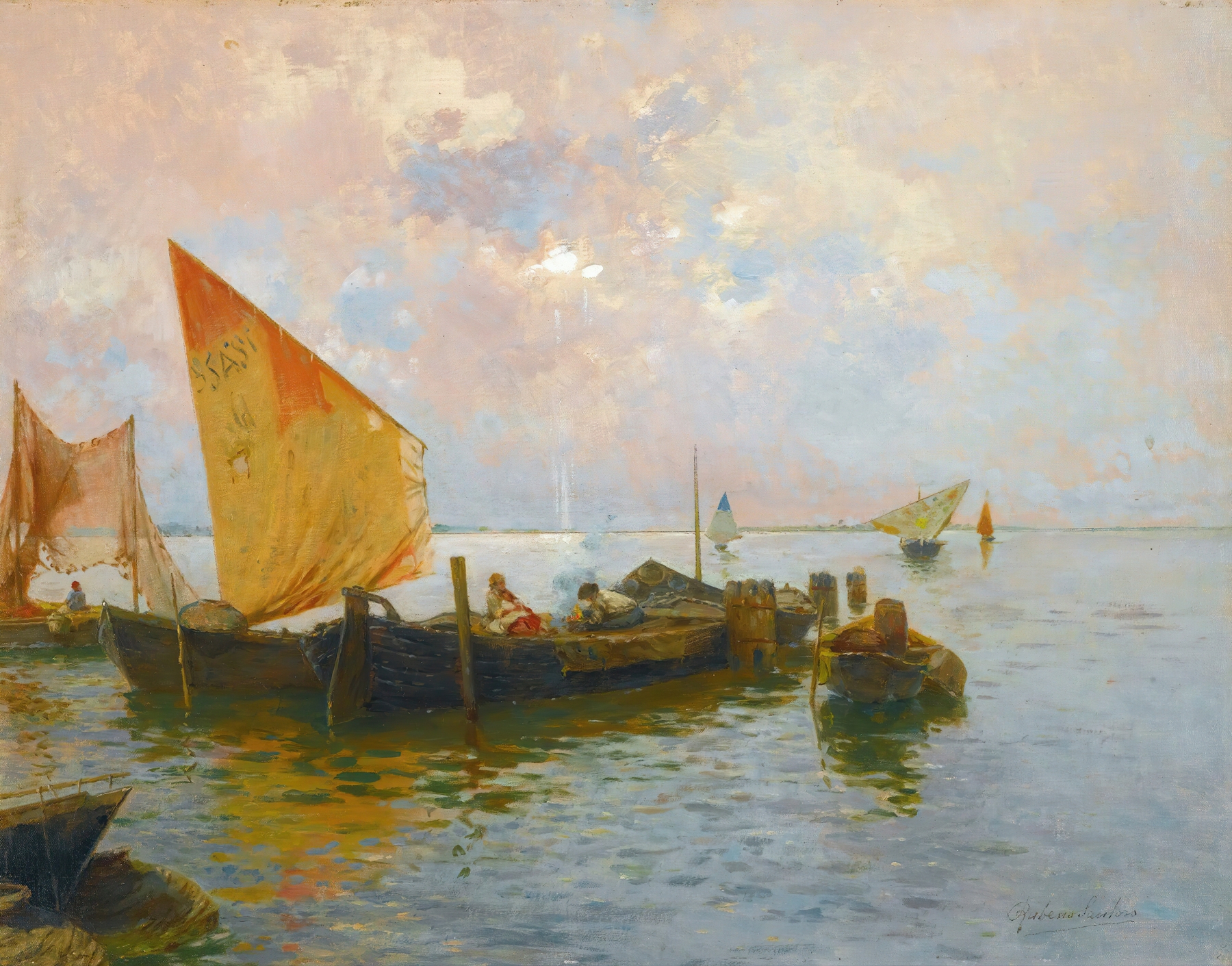
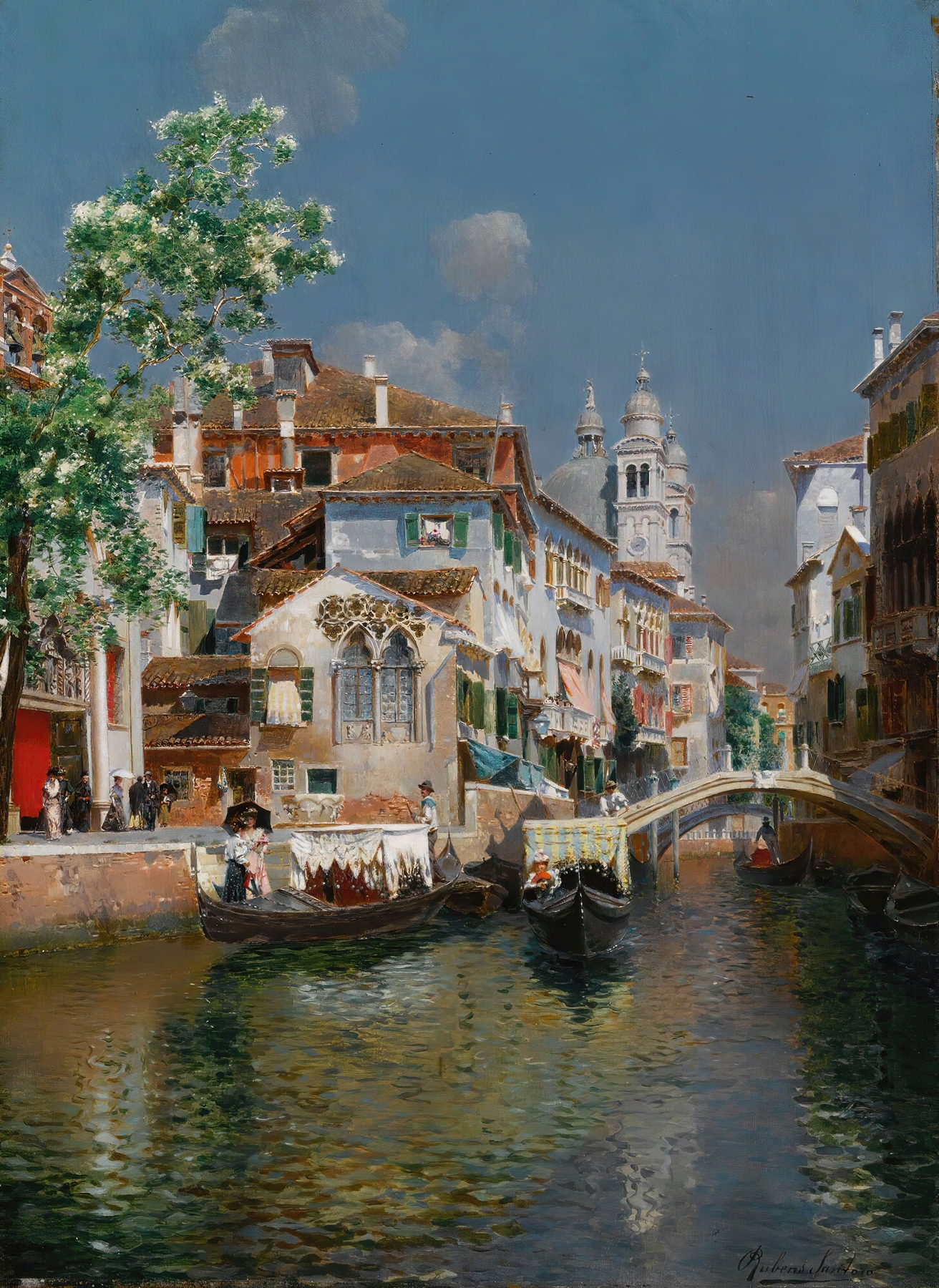
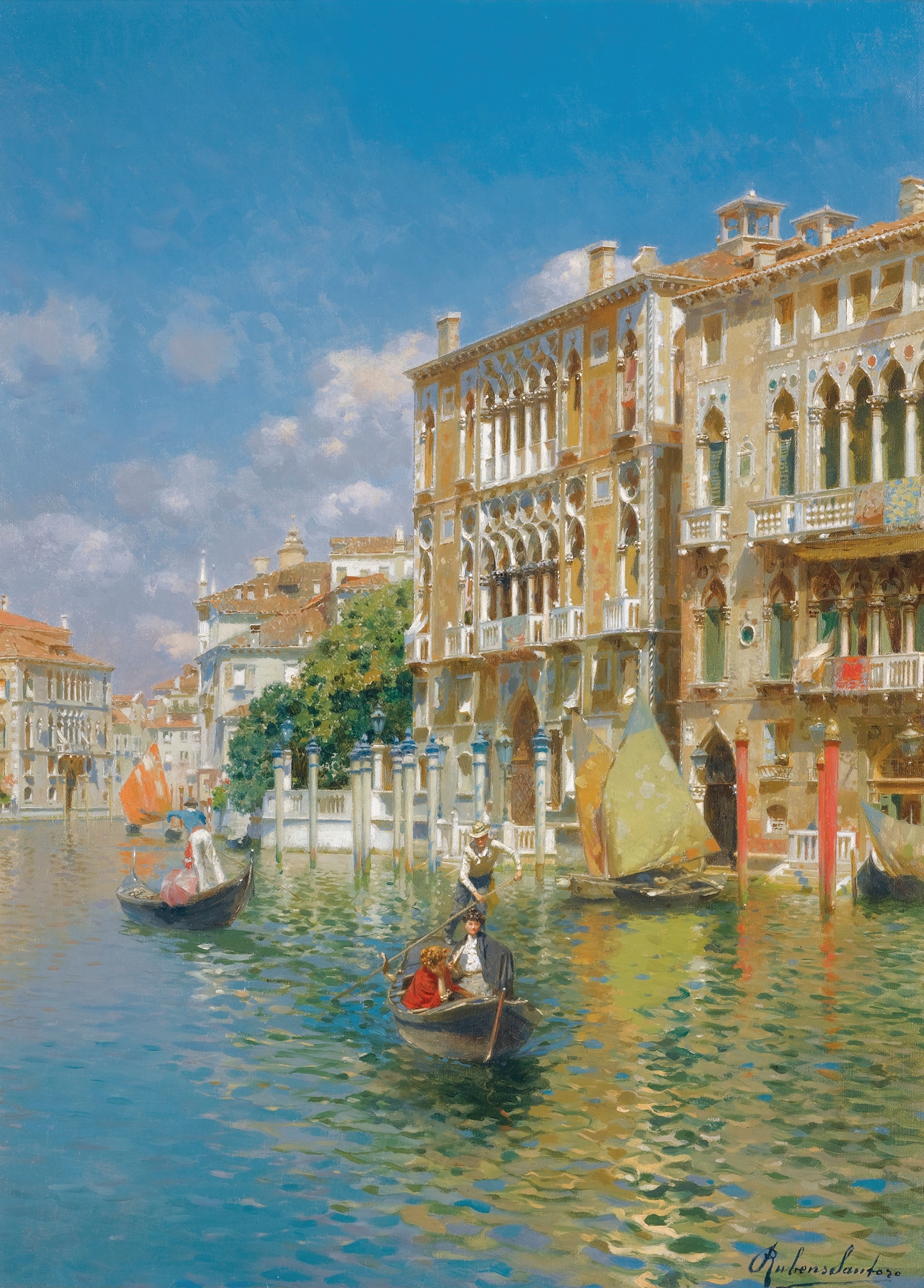
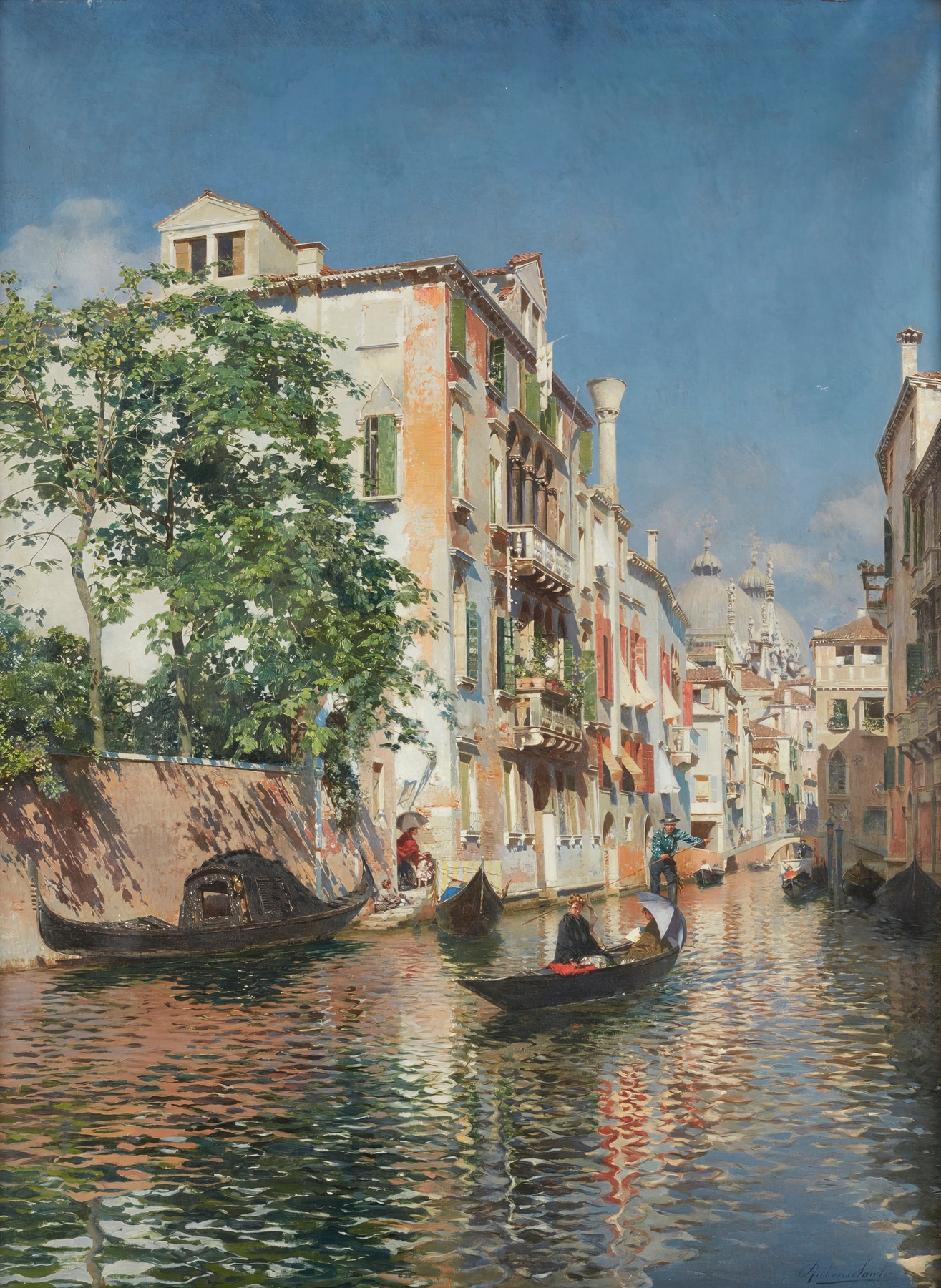
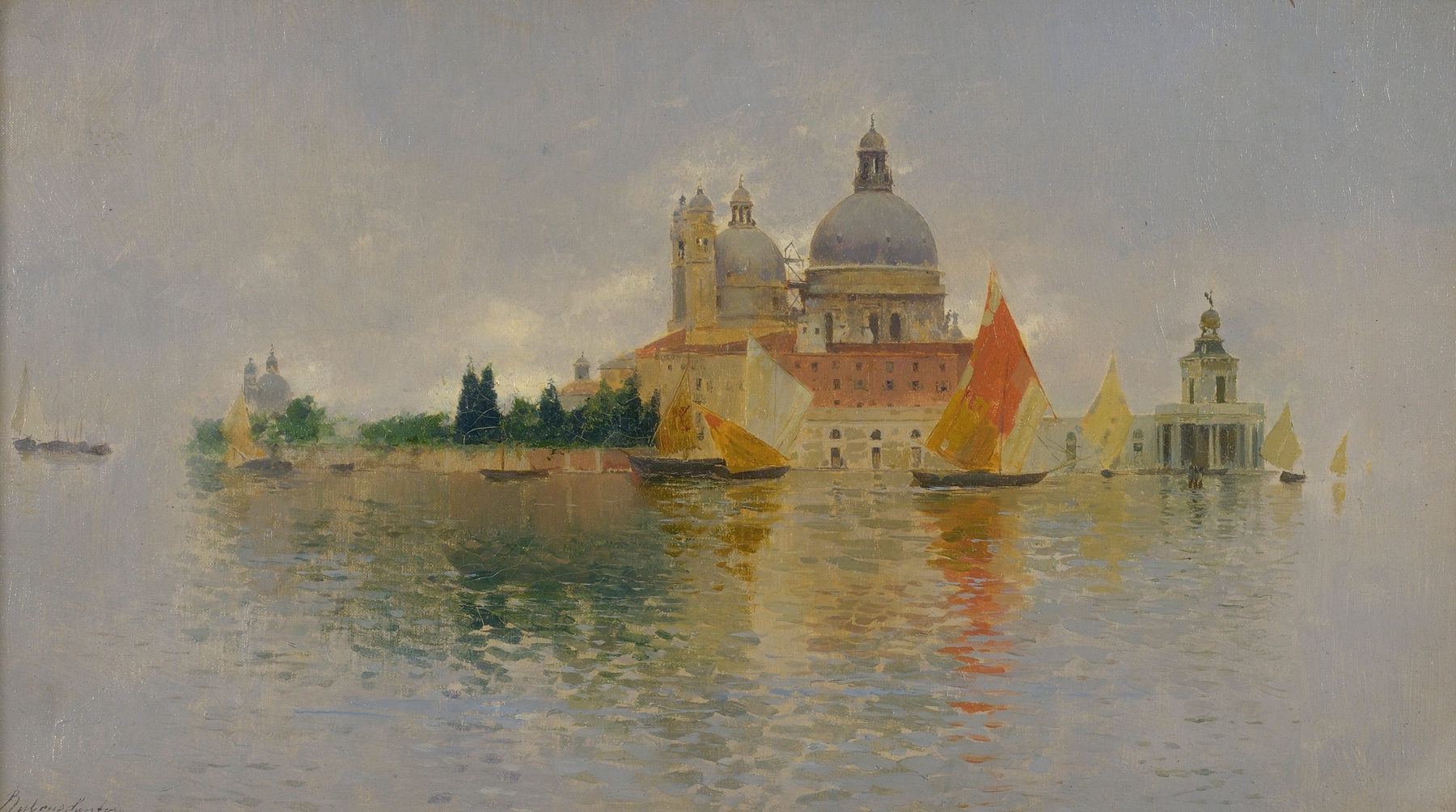
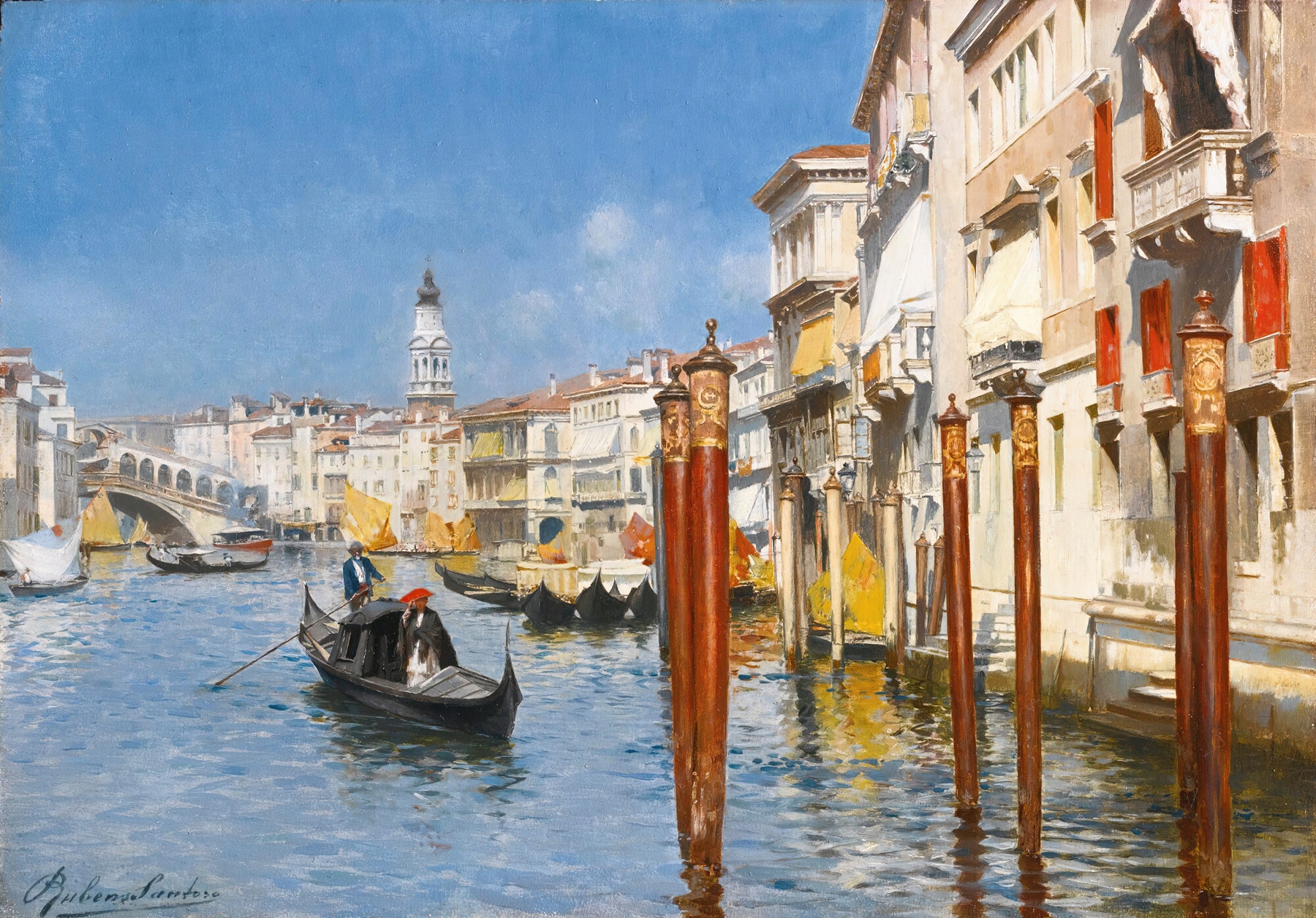
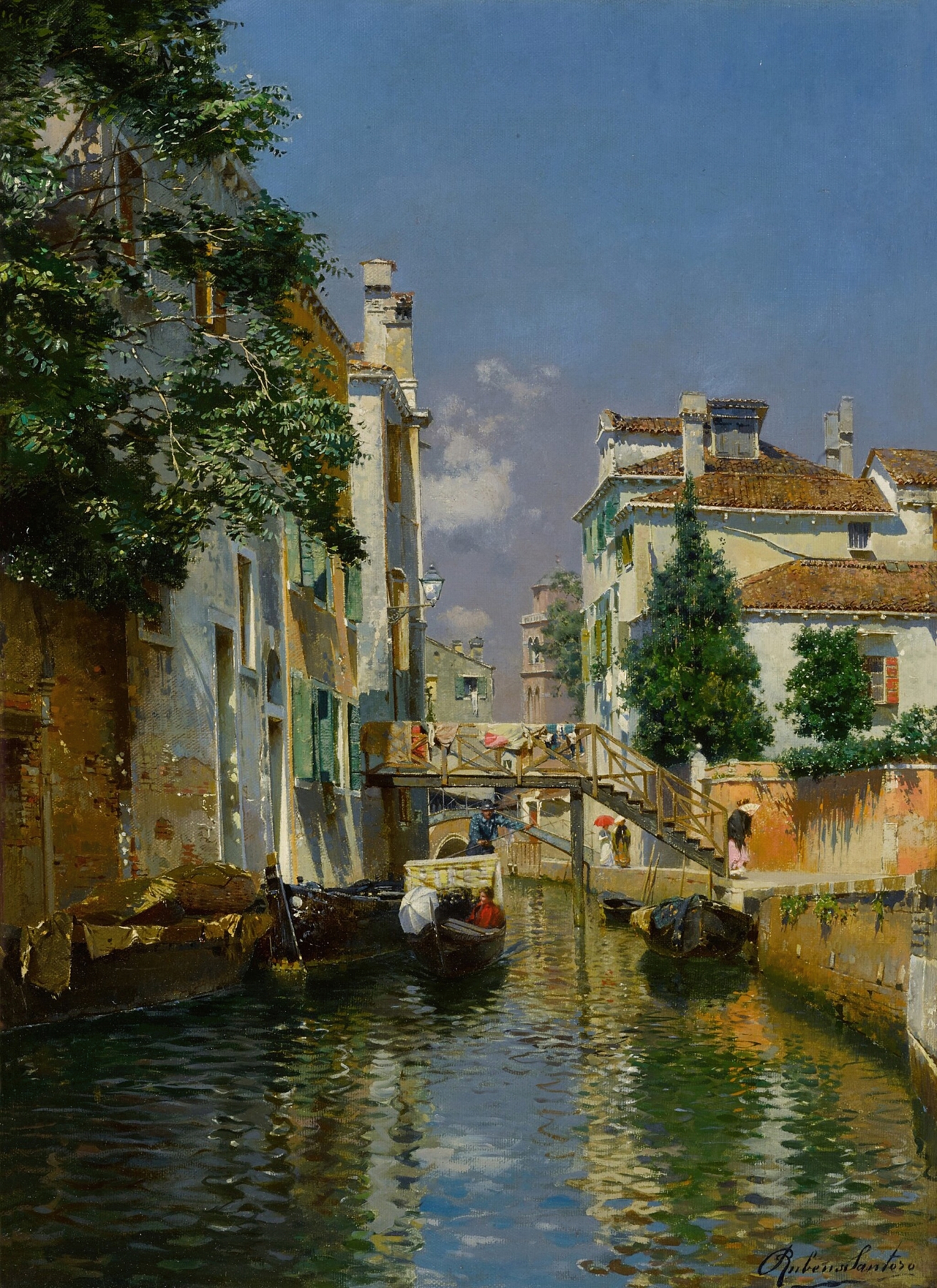
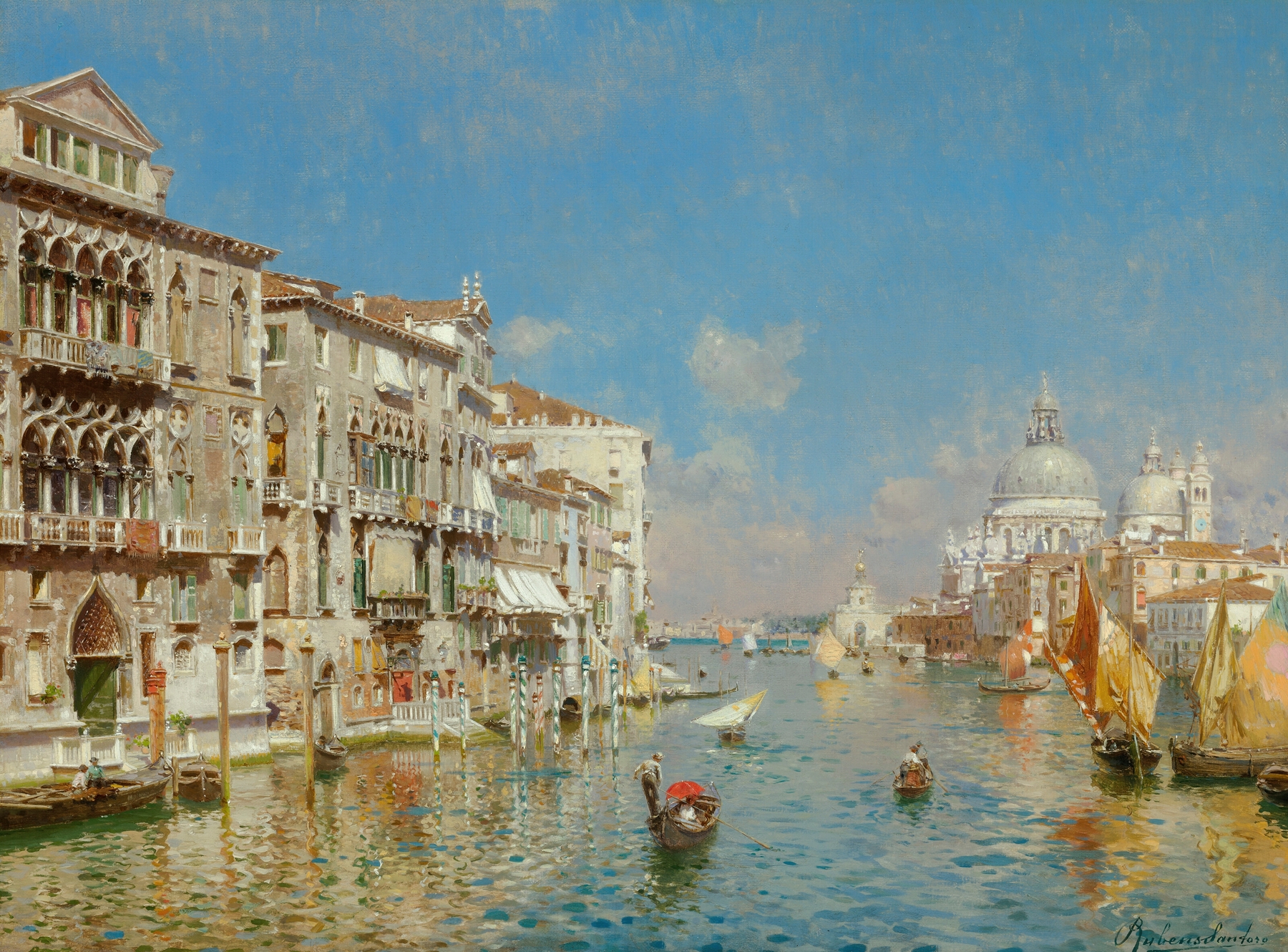
When did color learn to lie? In the hands of Rubens Santoro, hues become vessels of revelation, whispering secrets far beyond their surface. Look to the bottom left, where luminous water reflects the sky's soft blues and pinks, creating a serene dialogue between the elements. Notice how light dances across the surface, cradling the boats that float gently along the canal. The artist employs a warm palette, juxtaposing muted earth tones with vivid splashes of color, drawing the eye toward the contrasting architecture that stands proud along the banks.
Each brushstroke carries a palpable texture, inviting you to feel the cool breeze that sweeps through the scene. Delve deeper into the composition, and you'll discover the tension between tranquility and movement. The stillness of the water reflects an unchanging moment, yet the boats suggest fleeting journeys. The asymmetry of the buildings creates a sense of imbalance, hinting at the complexities of urban life that lie beneath the surface.
Here, the interplay of light and shadow evokes a feeling of nostalgia, as if the viewer is peering into a memory painted with longing. Rubens Santoro created this work during a time when the impressionist vision was blossoming, yet he remained distinct in his approach. Working in the early 20th century, he was influenced by his surroundings in Venice, a city renowned for its vibrant canals and unique light. The beauty of this artwork emerges from the confluence of personal experience and artistic exploration within a world shifting toward modernism.