Vesuvius from Posillipo — History & Analysis
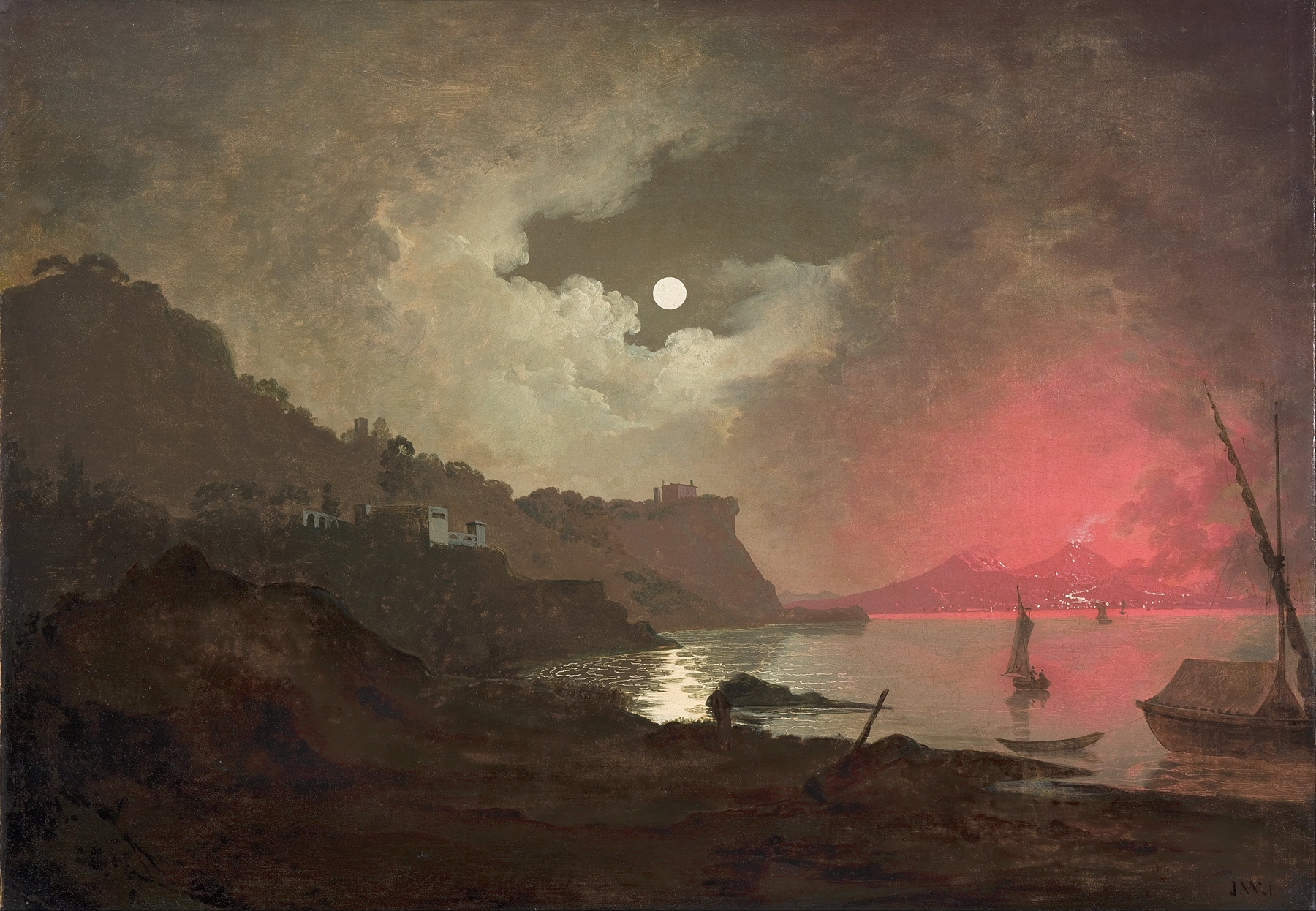
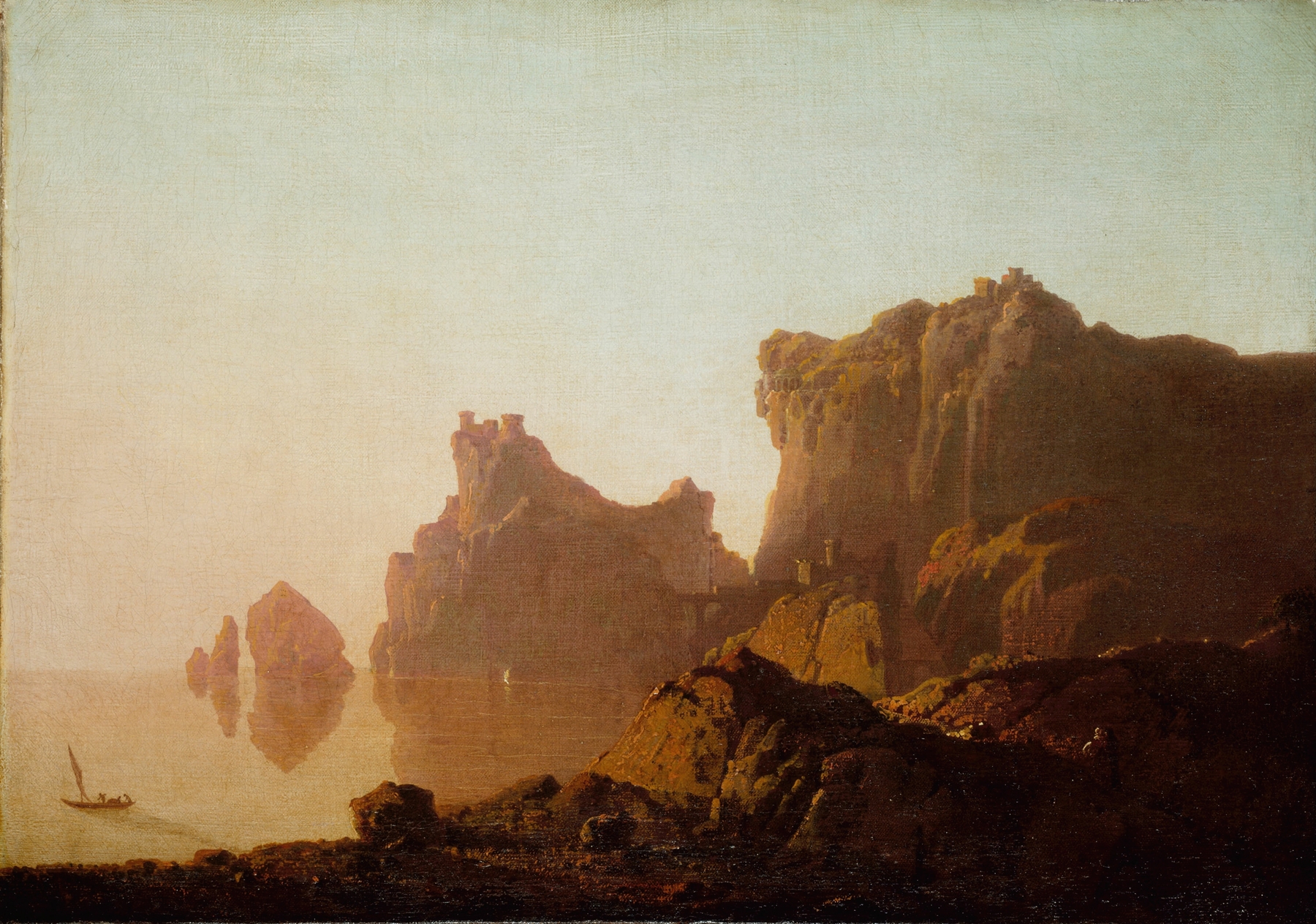
Can beauty exist without sorrow? The answer seems woven into the fabric of nature itself, where majesty and danger coexist in a delicate balance. Look to the horizon where the fiery silhouette of Vesuvius looms, a stark contrast against a softly illuminated sky. The artist employs a palette of warm tones, allowing the gentle glow of sunset to bathe the landscape while casting shadows that hint at the mountain's volatile power. Notice how the ochre and deep blues come together, forming a harmonious yet unsettling ambiance.
The tranquil waters in the foreground reflect the scene, amplifying the duality of serenity and threat encapsulated in this moment. Amidst the breathtaking beauty lies a palpable tension, suggesting the ever-present risk of eruption. The lush landscape enveloping the volcano conveys a sense of calm, yet the viewer is acutely aware that beneath the surface, chaos is brewing. This interplay of light and shadow reflects both the allure and the danger of nature, evoking a bittersweet feeling of hope amid uncertainty.
The delicate mingling of vibrant colors serves as a reminder that beauty often emerges from struggle. During the late 18th century, the artist created this work while exploring themes of enlightenment and the sublime, inspired by the intersection of science and art. At that time, Europe was gripped by revolutionary ideas and a fascination with the natural world, shaping his vision. Although the exact date of this piece remains uncertain, it reflects a period of intense personal creativity in his life, marked by a desire to explore the complexities of both beauty and fear in the landscape.