Vesuvius in eruption, viewed from Posillipo — History & Analysis
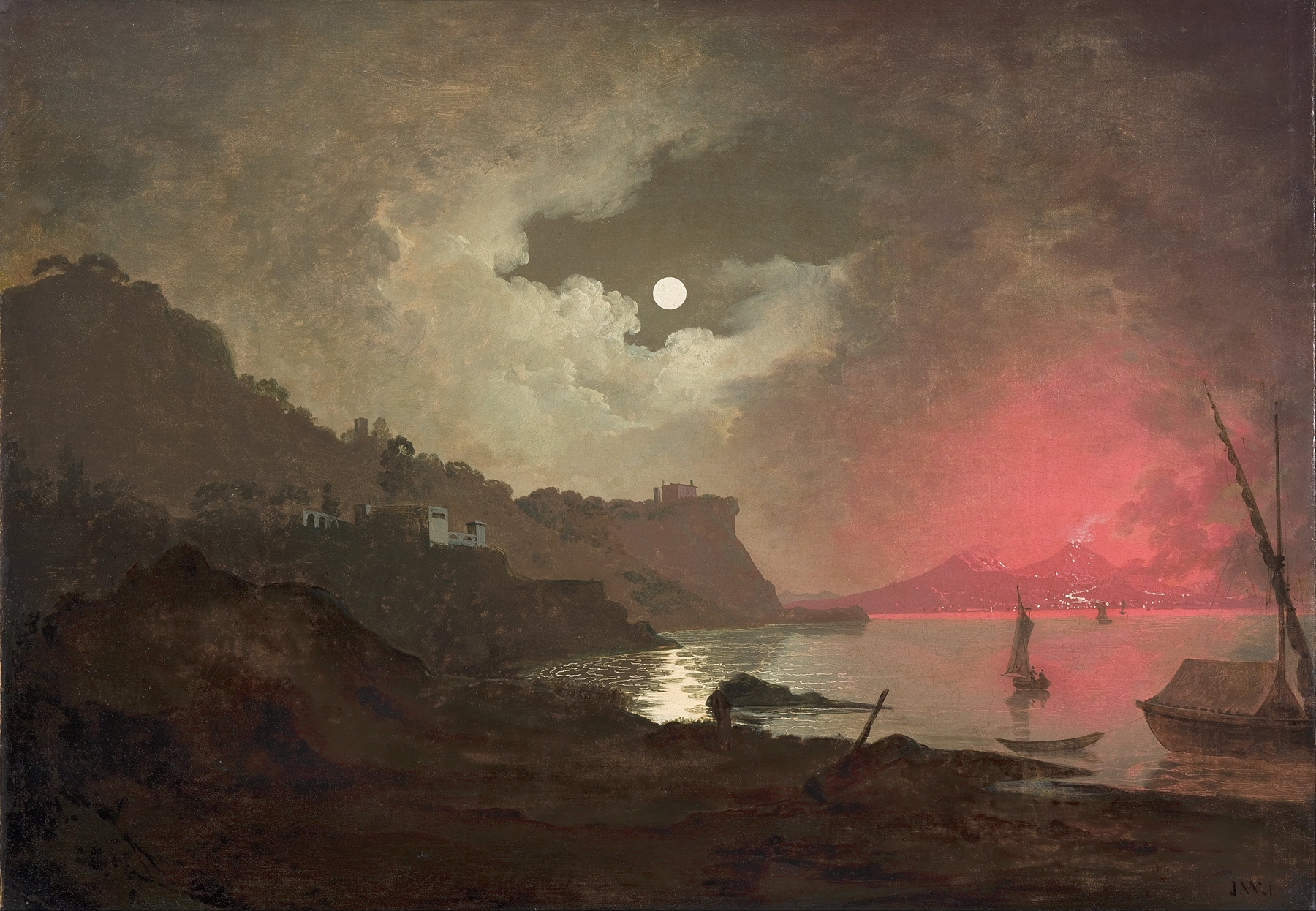
Could a single brushstroke hold eternity? In Vesuvius in eruption, viewed from Posillipo, grief and awe coalesce under the incandescent glow of a cataclysmic event, inviting us to confront the profound beauty intertwined with destruction. Focus first on the fiery eruption of Mount Vesuvius, where billowing clouds of ash and fire dominate the canvas, radiating brightness that stands in stark contrast to the darkened landscape below. Notice how the artist employs luminous colors—deep oranges and fiery reds—to evoke the violent energy of the volcano, while the serene blues and greens of the surrounding hills reflect a haunting tranquility.
The composition draws the eye upwards to the tumultuous sky, cleverly framing the eruption as both a spectacle and a warning. In this work, emotional tensions simmer between the sublime terror of nature and the human experience of vulnerability. The figures in the foreground, silhouetted against the encroaching light, embody a stark juxtaposition of life and destruction—witnesses to an event that is both captivating and catastrophic.
The quiet despair in their posture speaks to an inevitable grief, as they gaze at the very force that sustains and threatens their existence. Created in 1789, during a time of great change in Europe, the artist was in the midst of exploring the interplay of light and dark, a reflection of the Enlightenment's fascination with science and nature. Wright's work emerged at a time when the Romantic movement was beginning to shape artistic expression, deeply influenced by the philosophical debates surrounding humanity's relationship with nature's might and mystery.