View of Yosemite Valley — History & Analysis
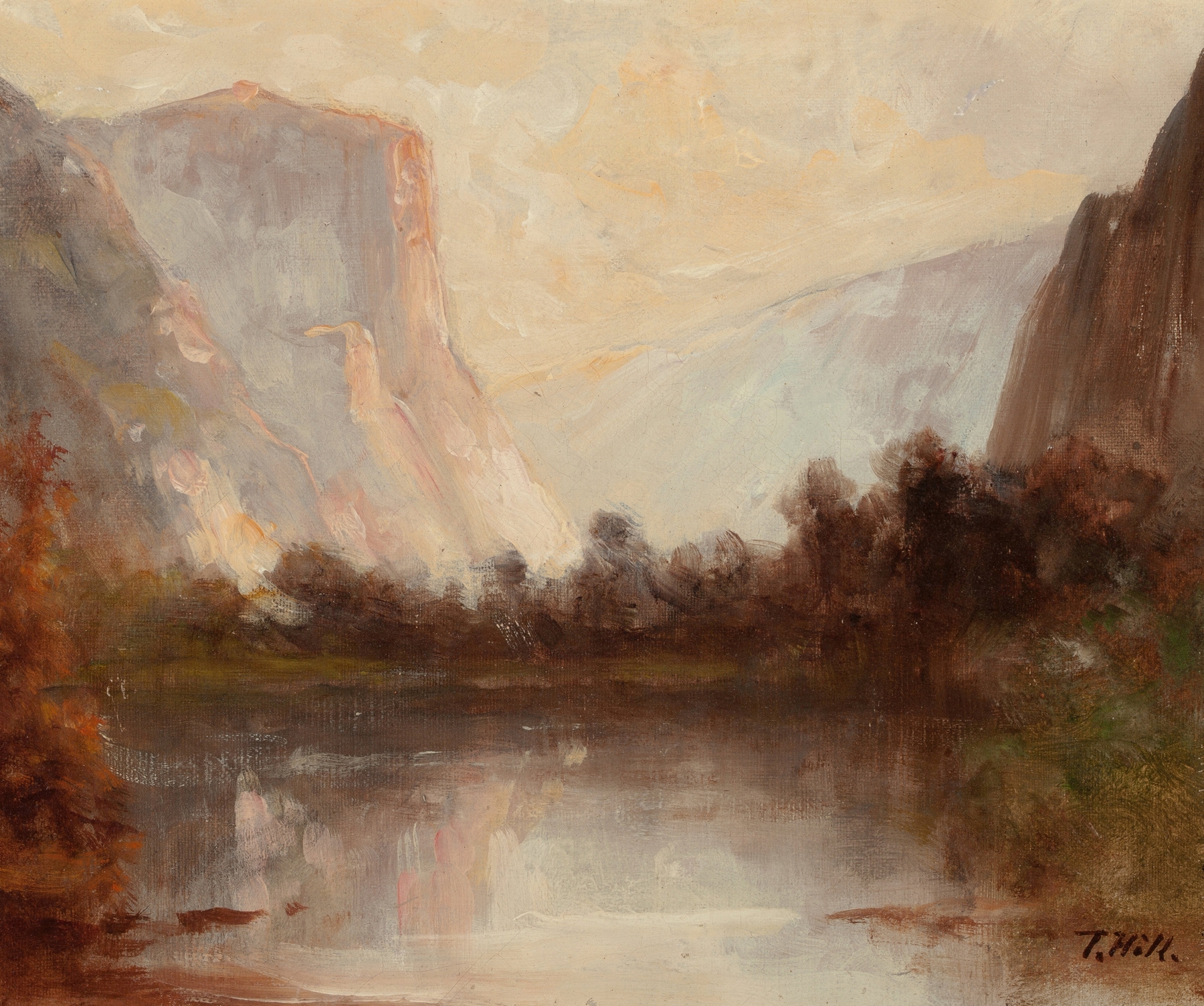
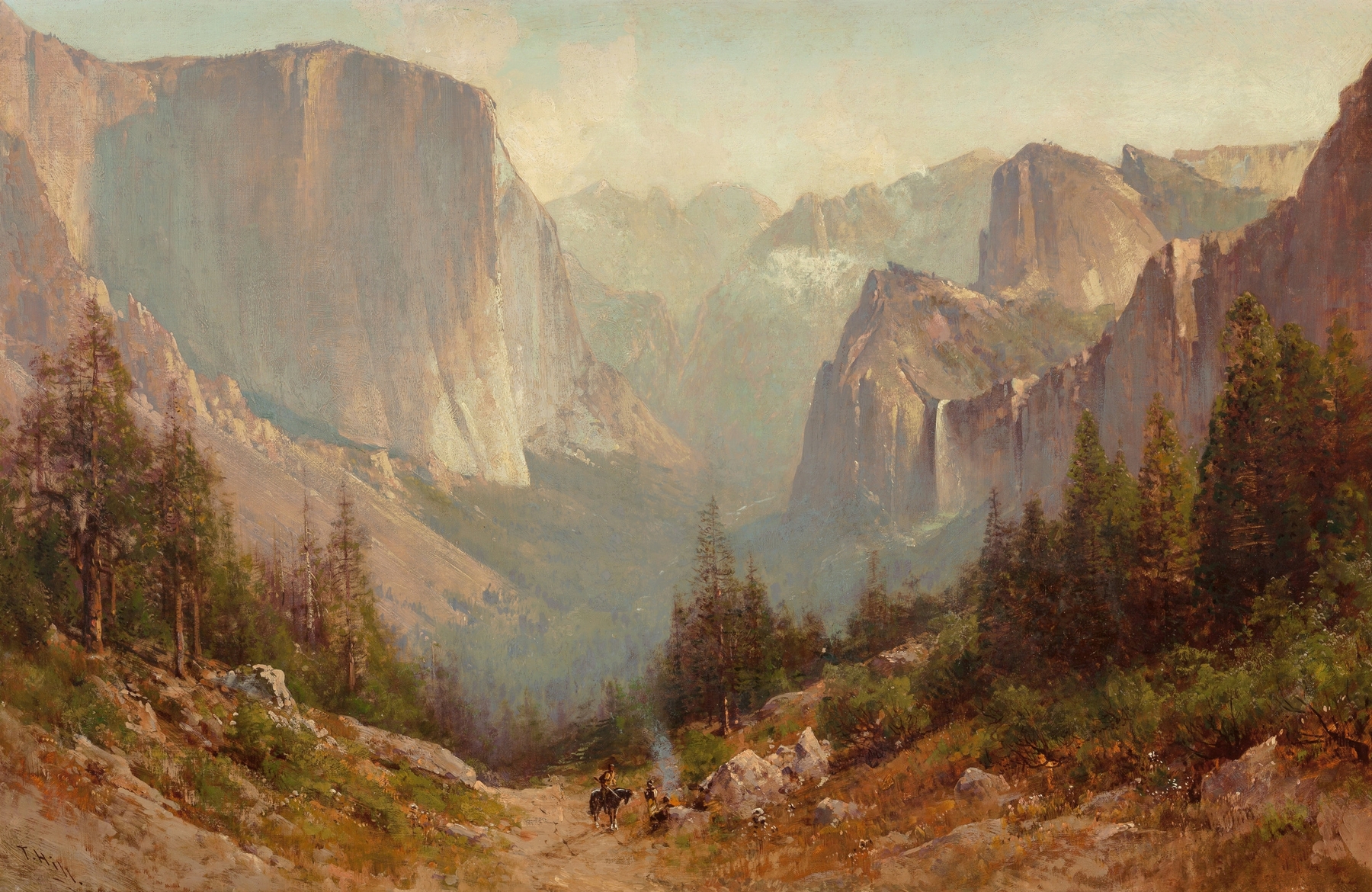
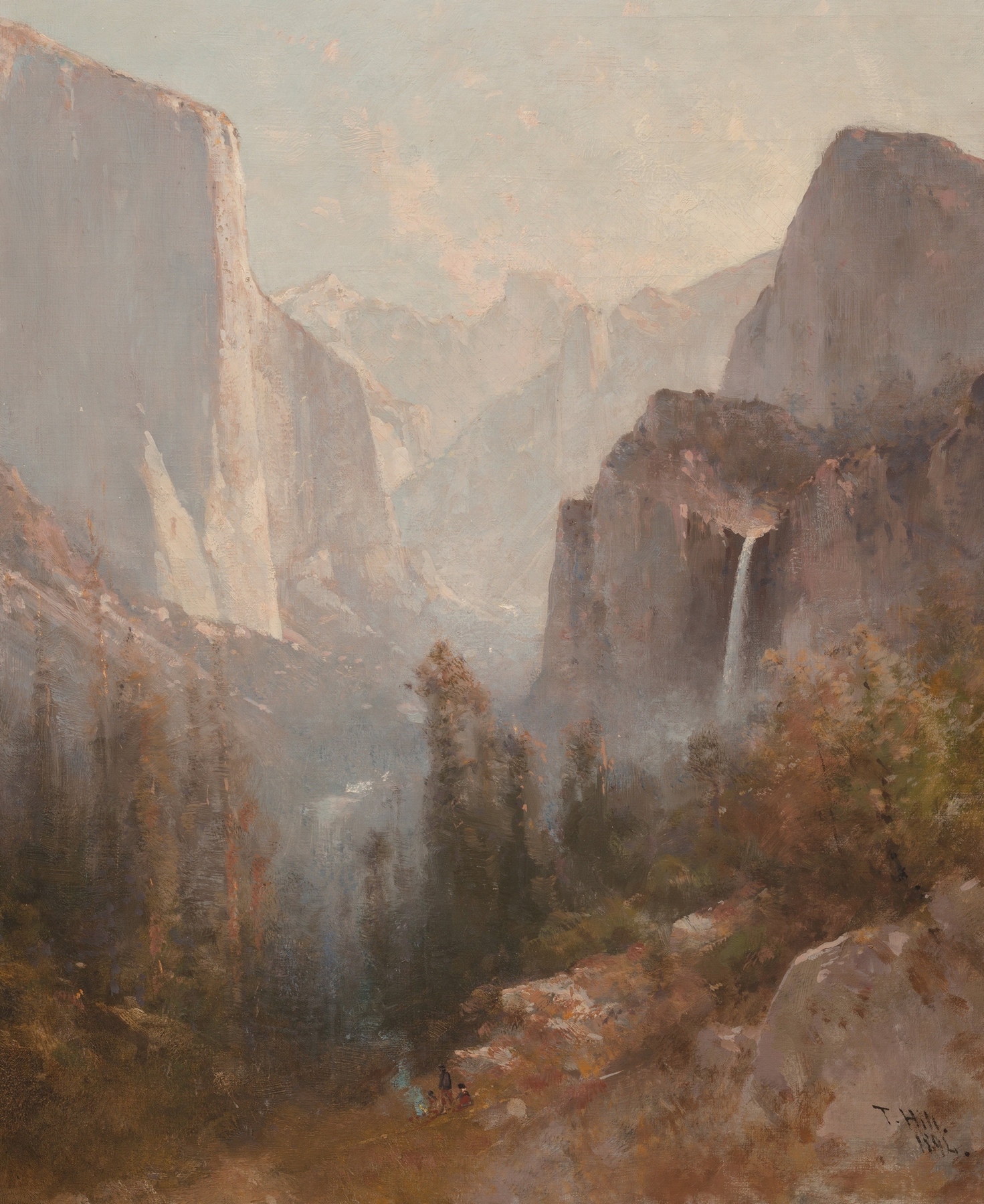
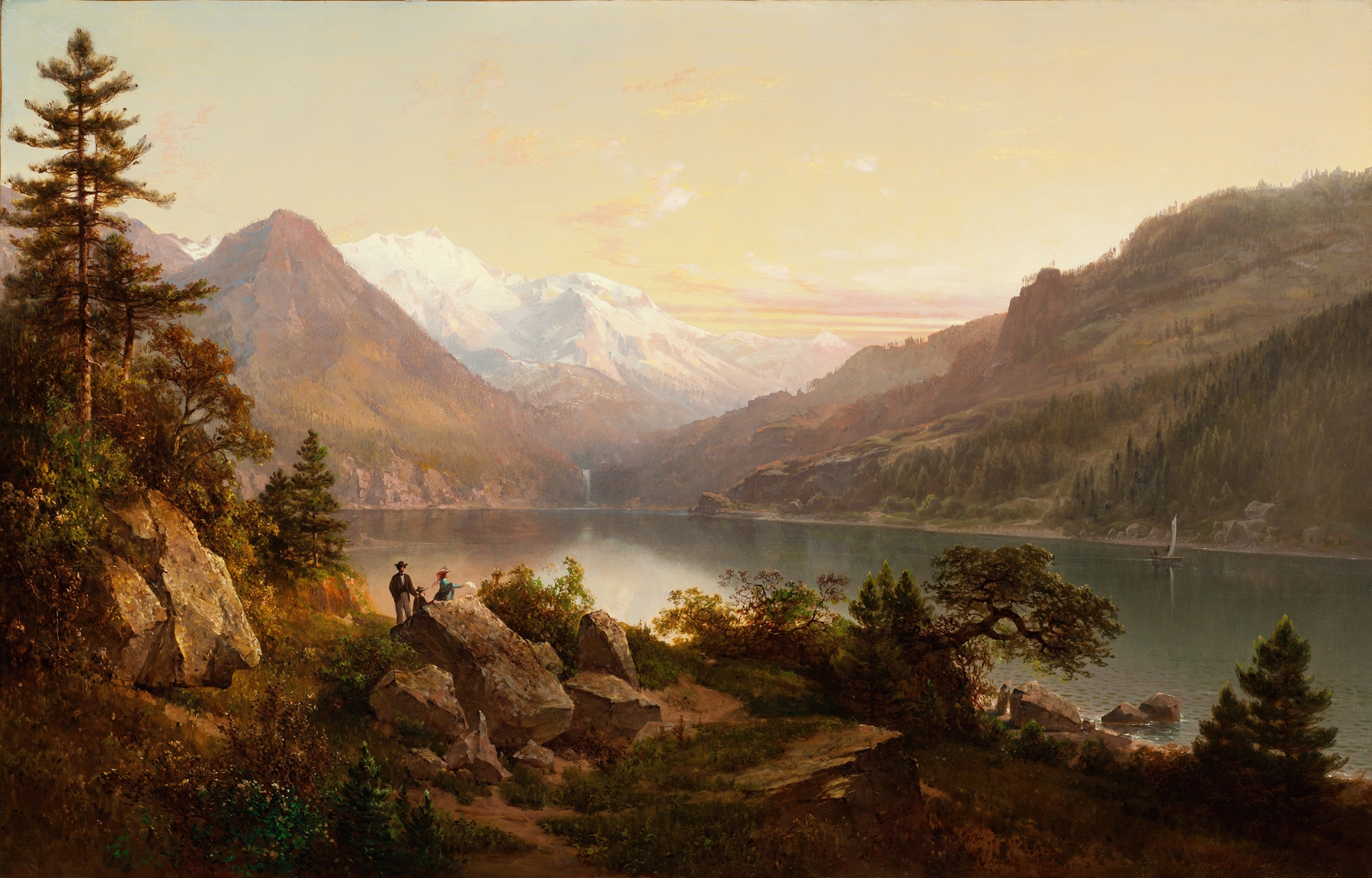
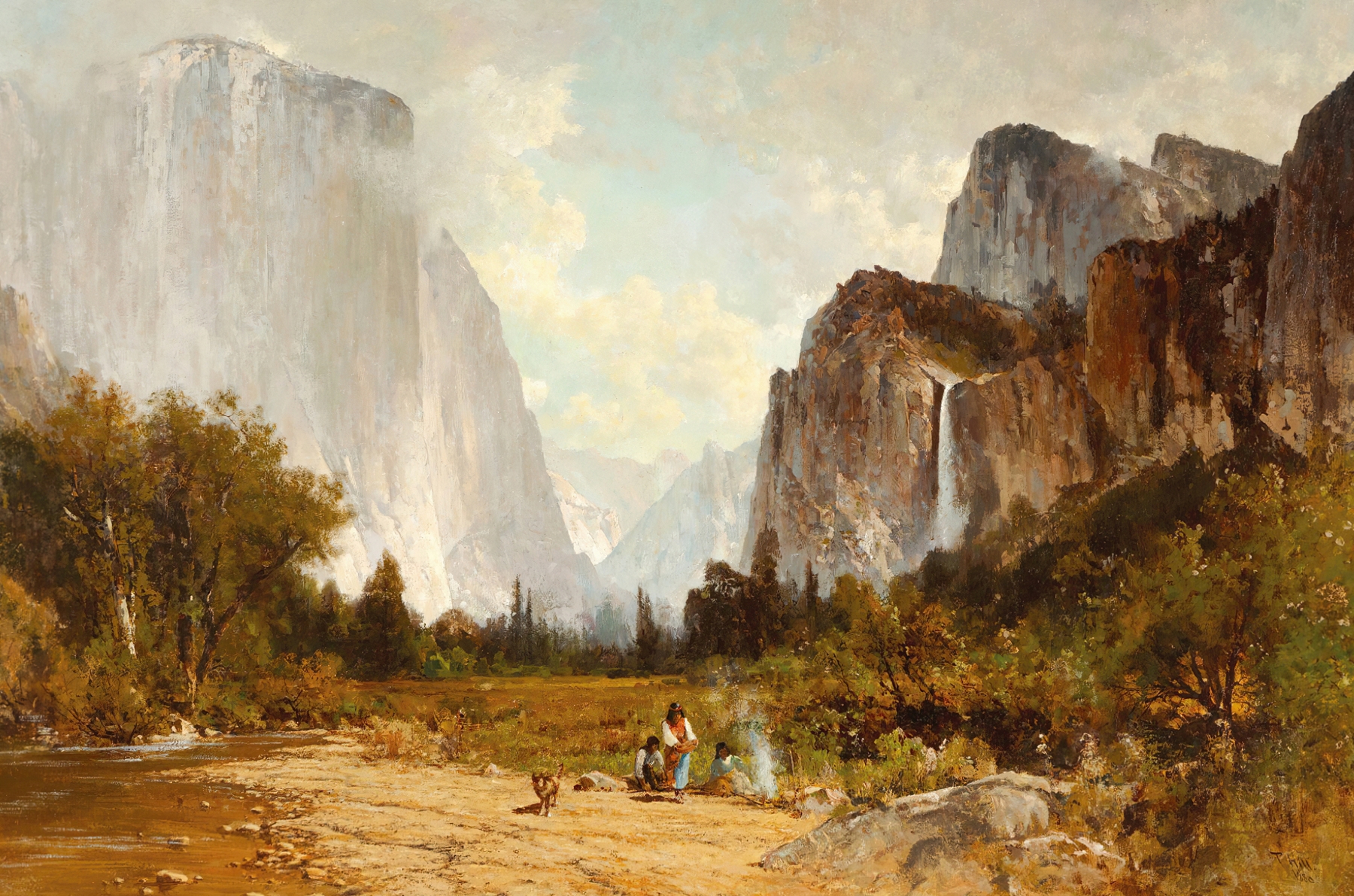
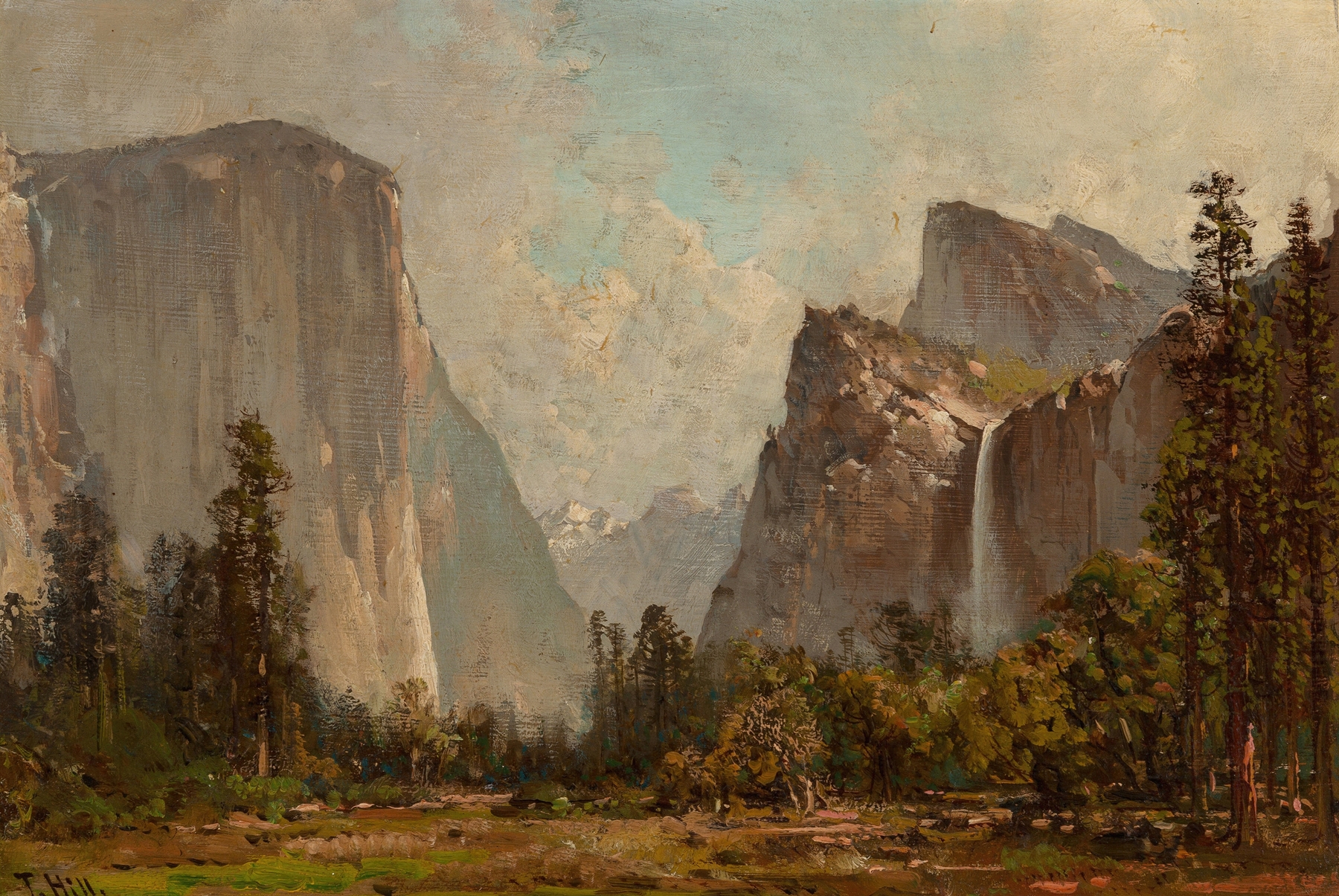
“Sometimes beauty is just pain, disguised in gold.” This sentiment echoes through the serene vistas of a landscape, where awe and melancholy intertwine, capturing the essence of human longing amid nature's grandeur. Look to the left at the towering granite cliffs, their jagged edges softened by the warm glow of the setting sun. The foreground, lush with vibrant greens, invites your gaze deeper into the valley, where a river meanders gently—a shimmering ribbon that reflects the sky’s hues. Notice how the artist employs delicate brushwork to create a sense of movement in the water, contrasting with the stillness of the colossal rocks, creating a palpable tension between permanence and transience.
The painting reveals layers of emotional depth; the expansive sky above hints at boundless possibility, while the enveloping valley speaks of isolation and loss. The juxtaposition of light and shadow evokes a bittersweet nostalgia—an echo of what once was, perhaps a personal loss entwined with the beauty of the natural world. It’s as if each leaf, each ripple in the water, holds a secret, a memory cloaked in the splendor of the scene.
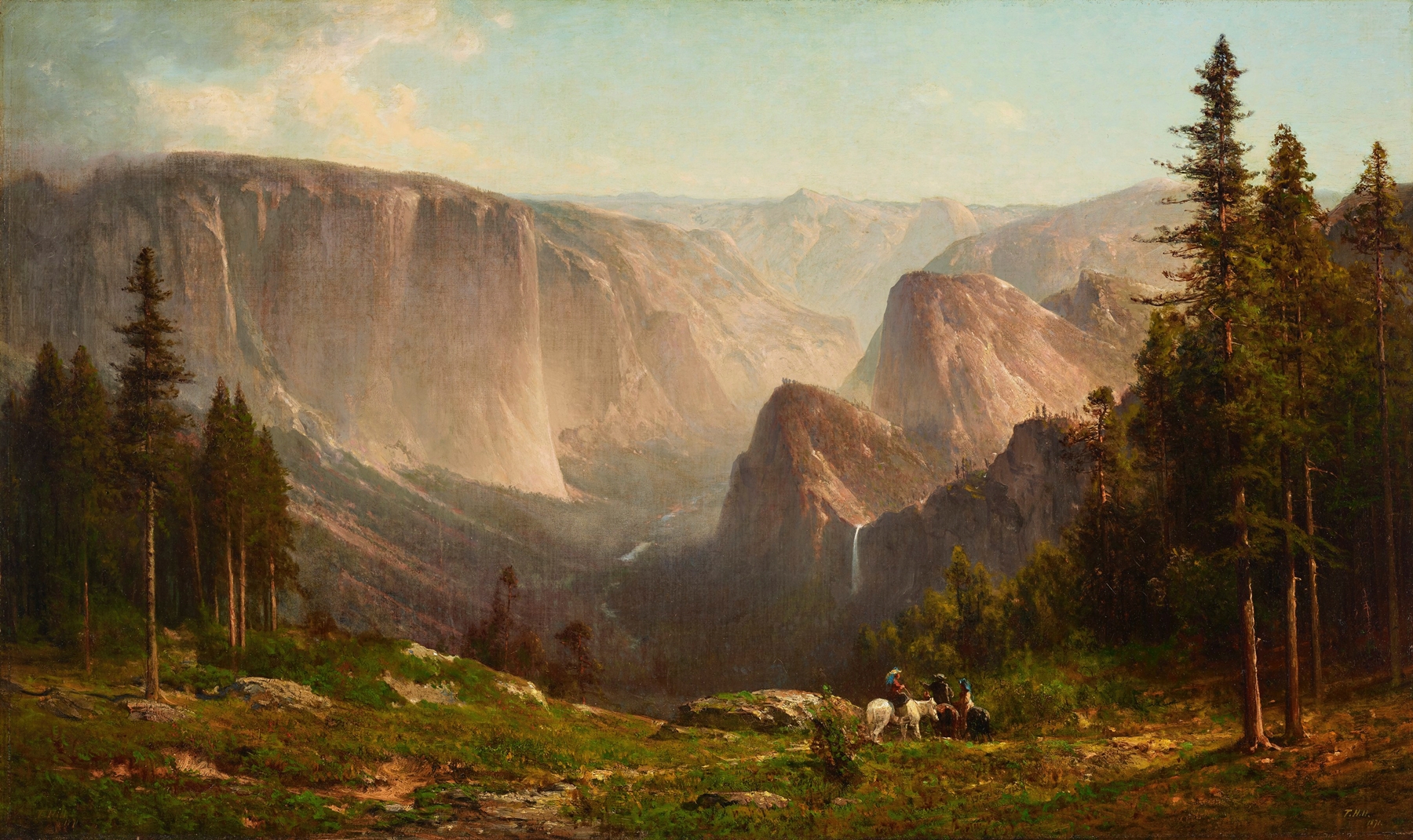
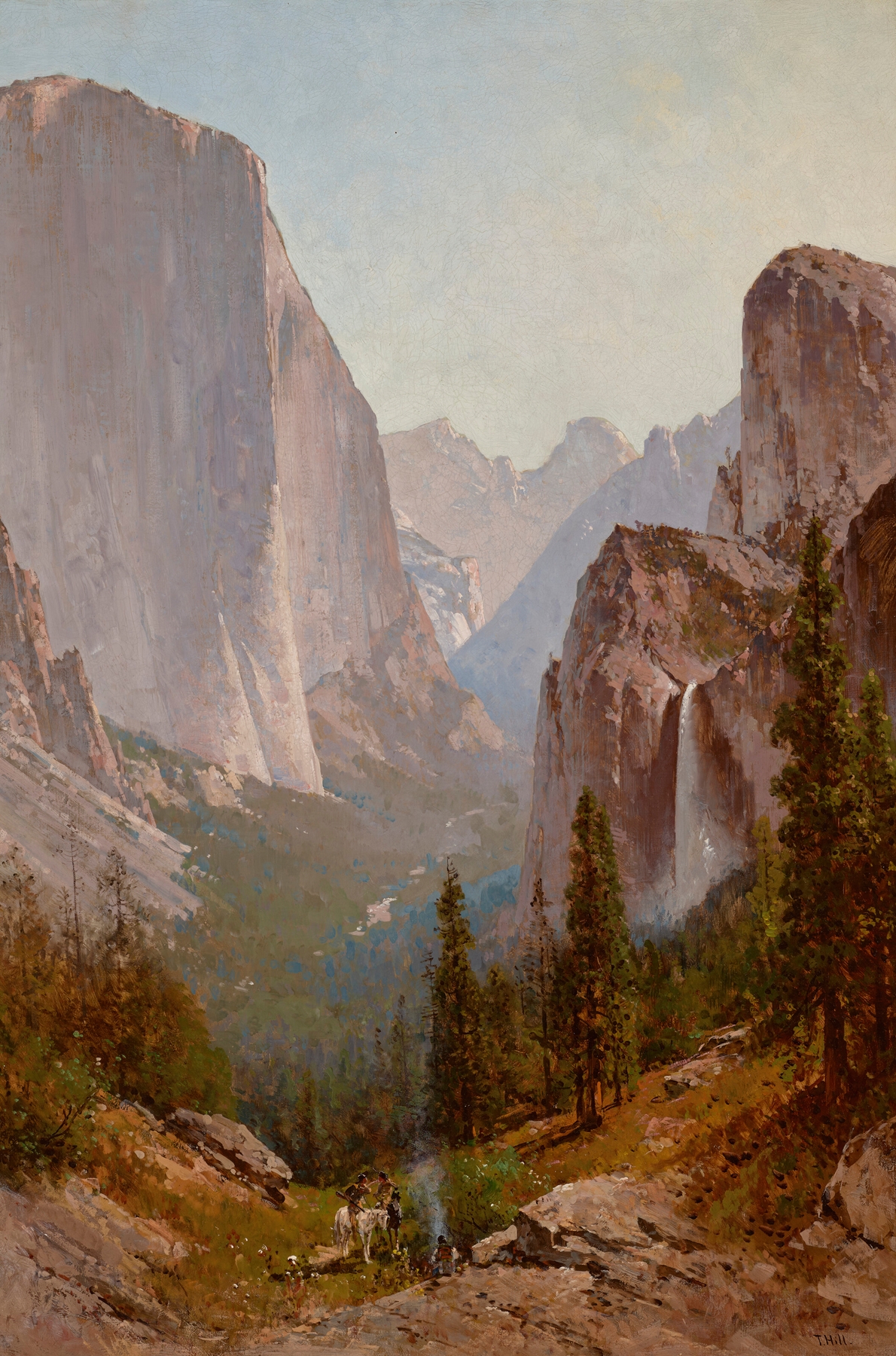
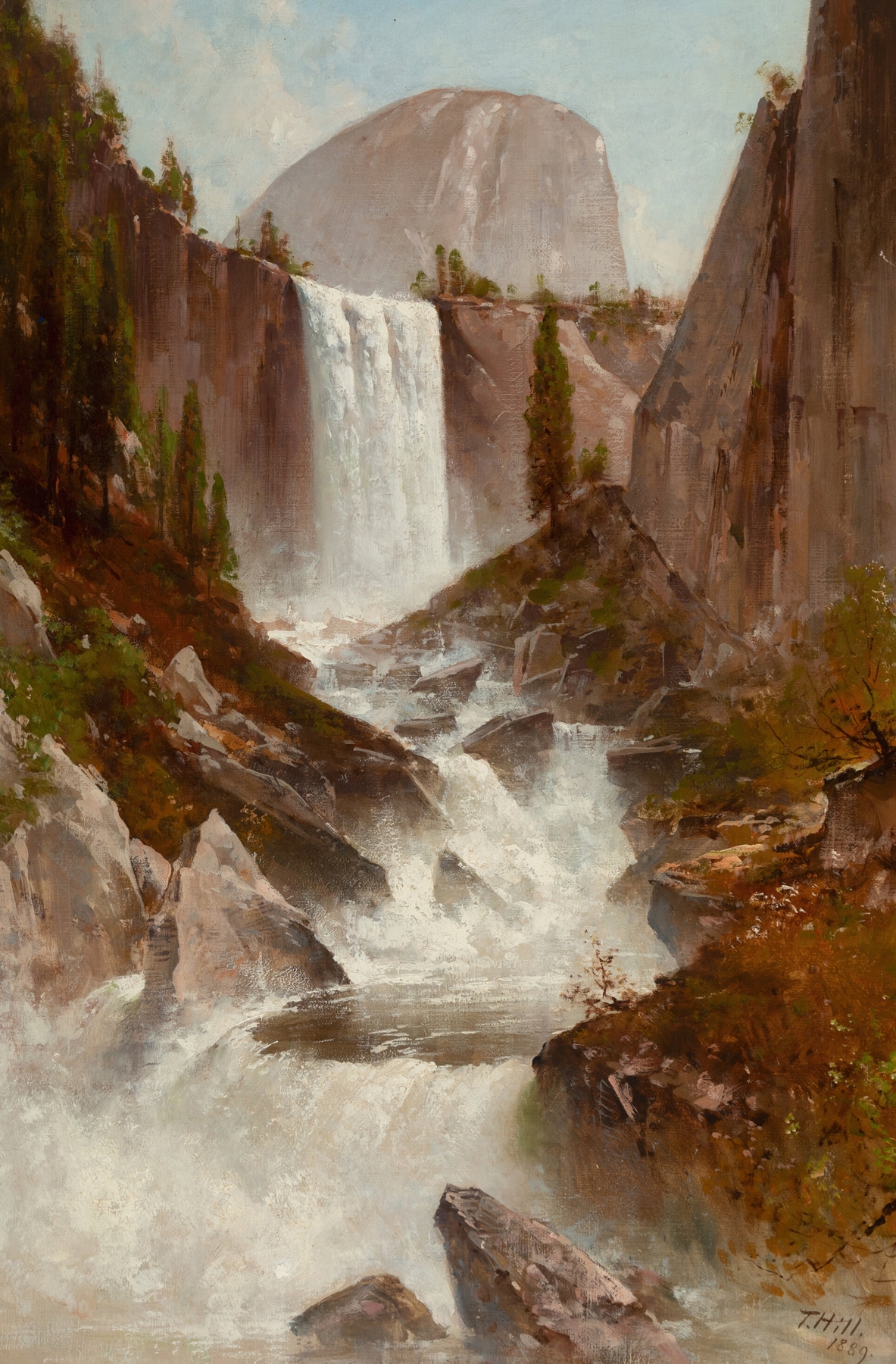
Thomas Hill painted this view in 1885, during a period when American landscape painting was gaining prominence. The artist found inspiration in the untouched wilderness of Yosemite, reflecting a growing national appreciation for nature. At that time, Hill was already well-regarded, yet the challenges of capturing such majesty in paint often haunted creators, as they grappled with their own emotional landscapes amidst a rapidly changing world.