Wooded landscape — History & Analysis
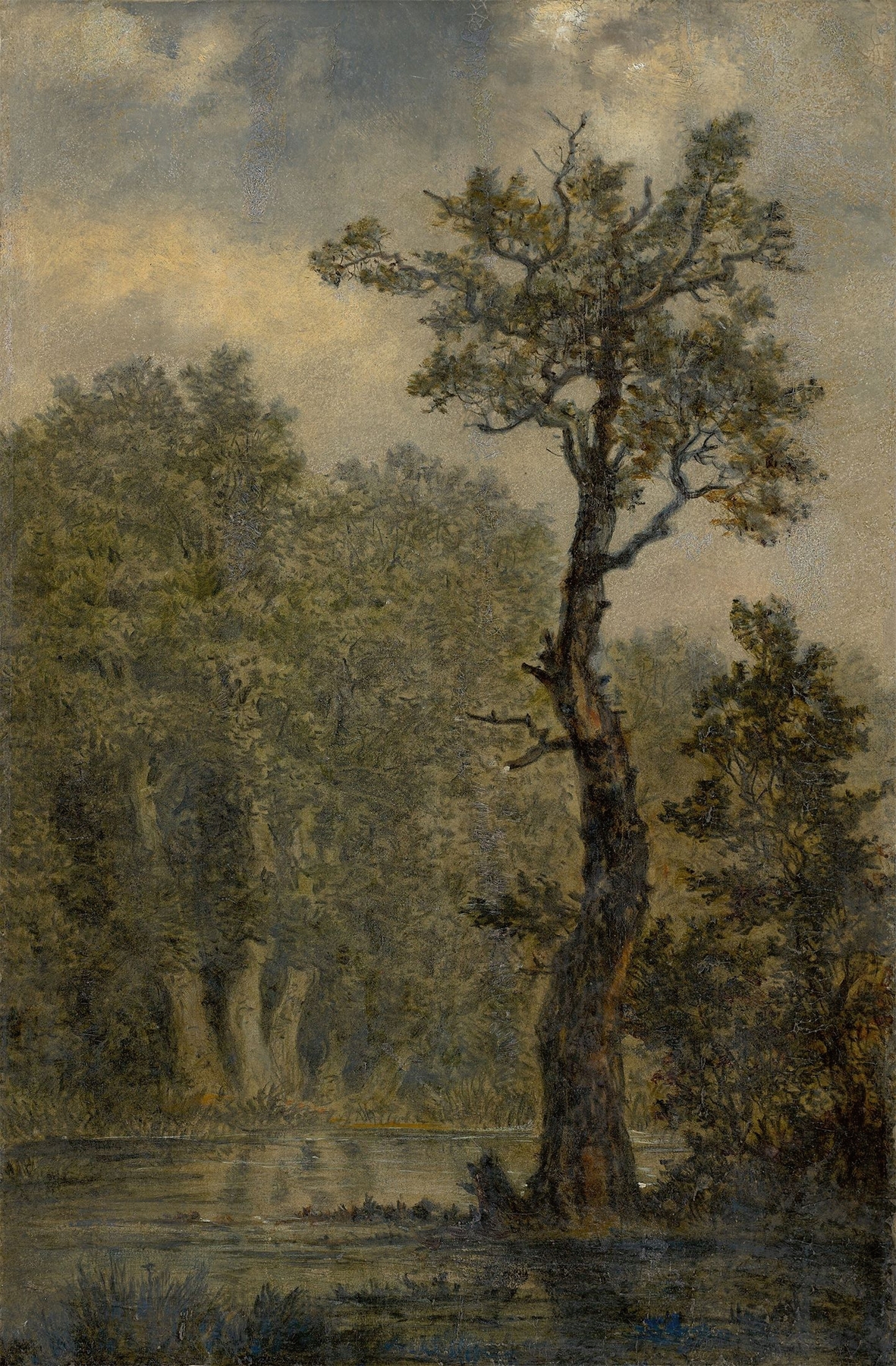
“The canvas doesn’t lie — it simply waits.” In the stillness of nature, a silent sorrow lingers, echoing the heartbeats of those who have loved and lost. Look closely at the lower left corner where a delicate stream meanders through the dense foliage, its reflective surface hinting at deeper currents of emotion. Notice how the trees, with their rich greens and browns, rise majestically, yet the shadowy undertones speak of an impending dusk. The subtle interplay of light—dappled yet fading—imbues the landscape with a sense of longing, as if it yearns to share its secrets with anyone willing to listen.
There is a stark contrast between the vibrant life of the forest and the isolated, almost melancholic atmosphere that pervades the painting. Each trunk stands tall, yet some seem to bend slightly inward, as if to shield their wounds from the world. The quietness of the scene is punctuated by a fear of the inevitable, suggesting a deeper grief that parallels the beauty surrounding it.
In 1830, during a period of personal upheaval and a profound shift in the Romantic movement, Carl Gustav Carus crafted this work in Dresden. The art world was beginning to explore the profound connection between nature and human emotion, and Carus, influenced by his studies of both science and art, sought to encapsulate the nuances of human experience within serene landscapes. This painting reflects not only his artistic vision but also the emotional weight of a world transitioning amid the whispers of change.