A Storm during Haymaking — History & Analysis
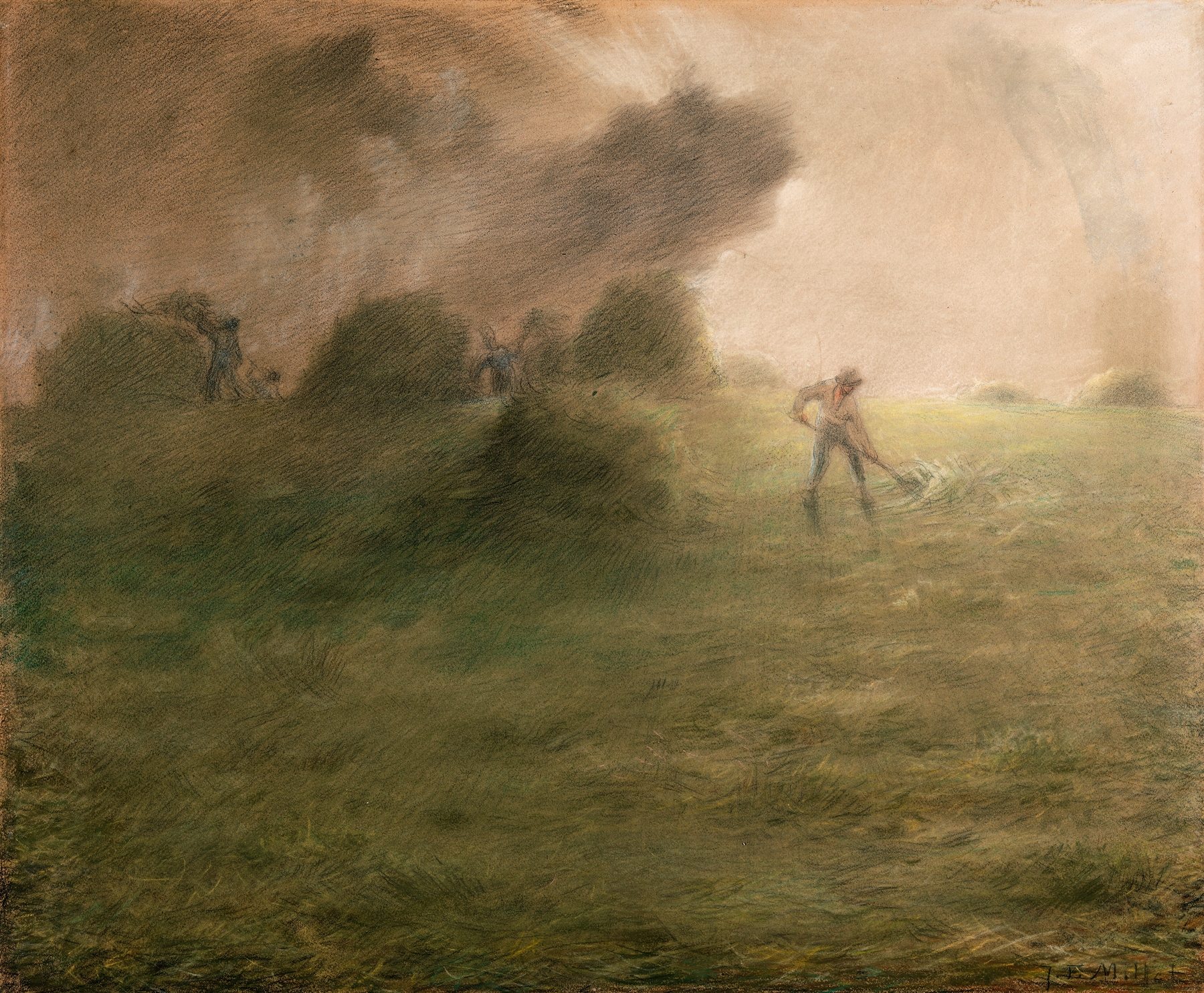
“Under the brush, chaos becomes grace.” This painting invites us to contemplate the raw struggle between humanity and nature, revealing a profound truth that resonates through time. Focus on the central figures, hunched against the rising tempest. Their backs are bent, bodies stooped under the weight of dark clouds gathering overhead. The swirling greens and browns of the field contrast starkly with the deep grays of the encroaching storm, creating a tension that speaks of both harvest and loss.
Notice how the brushstrokes convey movement, as if the wind is rushing through the scene, lending urgency to the workers' task. Millet captures the delicate balance between resilience and vulnerability. The farmer’s steadfast determination to complete the haymaking amidst impending danger symbolizes the struggle of rural life, where the beauty of labor is often at the mercy of nature’s fury. The anxious expressions on their faces reflect the weight of their toil, while the stormy sky looms, suggesting the unpredictability of existence.
Here, the mundane act of farming transcends into a larger commentary on the human condition. In the mid-1860s, Millet was deeply engaged with themes of peasant life, and A Storm during Haymaking emerged during a period marked by both personal and societal upheavals. Working in Barbizon, France, he was part of the Realist movement that sought to depict ordinary lives with sincerity. At this time, art was rapidly evolving, grappling with modernity and the realities of rural existence, providing a poignant backdrop to this striking piece.