Autumn Landscape with a Flock of Turkeys — History & Analysis
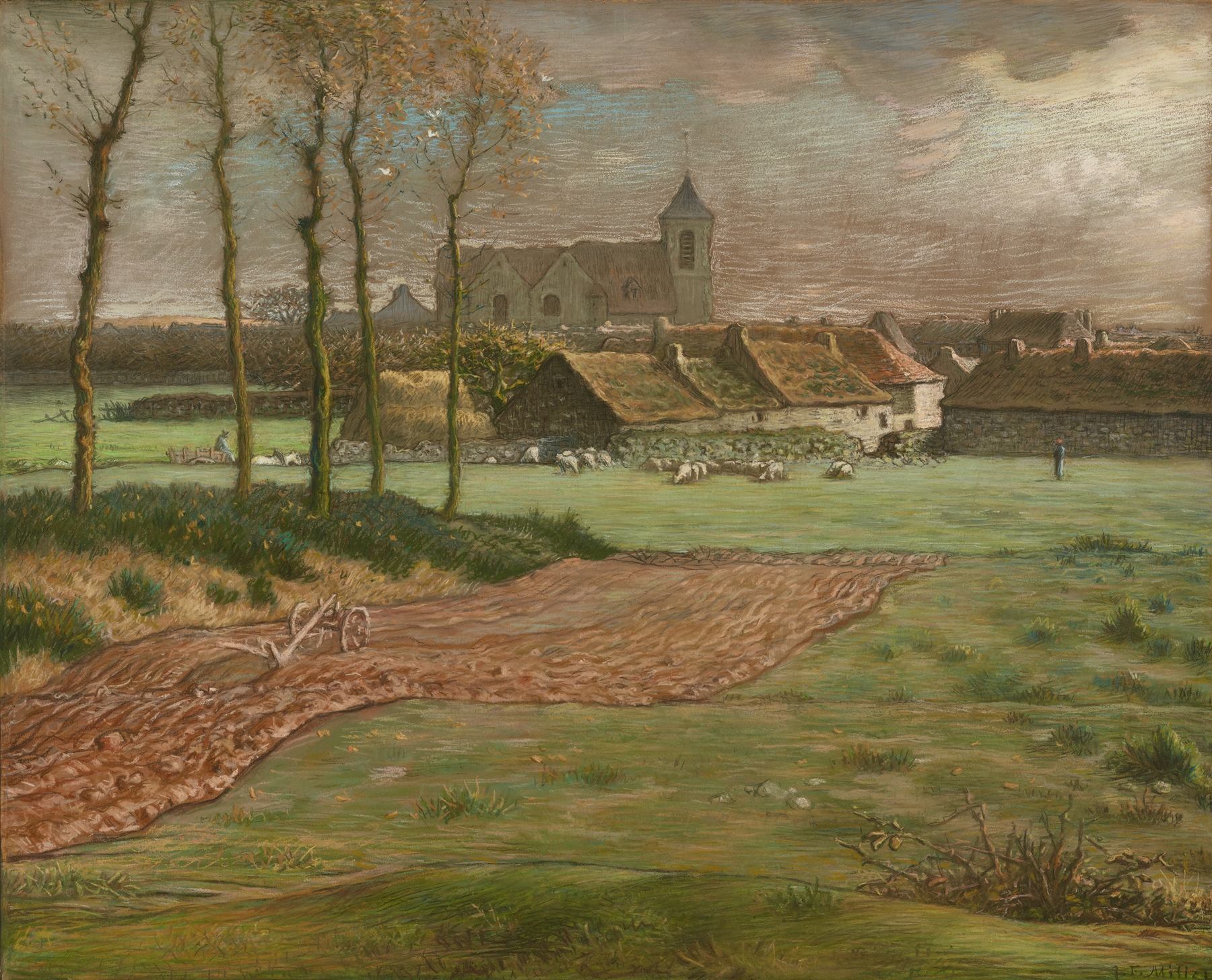
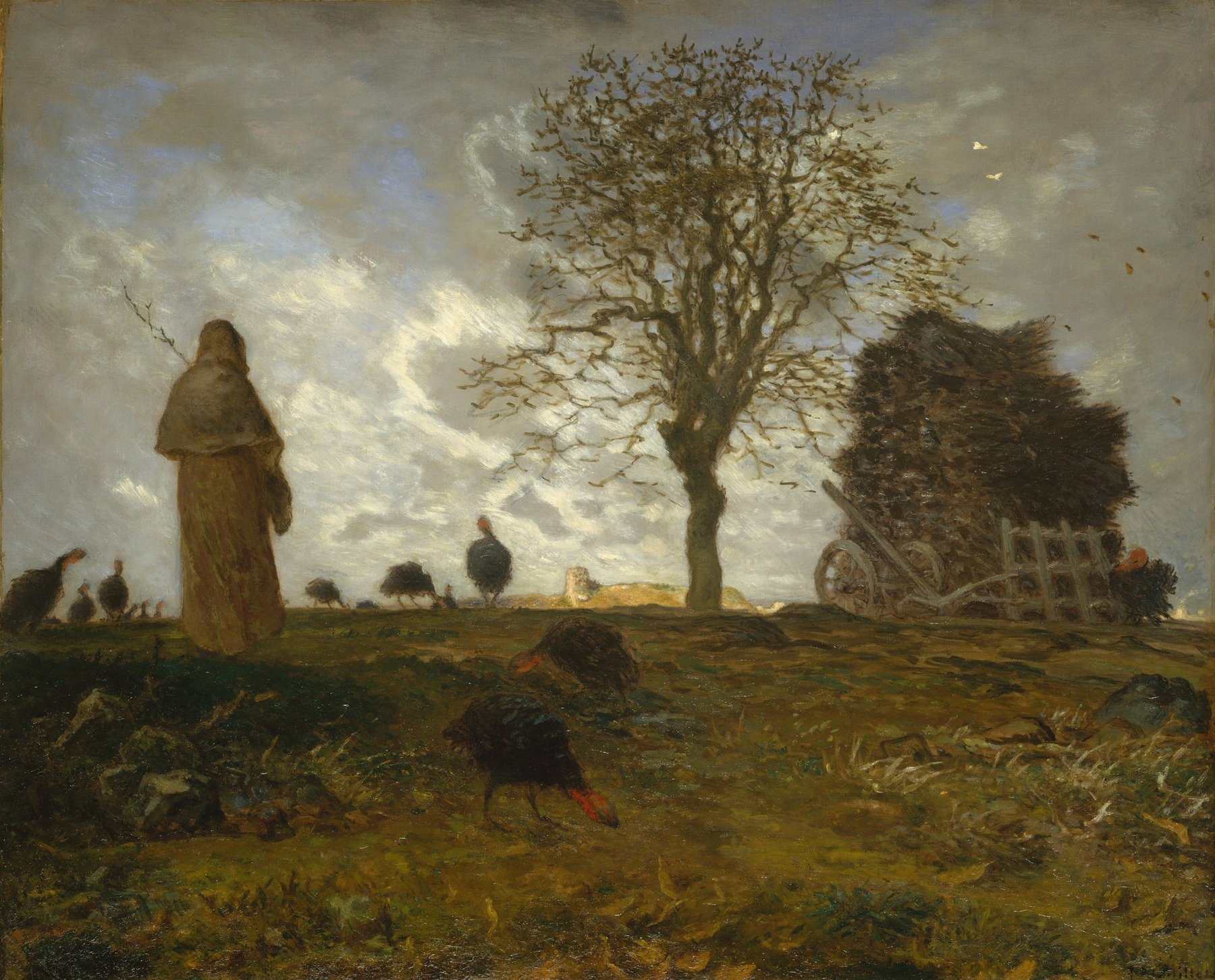
“Art reveals the soul when the world turns away.” In the hushed embrace of empty landscapes, the quiet speaks louder than the clamor of modern life. Here, in soft hues and gentle strokes, we are reminded of the spaces between noise — where solitude becomes a canvas for reflection. Look to the center of the composition; the flock of turkeys, rendered with earthy tones, commands attention. Their presence is both a celebration of the harvest and a nod to nature’s cyclical rhythm. Notice how the muted colors of autumn leaves, blending into the background, evoke a sense of nostalgia while the soft light casts elongated shadows, adding depth and warmth to the scene.
Millet's deft brushwork invites you to linger on the delicate details; each feather, each leaf is meticulously portrayed, emphasizing the harmony between the creatures and their environment. Yet, amidst this serene gathering, there lies an underlying tension. The turkeys, symbols of nourishment, contrast sharply with the barren branches overhead, suggesting a lingering emptiness in the abundance of harvest. This juxtaposition reflects both the beauty and fleeting nature of life, urging the viewer to contemplate the balance between sustenance and solitude.
The painting captures a moment of stillness, where time seems suspended, inviting introspection on what it means to be present in a world often filled with distractions. During the years 1872 to 1873, the artist was deeply entrenched in his rural surroundings in Barbizon, France. This period was marked by a growing appreciation for naturalism and a desire to depict the everyday lives of peasant folk. Millet, who had embraced this movement, aimed to elevate the humble scenes of agrarian life, imbuing them with dignity and spiritual resonance, as he sought to bridge art and the authenticity of the human experience.