The Church at Chailly — History & Analysis
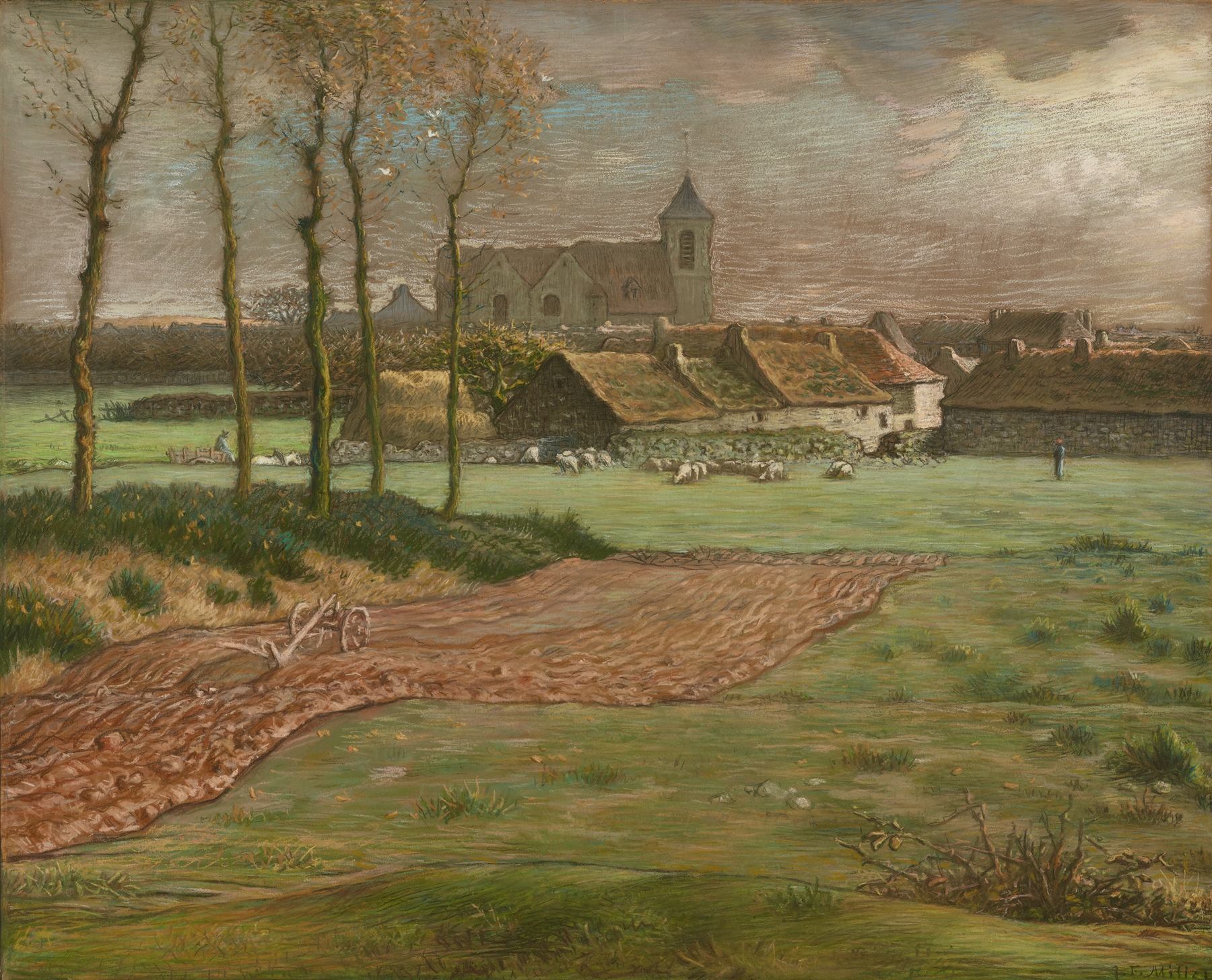
"Under the brush, chaos becomes grace." The delicate balance of fate and labor resonates through the landscape of rural life, where every stroke captures not just a scene, but the very essence of existence. Look to the center, where the church stands modest yet resolute, framed by verdant fields that stretch toward the horizon. Notice how the gentle play of light illuminates the structure’s weathered facade, revealing nuances in the earthy palette of ochres and greens. The composition draws the eye upward, where celestial clouds seem to cradle the steeple, suggesting a connection between heaven and the laborers below.
In every detail, there’s an interplay of toil and tranquility. The fields around the church are not just a backdrop; they embody the lives woven into the fabric of this community. The juxtaposition of the stern architecture against the soft, rolling hills speaks to the push and pull of human aspiration versus nature's indifference. It’s a quiet meditation on destiny, hinting that while human hands shape the land, the divine hand shapes human fate.
Millet created this piece between 1868 and 1869, during a time when he was deeply rooted in the Barbizon School, focusing on the lives of peasants and rural landscapes. This period marked a significant shift in art, as artists began to deliberately depict the everyday struggles of the working class, emphasizing authenticity over idealism. In capturing the church amidst the fields, the artist reflects both personal and societal narratives, revealing a profound connection to the land and its people.