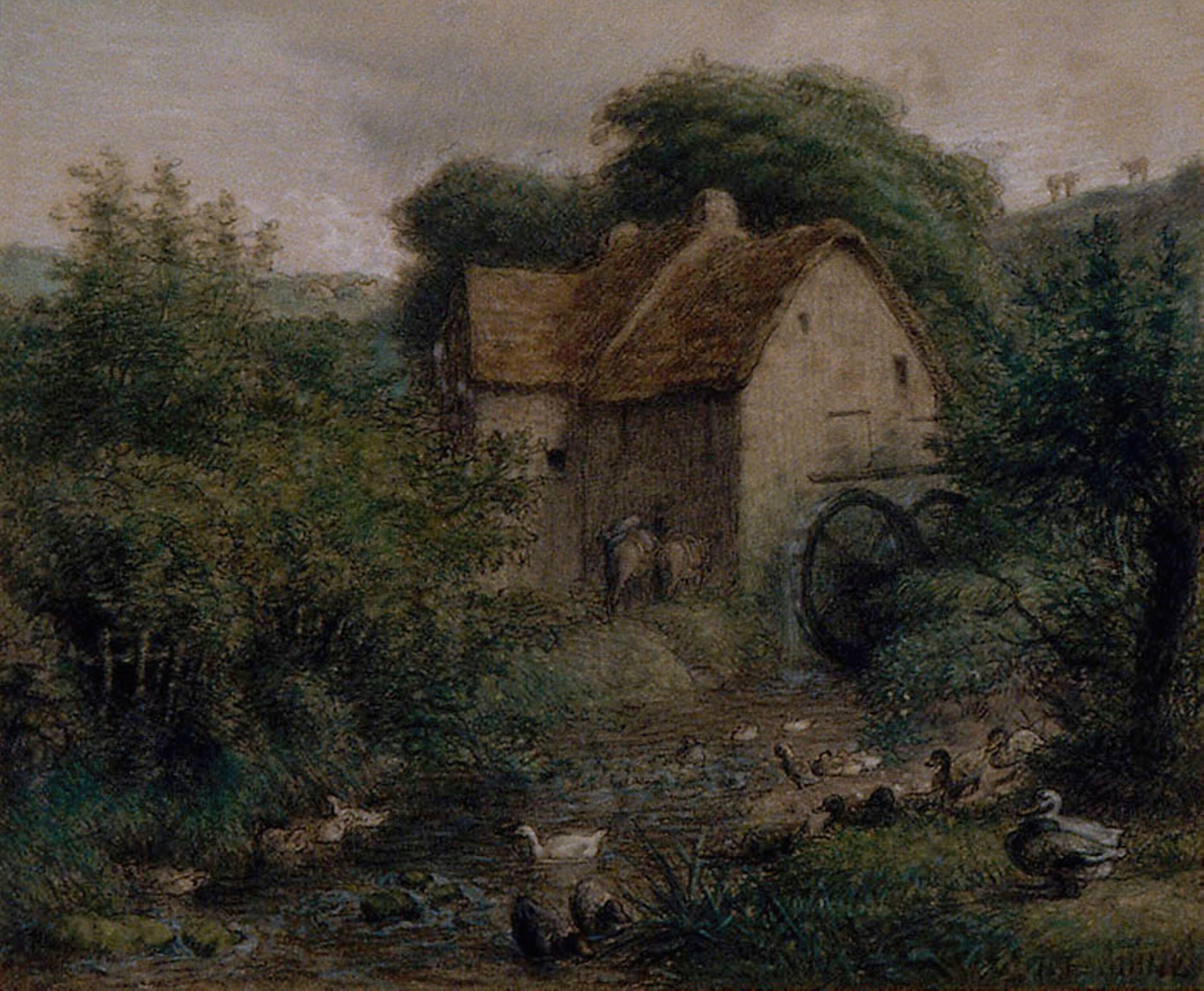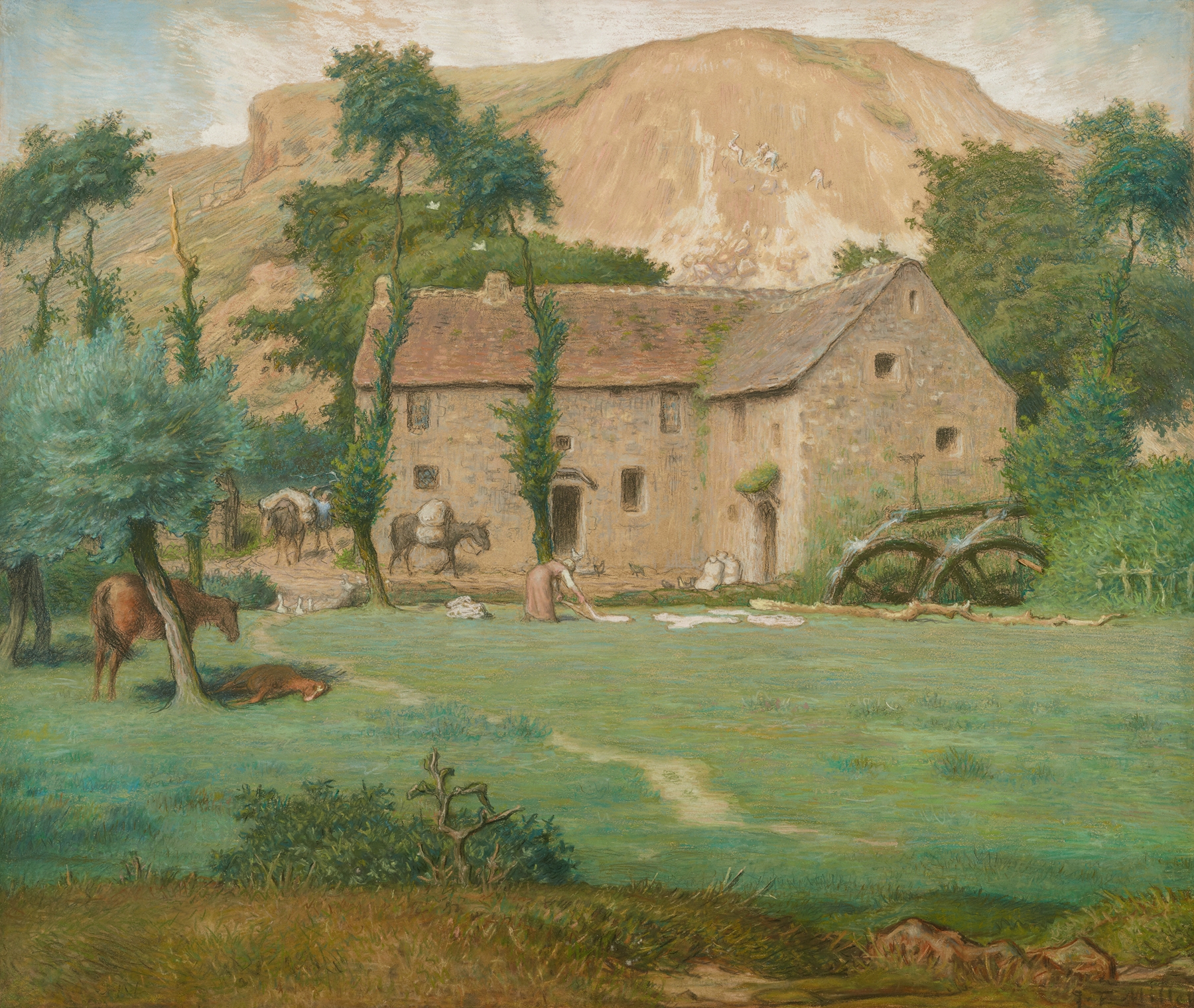
Watermill at the Foot of a Mountain, Allier — History & Analysis
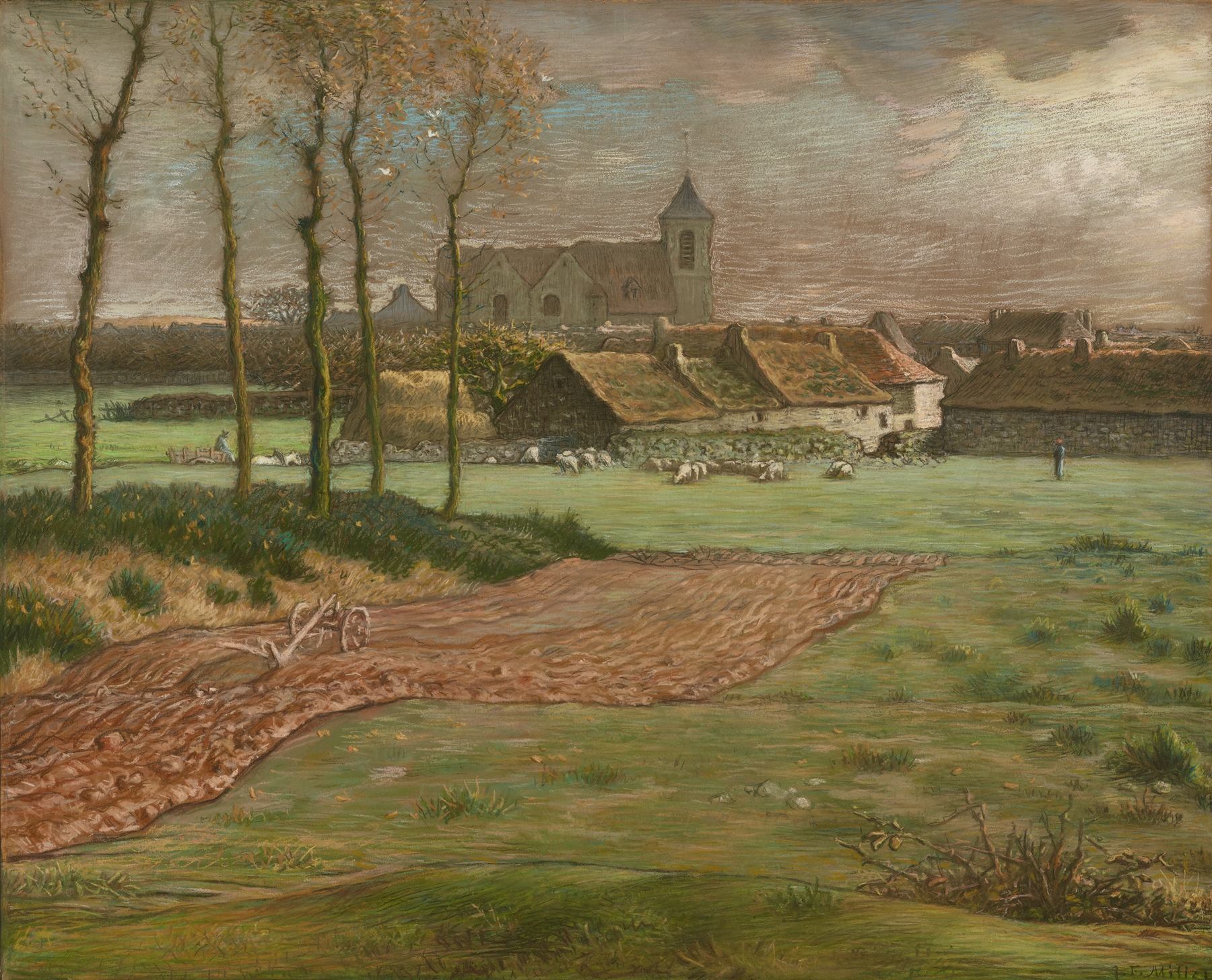
“Sometimes beauty is just pain, disguised in gold.” This sentiment echoes within the quiet turmoil of rural life, a paradox encapsulated in brushstrokes. The artwork holds a mirror to chaos, revealing the struggle beneath serene surfaces. Look to the foreground, where the watermill sits solidly, its wooden structure a testament to human craftsmanship amidst nature’s wild embrace. Notice how the gentle flow of water reflects dappled sunlight, illuminating the scene in hues of soft gold and cool blue. The mountain looms in the background, its towering presence a reminder of nature’s overwhelming power, contrasting starkly with the fragile beauty of the mill.
The colors blend harmoniously yet evoke a sense of tension, as if the tranquility is but a fleeting moment before the chaos surges forth. Within this serene composition lies a rich tapestry of emotion. The mill, often seen as a symbol of industriousness, also hints at the laborious life of the peasant, where beauty coexists with hardship. The juxtaposition of the mighty mountain and the humble mill speaks to the struggle against nature’s indifferent forces, hinting at life’s precarious balance. Each stroke carries the weight of toil, and the water's flow suggests both sustenance and the relentless passage of time, a reminder that chaos is inherent in beauty.
During the late 1860s, the artist found himself at a crossroads in his career, living in Barbizon, France. This period marked a shift towards Realism, as he sought to depict the everyday lives of peasants with authenticity. The art world was moving away from Romantic ideals, embracing the raw insights of life. In this context, the creation of this piece reflects not only Millet's personal evolution as an artist but also the changing tides of artistic expression during that transformative era.