Calling Home the Cows — History & Analysis
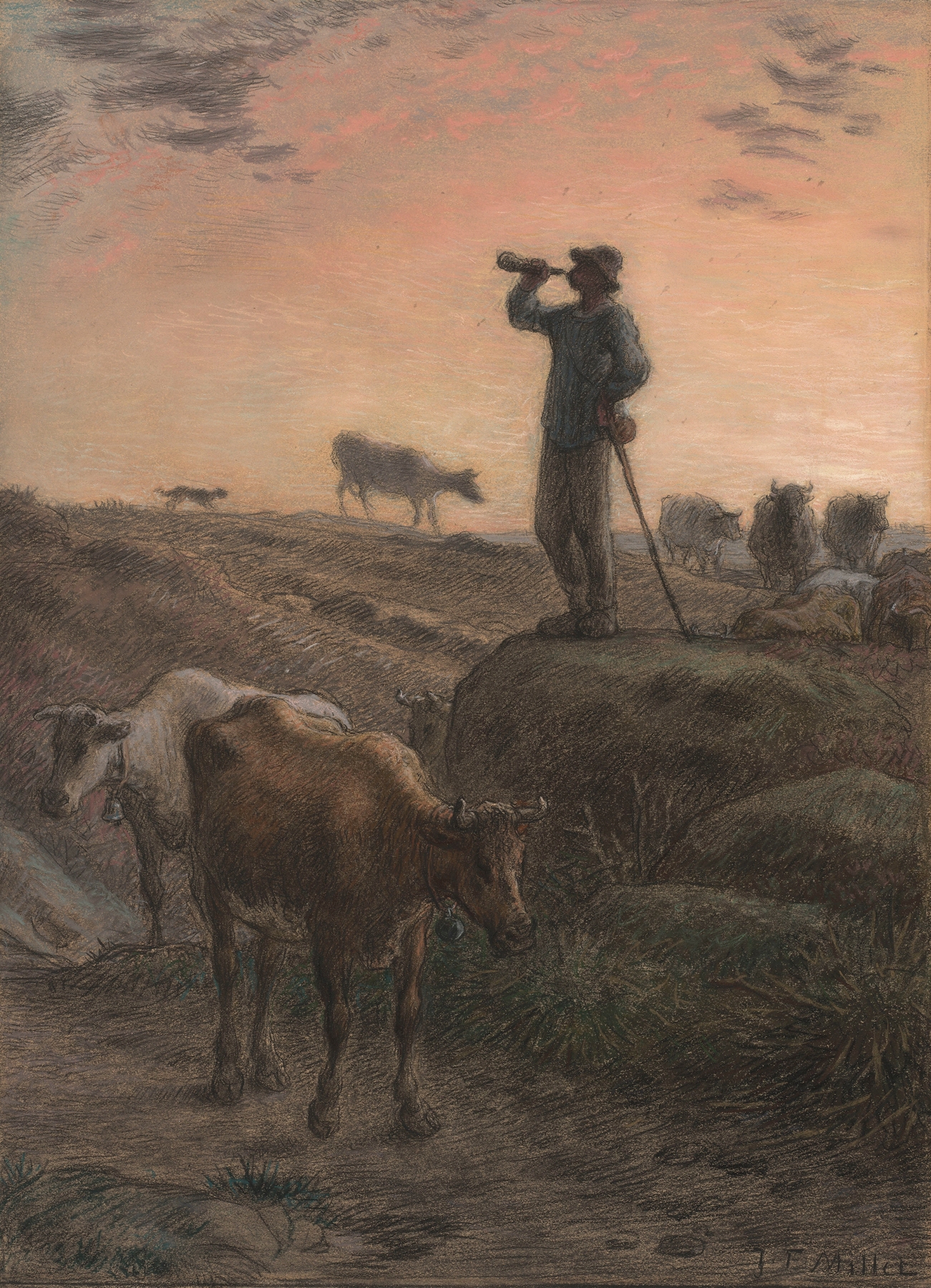
Did the painter know this moment would outlive them? The quiet grace of rural life holds a timeless serenity, a connection between humanity and nature that resonates through the ages. Look to the left at the gentle slope of the field, where two women guide a herd of cows homeward. The earthy palette of browns and greens envelops the scene, reflecting the warmth of a setting sun that casts long shadows across the ground. Notice how the light falls upon the figures, softening their forms as they bend with the weight of their task, their hats framing humble faces filled with purpose.
Millet’s loose brushstrokes evoke movement, inviting the viewer to imagine the soft rustle of grass and the lowing of cattle. Delve deeper into the composition, where contrasts emerge. The serene landscape juxtaposes the laborious task of bringing in the cows, reminding us of the balance between toil and tranquility. The expressions on the women’s faces reveal both determination and a profound connection to the land, while the distant horizon suggests that life continues beyond this moment.
The cows, with their subdued colors, blend into the earth, emphasizing a harmonious relationship between humans and nature, yet hinting at the fragility of such peace. In the mid-1860s, Millet was in Barbizon, France, immersed in the Realist movement, which sought to depict everyday life authentically. This period saw a shift away from romantic ideals toward a focus on the rural working class, a reflection of societal changes in post-revolutionary France. Calling Home the Cows captures a simple, yet profound moment, revealing the artist’s commitment to portraying the dignity of ordinary life amid the evolving landscape of 19th-century art.