Shepherdess with Sheep — History & Analysis
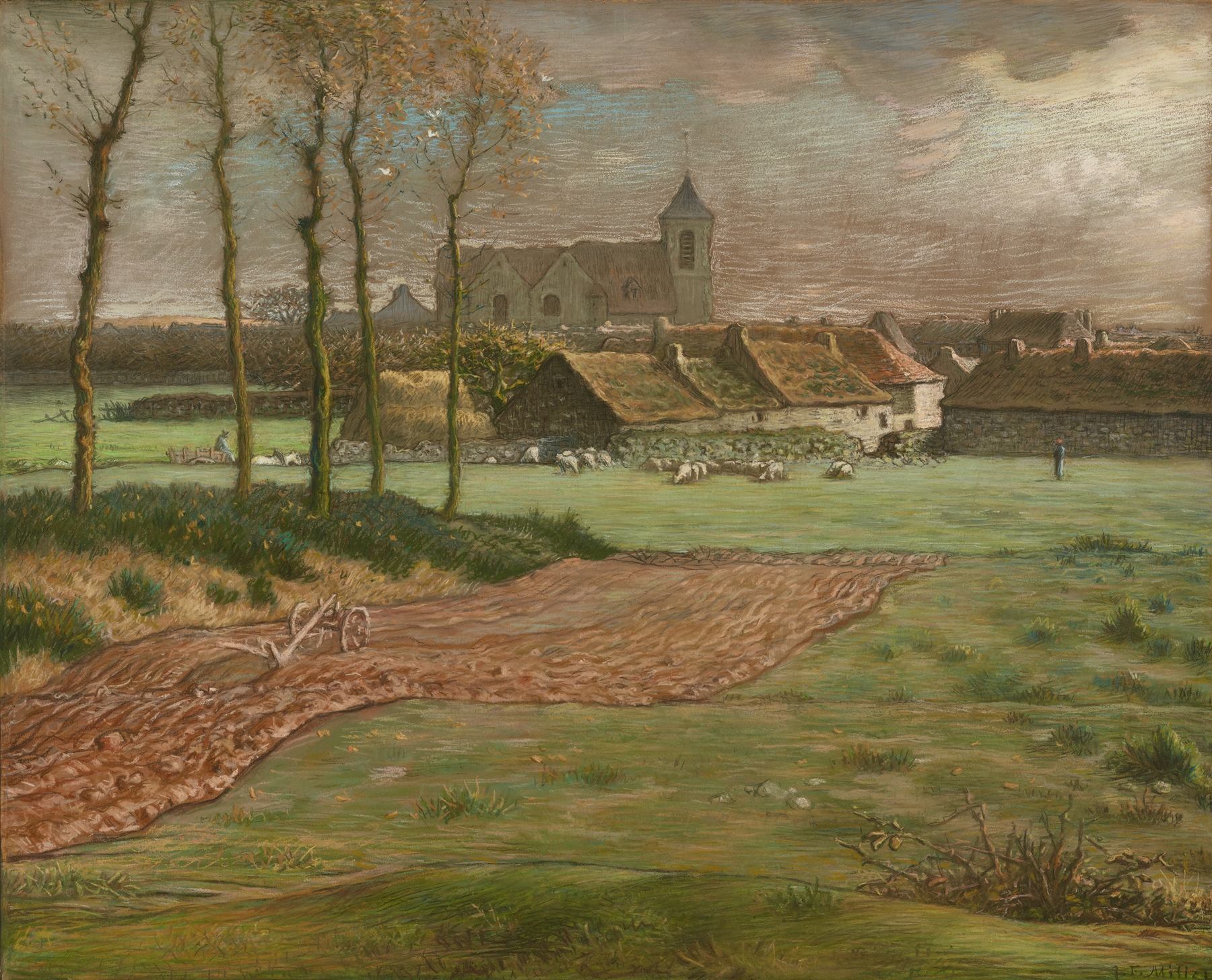
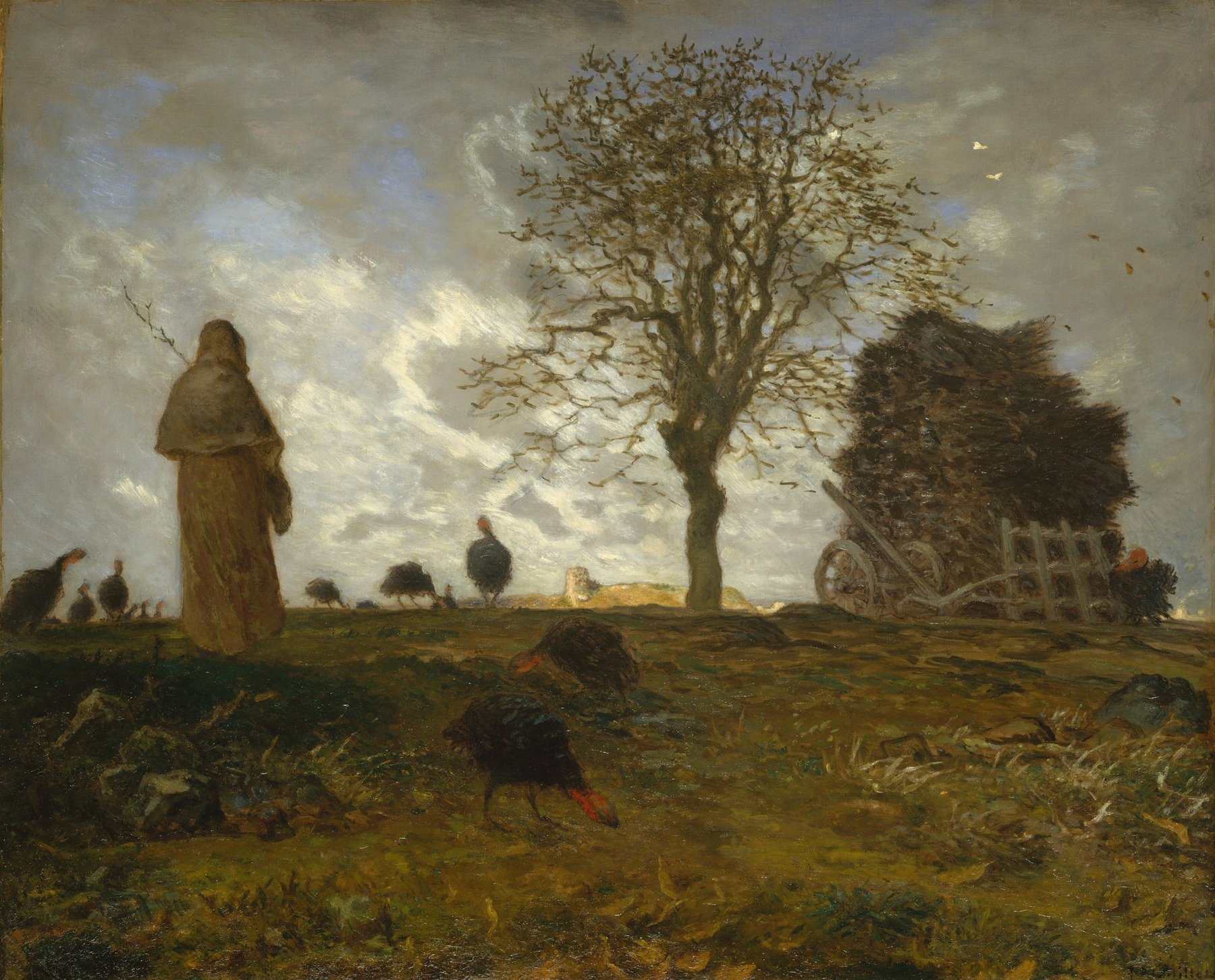
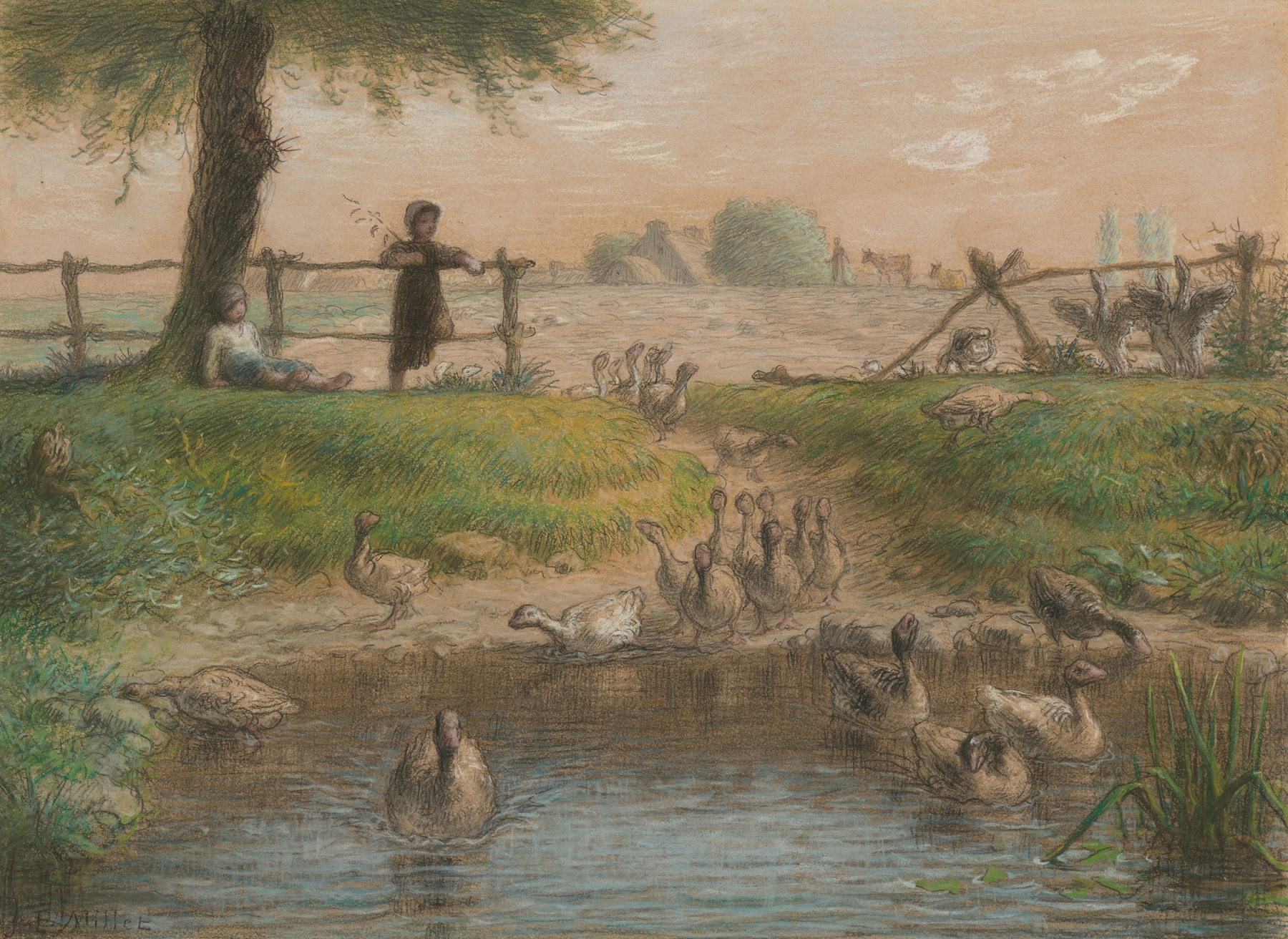
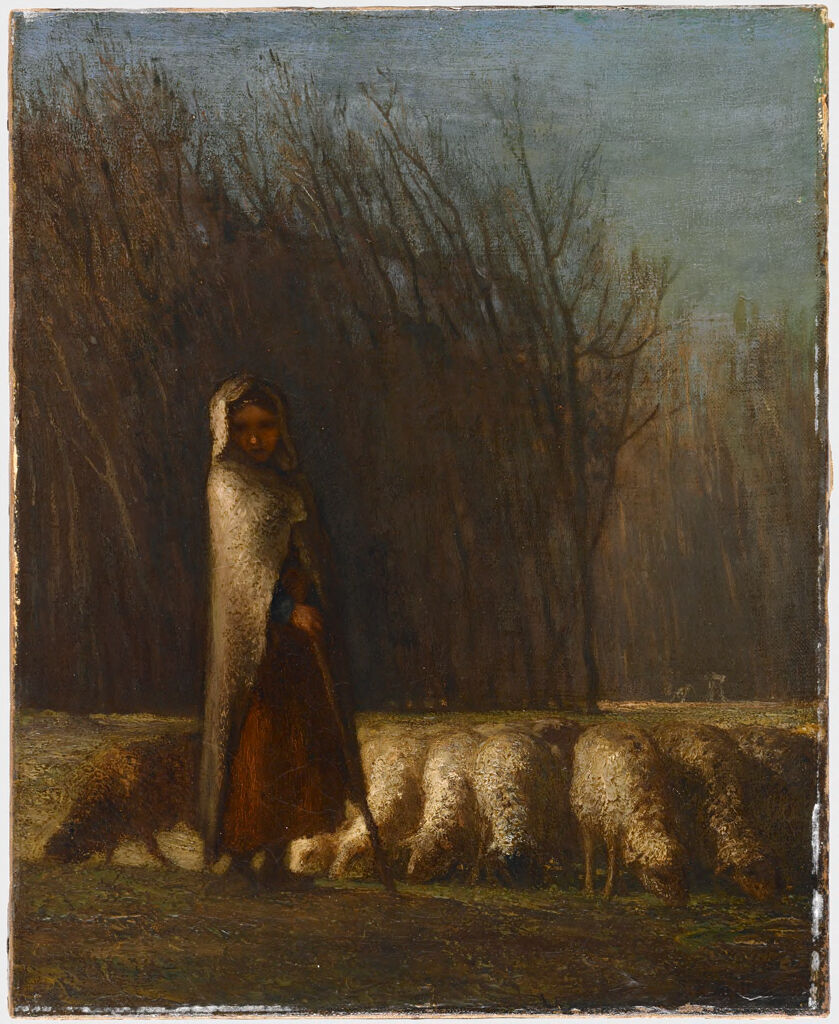
“The canvas doesn’t lie — it simply waits.” In the stillness of pastoral life, the quiet veneer of serenity often conceals deeper undercurrents. Though the scene may appear idyllic, the tension of existence lurks just beneath the surface, hinting at the violence that can simmer in the simplicity of everyday life. Look to the left where the shepherdess stands, her gaze directed toward her flock with an air of quiet authority. Notice how the earth tones of her clothing blend seamlessly with the muted greens and browns of the landscape, creating a sense of unity between the figure and her surroundings.
The brushwork, loose yet purposeful, captures the gentle movement of sheep grazing, while the light filters through the clouds, casting soft shadows that evoke a sense of impending change. Yet, amid this tranquil tableau, contrasts emerge. The shepherdess, although embodying tranquility, suggests a life of laborious struggle, her hands perhaps calloused by the relentless demands of nature. The flock, peaceful in appearance, can also symbolize the fragility of life, vulnerable to the harsher realities of existence.
This duality invites a contemplation of the violence wrought by nature, as well as the societal pressures that bear down on those who toil in its embrace. In the 19th century, Jean-François Millet painted this evocative piece during a time of significant social upheaval in France. As the Industrial Revolution began to transform the landscape, artists sought to capture the essence of rural life and its inherent struggles. Millet, a leading figure in the Barbizon School, focused on peasant life, infusing his work with empathy and realism, reflecting both the beauty and the harshness of the world around him.