Aanbidding van Christuskind door drie koningen — History & Analysis
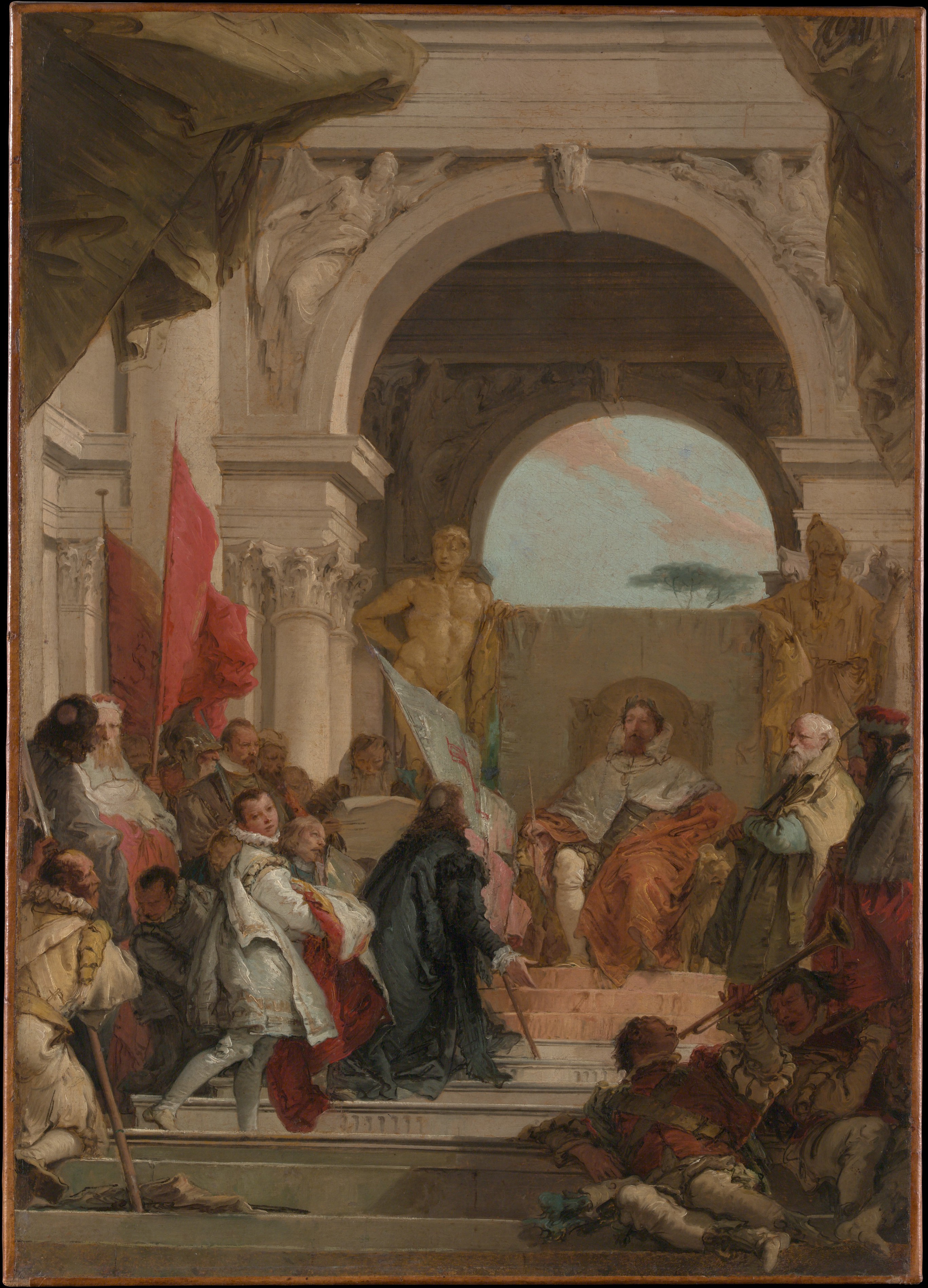
What secret hides in the quiet of the canvas? In Aanbidding van Christuskind door drie koningen, the passage of time is poignantly suspended, inviting us to ponder the profound moments that shape our lives. Look to the center of the painting, where the Christ child, bathed in a celestial glow, commands the attention of the three kings. Notice how the delicate interplay of light and shadow accentuates their reverence, illuminating their richly adorned garments while enveloping them in a soft, ethereal haze. The warm palette of golds and reds contrasts sharply with the cooler tones of the surrounding figures, drawing our gaze inward to the holy scene.
Tiepolo’s masterful brushwork captures intricate details, from the glimmer of jewels to the tender expressions of awe etched upon the kings’ faces, creating an intimate moment of worship. The emotional tension in the piece lies in the juxtaposition of regal authority and humble devotion. Each king, a representation of worldly power, bows before a child who embodies transcendence and innocence. This contrast speaks to the universal themes of humility and grace.
Additionally, the artists' inclusion of a serene, watchful angel in the background hints at the divine surveillance of human affairs, suggesting that time, though fleeting, is always marked by moments of significance. Giovanni Battista Tiepolo created this work around 1775, during a period when he was at the peak of his artistic prowess in Venice. This was a time marked by the Rococo style’s flourish, celebrated for its elegance and lightness. The artist’s career was thriving, yet beneath this success lay the broader cultural shifts of Enlightenment thought, which was challenging traditional hierarchies and redefining the relationship between the sacred and the secular.