Armida Encounters the Sleeping Rinaldo — History & Analysis
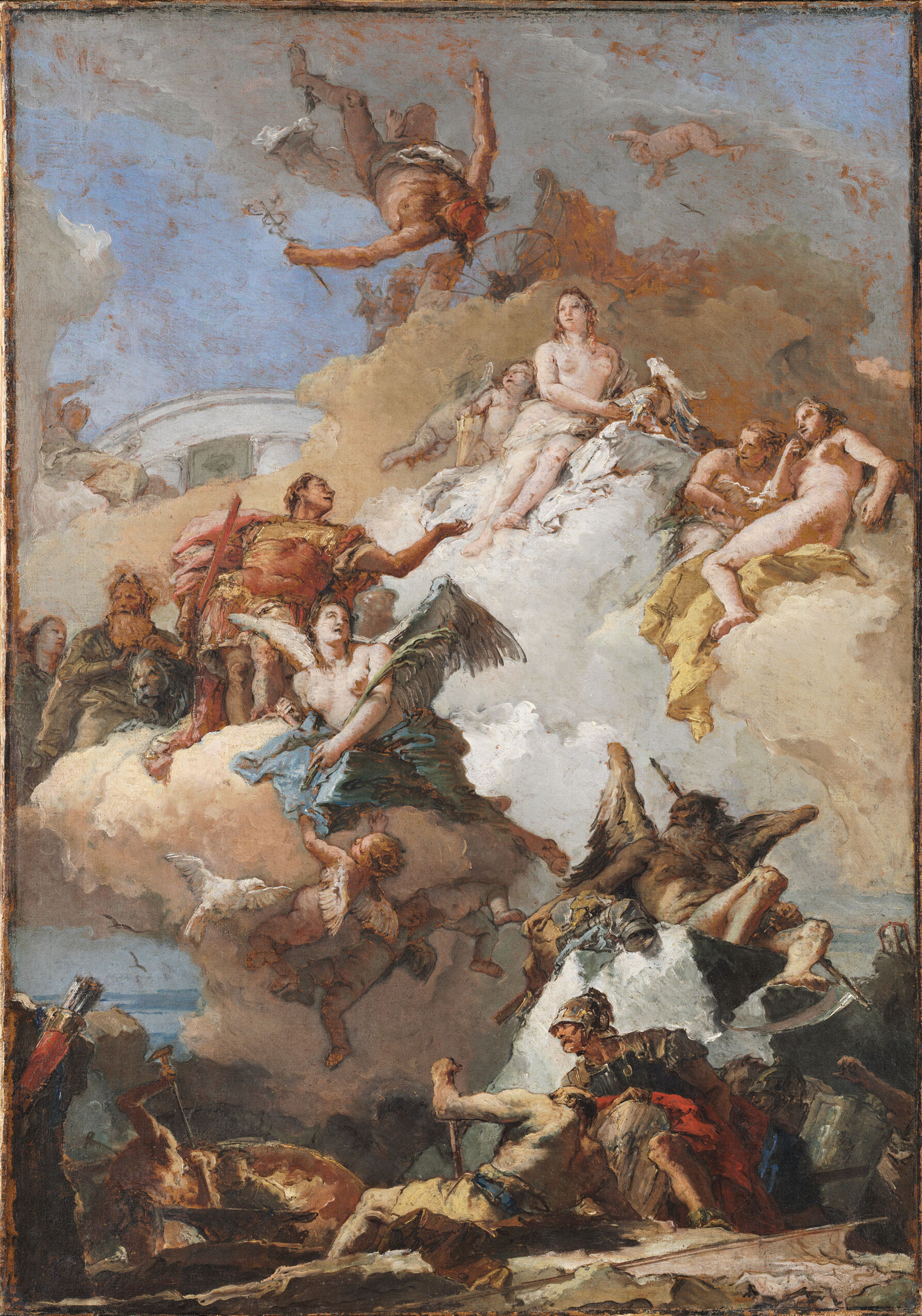
When did color learn to lie? Tiepolo's work invites us to ponder the very nature of perception and transformation as reality bends to the artist's will. Look closely at the ethereal figure of Armida, her hand poised delicately as if she might awaken the sleeping Rinaldo. The vibrant hues of her gown contrast dramatically against the cool, serene tones surrounding the slumbering knight. Notice how the light plays across the fabric, imparting a shimmering quality that breathes life into the scene, almost as if Armida's enchantment were palpable.
The harmonious composition draws your eye across the canvas, leading you to the expressive details in Rinaldo’s face, where the subtle warmth of his skin hints at vulnerability amidst the enchanting twilight. Within this moment, contrasts emerge — the dynamic tension between Armida’s vibrant energy and Rinaldo's stillness reflects the struggle between desire and passivity. The lush foliage surrounding them acts as both a sanctuary and a prison, emphasizing the duality of beauty and entrapment. Moreover, the interplay of light and shadow evokes a sense of dreamlike unreality, as if the viewer is caught between waking and sleep, reality and illusion.
This dichotomy compels us to question the very transformations that love and desire can bring forth. Tiepolo painted this work between 1742 and 1745, during a period of flourishing artistic exploration in Venice. Influenced by the Rococo movement, he sought to elevate emotional expression through vibrant color and grand composition. At this time, the artist was establishing his reputation, captivated by themes of myth and romance, and this particular piece reflects both his mastery of light and his keen understanding of human emotion, embodying the transformative power of love that was both celebrated and scrutinized in contemporary society.