The Apotheosis of Aeneas — History & Analysis
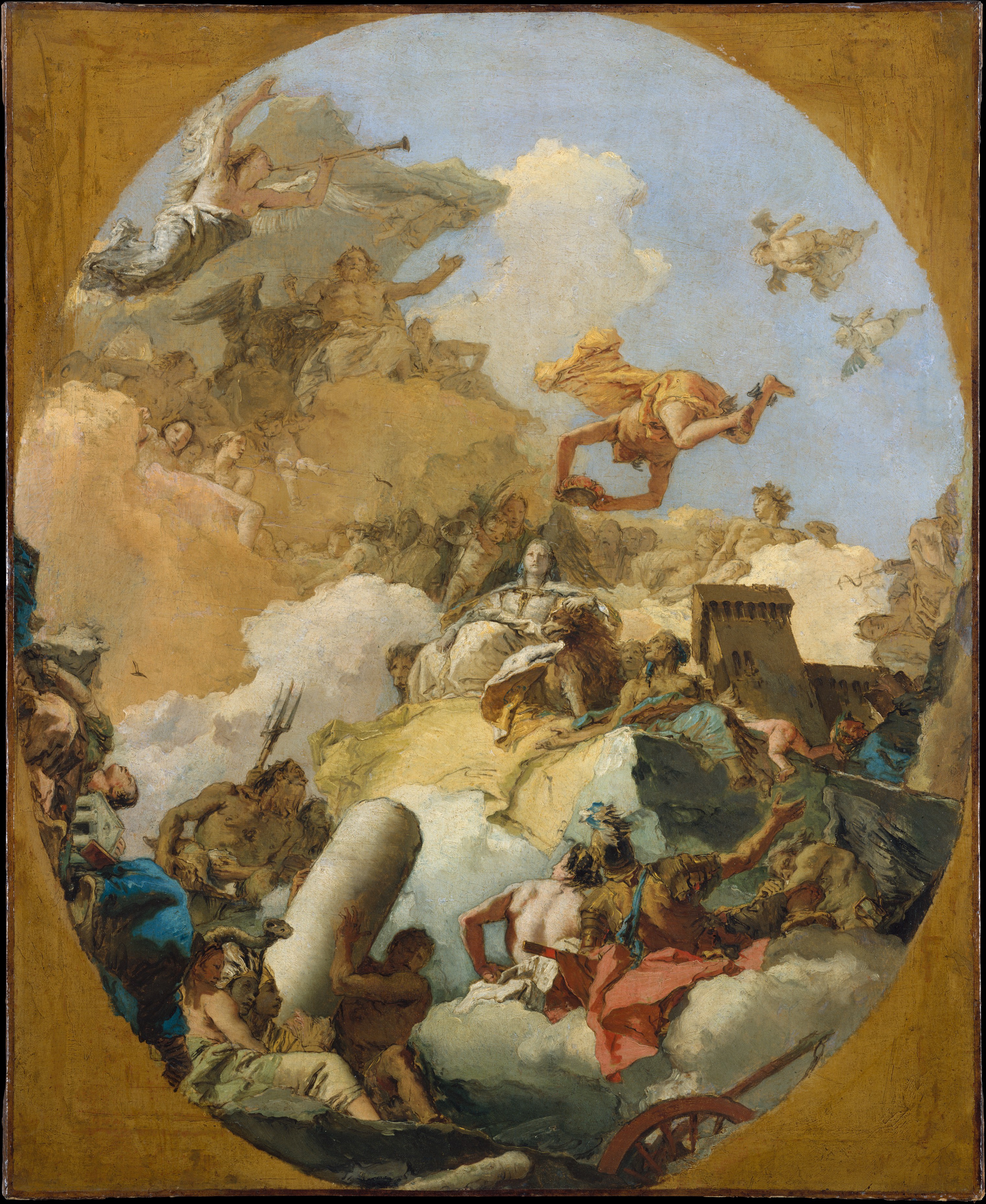
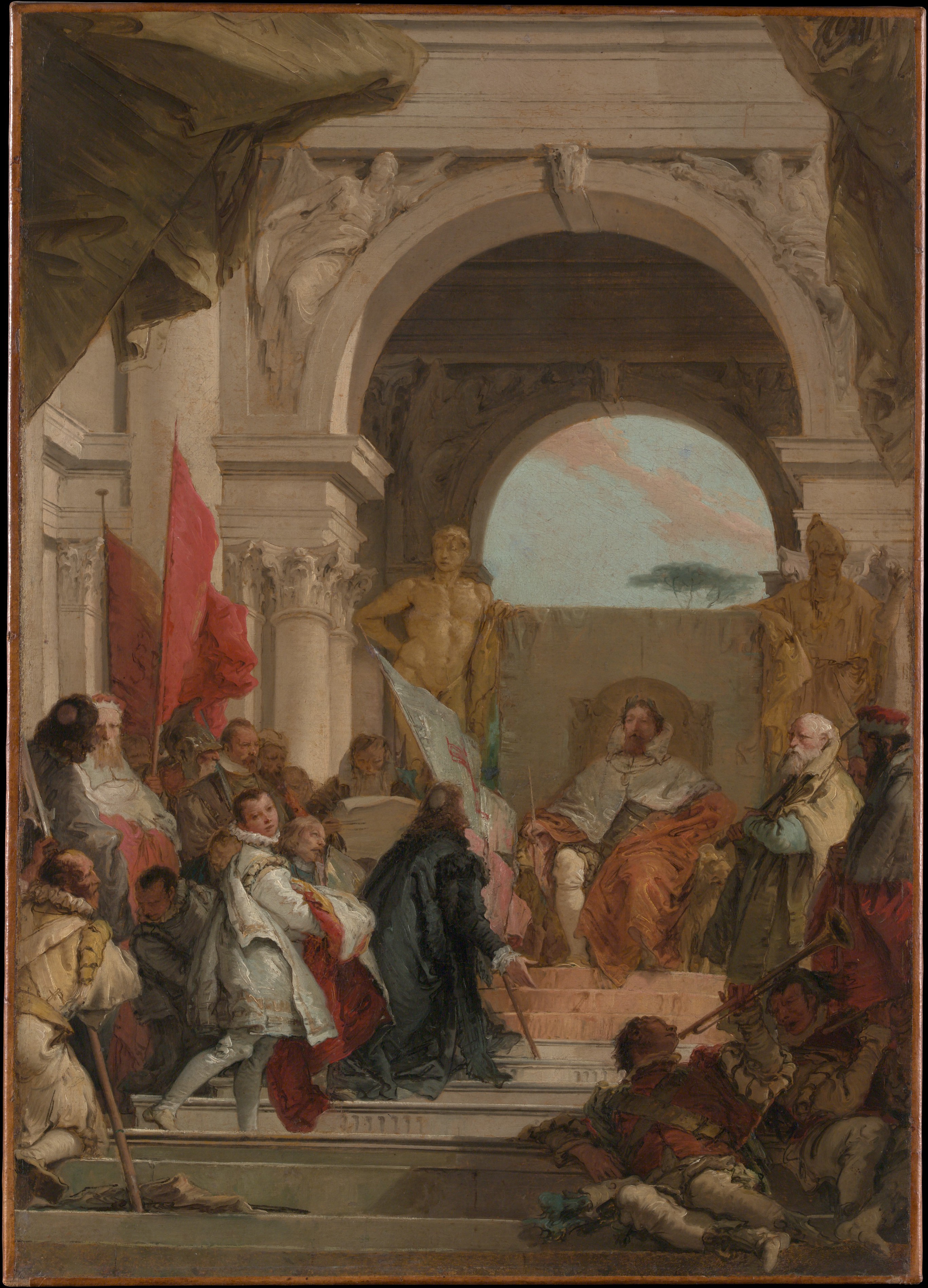
Is this a mirror — or a memory? In The Apotheosis of Aeneas, the viewer is confronted with an ethereal tableau that intertwines grandeur with a haunting sense of emptiness, prompting contemplation of legacy and the passage of time. Focus first on the celestial figures ascending in the upper half, a whirlwind of vibrant colors and dynamic brushstrokes. Notice how the luminous golds and soft whites of their garments contrast sharply against the dark, shadowy background, creating a sense of divine elevation.
The poised gestures of Aeneas, flanked by gods, convey a moment frozen in triumph, yet there's an underlying tension in their gazes that hints at both celebration and solitude of spirit. Delve deeper into Aeneas’ expression, which oscillates between determination and introspection; it invites questions about the weight of the past and the future he carries. The surrounding figures, each uniquely adorned, further emphasize this duality of glory and isolation. The empty space around Aeneas serves as a poignant reminder of the past that has built him, and the void that lies ahead, evoking an emotional resonance that lingers long after the initial visual marvel.
Giovanni Battista Tiepolo painted this masterpiece around 1765 during a pivotal period of artistic exploration in Europe. His work was characterized by a fascination with grandeur and drama, reflecting the Rococo movement’s embrace of opulence and vibrant colors. At that time, Tiepolo was at the height of his career, creating monumental works that merged theatricality with mythological themes, as he sought to convey greater meaning through his portrayal of historical and mythical narratives.