Armida Abandoned by Rinaldo — History & Analysis
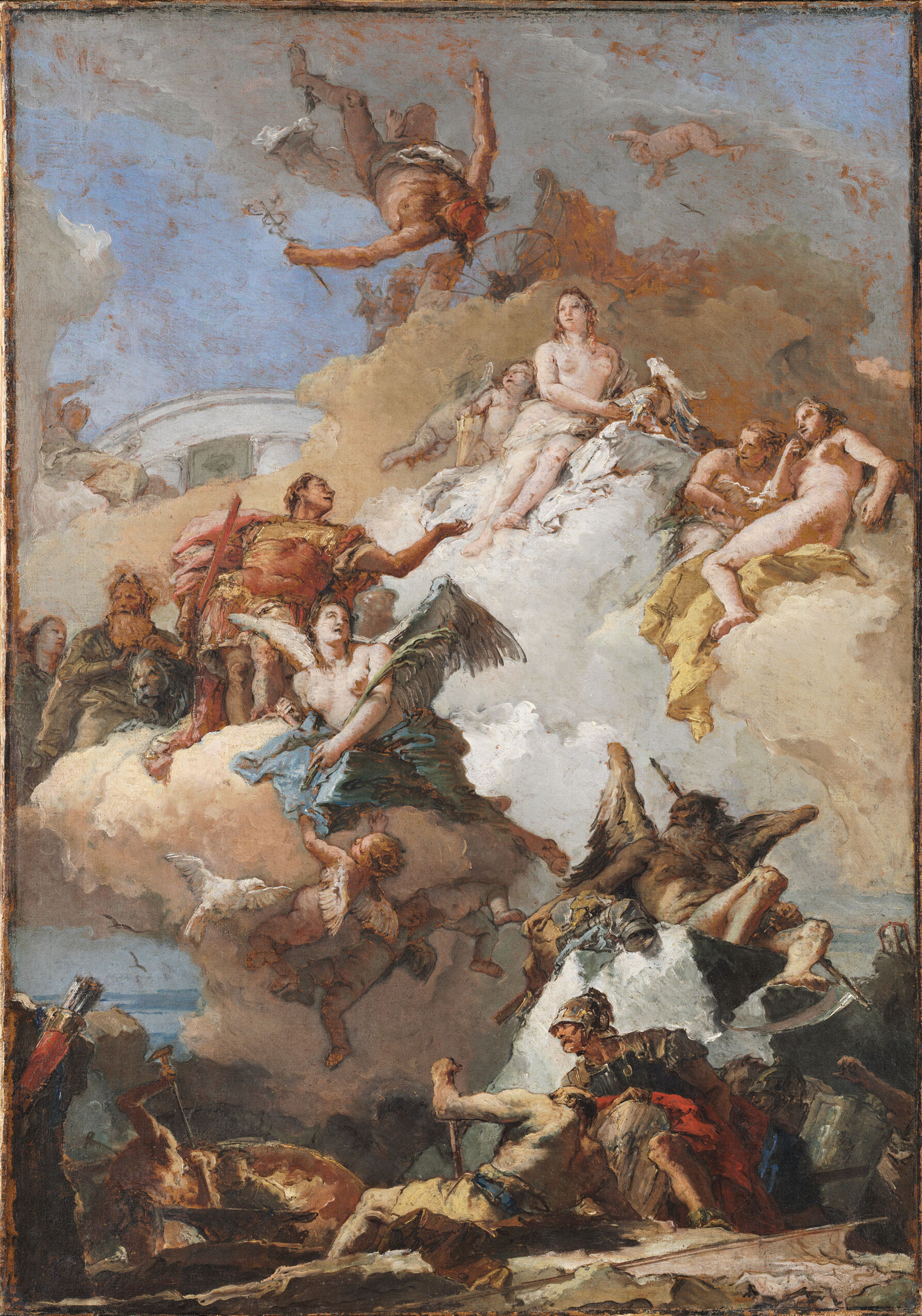
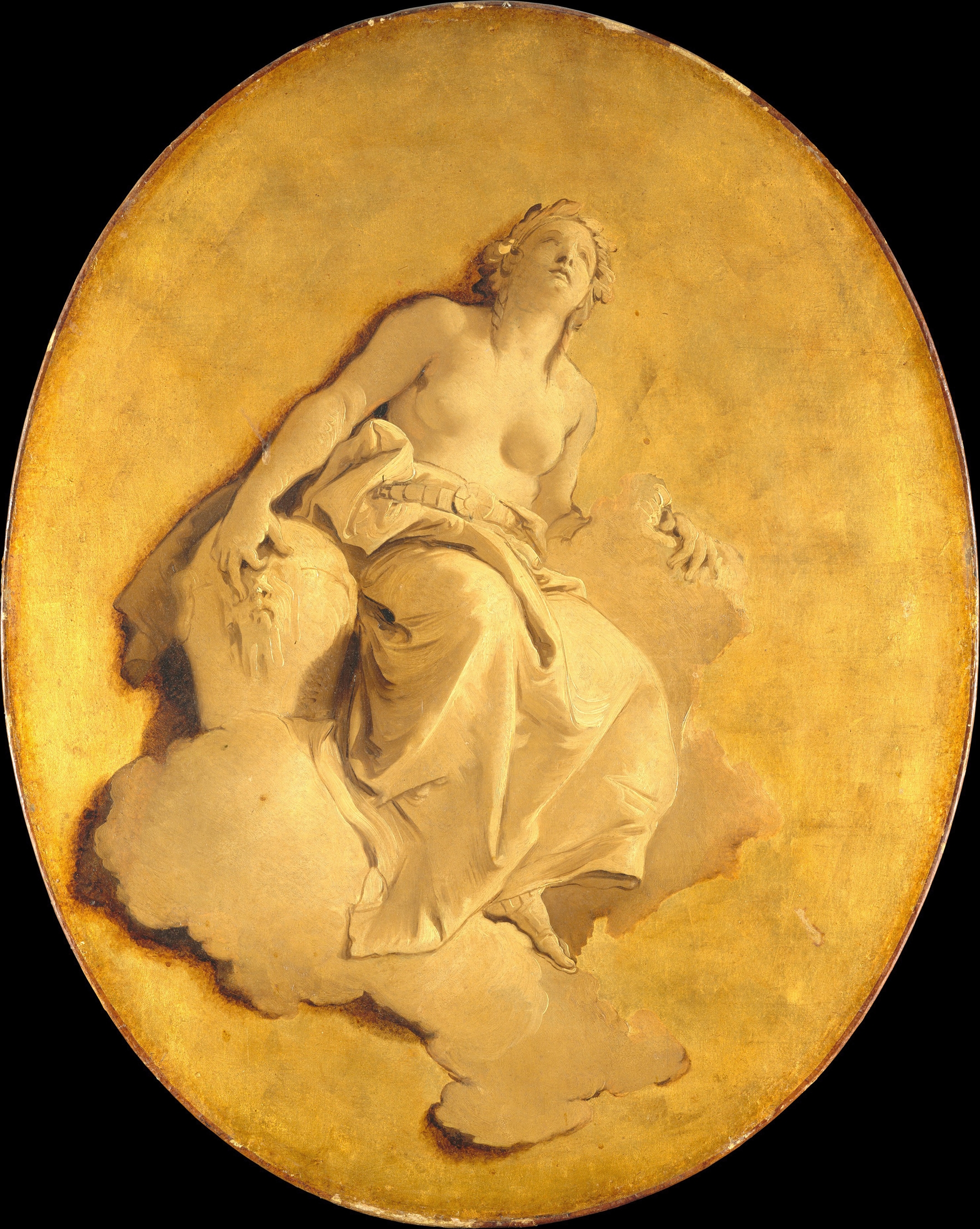
What secret hides in the quiet of the canvas? In Armida Abandoned by Rinaldo, Tiepolo invites us to explore the depths of grief, illuminating the fragility of love and the profound ache of loss. Look to the left where Armida stands—her expression a tapestry of sorrow and yearning. The delicate brushwork captures her flowing gown, shimmering with shades of soft pink and gold against the muted background. Notice how the light falls upon her face, revealing the glimmer of unshed tears, while the shadows deepen the sense of isolation enveloping her.
The composition draws your eye to her outstretched hand, a poignant gesture that speaks louder than words, capturing a moment suspended in time. As you delve deeper, consider the contrasts at play: the vibrancy of Armida's attire against the stark emptiness of her surroundings. This dissonance mirrors the internal struggle between love and abandonment. The lush foliage surrounding her hints at a world teeming with life, yet Armida’s solitude starkly contrasts this vitality, underscoring her emotional desolation.
The drooping flowers at her feet serve as silent witnesses to a love that has wilted, embodying the painful reality of unreciprocated feelings. Giovanni Battista Tiepolo created this work between 1742 and 1745 during his time in Venice, a period marked by the height of Rococo art. His career was flourishing, yet the thematic exploration of love and loss in this painting diverges from the celebratory exuberance typical of the style. Tiepolo’s nuanced portrayal of emotional depth amidst a decorative aesthetic reflects both personal and broader societal tensions of the time, revealing a complexity that resonates through the centuries.