The Investiture of Bishop Harold as Duke of Franconia — History & Analysis

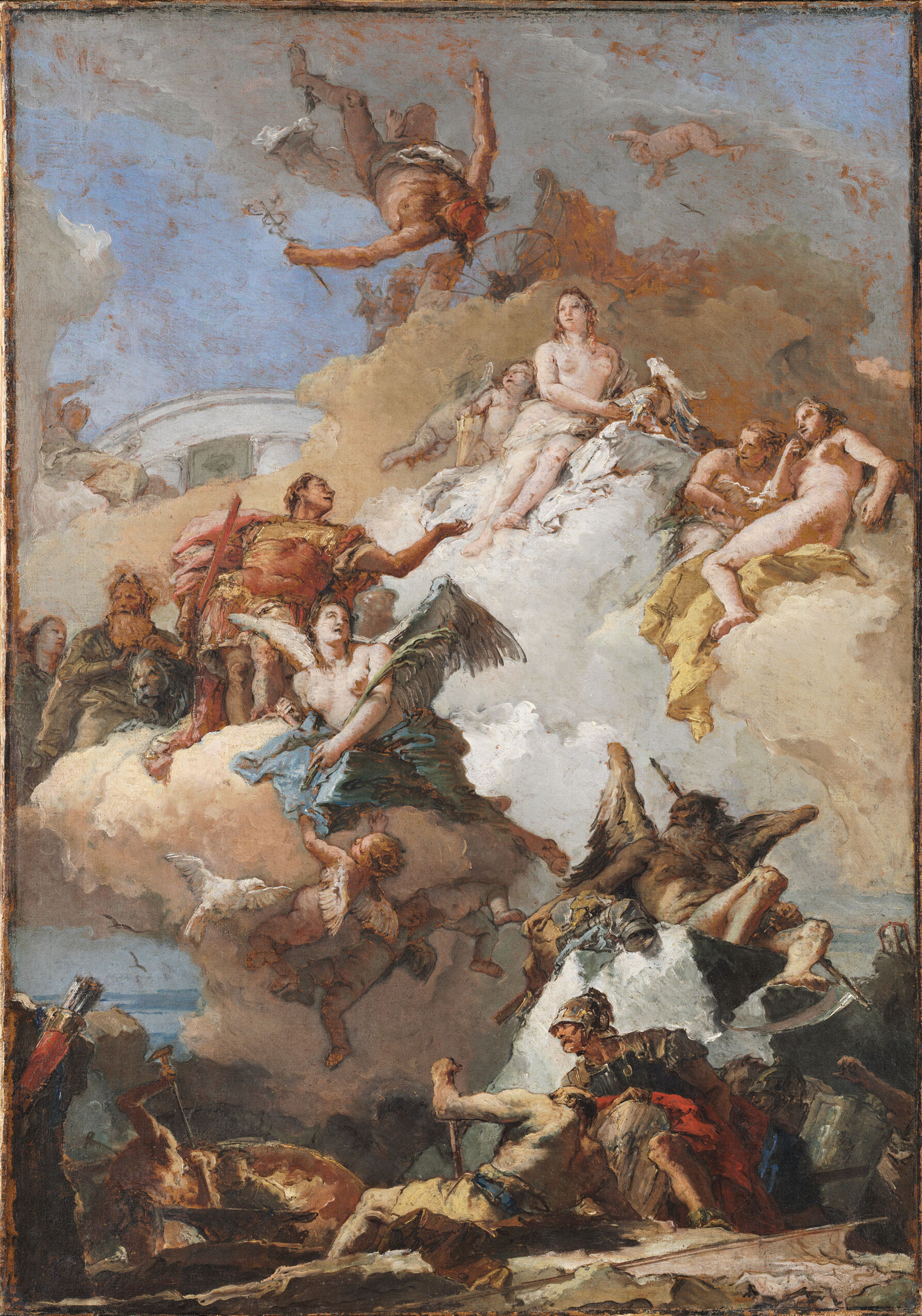
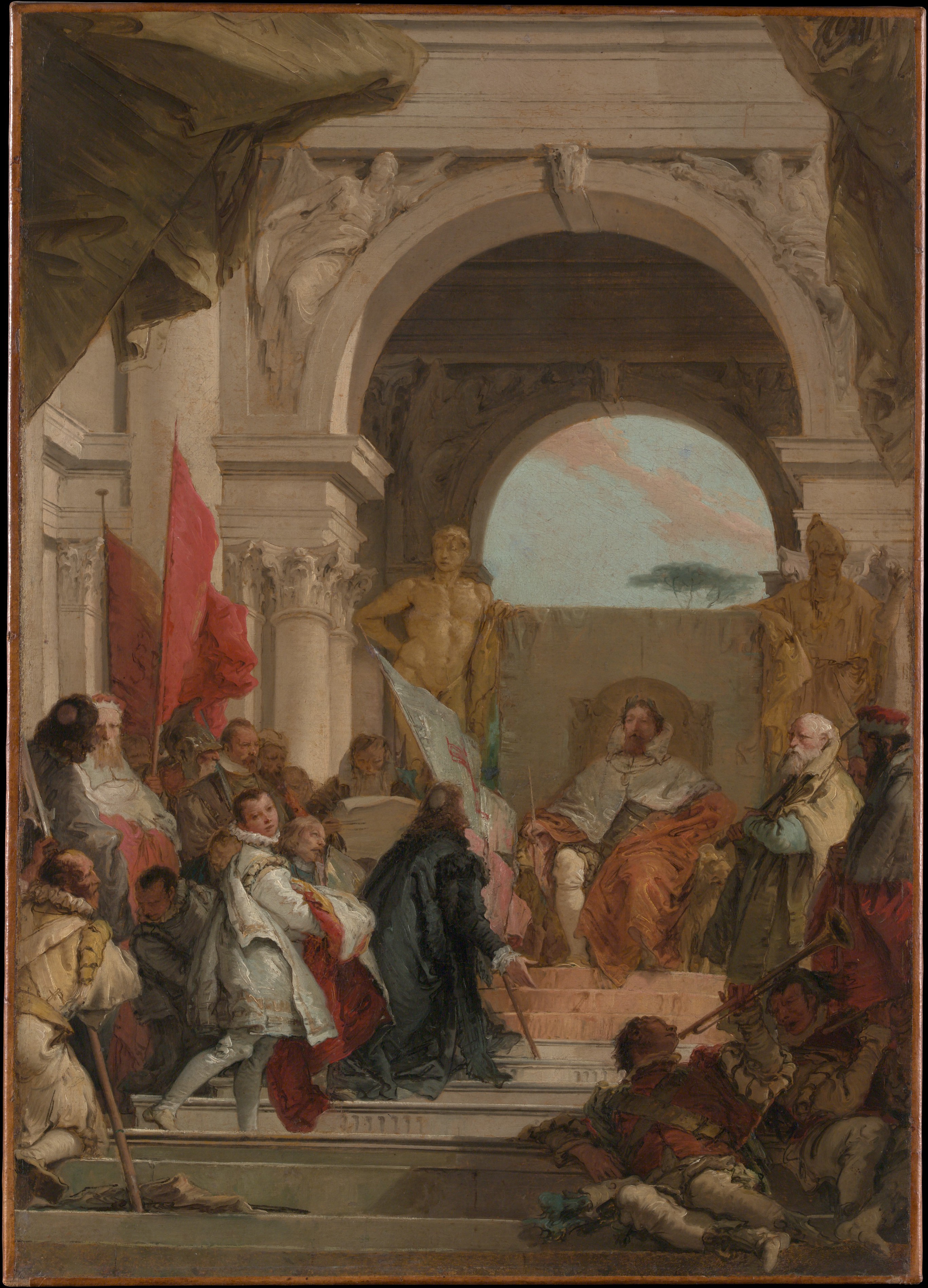
What if beauty was never meant to be finished? In The Investiture of Bishop Harold as Duke of Franconia, the moment of destiny unfolds, captured in the luminous brushstrokes of Giovanni Battista Tiepolo. This masterful work invites contemplation of power, divinity, and the intricate intertwining of human aspiration with fate. Begin your exploration by gazing at the central figures: the bishop, adorned in ceremonial regalia, stands resolutely as he receives the duke’s cloak. Notice how the light cascades from above, illuminating the rich golds and deep reds of his vestments, creating a striking contrast with the softer hues surrounding him.
Look closely at the figures that encircle him; each is imbued with an air of reverence, their expressions a mix of awe and solemnity, as if they understand the weight of the moment captured. Delve into the details, and you will uncover the layers of meaning woven into the fabric of this scene. The juxtaposition of the bishop's authoritative gaze with the gentle, almost ethereal figures around him reveals the tension between spiritual and secular power. The subtle play of light not only highlights the bishop's centrality but also symbolizes enlightenment, suggesting that true destiny is illuminated through divine guidance rather than mere ambition.
Each figure contributes to the collective narrative, forming a tapestry of fate that extends beyond the canvas. Painted between 1751 and 1752 in Venice, this work reflects Tiepolo's mastery during a period of rich artistic innovation. At the time, he was at the height of his career, celebrated for his ability to create grand compositions infused with drama and emotion. The world was shifting, with the art of the Rococo flourishing, and Tiepolo was deftly navigating these currents, capturing not just a moment, but the essence of destiny itself in his brushstrokes.