
Rinaldo and the Magus of Ascalon — History & Facts
A young man draped in a vivid red cloak stands at the center, his gaze lowered in contemplation as an elderly figure beside him gestures toward a large shield. The older man, wrapped in ochre robes, holds the shield upright and points with his right hand, drawing the young man's attention to its reflective surface. To the left, two armored soldiers stand on rocky ground, watching the central pair with attentive postures; one leans on a shield while the other rests his hand on his hip.
Behind the group, a boat with a curved prow waits at the water's edge, its oarsman visible in the stern, while a tall pine tree rises against the pale sky. The scene is bathed in clear daylight, with strong shadows and luminous, pastel colors typical of the Rococo movement. Brushwork is fluid and broad, especially in the draperies and landscape, creating a sense of movement and theatricality.
Details such as the gold trim on the young man's armor, the feathers on the fallen helmet, and the texture of the rocky ground reveal the artist’s attention to surface and material. The composition is carefully balanced, with the main figures forming a diagonal line from the lower right to the upper left, while the background recedes into a calm, blue distance. A discarded blue garment and a plumed helmet lie on the ground in the lower right corner, partially in shadow and edged by greenery.
The bare foot of the central young man is illuminated by sunlight, contrasting with the shaded folds of his red cloak. In the background, the sky transitions from pale blue to soft peach near the horizon, with wispy clouds and a few distant birds. The left edge of the painting is bordered by a rough, light-colored rock formation that catches the afternoon light.
Loose, visible brushstrokes define the foliage and rocky terrain, giving texture and depth to the landscape at the painting’s edges. The Art Institute of Chicago notes that the painting has been exhibited in major shows in Chicago, Udine, Venice, and New York, reflecting its enduring importance.
Sources: Art Institute of Chicago, record 1925.702 · Wikidata Q20273873
More Artworks by Giovanni Battista Tiepolo
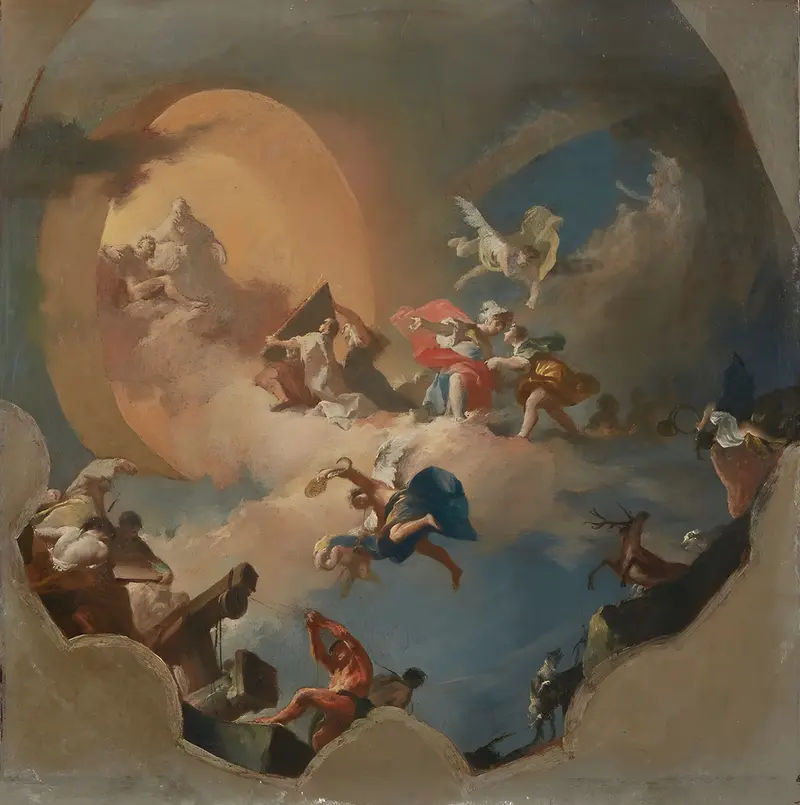
The Apotheosis of the Arts
Giovanni Battista Tiepolo
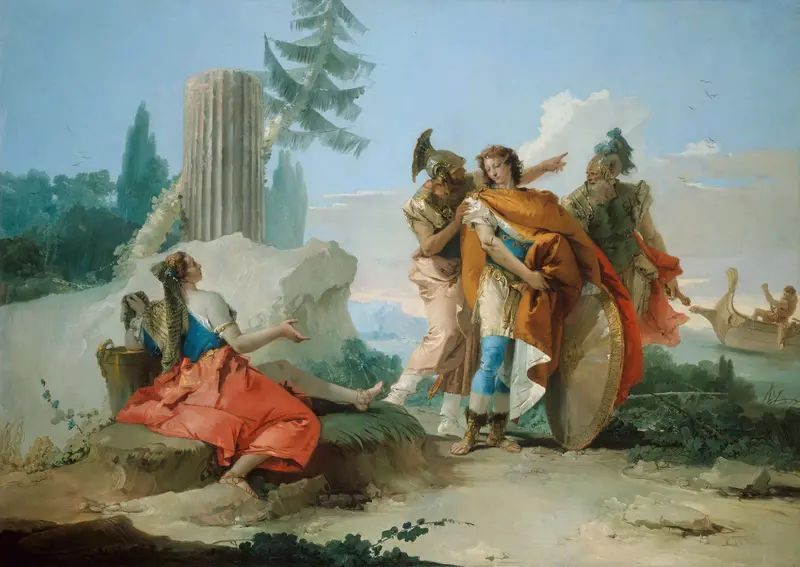
Armida Abandoned by Rinaldo
Giovanni Battista Tiepolo
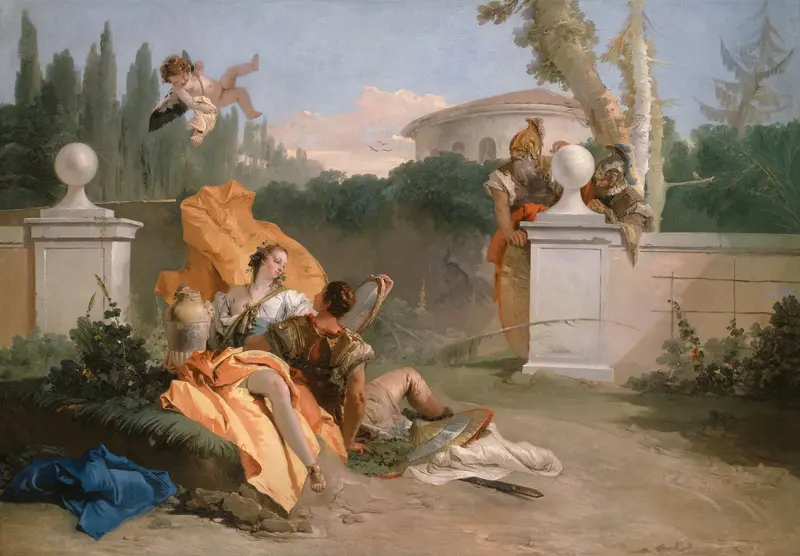
Rinaldo and Armida in Her Garden
Giovanni Battista Tiepolo
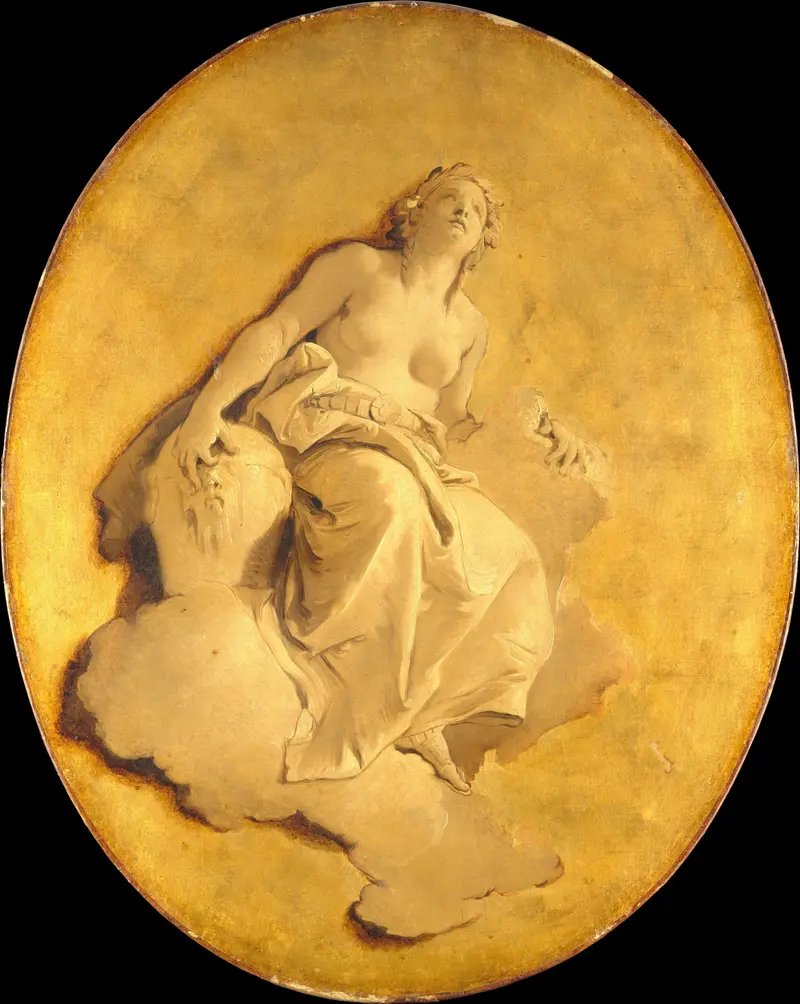
A Female Allegorical Figure
Giovanni Battista Tiepolo
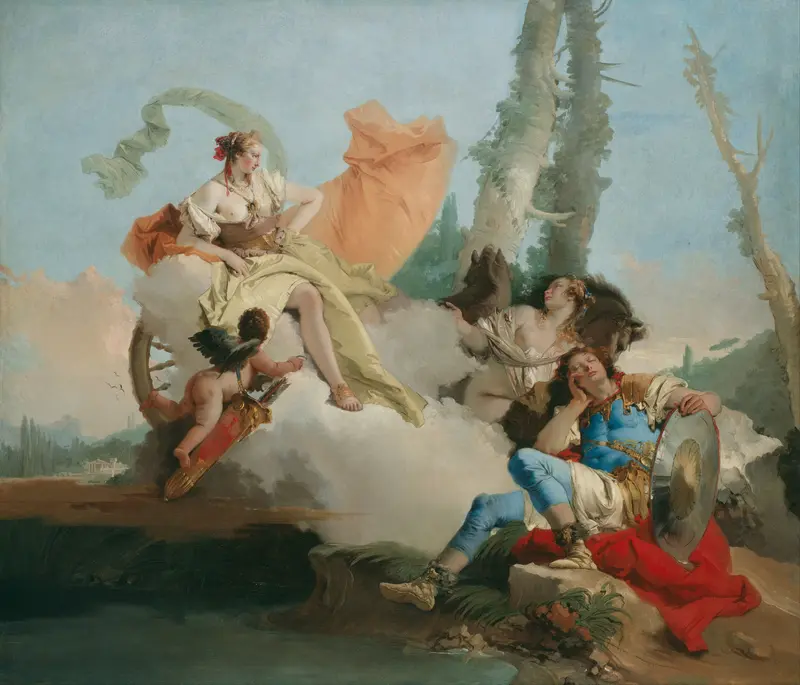
Armida Encounters the Sleeping Rinaldo
Giovanni Battista Tiepolo
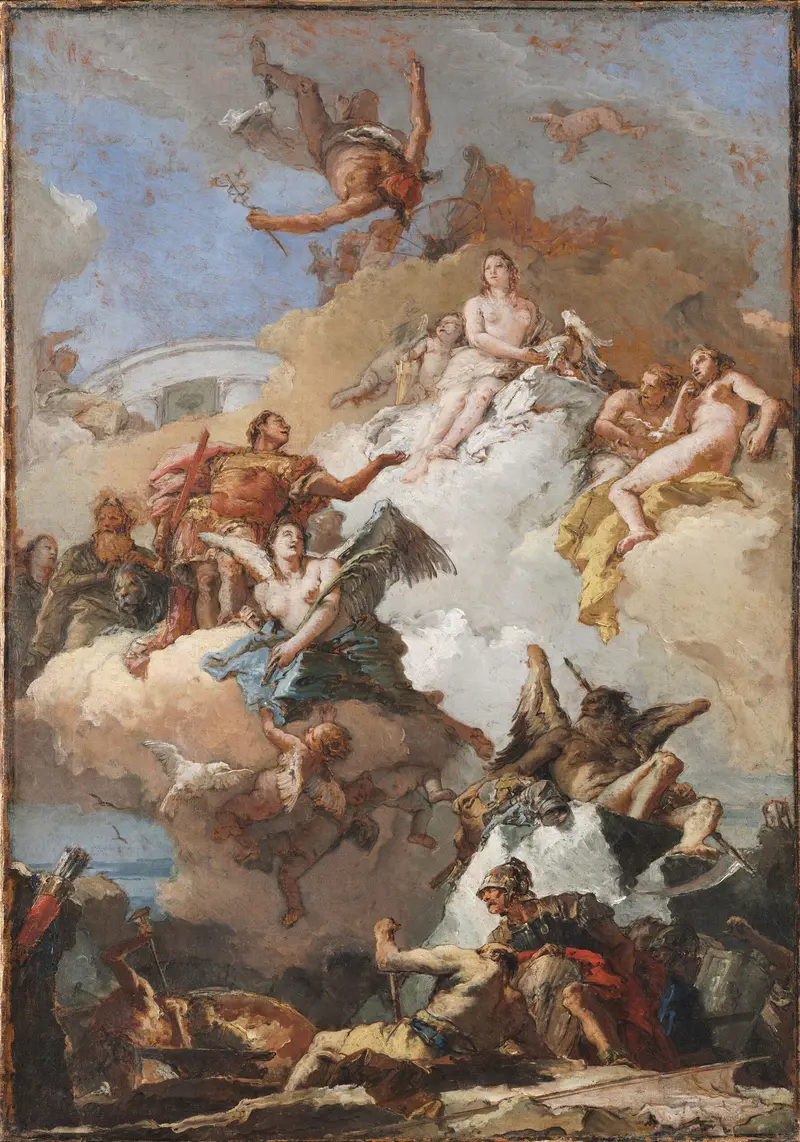
The Apotheosis of Aeneas
Giovanni Battista Tiepolo
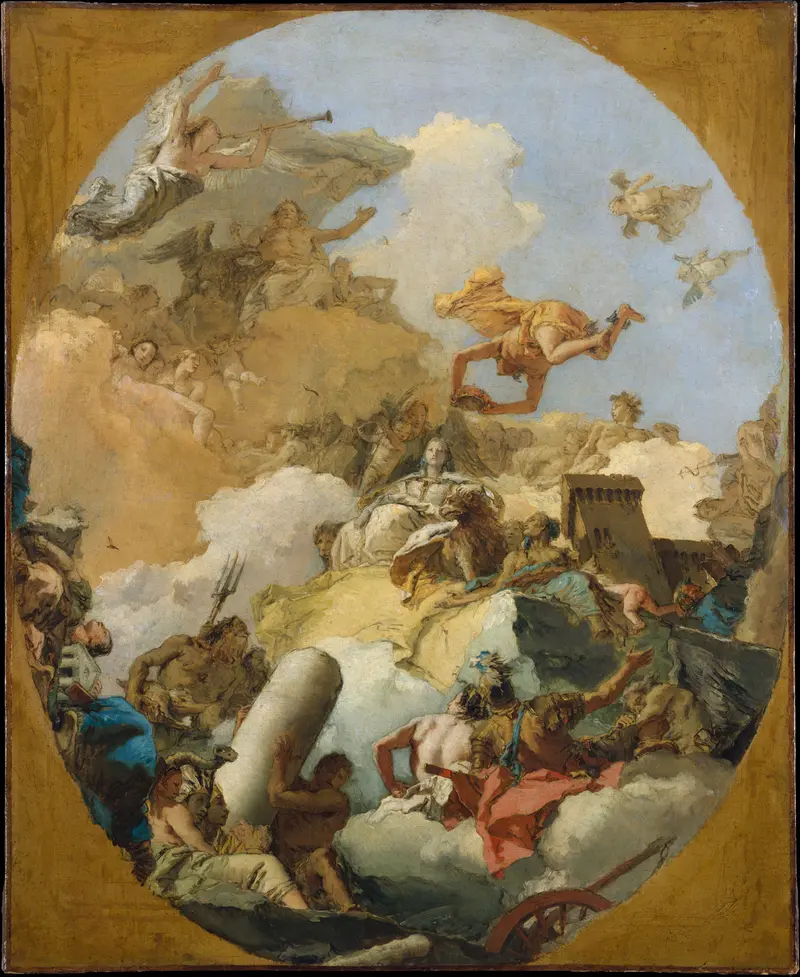
The Apotheosis of the Spanish Monarchy
Giovanni Battista Tiepolo
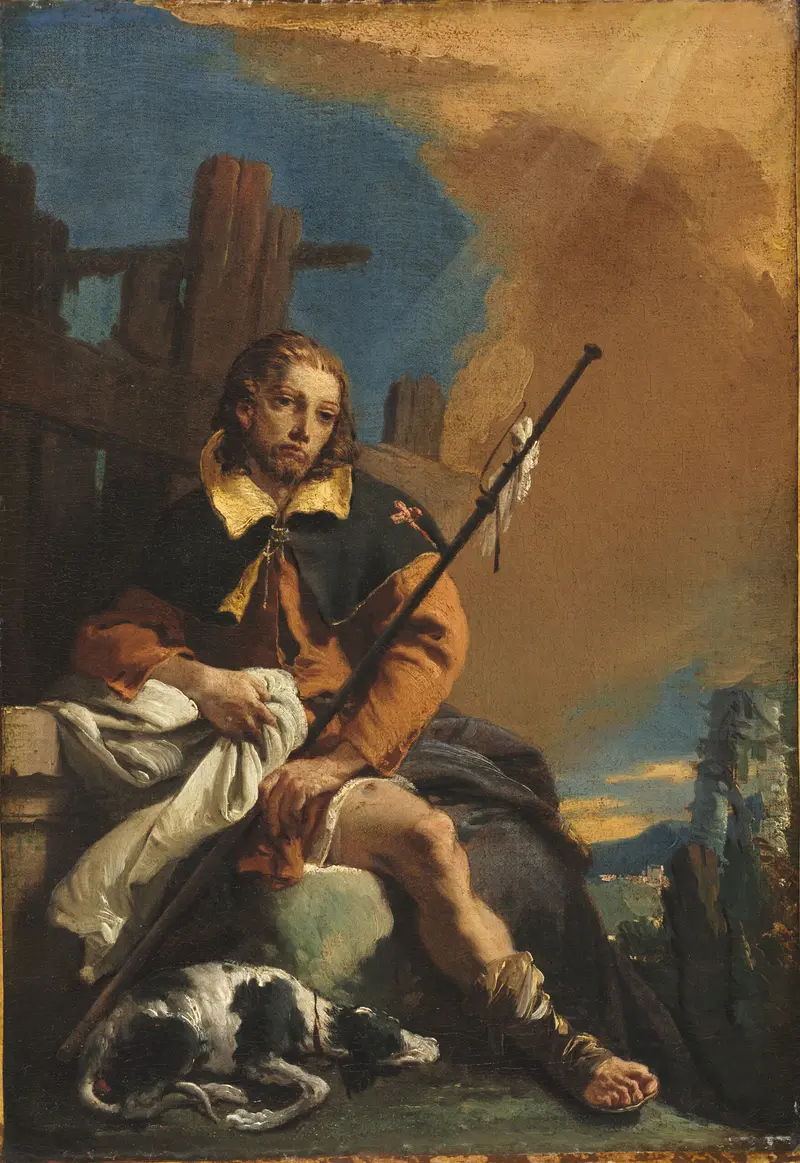
Saint Roch as a Pilgrim
Giovanni Battista Tiepolo
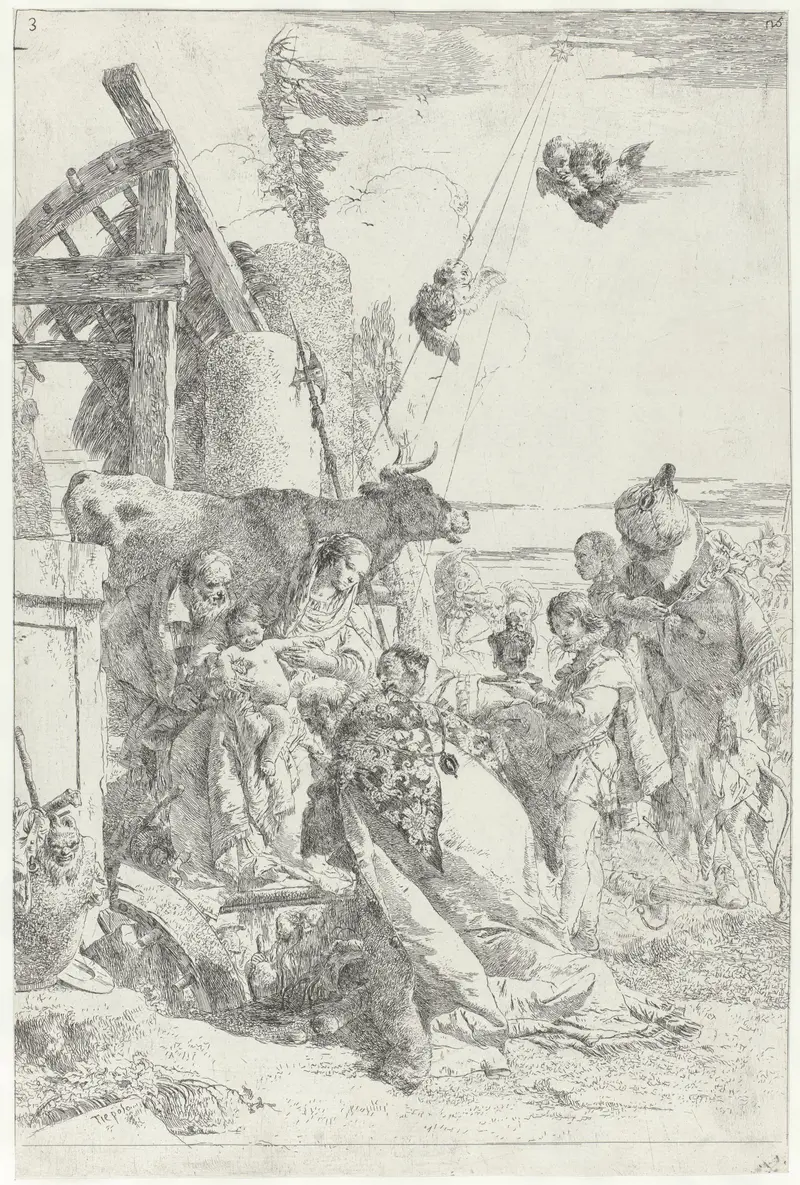
Aanbidding van Christuskind door drie koningen
Giovanni Battista Tiepolo
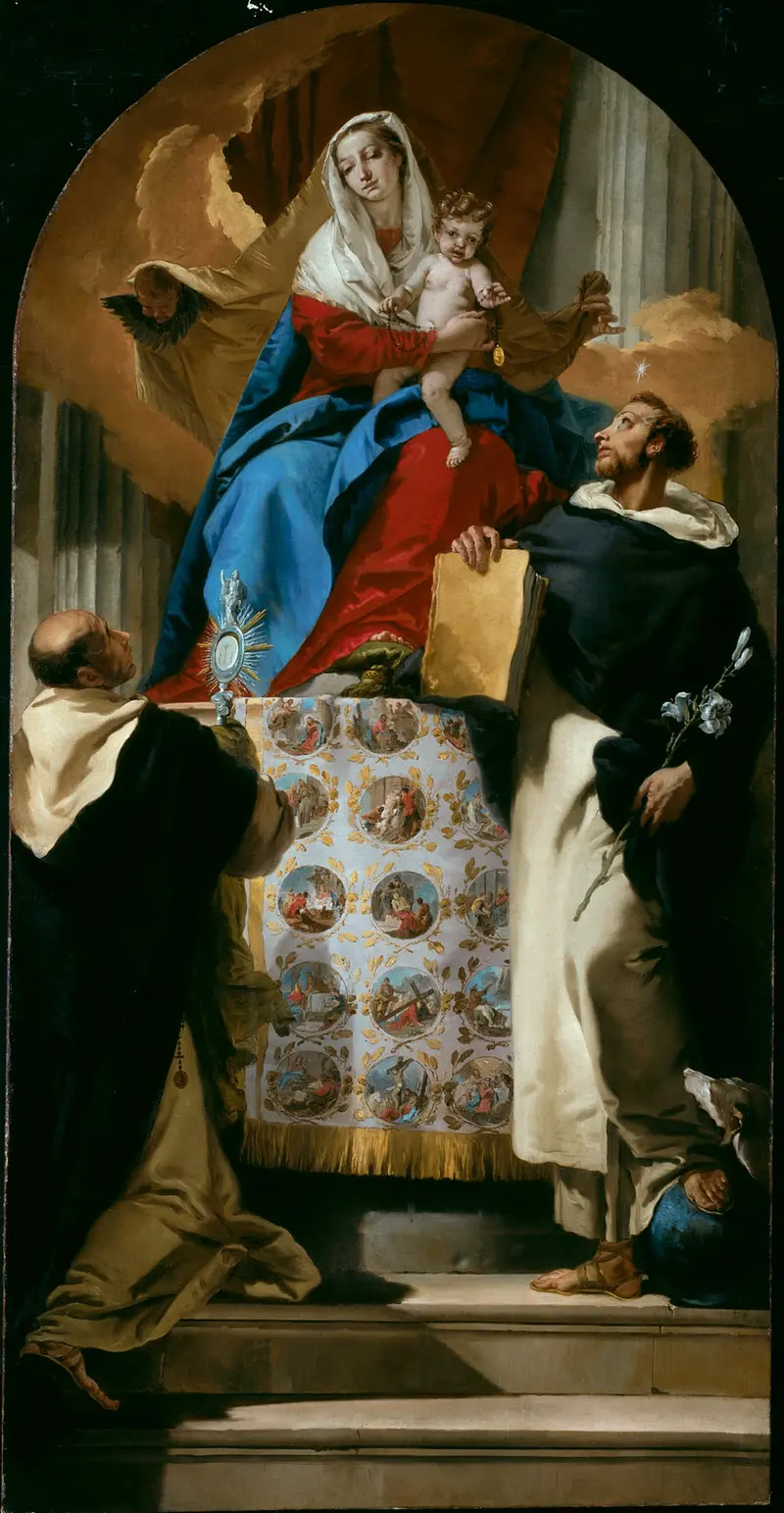
Virgin and Child with Saints Dominic and Hyacinth
Giovanni Battista Tiepolo





