The Apotheosis of the Spanish Monarchy — History & Analysis

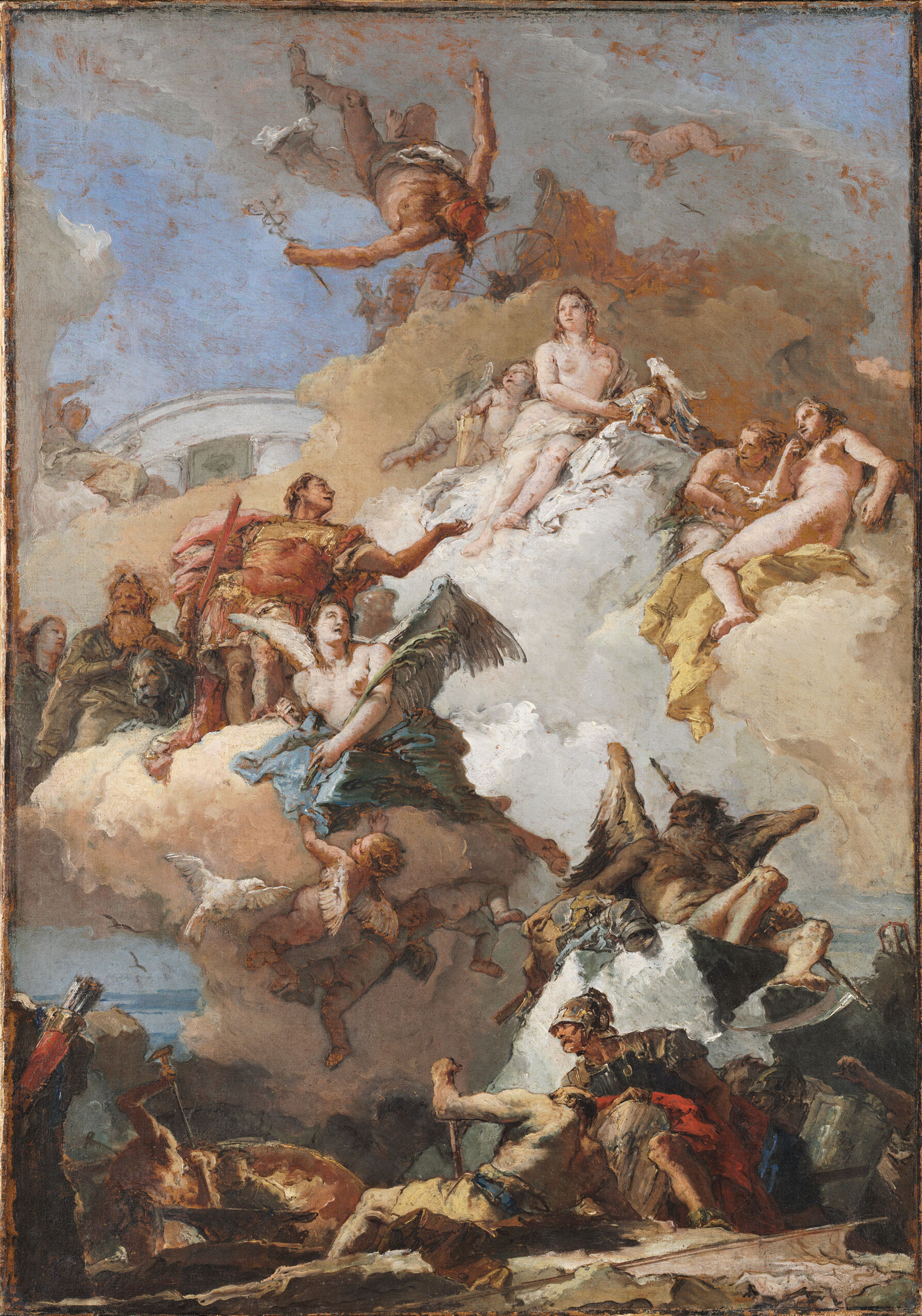
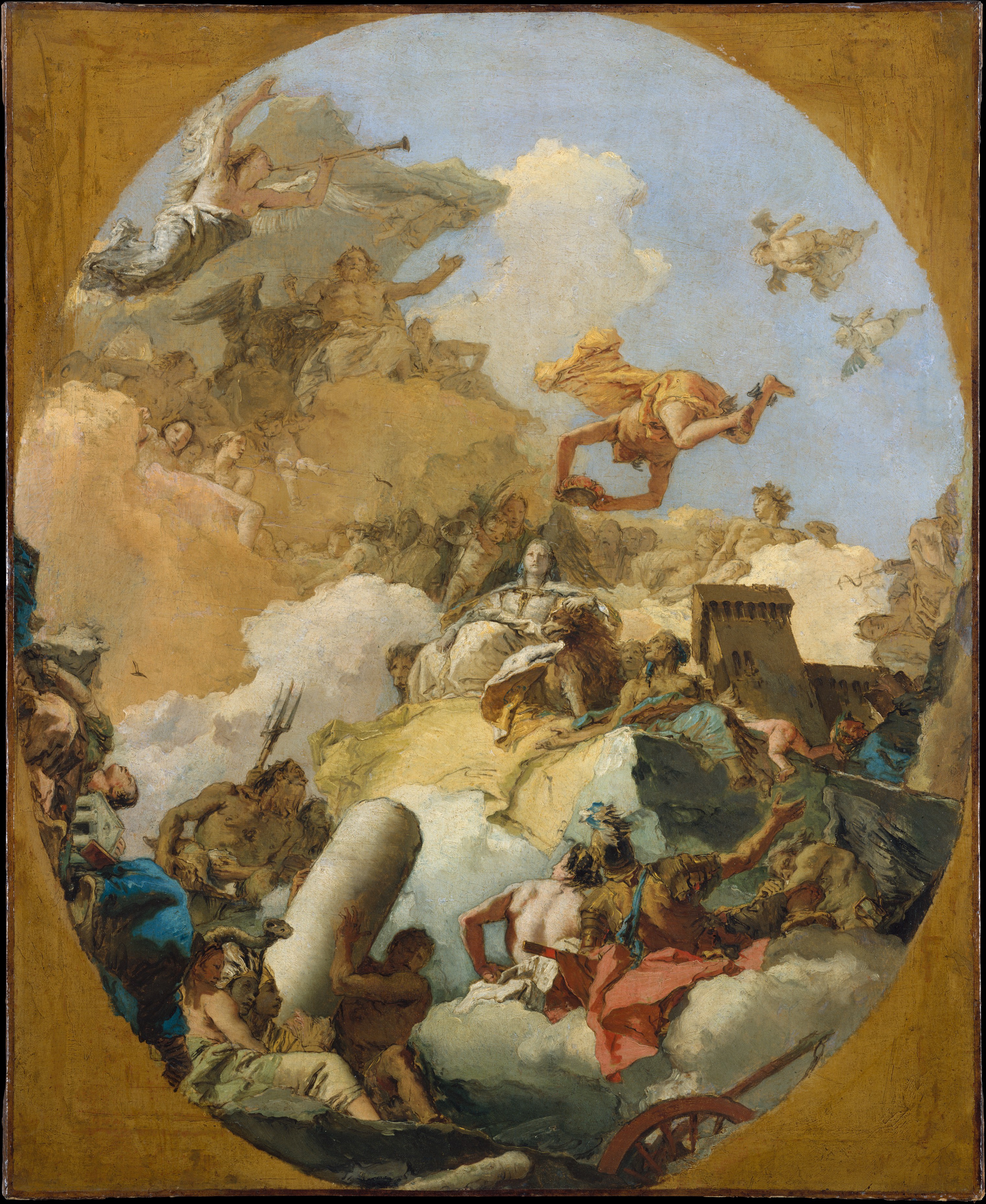
Can paint confess what words never could? In the grand tapestry of history, how does one capture the weight of ambition and fear that crowns a monarchy? Focus on the celestial figures that dominate the upper half of the canvas, where light cascades like a divine proclamation. Notice how the radiant golds and soft whites create an otherworldly glow that bathes the enthroned figure in a halo of reverence. The diagonals of the composition draw your gaze unerringly to the monarch, almost entrapping the viewer in the gravity of the moment.
Observe the contrasting shadows in the lower register, where earthly attendants and subjects appear—each figure is dressed in rich colors, yet their expressions betray a blend of awe and trepidation. Within this work lies a tension between glory and vulnerability, illustrating the dual nature of power. The exuberance of the scene is punctured by whispers of fear—fear of losing such majesty, fear of the cost that comes with it. The placement of subtle, somber figures in the foreground reveals the burden that accompanies greatness; they stand as silent witnesses to the divine ascendancy, their gazes entwined with both reverence and a hint of dread.
Here, Tiepolo captures the paradox of monarchy: exaltation overshadowed by the looming specter of inevitable decline. In the 1760s, Tiepolo was at the height of his career in Venice, a time when the art world was shifting towards neoclassicism. Amidst this cultural backdrop, he sought to elevate the Spanish monarchy through grand narrative paintings. His artistic choices during this period reflect not only a desire to celebrate power but also a nuanced understanding of the fears that accompany it, resonating with an audience grappling with the complexities of authority and legacy.