Saint Roch as a Pilgrim — History & Analysis
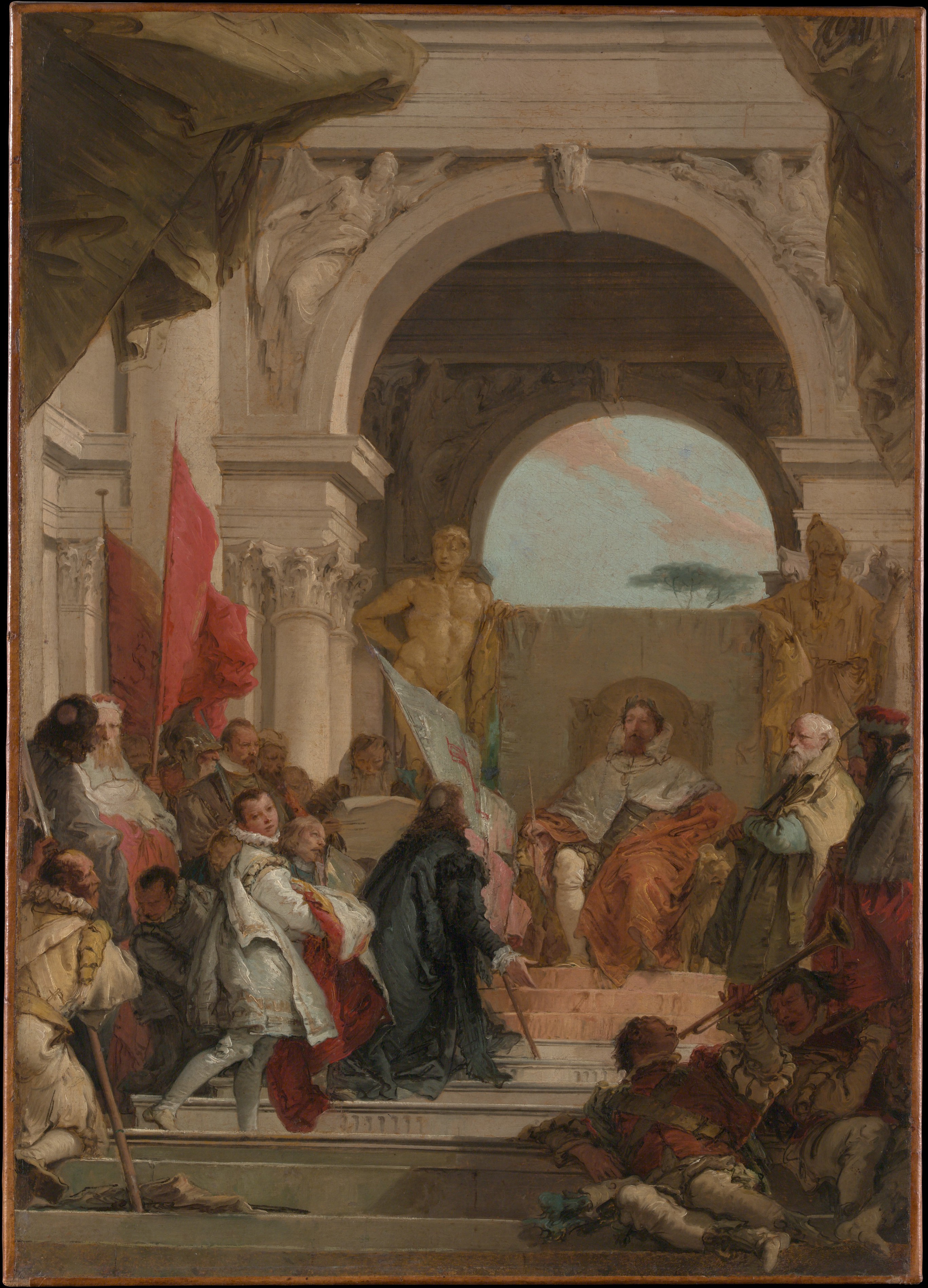
“Art reveals the soul when the world turns away.” In the face of mortality, how do we find solace or understanding? Focus on the figure of Saint Roch, whose ragged pilgrim's attire subtly contrasts with the vibrant hues of his surroundings. The artist employs a rich palette that breathes life into the scene, from the warm earth tones of his robe to the cool blues of the sky. Notice how the light falls upon Saint Roch’s face, illuminating his expression of both vulnerability and resilience, drawing your gaze toward his gaze that seems to yearn for spiritual solace amidst earthly trials.
Beneath the surface, the painting speaks to the fragility of life. The saint holds a staff emblematic of pilgrimage, yet his posture suggests weariness from the journey, a reminder of human perseverance against adversity. The subtle inclusion of a dog at his side, often associated with loyalty and companionship, adds another layer to the narrative—depicting the bond between humanity and the divine during hardship. Here, mortality looms large, but the spirit of hope flickers brightly, as if to urge viewers to find strength even in fleeting moments.
Around 1730, Giovanni Battista Tiepolo was flourishing in Venice, establishing himself as a master of grand frescoes. The period was marked by shift and transformation in art, as Baroque influences mingled with emerging Rococo styles that celebrated lightness and elegance. Tiepolo, at this point in his career, was exploring themes of spirituality and humanity, capturing the essence of life’s journey through profound narratives like this one.