Virgin and Child with Saints Dominic and Hyacinth — History & Analysis

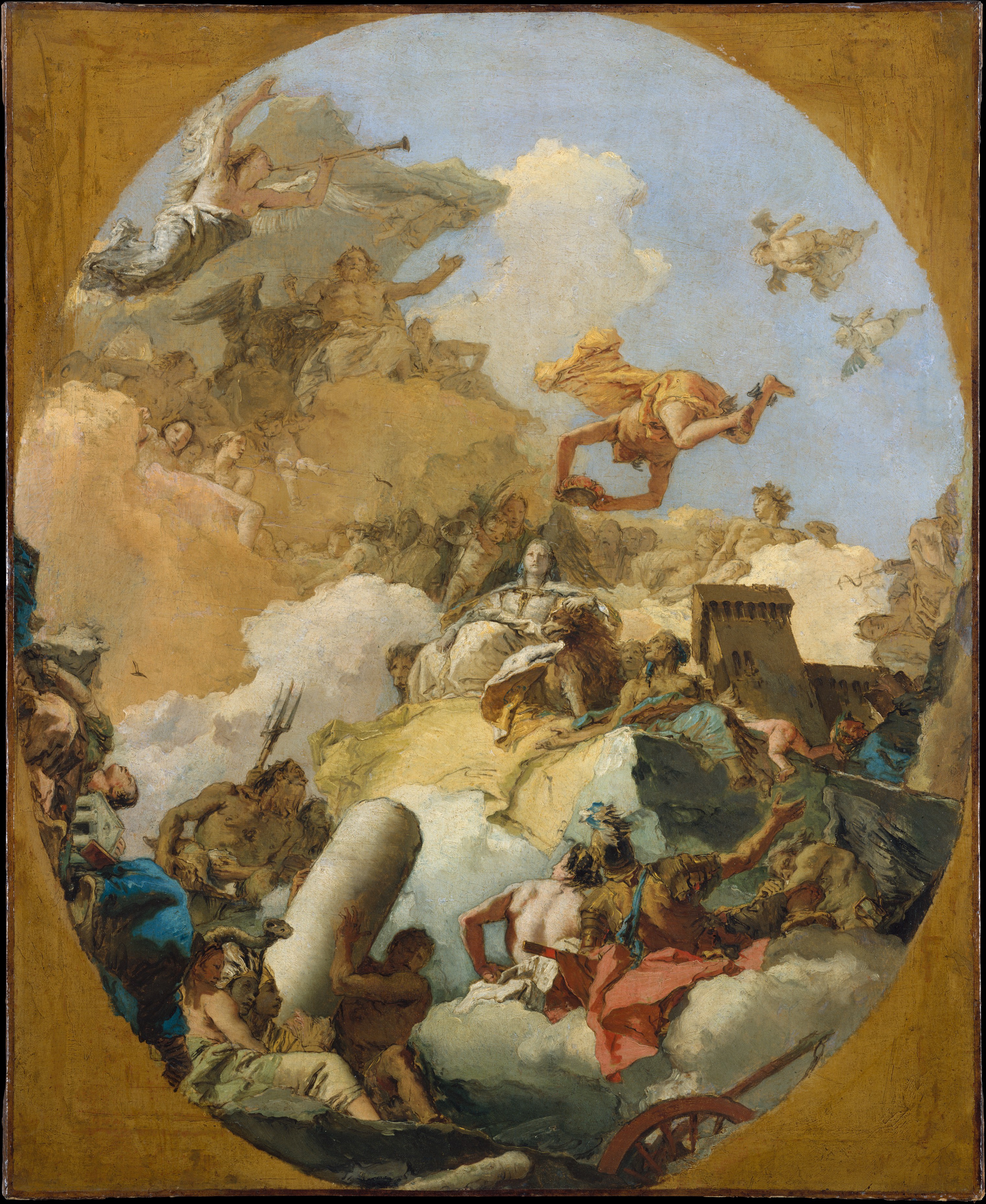
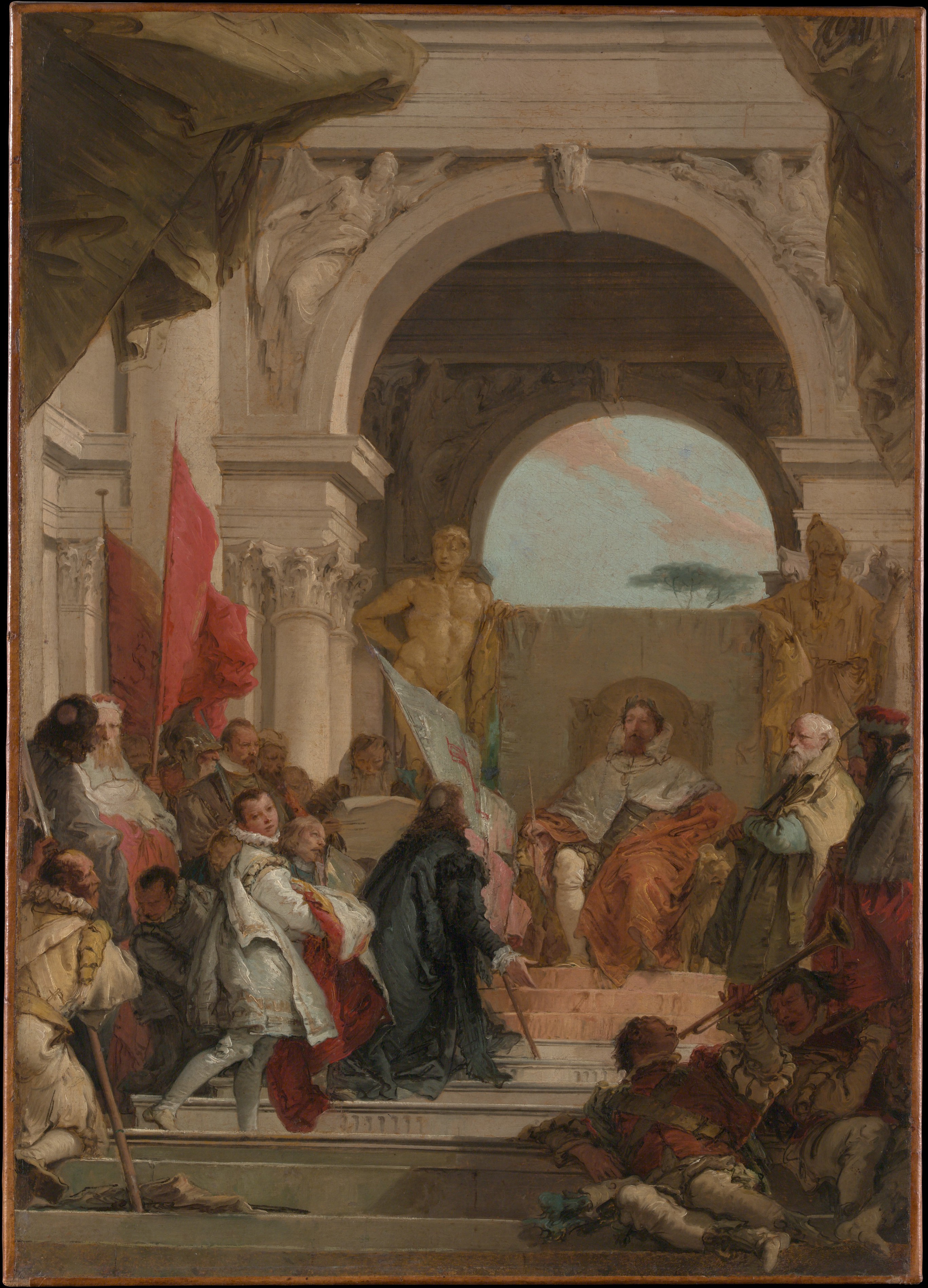
Can beauty exist without sorrow? In Giovanni Battista Tiepolo’s Virgin and Child with Saints Dominic and Hyacinth, serenity envelops a holy gathering, inviting the viewer to ponder this profound question. Focus on the gentle embrace of the Virgin as she cradles the Christ Child, their forms bathed in ethereal light that spills from an unseen source. Look to the left where Saints Dominic and Hyacinth stand, their expressions a blend of reverence and joy, while drapery in warm gold and soft pastels defines their figures against a vibrant celestial backdrop.
Notice the masterful interplay of shadow and light, which not only enhances the three-dimensionality of the figures but also encapsulates a tranquil atmosphere that invites contemplation. Yet, beneath this serene surface lies an intricate tension. The juxtaposition of the saints’ serene adoration against the evident vulnerability of the child evokes a subtle fragility inherent in divine beauty. The swirling clouds in the background, while beautiful, also hint at the complexities of faith and existence, suggesting that the light of heaven coexists with the shadows of earthly trials.
Each detail, from the delicate features of the Virgin to the ornate garments of the saints, contributes to a narrative that intertwines sanctity and human emotion. During the years 1730 to 1735, Tiepolo painted this piece in Venice, a time when he was cementing his reputation as one of the leading decorative painters of the Rococo period. The art world was shifting, embracing grandeur and emotional depth, as the Baroque gave way to a more expressive style. Amidst this transformation, Tiepolo infused his work with a luminous quality, capturing the spiritual and emotional essence of his subjects, reflecting both the beauty and the underlying sorrow of existence.