Afterglow — History & Analysis
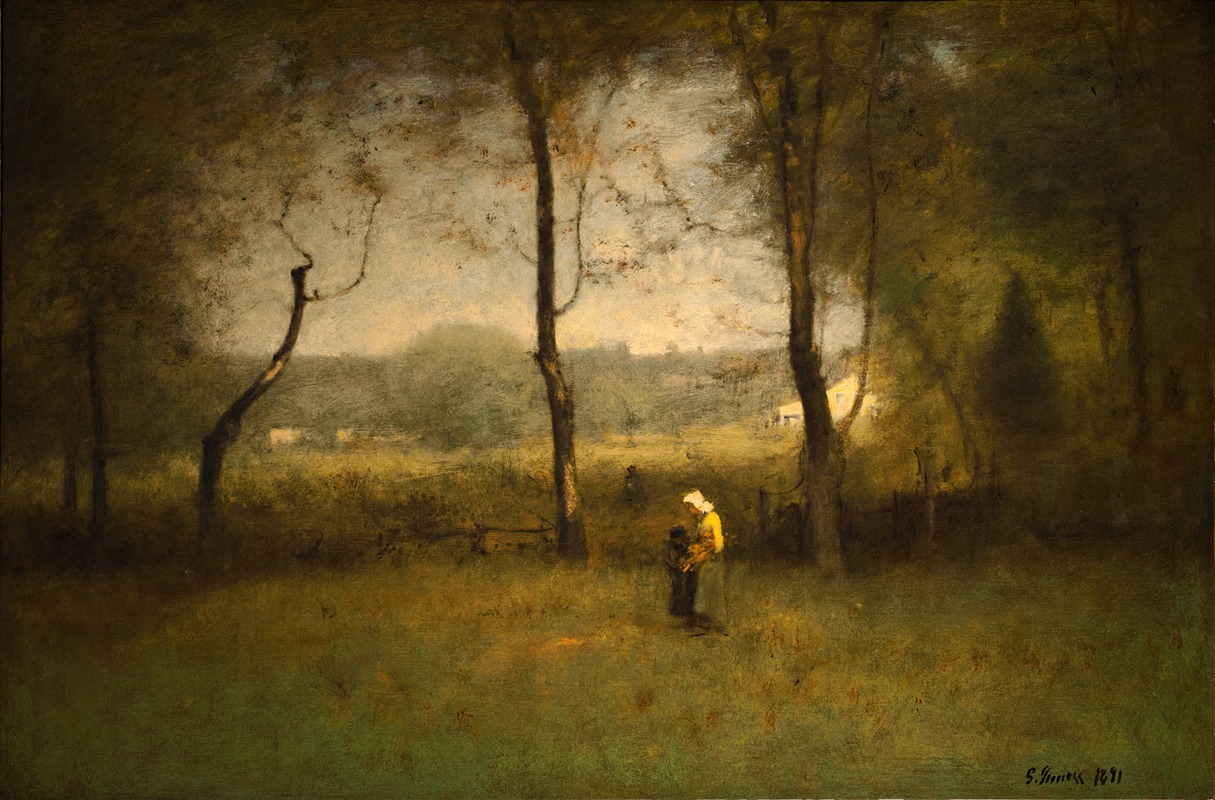
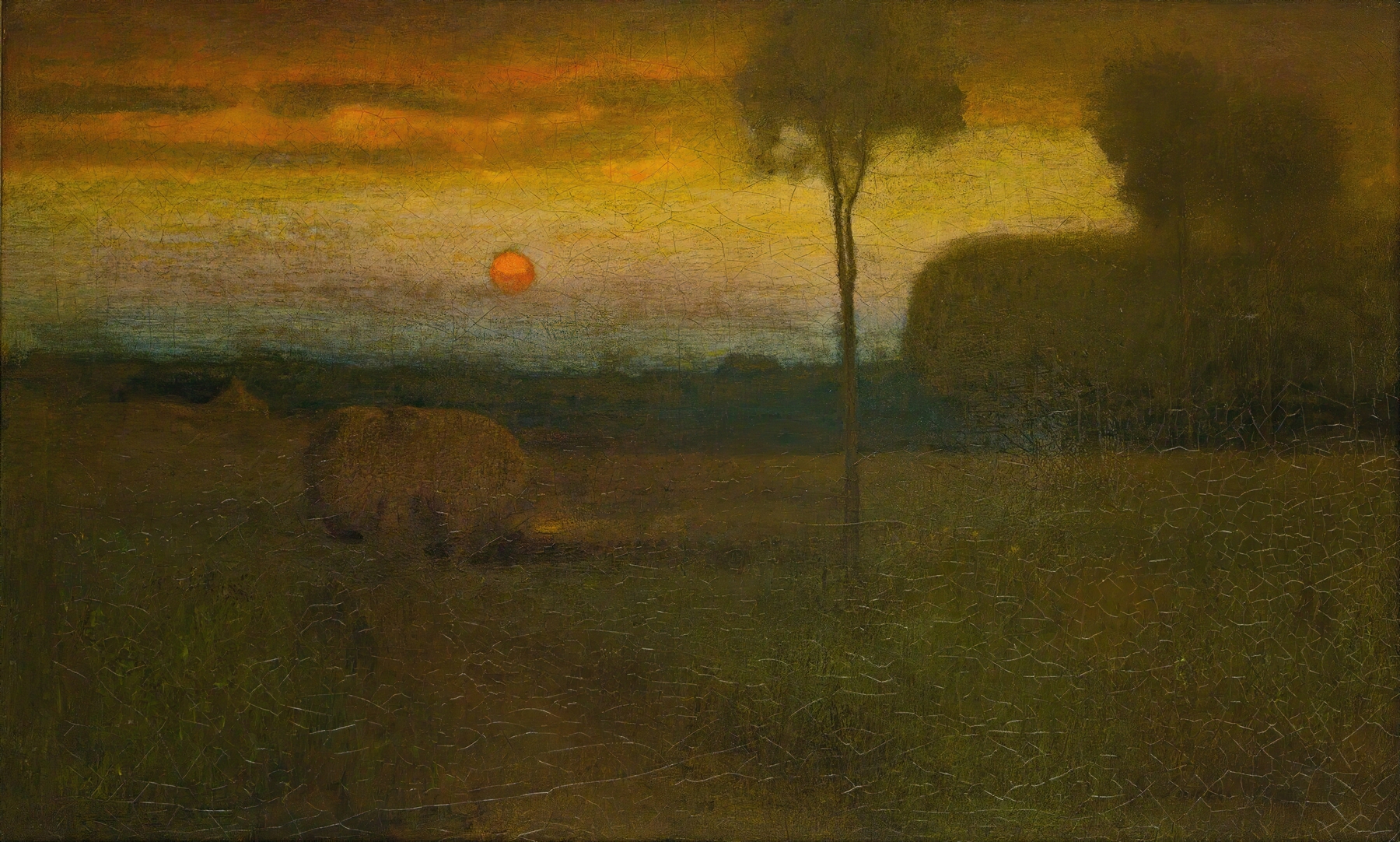
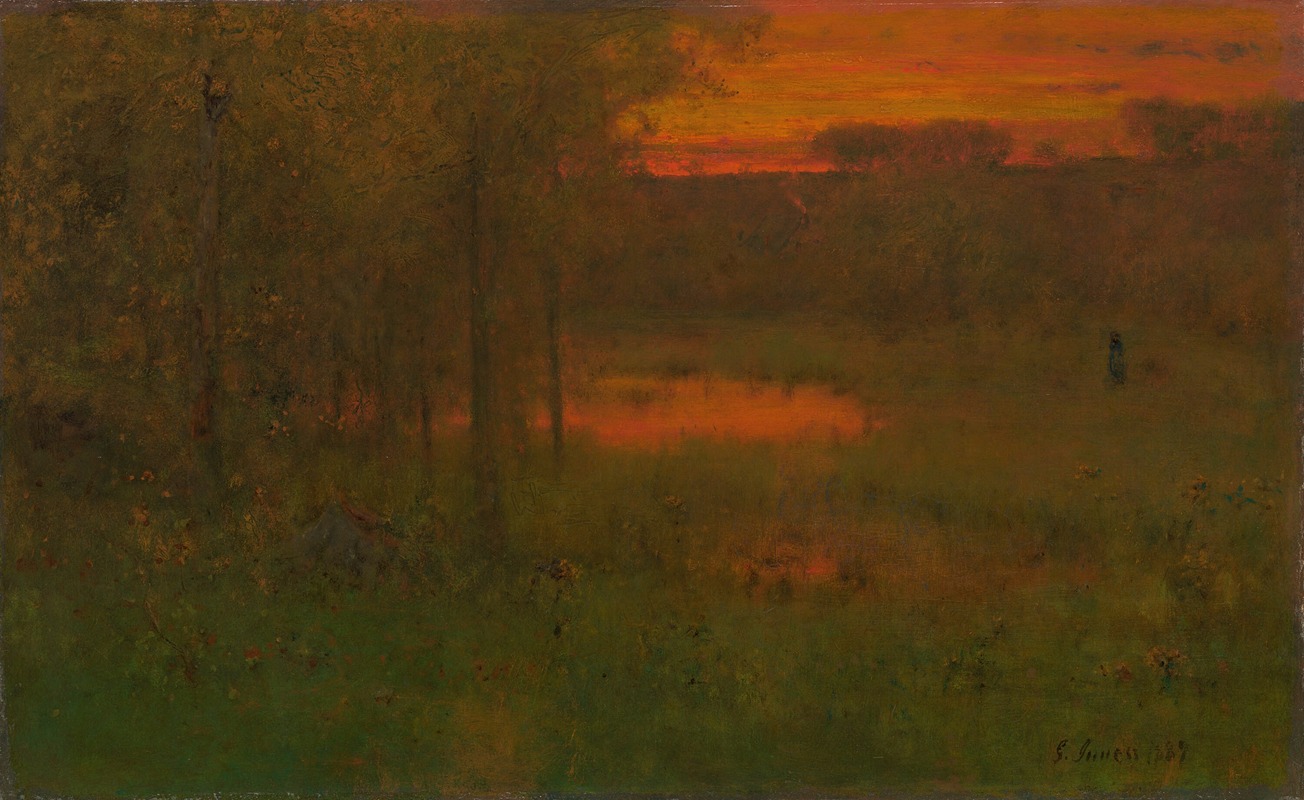
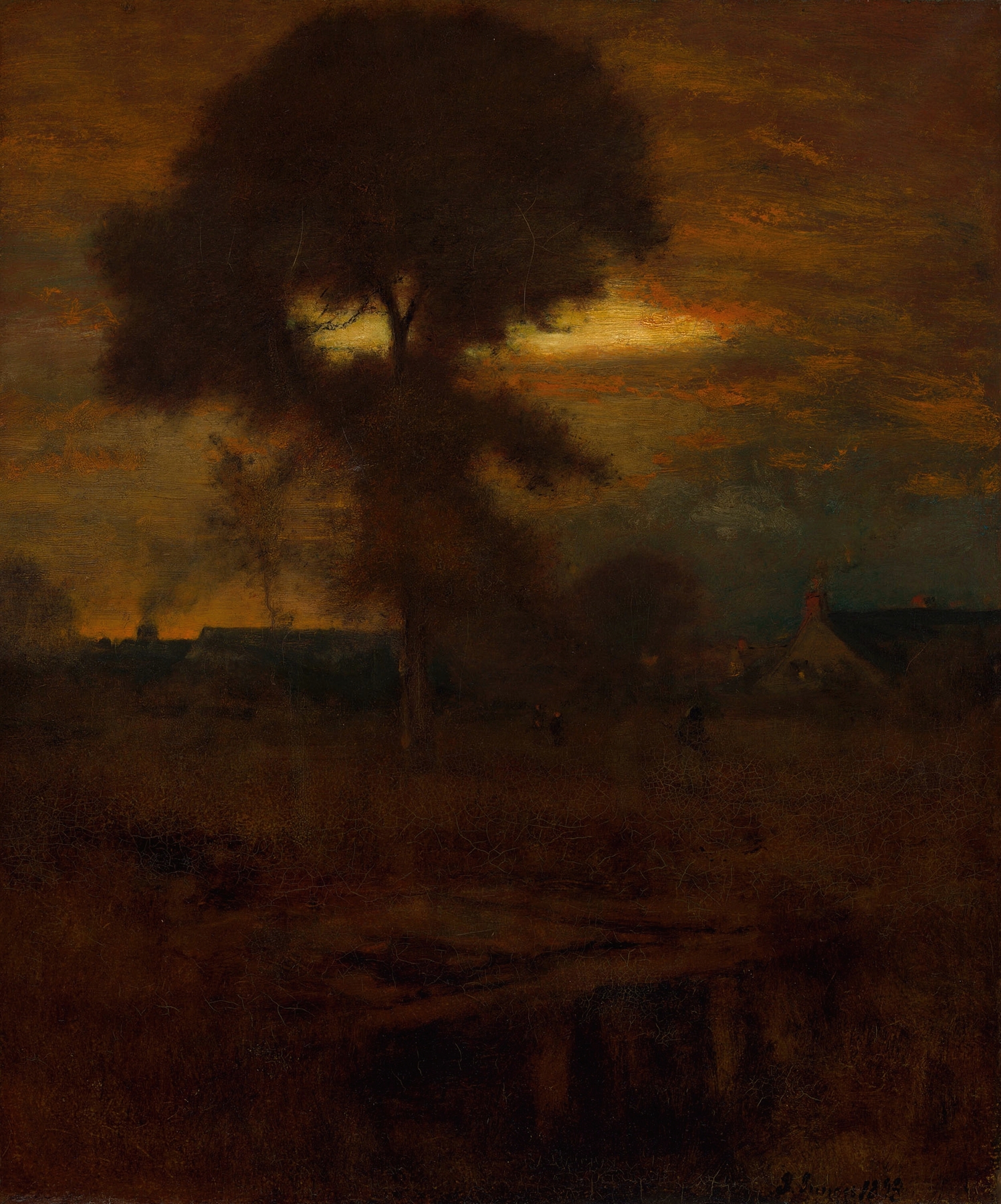
Could beauty survive in a century of chaos? In Afterglow, the answer seems to whisper through the tranquil landscape, inviting viewers into a dreamlike embrace of color and light. Look to the horizon, where a warm, golden light bathes the sky, casting a soft glow over the rolling hills. Notice how the painter's brushstrokes blend seamlessly, creating a sense of fluidity that mirrors the evening’s gentle transition into night.
The interplay of warm hues — oranges and pinks — against the cooler tones of the earth evokes both peace and nostalgia, urging the eye to wander across the canvas as if following the sun’s descent. Yet beneath this serene surface lies an emotional tension. The fading light hints at the passage of time, a reminder of life’s fleeting moments. The sparse trees, silhouetted against the sky, stand like sentinels, holding stories of resilience against the chaos of industrial progress that characterized the late 19th century.
This landscape encapsulates a yearning for harmony in a world increasingly marred by turmoil, suggesting that beauty, though threatened, remains a vital force. Painted in 1893, this work emerged during a transformative period for George Inness, who found himself exploring spiritual themes through nature. At this time, he was deeply influenced by the ideals of the Hudson River School and the emergence of the Impressionist movement, seeking to capture the sublime through landscape. The world around him was rapidly changing, and his art reflected a profound desire to connect with the eternal amidst the transient chaos of modernity.