Montclair — History & Analysis
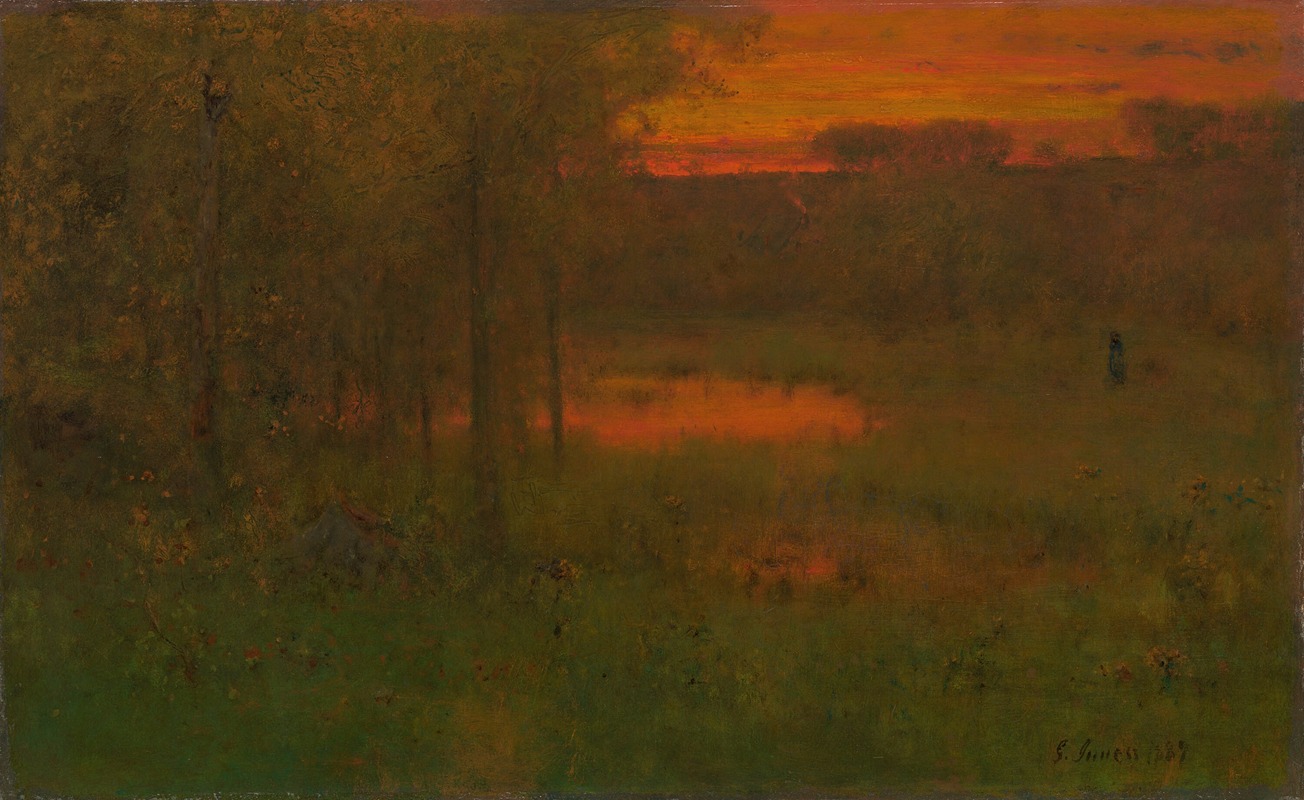
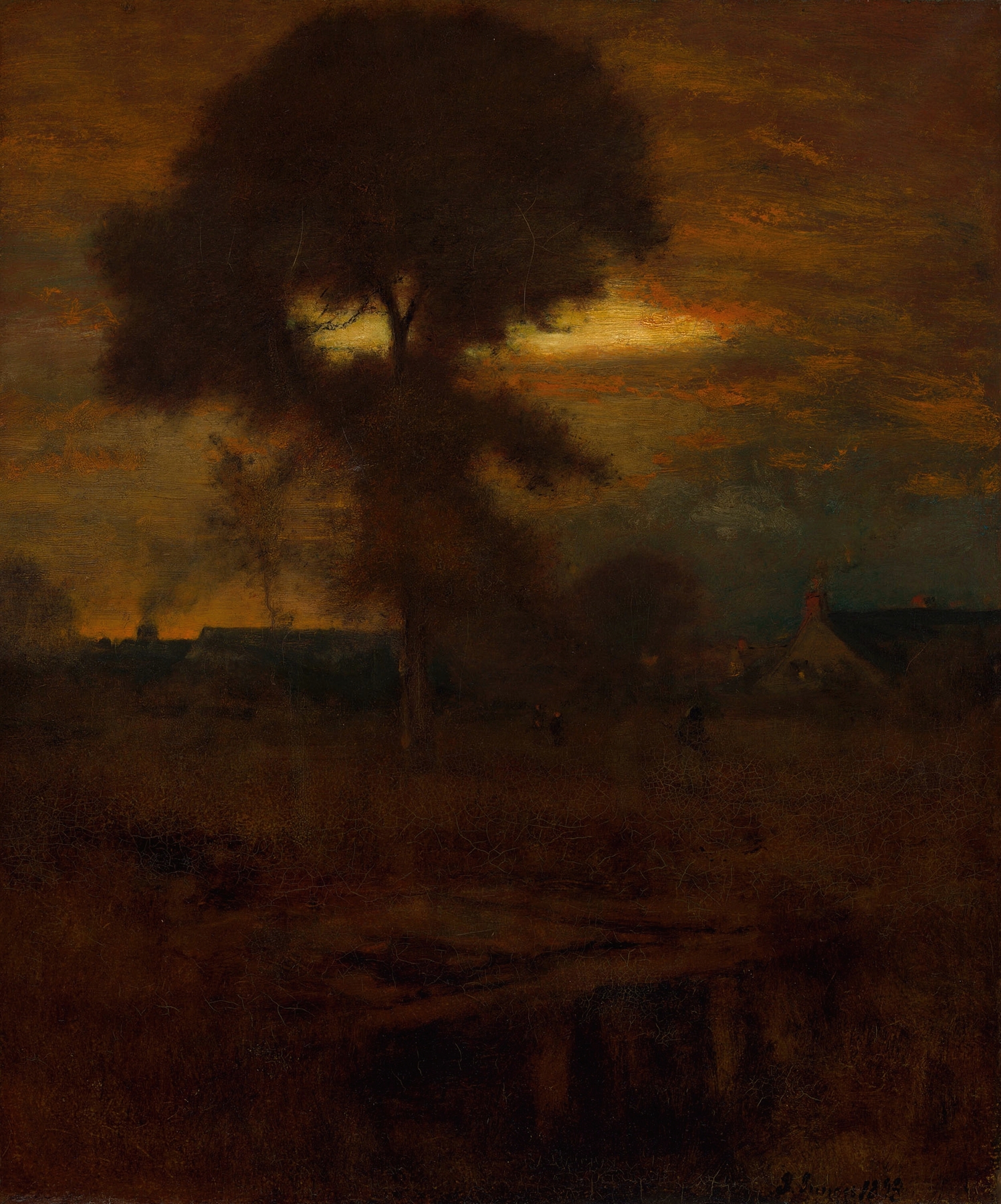
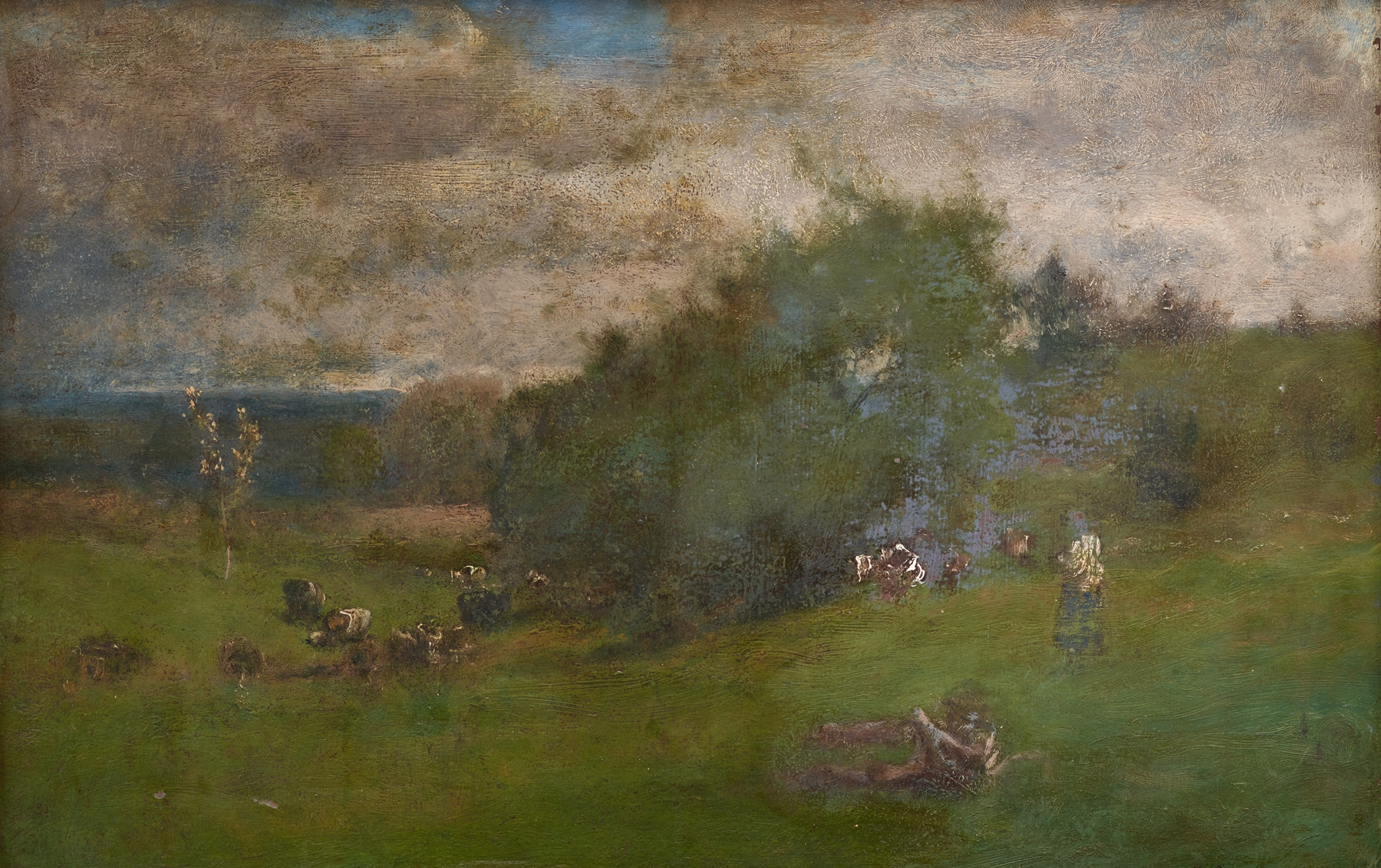
Can paint confess what words never could? In Montclair, ethereal reflections dance across the canvas, whispering secrets of nature and the spirit within. Look to the center of the composition, where a tranquil lake captures the sky's gentle hues. The soft blues and greens meld seamlessly, creating an impression of serenity that draws the viewer in. Notice how the light plays upon the water's surface, its glimmers suggesting movement and life beneath the stillness.
The subtle brushstrokes evoke a sense of fluidity, inviting contemplation of both the landscape and our inner emotions. Delve deeper into the play of contrasts in this artwork. The vibrant foliage on the left side stands in stark juxtaposition with the muted, almost ghostly reflections in the lake, symbolizing the tension between the tangible world and its ephemeral counterpart. This duality hints at the artist's fascination with nature not just as a visual spectacle, but as a mirror to human experience—where beauty and transience coexist.
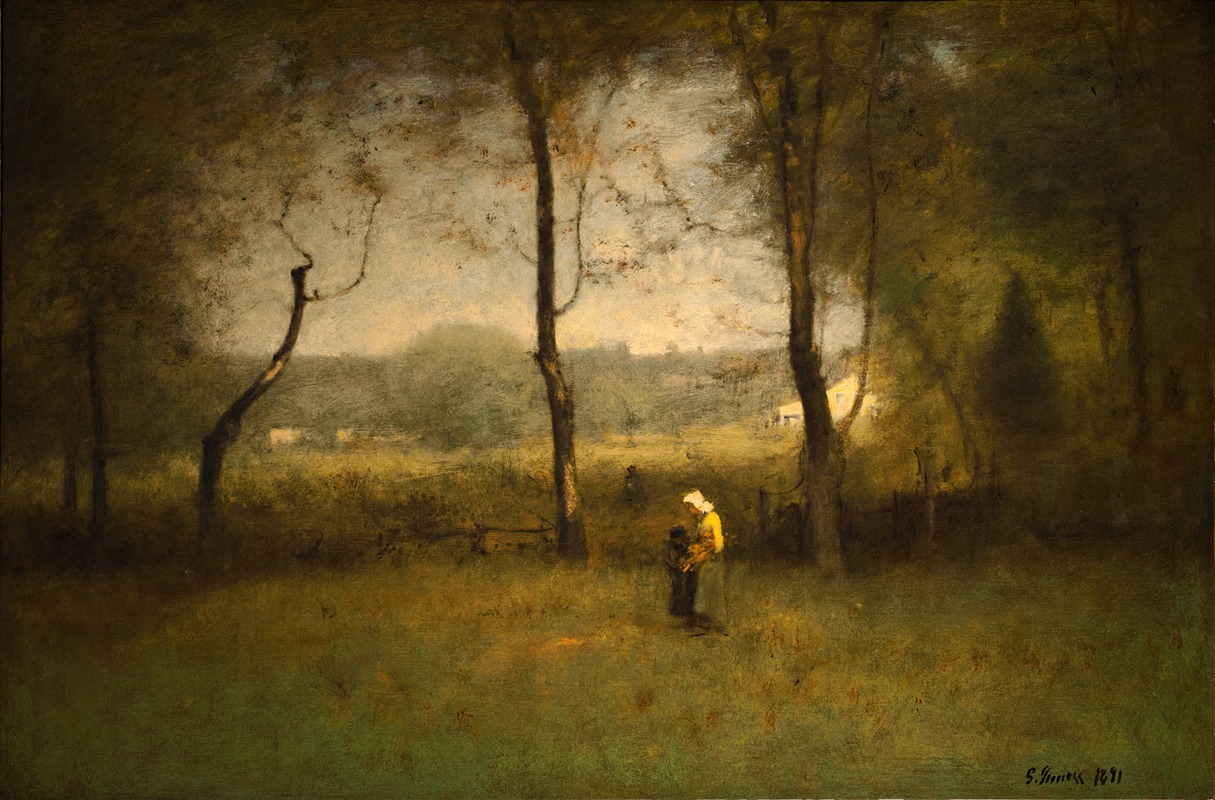
Each stroke of color becomes a layer of emotion, inviting viewers to reflect on their own inner landscapes. In 1881, George Inness painted Montclair during a transformative period in his life, marked by a growing interest in spiritualism and the metaphysical. Settling in Montclair, New Jersey, he sought to express an emotional resonance through landscapes rather than mere representation. This pivotal work emerged as part of his exploration into the connection between the visible world and deeper truths, contributing to the evolution of American landscape painting in that era.