Catskill Mountains — History & Analysis
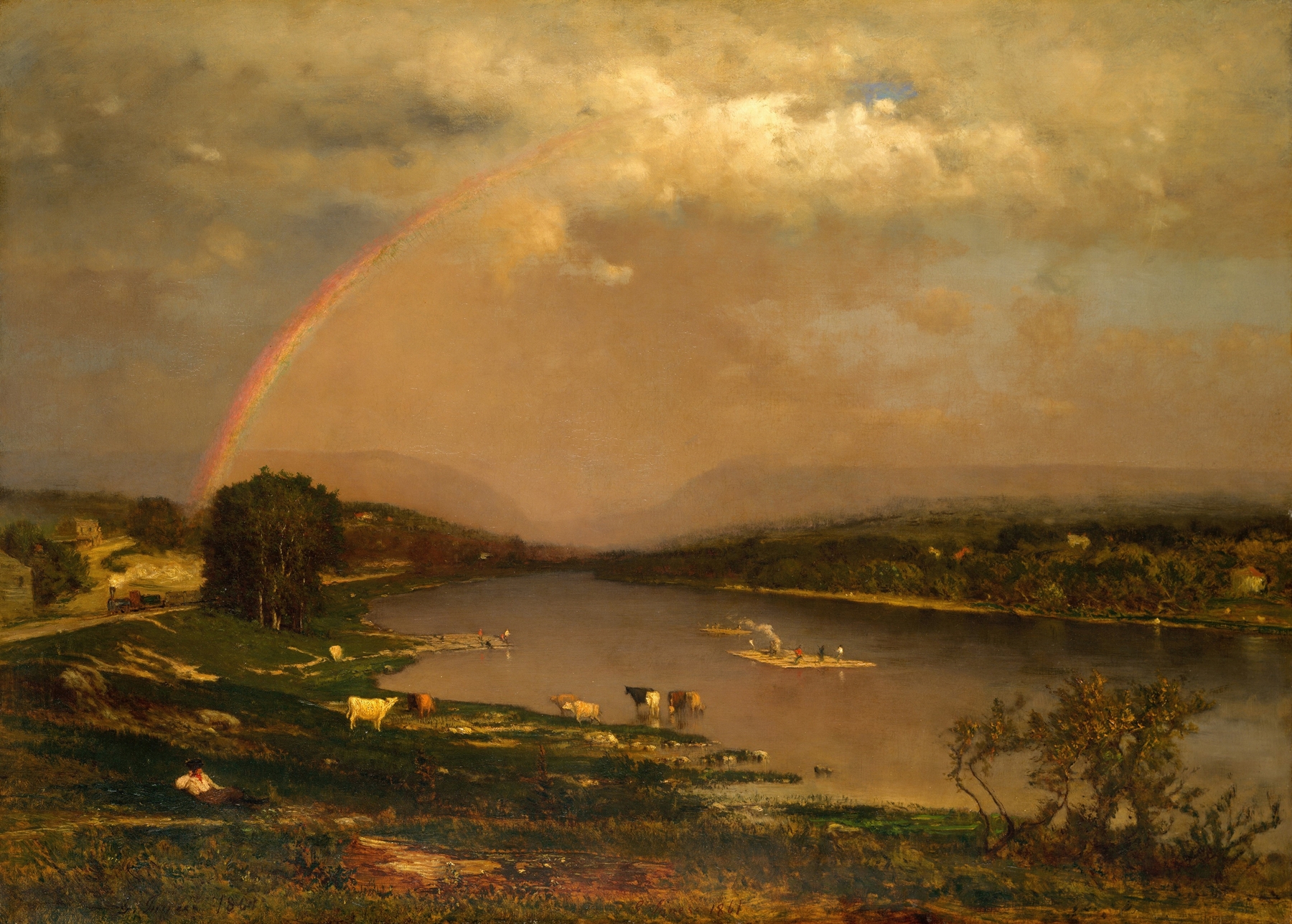
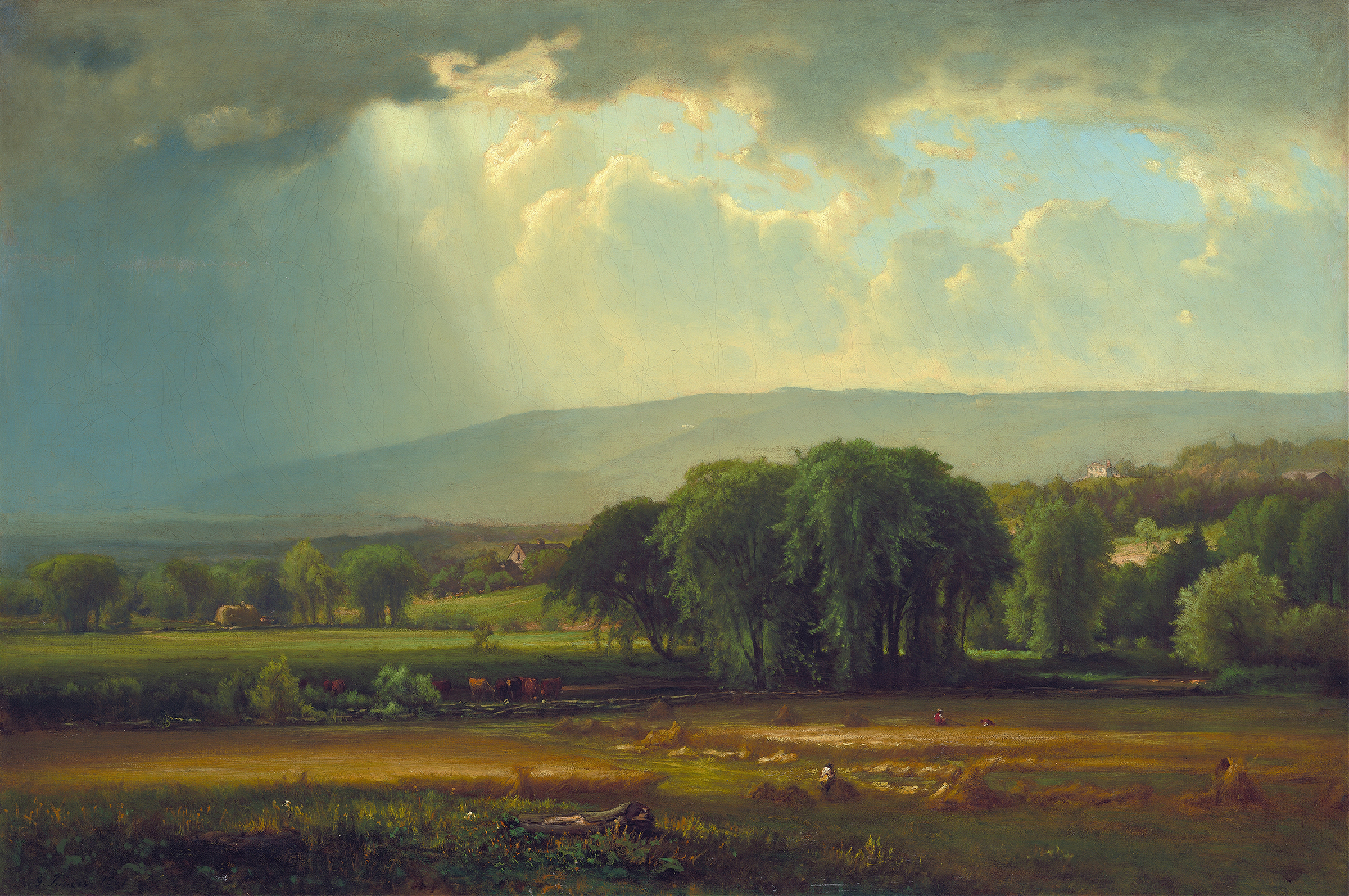
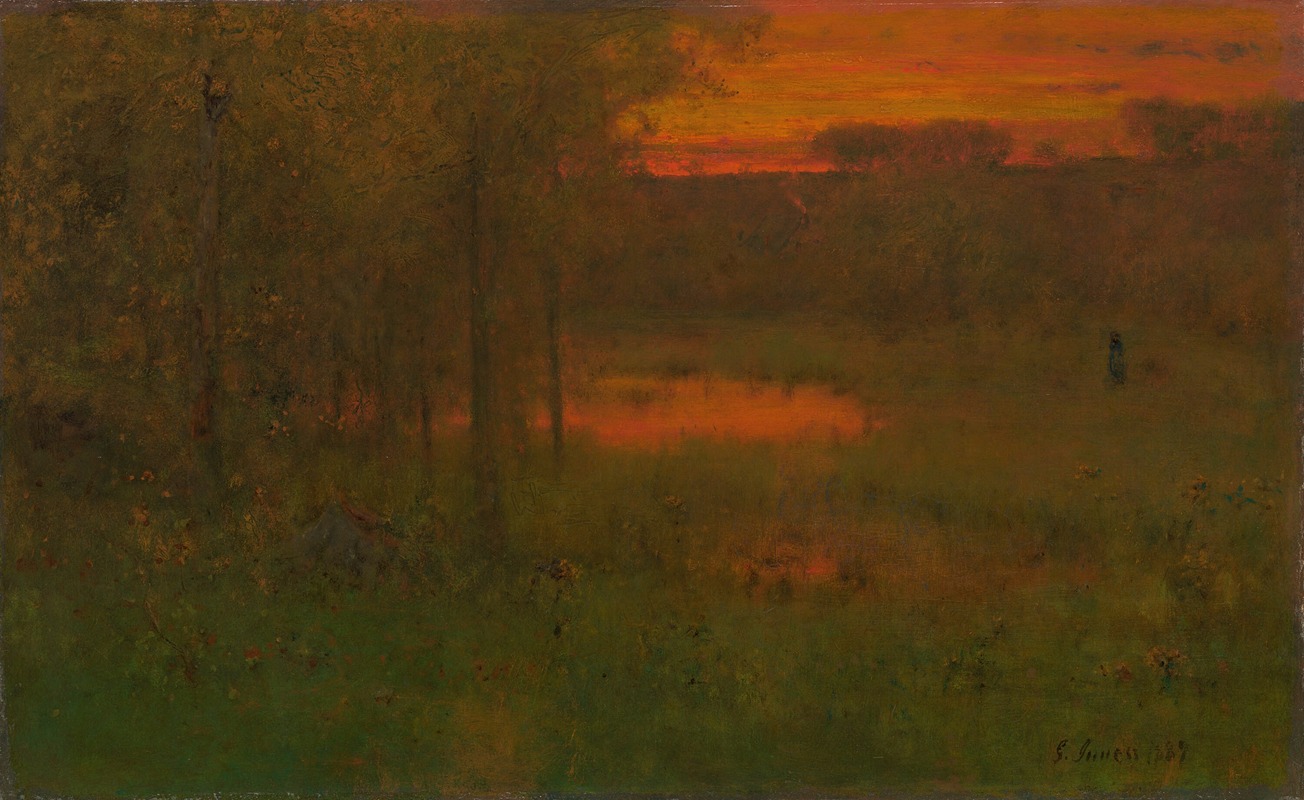
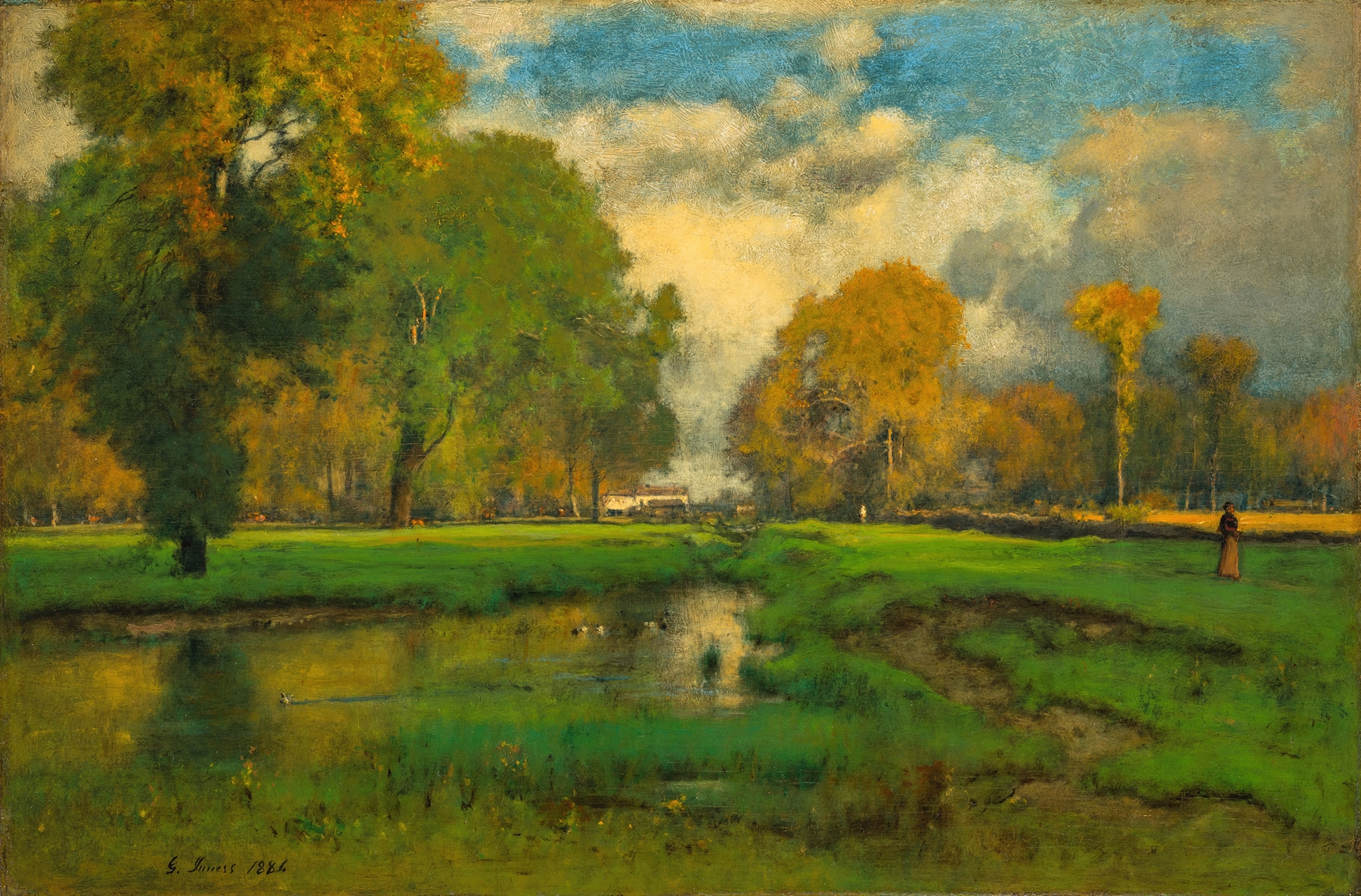
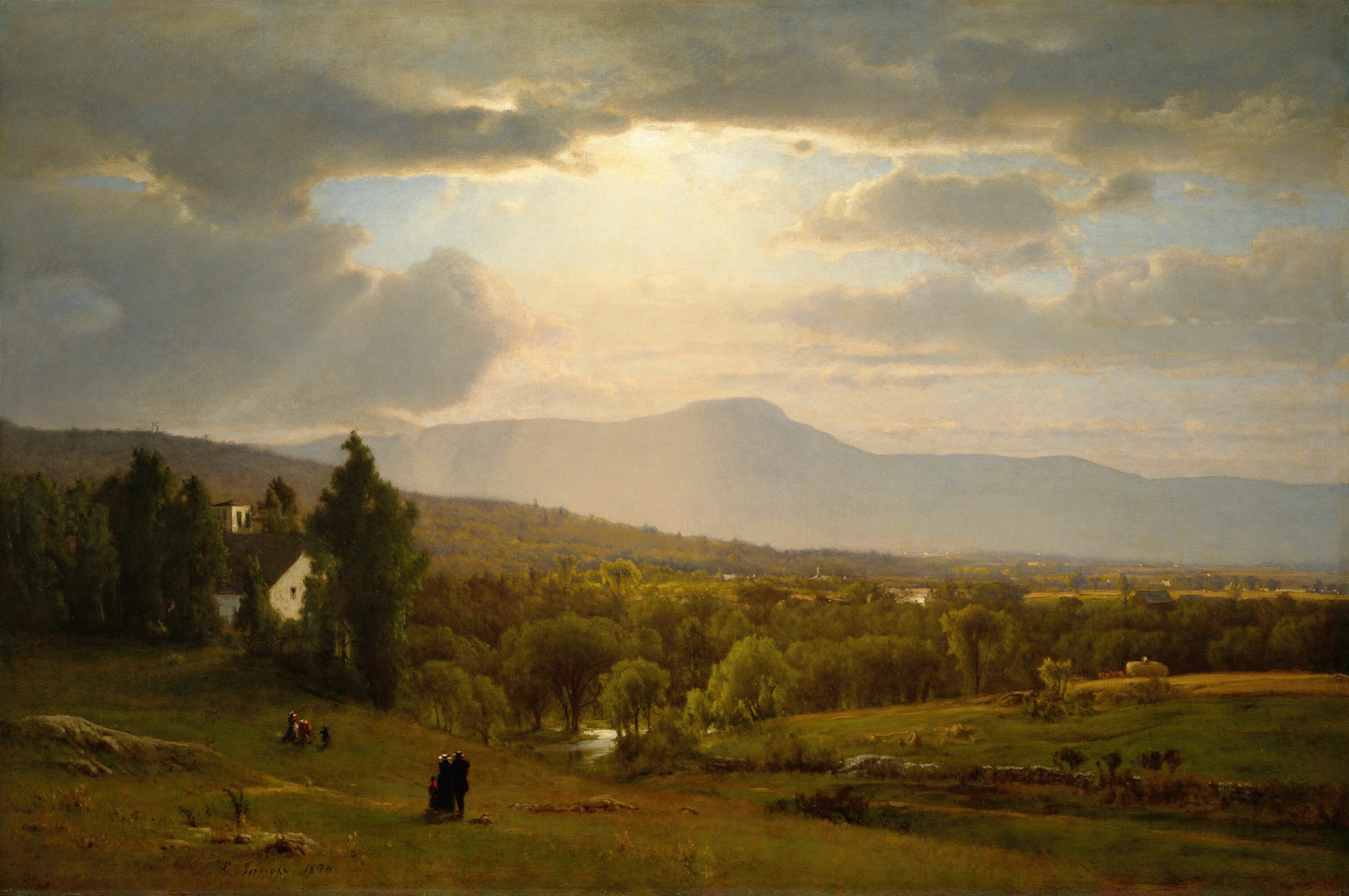
Where does light end, and longing begin? In Catskill Mountains, an ethereal serenity envelops the viewer, inviting contemplation and quietude amidst nature’s embrace. Focus on the horizon, where soft hues of blue and gold meld seamlessly, suggesting the transition from day to twilight. The undulating mountains are rendered with a delicate touch, their contours softened by a gentle mist that seems to breathe life into the landscape. Notice how the light falls upon the foreground, illuminating patches of vibrant green grass while casting long shadows that stretch like whispers across the canvas.
Each brushstroke conveys a sense of peace, illustrating Inness’s skill in capturing the ephemeral beauty of the Catskills. Delve deeper into the layers of this work, and you’ll find a poignant dialogue between nature and the human spirit. The tranquil scene speaks to a yearning for connection with the natural world, evoking a timeless intimacy. The play between shadow and light not only highlights the physical landscape but also reflects the emotional depth of solitude, suggesting that in stillness, one may encounter their true selves.
The mountains stand as silent witnesses to human contemplation, embodying both permanence and the fleeting nature of existence. In 1870, George Inness was deeply immersed in the ideals of the Hudson River School, focusing on the sublime beauty of American landscapes. During this period, he explored themes of spirituality and emotional resonance in nature, a reflection of his own personal struggles and philosophical inquiries. The painting emerges from a time in art where Romanticism was yielding to Impressionist influences, marking a pivotal moment in the evolution of American landscape painting.