An Indian Encampment — History & Analysis
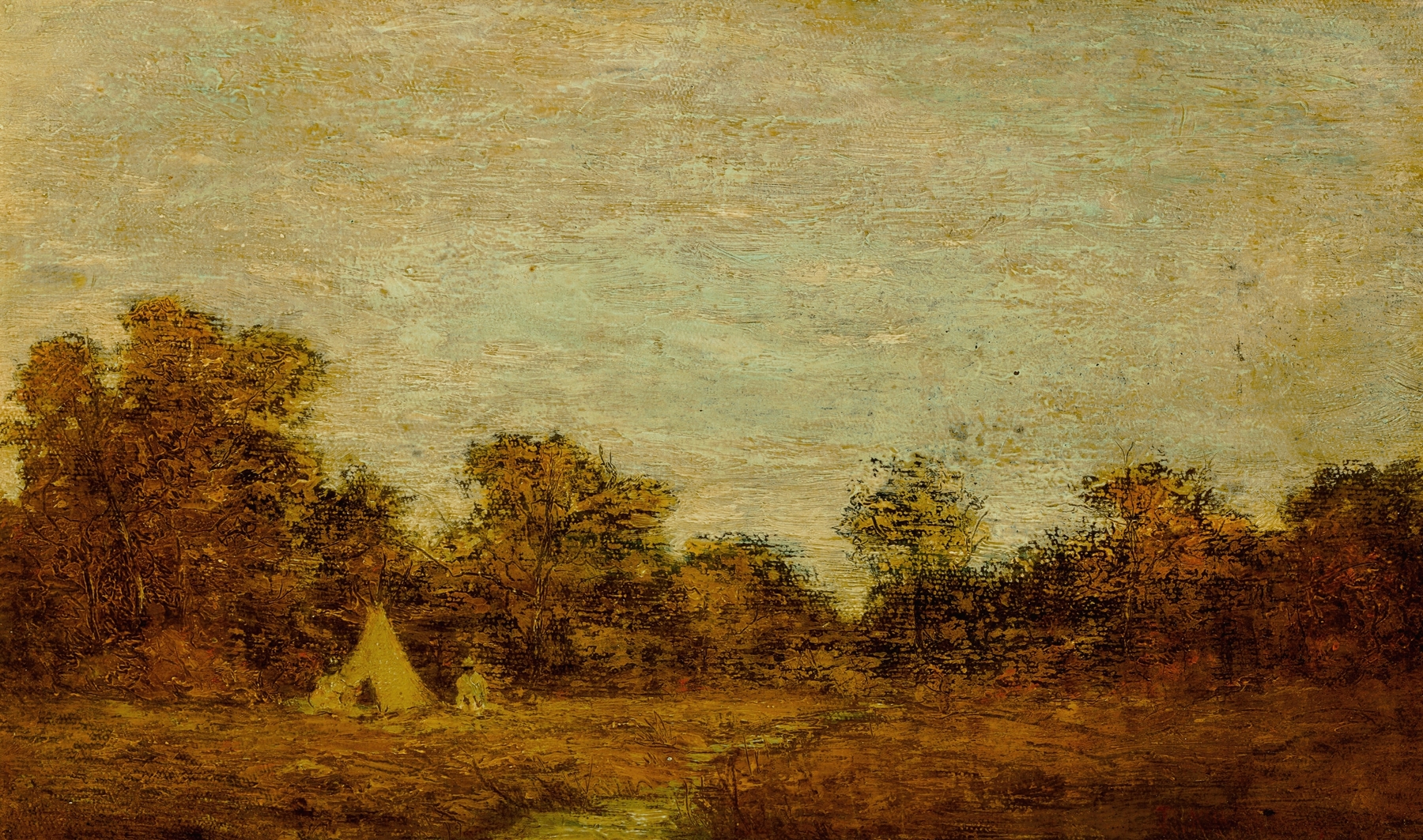
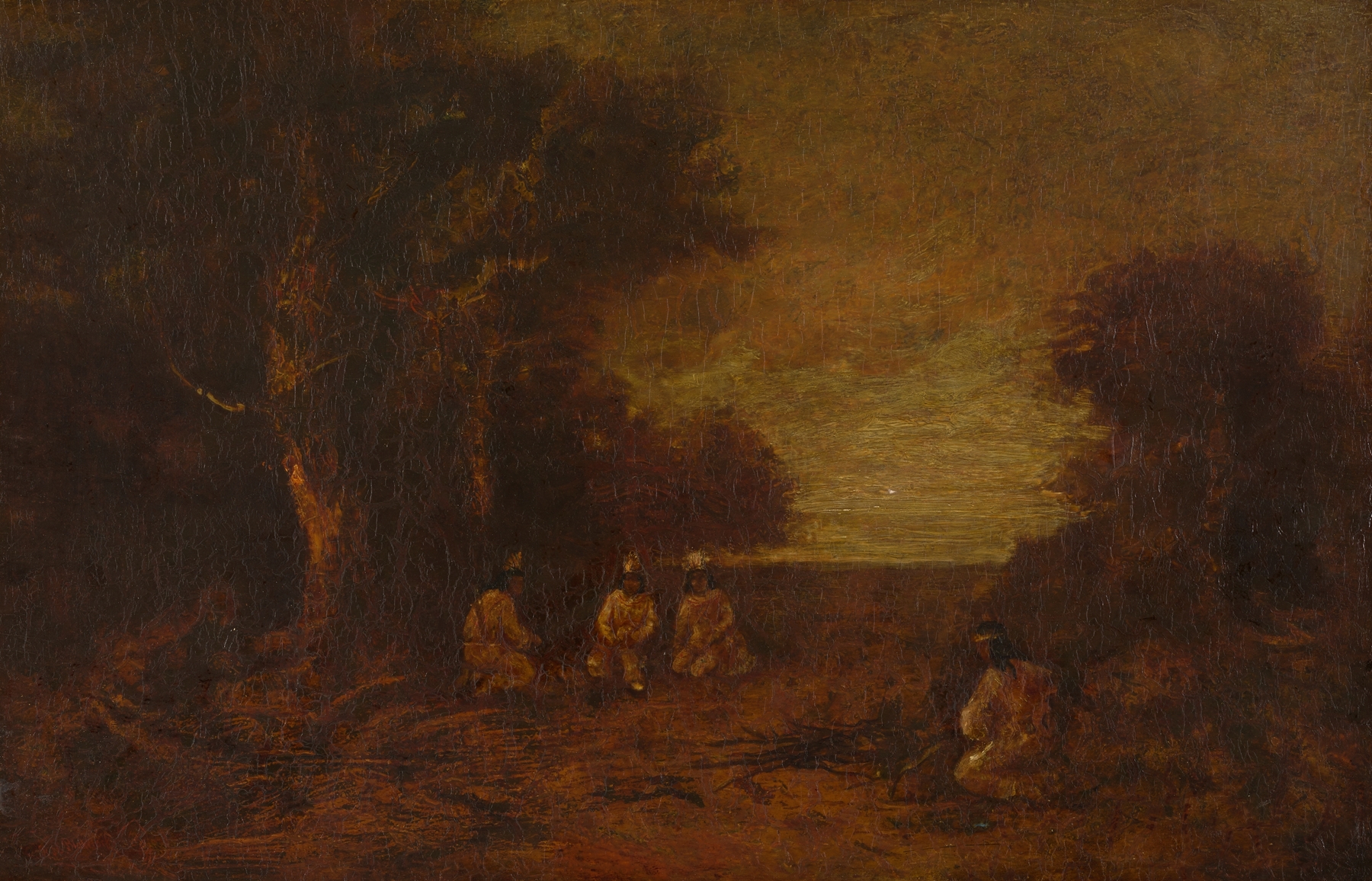
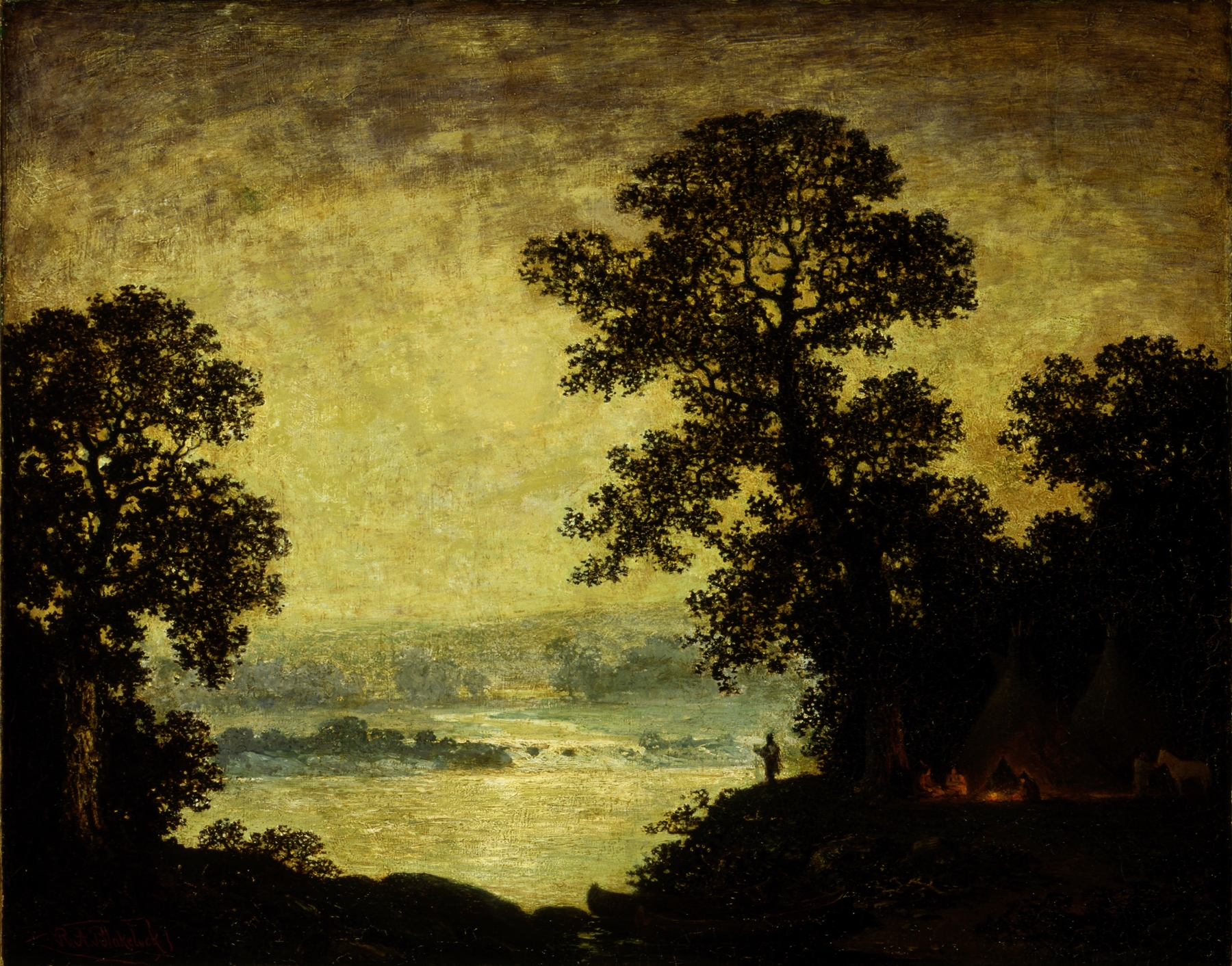
Could a single brushstroke hold eternity? In An Indian Encampment, nostalgia resonates through the tender hues and soft silhouettes, evoking a yearning for moments past that linger just beyond grasp. Look to the foreground where the encampment's simple tents blend seamlessly with the natural landscape. The earthy browns and muted greens invite the viewer to step closer, while the delicate strokes of the trees above frame the scene, creating a sense of intimacy and refuge.
Notice how the muted light casts gentle shadows, enhancing the emotional weight of the moment captured — a fleeting respite in the vast wilderness, steeped in serenity and reflection. The painting’s emotional tension arises from the contrast between the warmth of the encampment and the encroaching shadows of the surrounding forest. The tents, simple yet inviting, stand as symbols of a transient existence, perhaps hinting at the fragility of the culture they represent. The soft, fading light suggests an ending, evoking a palpable sense of longing, as if the viewer is witnessing a moment that is both beautiful and ephemeral, present yet slipping away.
Ralph Albert Blakelock created An Indian Encampment between 1880 and 1900 during a period when American art was increasingly fascinated by Indigenous themes and landscapes. Living a tumultuous life marked by financial difficulties and mental health struggles, Blakelock sought refuge in his art, drawing inspiration from nature and the American wilderness. This painting reflects his desire for connection to a simpler, more harmonious existence, embodying not just the allure of the landscape but also a poignant commentary on the vanishing way of life.