Ascent of Balloon from Burlington House, Piccadilly, from the Window at Mr. B. Palmer’s — History & Analysis
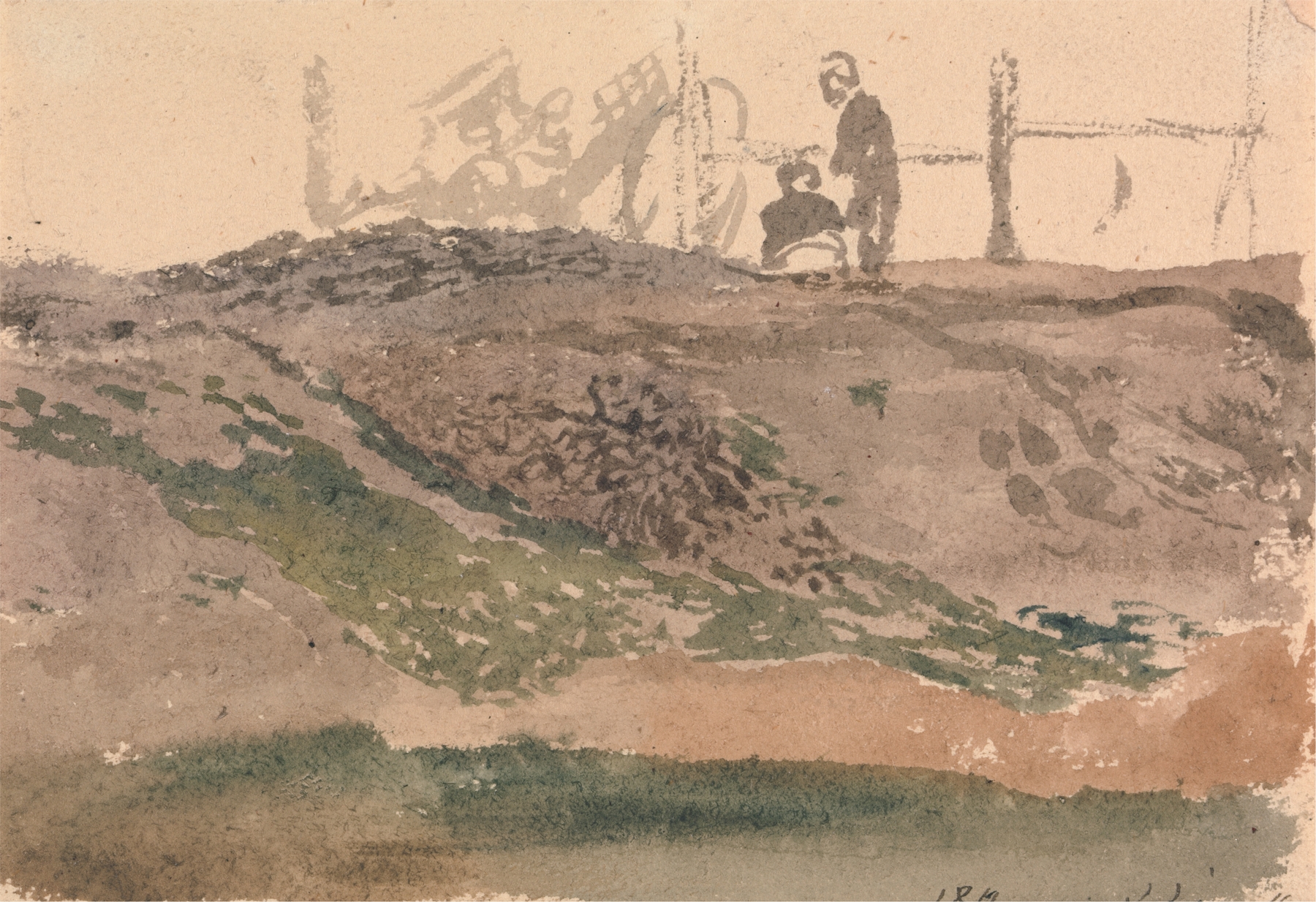
“To paint is to remember what time wants us to forget.” In this fleeting moment, the essence of longing suspends in the air, where memories drift like the hot air balloon ascending into the vast sky. Look closely at the bottom right, where a delicate hand reaches out, perhaps signaling a farewell to the departing vessel. The soft, muted palette of greens and blues envelops the scene, while the warm burst of the balloon's colors draws your gaze upward, creating a sense of movement and aspiration. The window frame serves as a literal and metaphorical boundary, inviting the viewer to ponder what lies beyond the everyday world.
There’s an emotional duality in this composition—joy intertwined with a palpable sense of absence. The figures in the foreground appear caught in a moment of reflection, suggesting the bittersweet nature of farewell. The balloon, symbolizing freedom and exploration, contrasts sharply with the domesticity of the window, hinting at a yearning for adventure amidst the confines of life’s routines.
John Linnell painted this work after 1812, a time when Romanticism was gaining traction, influencing artists to explore themes of nature and emotion. Living in London, he found inspiration in the changing landscape and burgeoning industrial environment. This piece encapsulates both the excitement of possibility and the weight of nostalgia, as Linnell navigated the tensions of progress and longing in a rapidly evolving world.