At Nature’s Mirror — History & Analysis
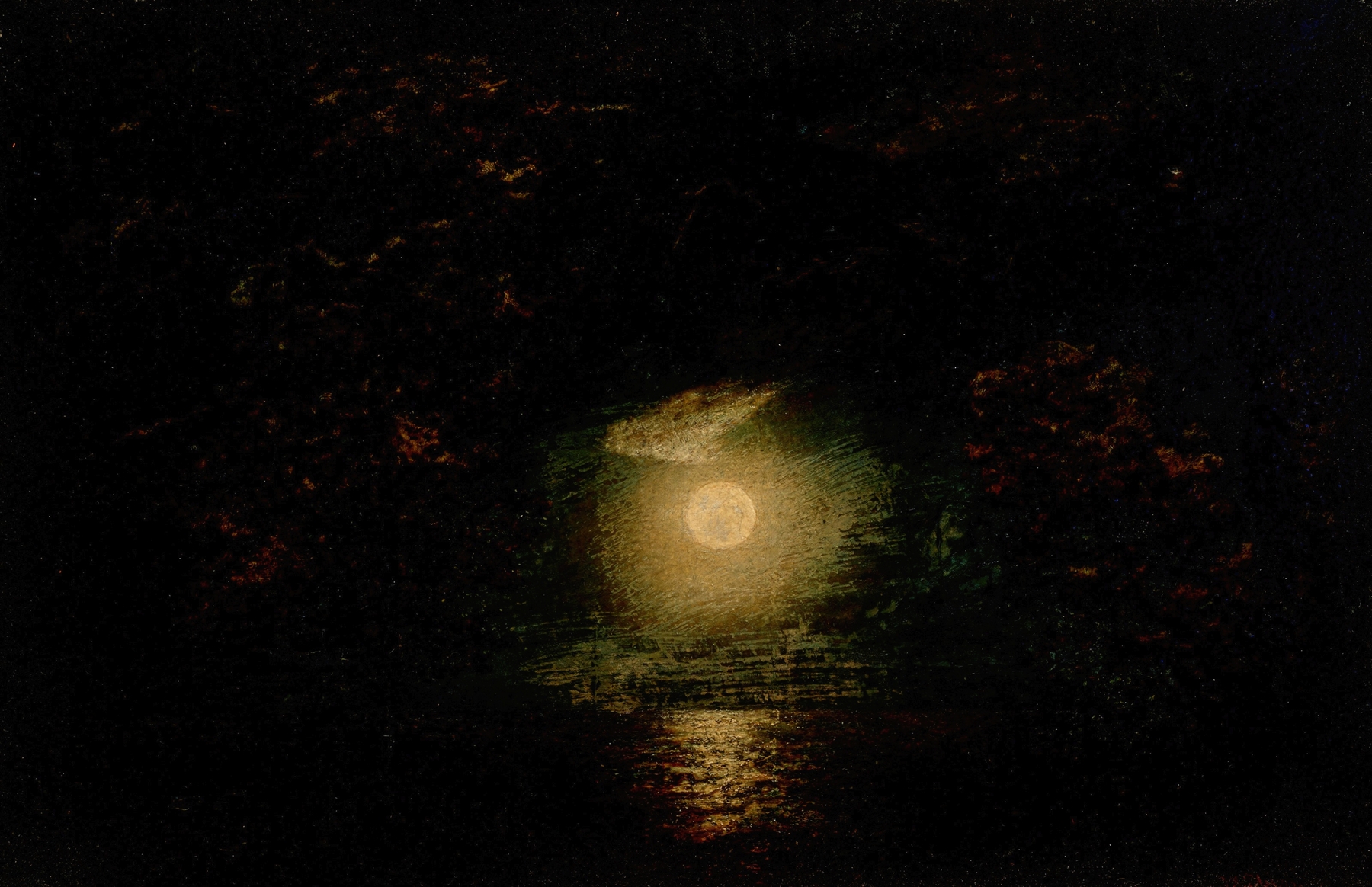
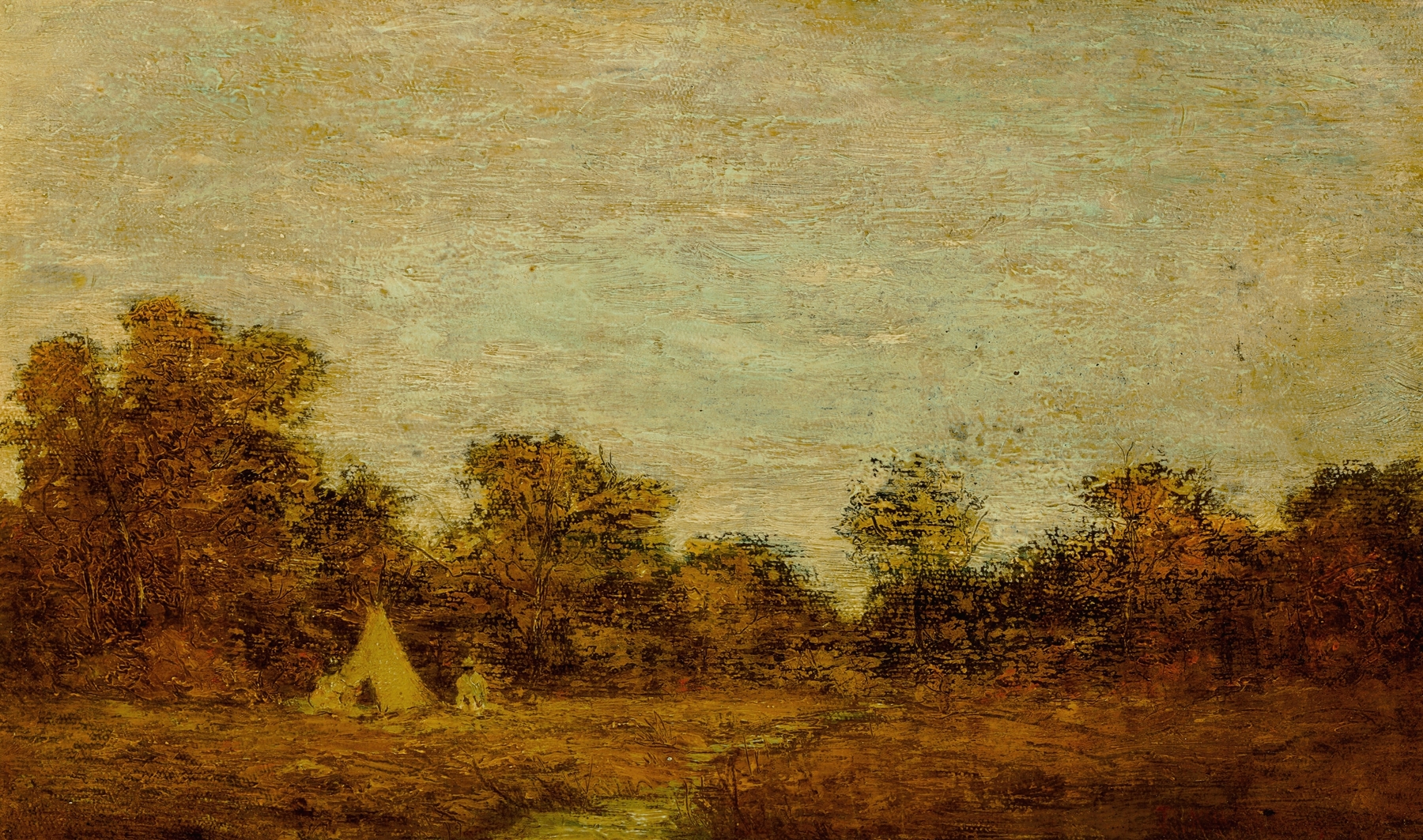
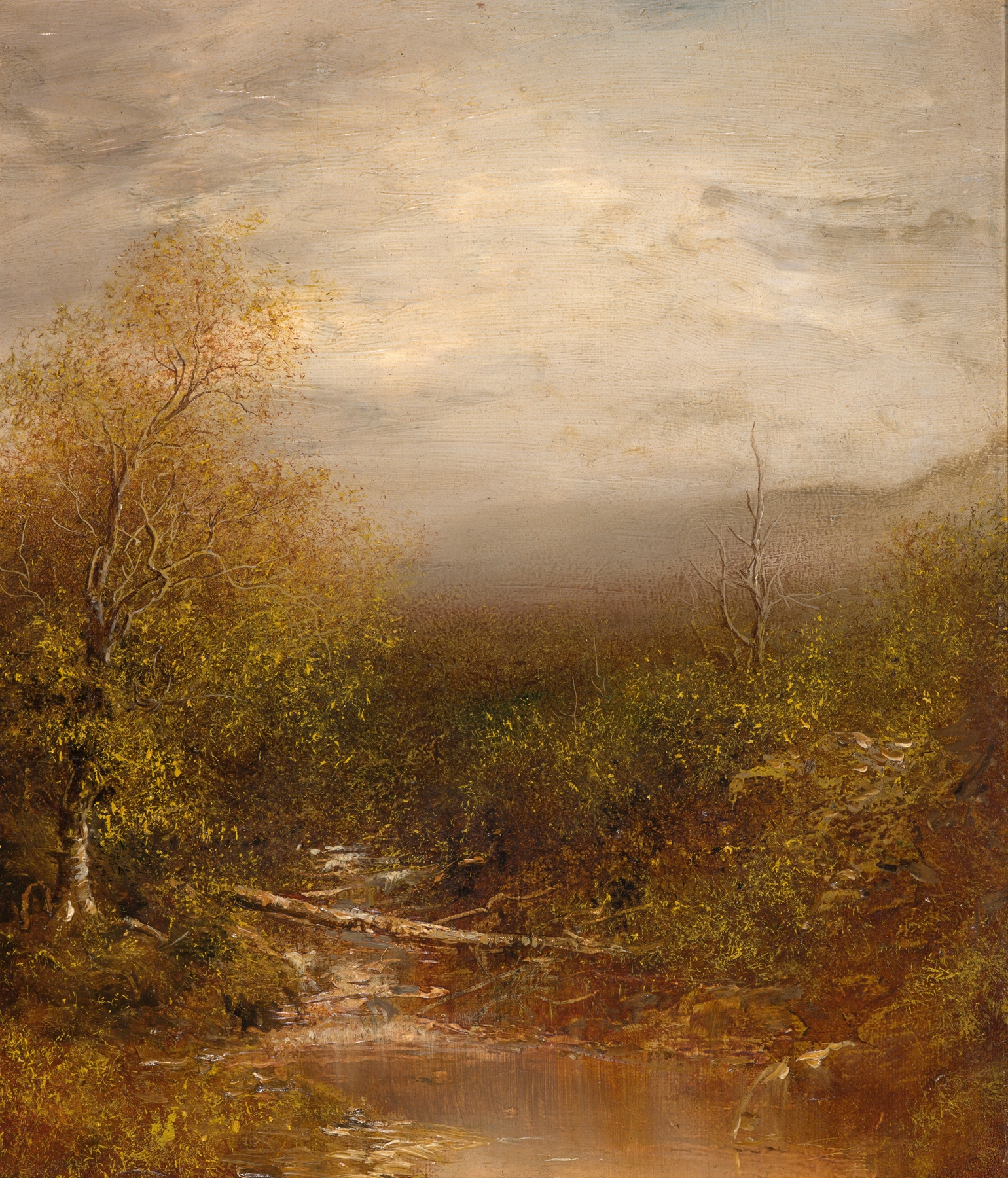
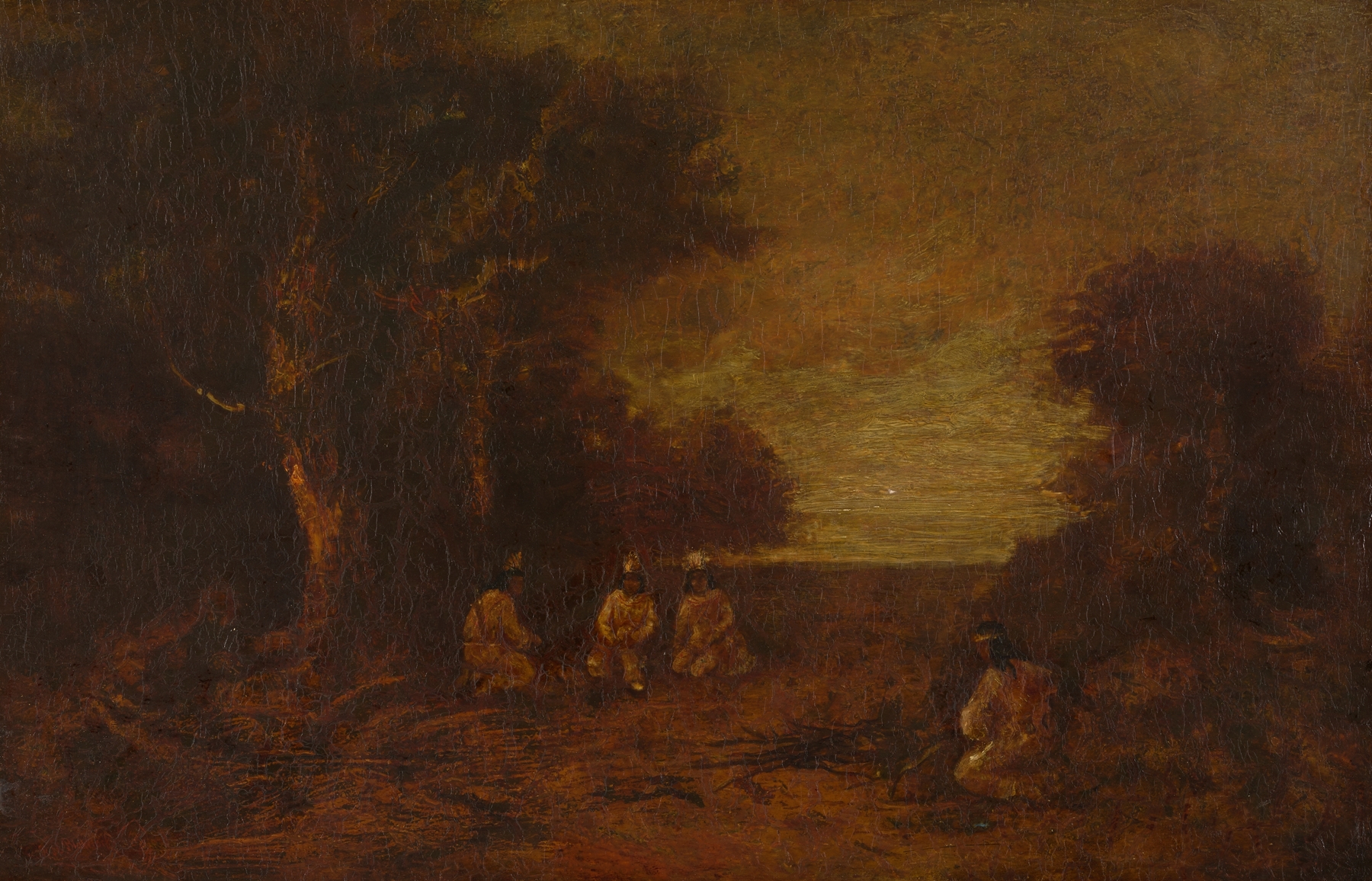
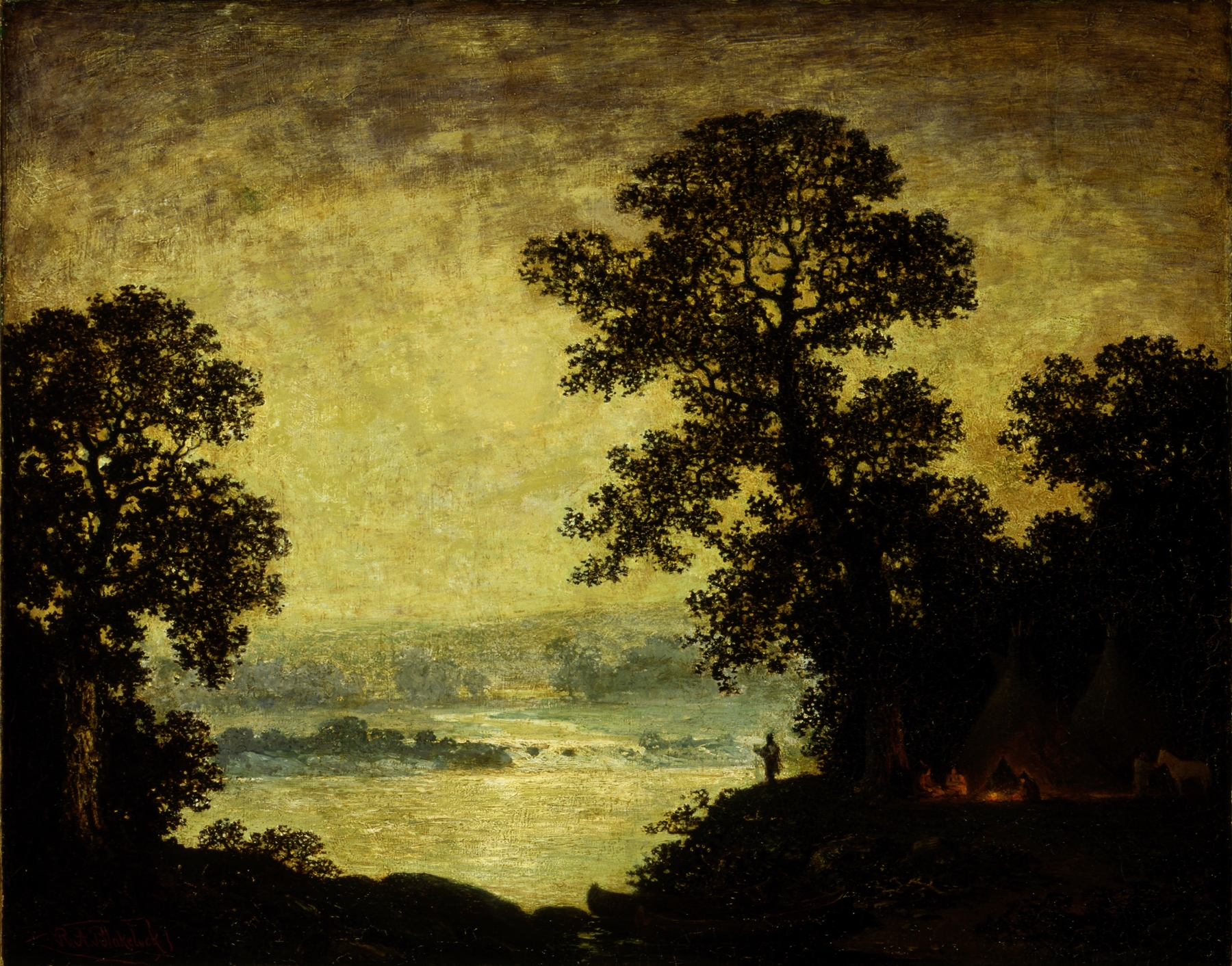
Could a single brushstroke hold eternity? In Ralph Albert Blakelock's At Nature’s Mirror, the answer flickers in the vibrant play of light and shadow across a tranquil landscape, inviting viewers to lose themselves in its profound depths. Look to the center, where a serene lake stretches across the canvas, reflecting a kaleidoscope of colors from the sky above. The gentle ripples disturb the flawless surface, creating a dance of hues that transitions from golden yellows to deep blues. Notice how the trees on either side frame the scene, their dark forms contrasting against the luminous backdrop, drawing your gaze inward.
Blakelock’s mastery of chiaroscuro brings a palpable tension to the composition, as light and darkness grapple for dominance, evoking an emotional resonance that transcends the mere visual. Deeper meanings emerge in the delicate balance of nature’s beauty and fragility. The reflective water invites contemplation, suggesting a moment of introspection where the viewer can confront their own emotions — an ecstasy tinged with melancholy. The towering trees seem to whisper secrets of time, representing both the permanence of nature and the transience of human existence.
Each brushstroke speaks of a yearning for connection, urging us to ponder our place within this vast, enchanting world. In the year 1880, as Blakelock painted this piece, he was grappling with personal challenges, including mental health struggles and financial instability. These experiences colored his perception of the natural world, enabling him to capture its beauty with a poignant intensity. At this time, he was part of the American luminism movement, which emphasized the effects of light on landscapes, marking a significant evolution in the exploration of nature within the realm of art.