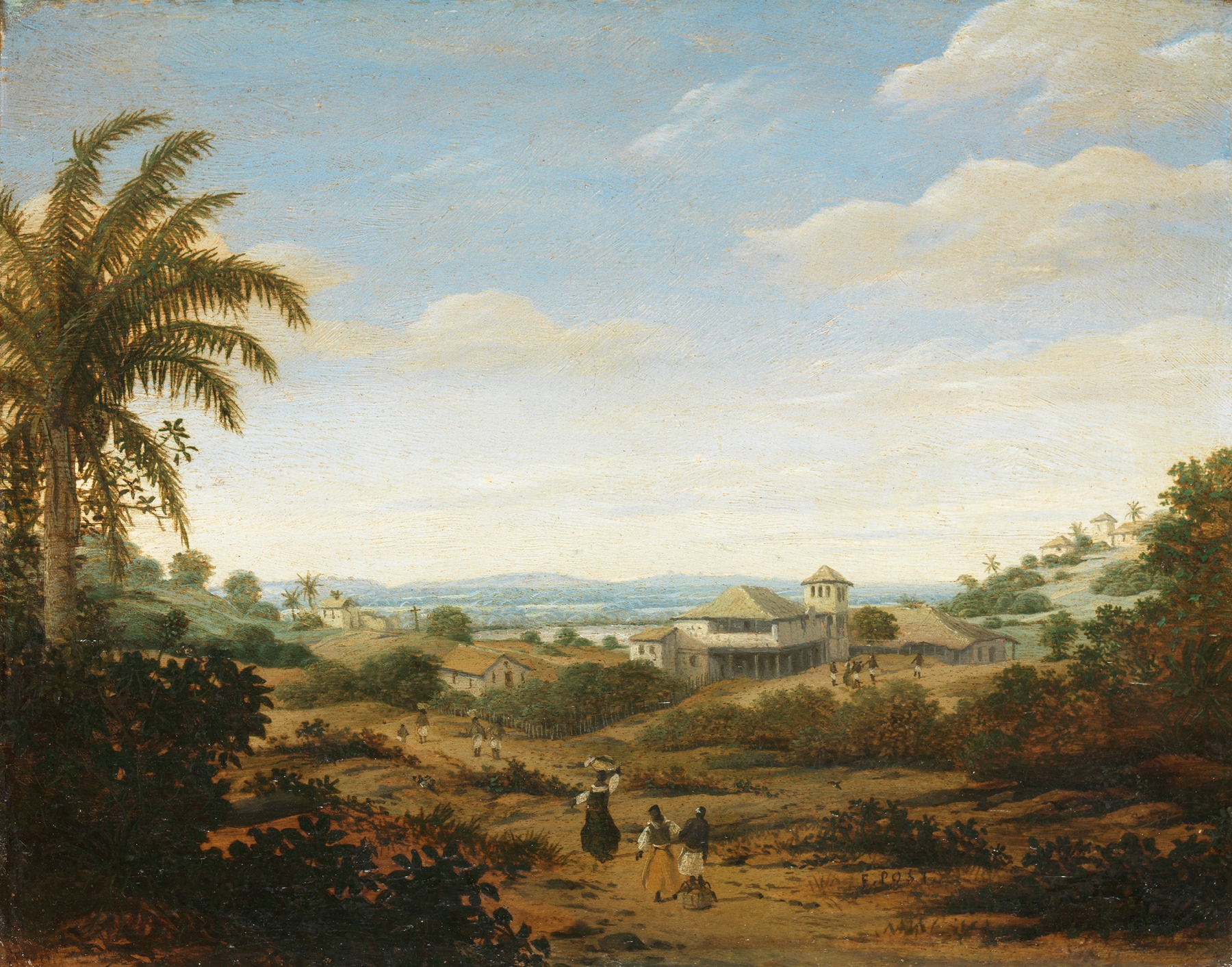
Brazilian landscape with the village of Igaraçú. To the left the church of Sts Cosmas and Damian — History & Analysis
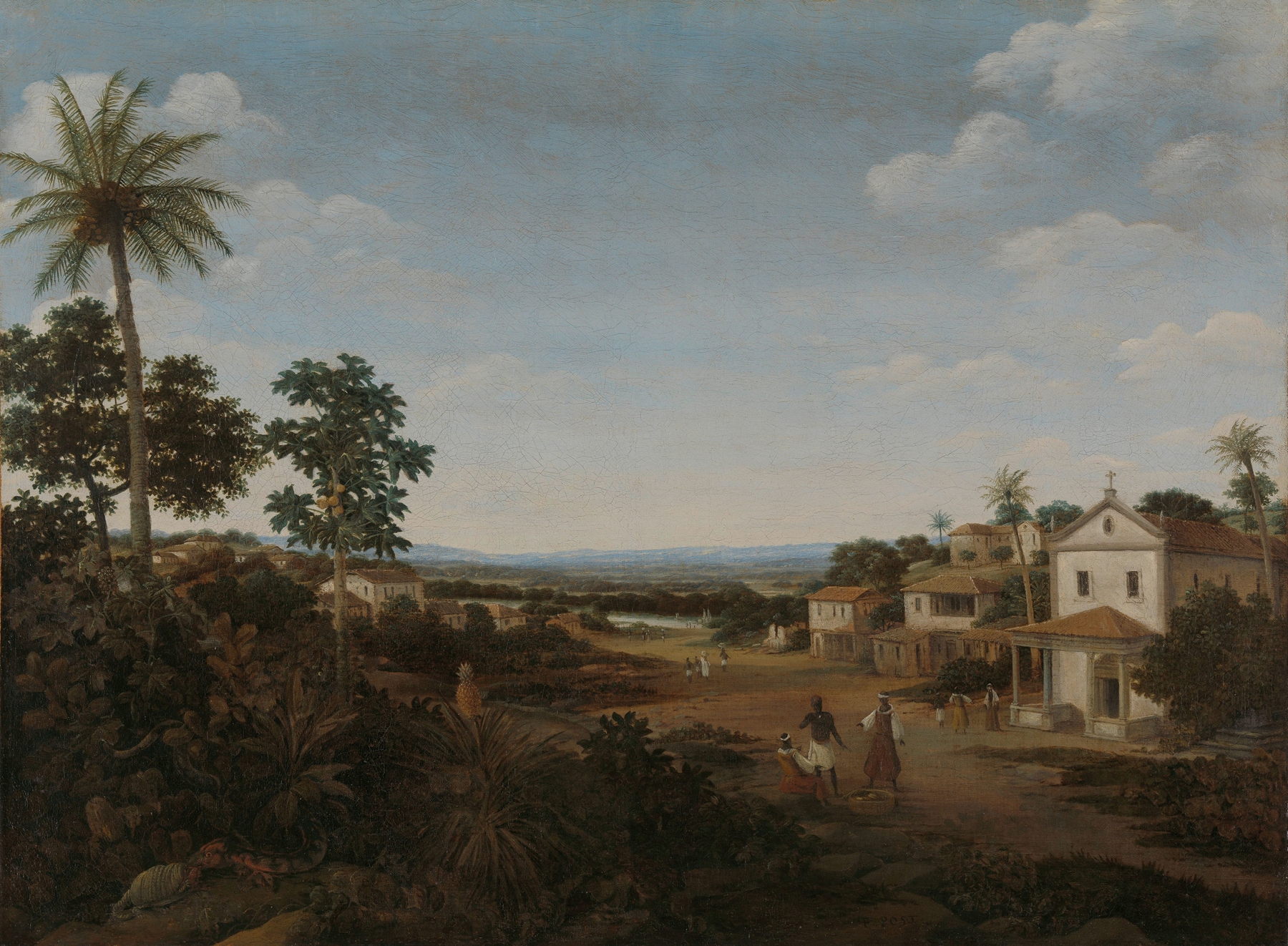
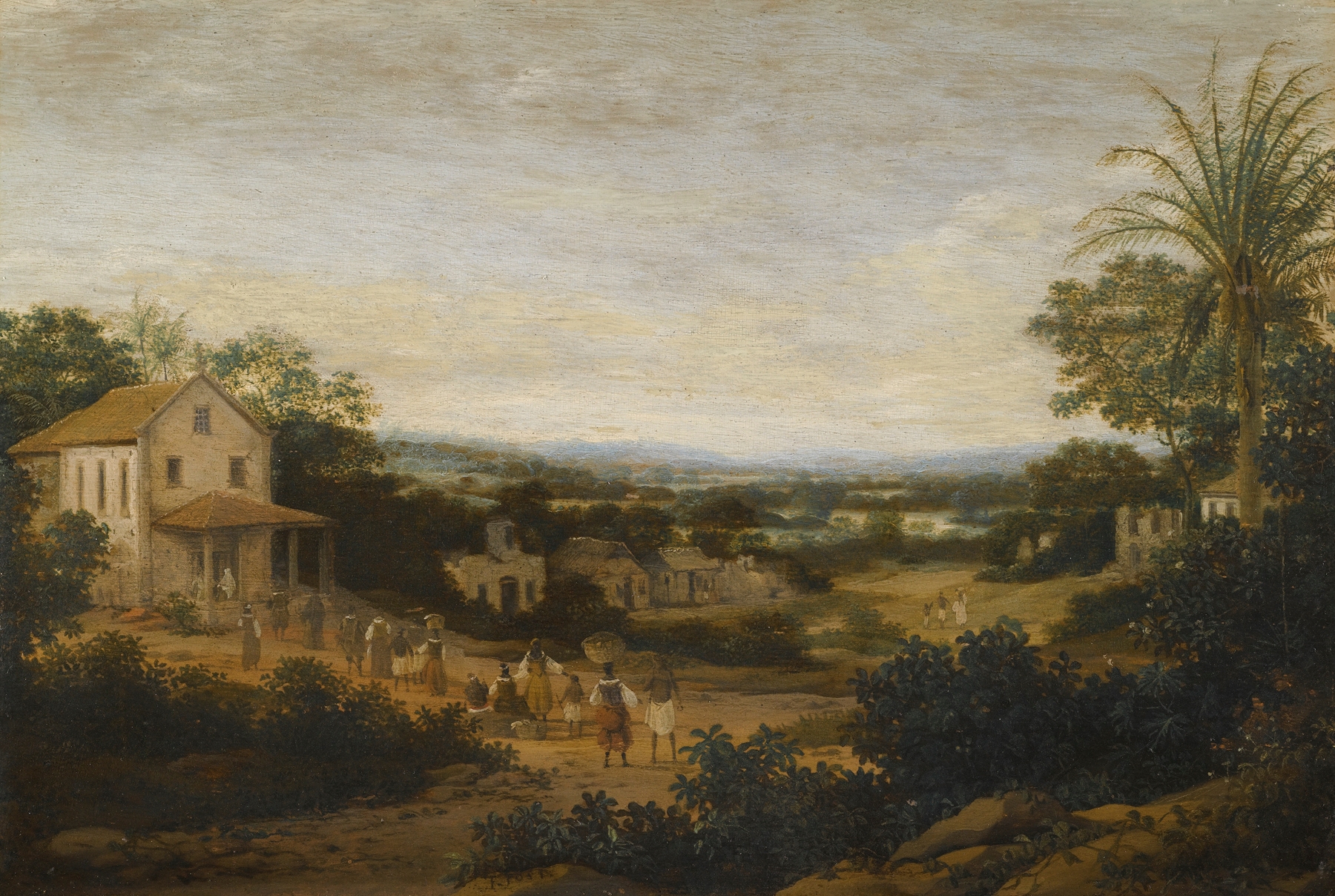
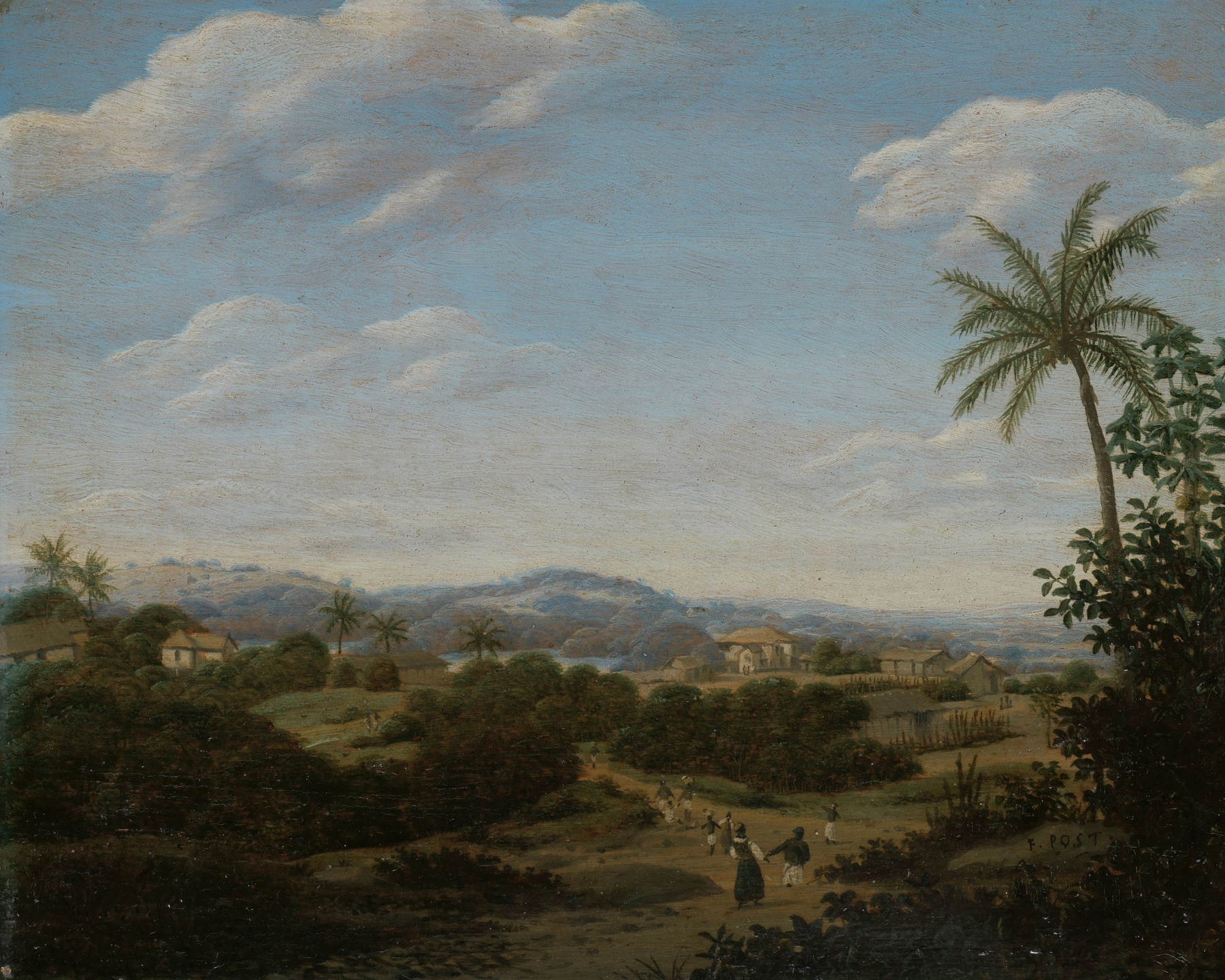
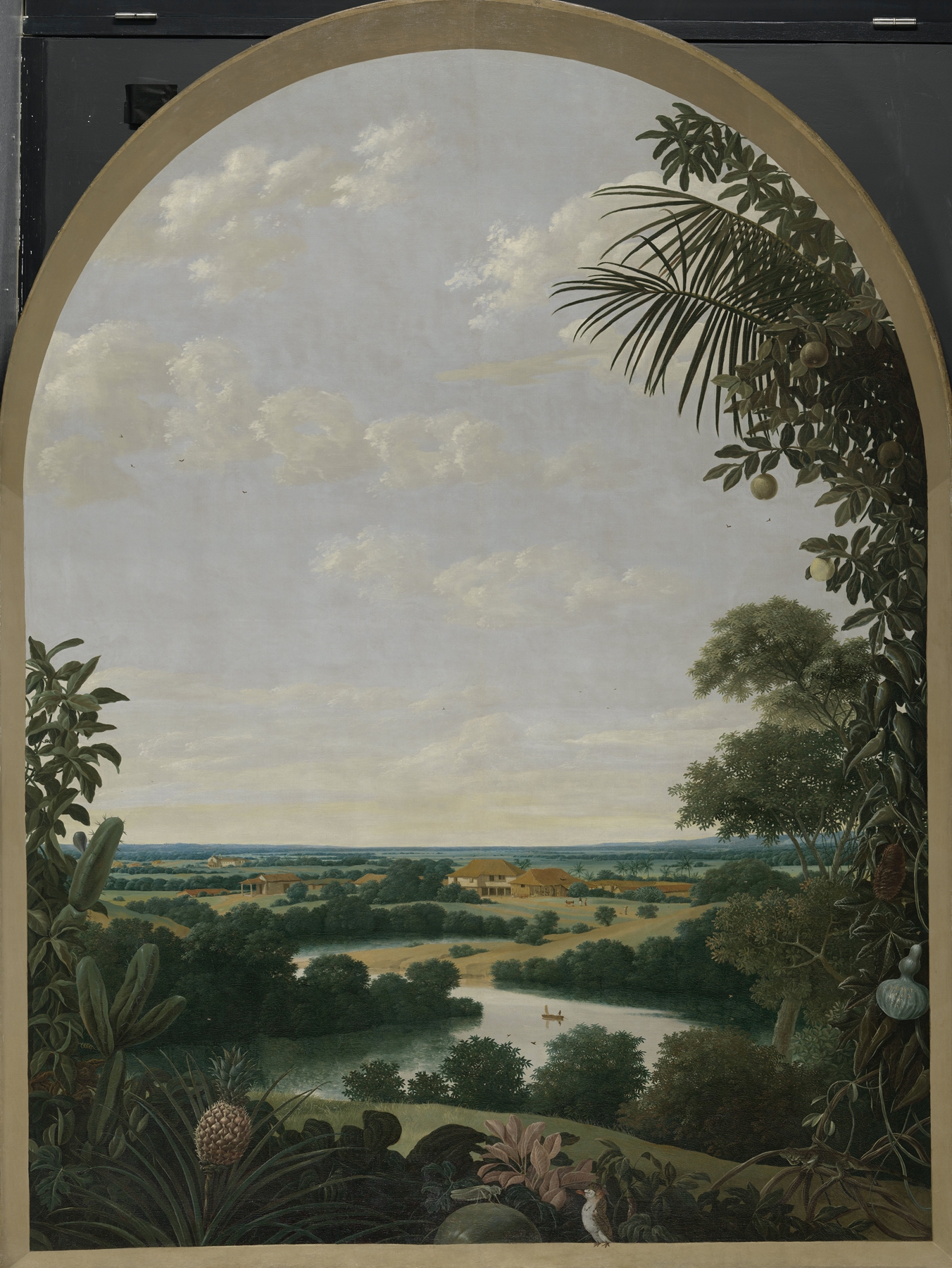
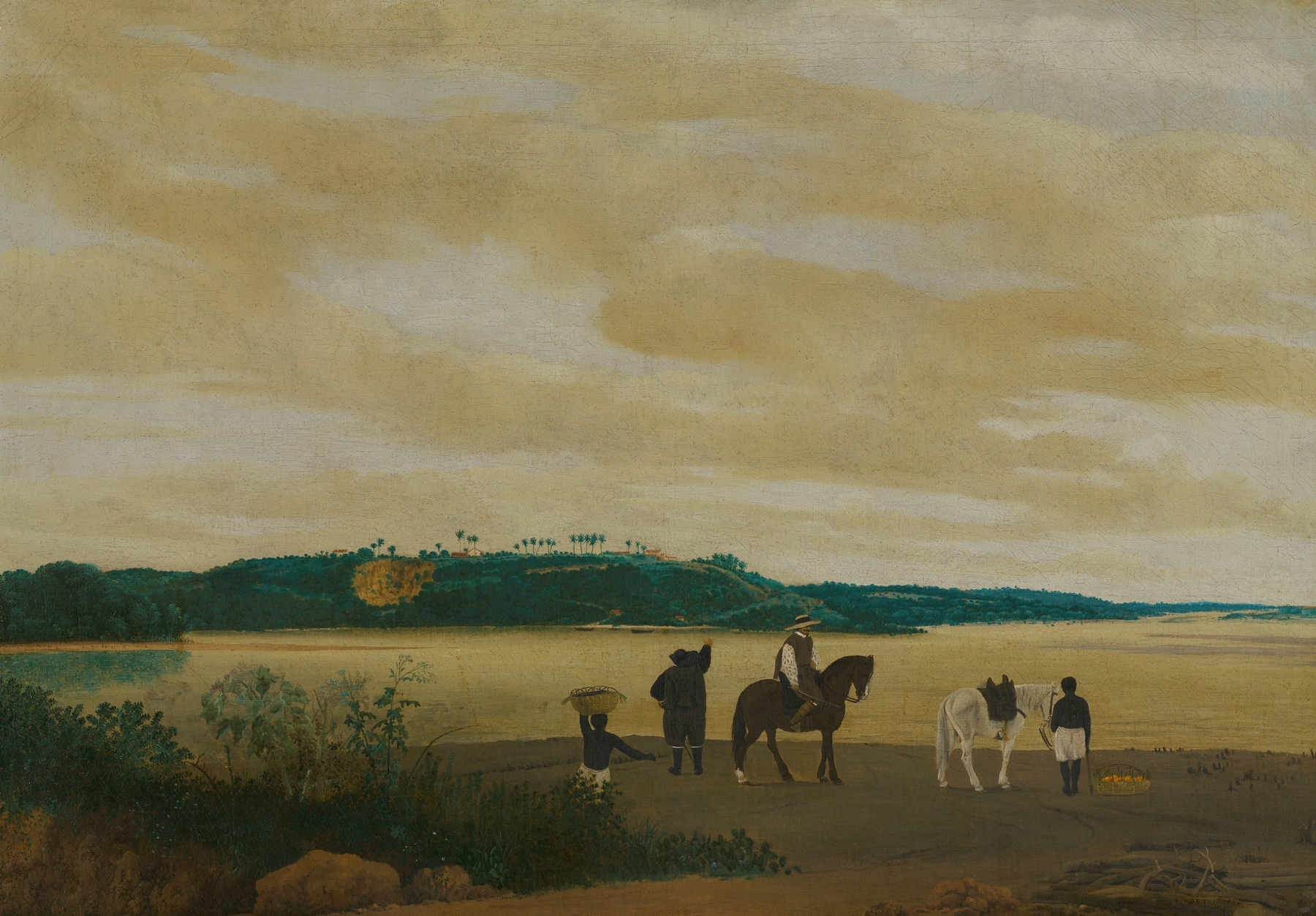
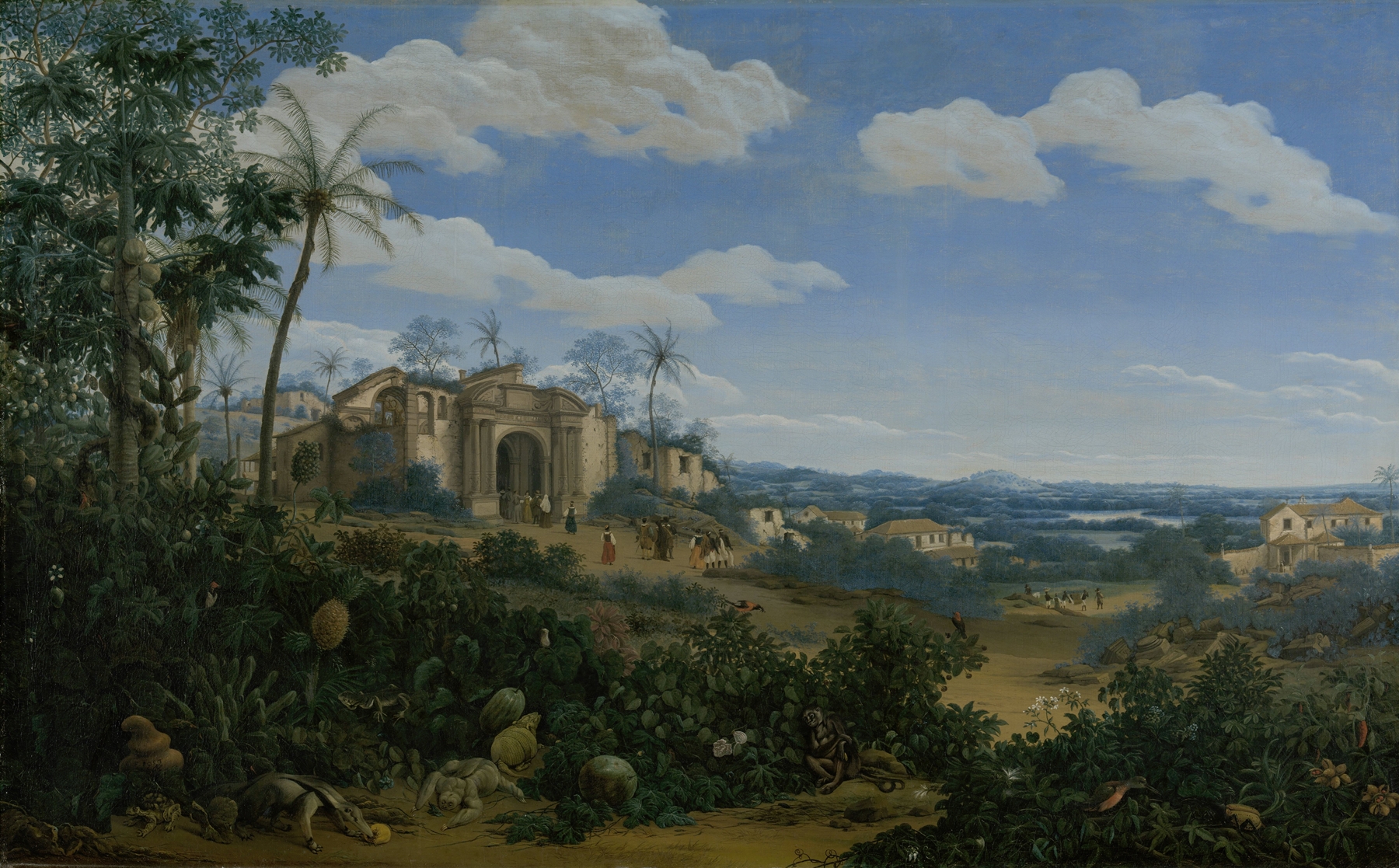
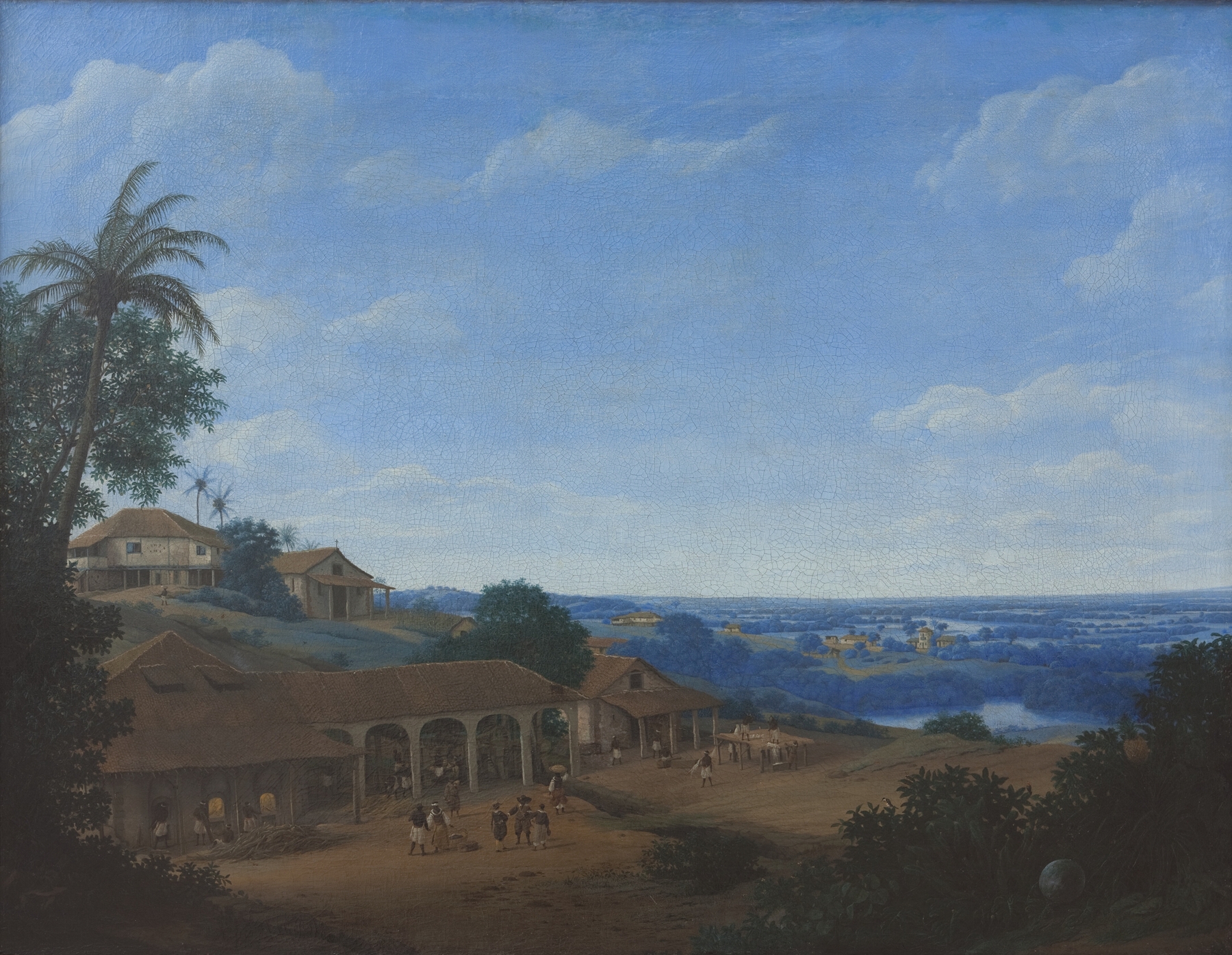
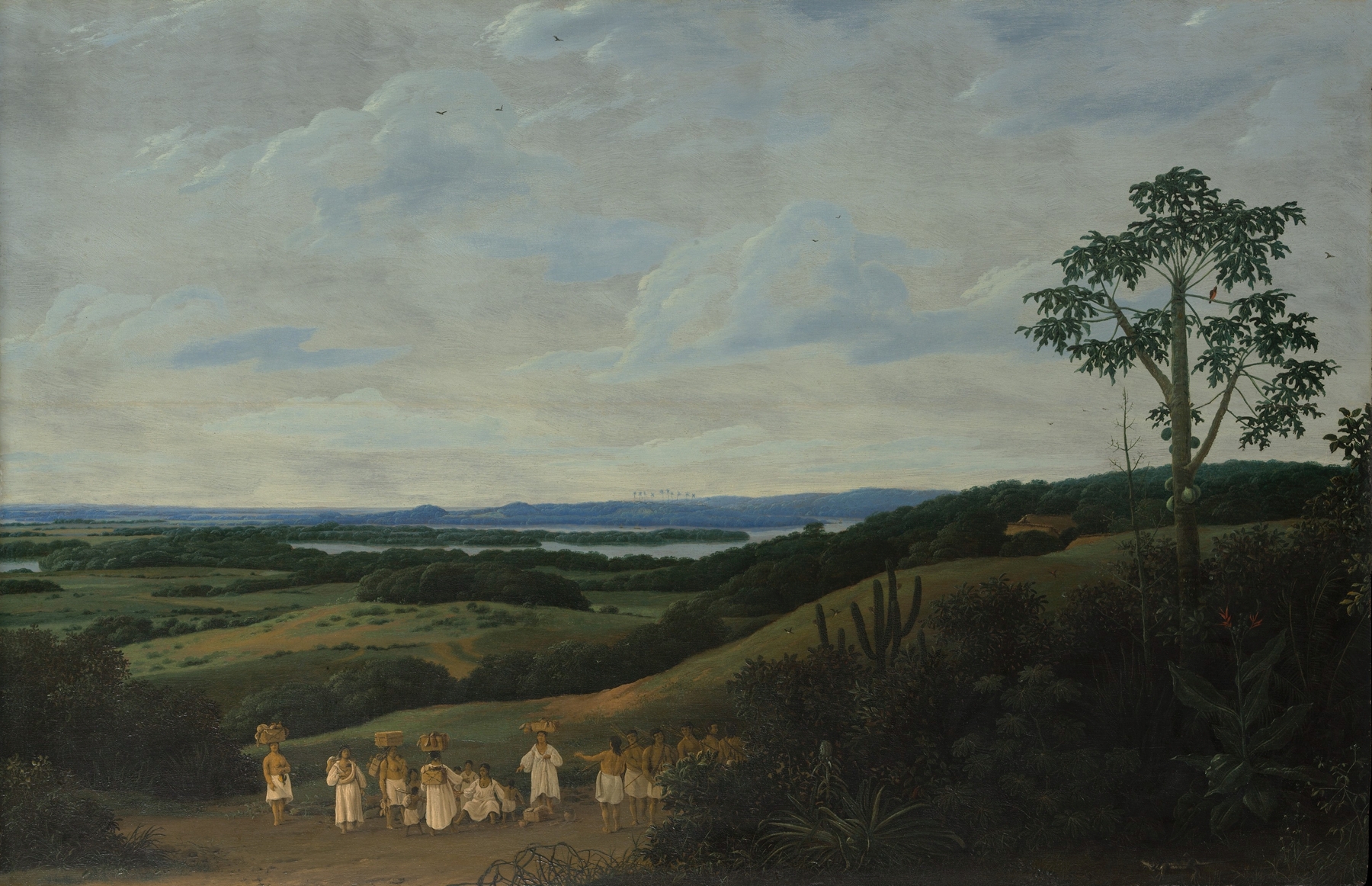
Is this a mirror — or a memory? In Brazilian Landscape with the Village of Igaraçú, innocence reigns in the lush expanse of nature, whispering tales of forgotten times. Look to the left, where the church of Sts. Cosmas and Damian stands sentinel, its white facade contrasting with the deep greens of the surrounding foliage. The composition invites the eye to wander: from the vibrancy of the trees to the tranquil waters reflecting the sky's gentle blues.
Notice the way light dances across the landscape, illuminating the village nestled at the foot of a hill, as if capturing a fleeting moment in time. The brushwork is meticulous, each stroke breathing life into both the architecture and the natural world. The painting holds a world of tensions within its serene exterior. The coexistence of human habitation and untouched wilderness suggests the fragility of innocence in the face of encroaching civilization. The church, a symbol of faith, seems both a refuge and a reminder of the cultural imposition that accompanies colonization.
In this delicate balance, the artist evokes a sense of nostalgia, hinting at a yearning for simplicity in a rapidly changing world. Created in 1659, this work by Post reflects both his deepening connection to Brazil and the broader artistic trends of the time. Living in the Netherlands, he was part of a movement that sought to capture exotic lands through the lens of European sensibility. The period was marked by exploration, where artists translated their awe for new landscapes into vibrant canvases, bridging the old world with the new.